
A sunset in the Aegean includes joy and sorrow in such equal doses that in the end, only truth remains. – Greek poet Odysseus Elytis

When we set out, Robie and I referred to our plan as off-season slow travel.
Before we stepped off the hamster wheel, our limited vacation schedules were always a mad dash to see as much as we could in the shortest amount of time. We took overnight flights and trains, laid out daily sightseeing itineraries with evening events that had us collapsing in a hotel bed only to awaken and do it all over again.
Not anymore. Once we quit work, we vowed to take our time, explore unseen corners, go out into the countryside, meet our neighbors and see how other people lived.
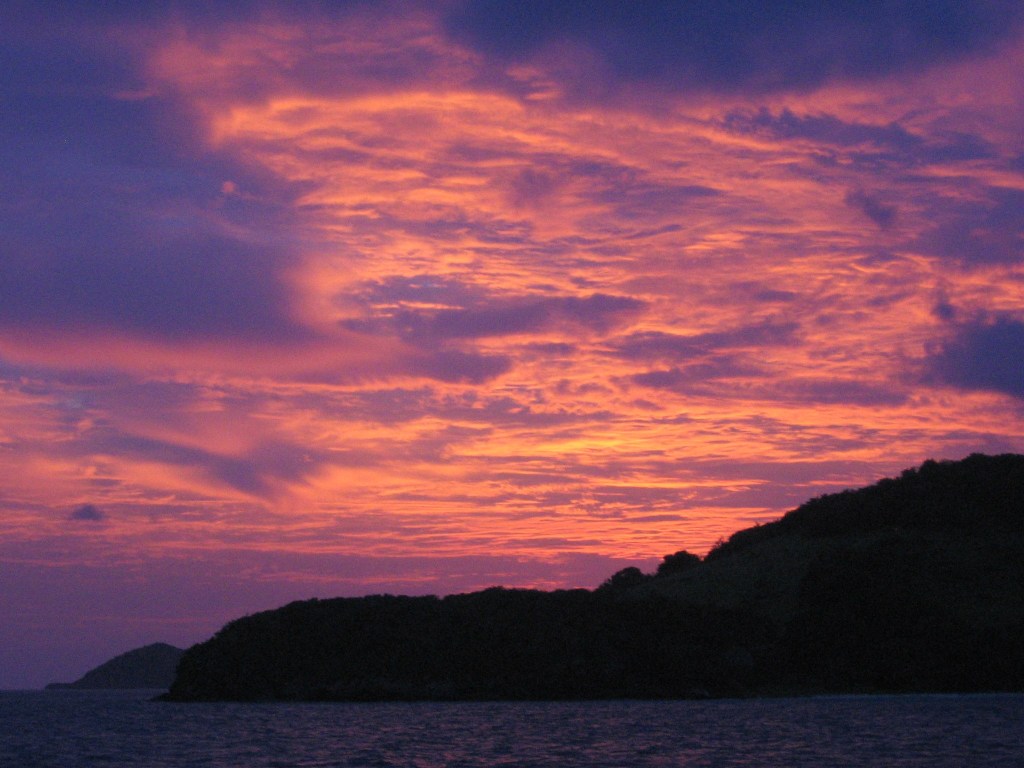
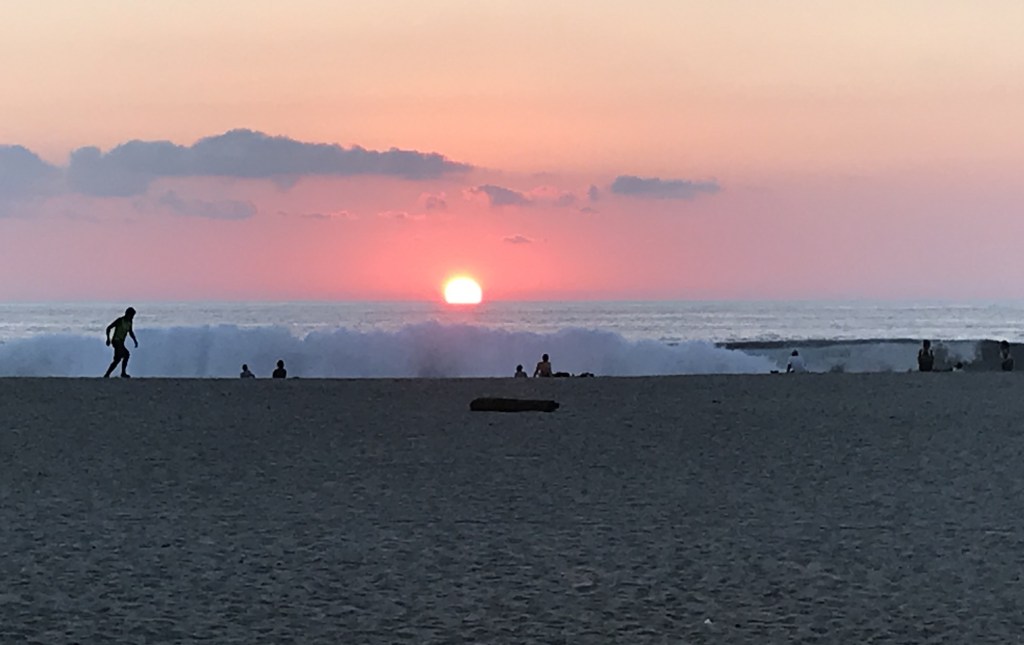
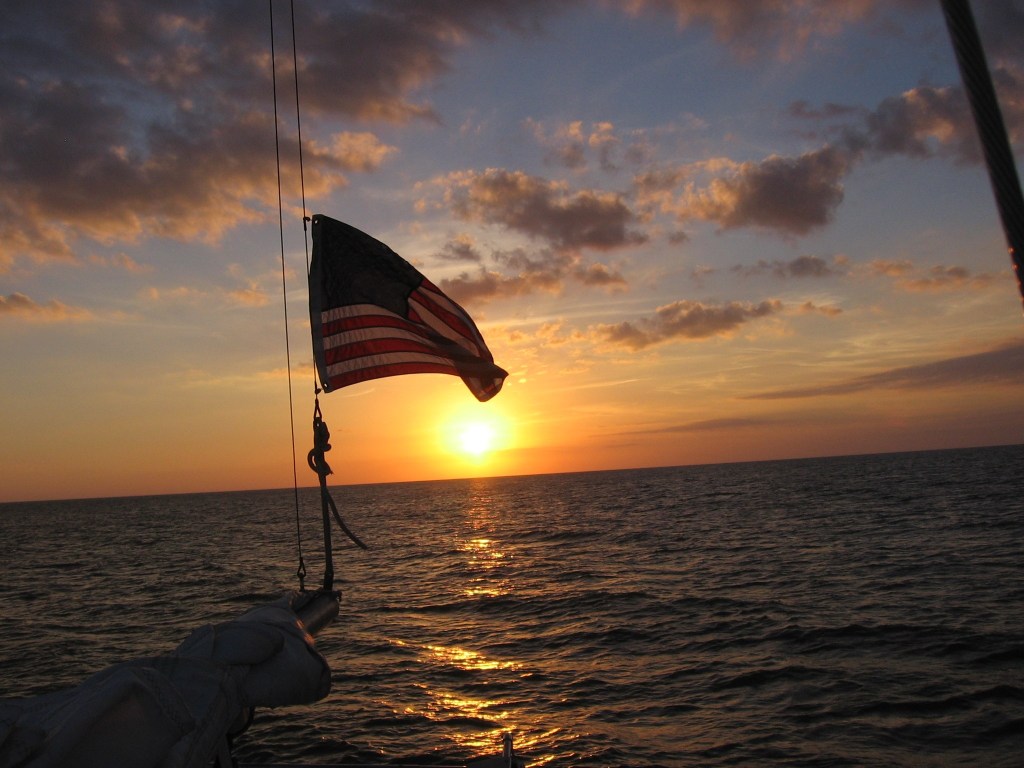
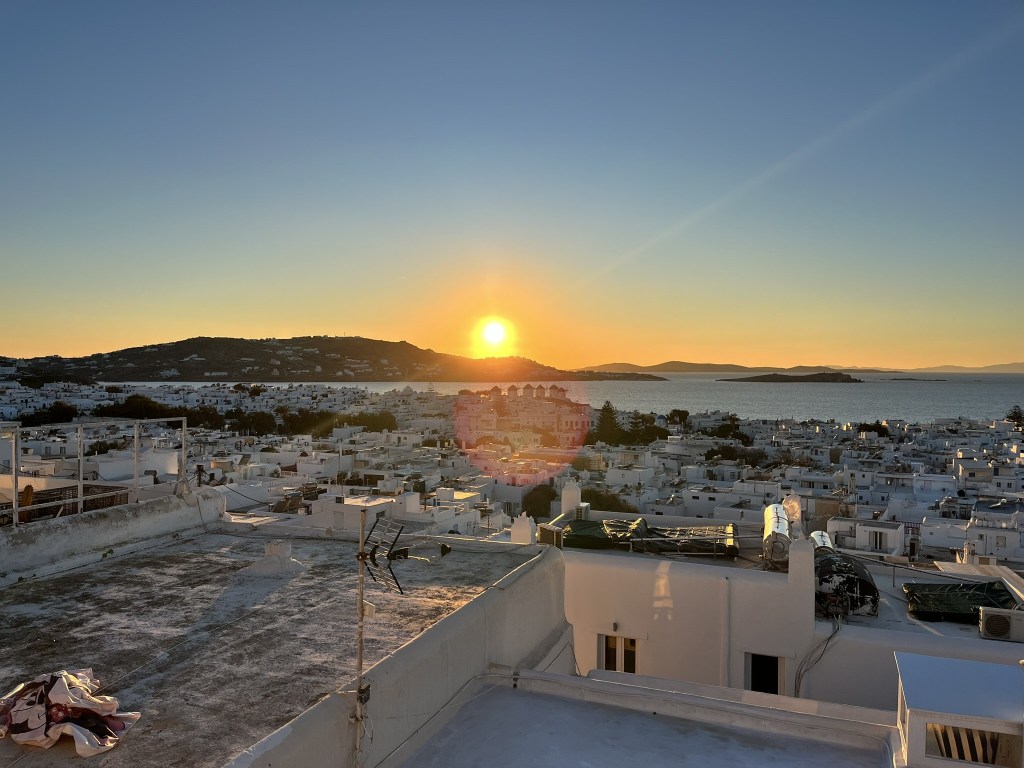
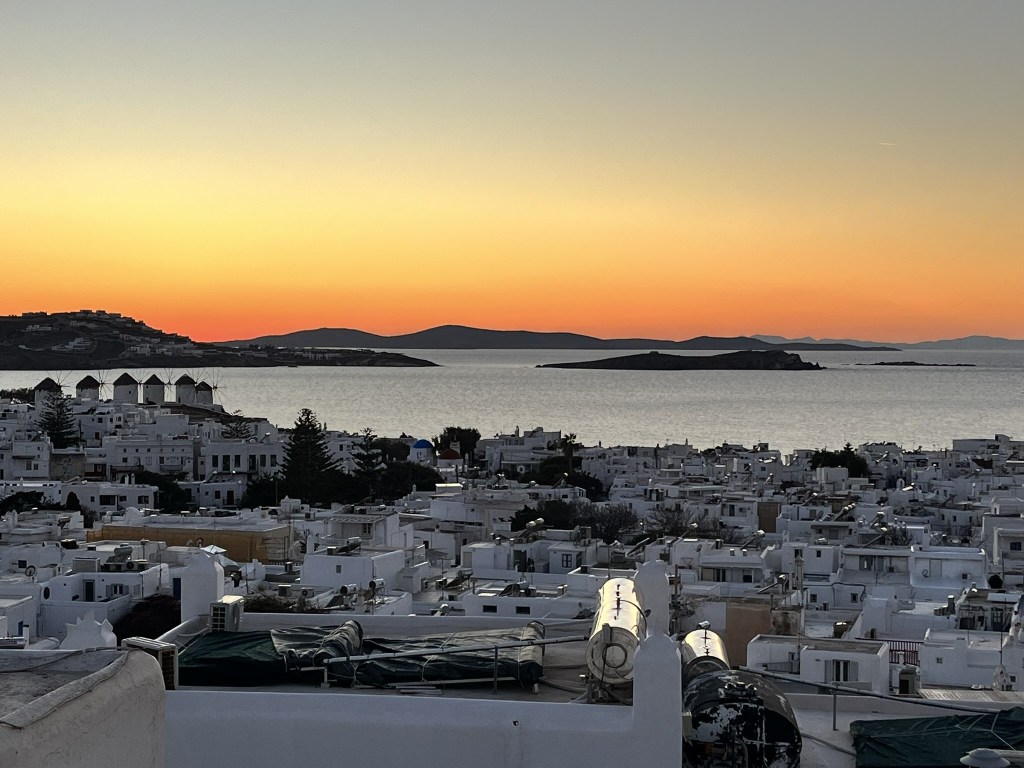
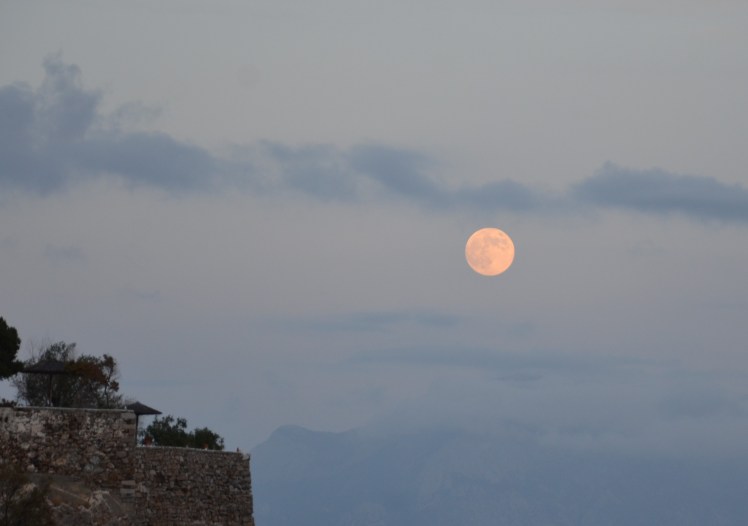
And watch a lot of sunsets.
We weren’t trying to live like locals because there really is no such thing. Instead, we described our itinerary as a deep dive into a single place in the off season free from the tourist hordes. While most people we talked to moved every month, our plan was to stay put as long as our tourist visa allowed, make short excursions from a homebase and change residences with the seasons.
We wanted to stay off the beaten path and visit well-known places only in the off-season. It was about choosing Liverpool over London, Ikaria instead of Santorini or Mykonos, and Albania rather than Croatia.
When we arrived in Liverpool, the summer tourist season was ending and a daytrip to Chester was delightfully free of the summer throngs. When we flew to Dublin for a week, Robie and I weren’t the only tourists braving the fall’s rainy weather, but our apartment in the suburbs had us meeting locals in the grocery aisles, on the bus, and at neighborhood pubs.
Landing in Athens toward the end of season, we found the Acropolis teeming with visitors, but they were mostly Greeks celebrating Ohi Day, the anniversary of the country’s refusal to give in to Mussolini’s demands and triggering their entry into the Second World War on the side of the Allies.
In Liverpool we met locals at the pub. On Ikaria we met them at the therapeutic baths. But on the island even the out-of-towners were predominantly Greek – young lovebirds from Thessaloniki and a band of hoteliers from Mykonos marking the end of another successful summer.
With locals outnumbering winter travelers, on Ikaria Robie and I quickly met the handful of foreigners still lingering at the close of season. Sari sat on the beach staring out across the water in flowing black pants and long sleeves. Gilou relieved her arthritic knee basking on a park bench with her favorite cat. John swam in the bay to alleviate pain from a back injury, Rahm strolled along the beach as Caitlin read on her small patio and Matilde kept watch over the shuttered hotel in exchange for free rent.
As the weeks went by and the sun began setting early, Sari stopped coming to the beach. Gilou returned to Paris. John and his wife disappeared for weeks only to reappear one day and leave for good. Rahm quietly departed without a word. And soon only four of us were living among the town’s handful of permanent residents.
As the meltemi winds began to swirl and the days cooled, the town of Therma slowly, persistently closed. The grocery store run by an elderly woman and her husband abruptly shut down. Two of the three restaurants across the bay locked their doors followed by the third a month later. Construction projects popped up bringing more apartment and dining options for the coming season as Ikarians from mountain towns ventured to the beach only on weekends.
With the holidays fast approaching, the municipal baths changed their hours, and the two remaining restaurants eliminated the outdoor seating, reduced their menus, and alternated days of operations. Soon the baths closed, and after Christmas mass even the boy who swept Therma’s church locked the heavy wooden doors. Only the town’s two bakeries remained open.
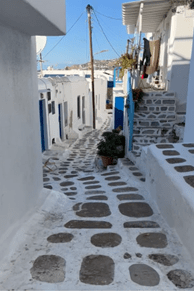
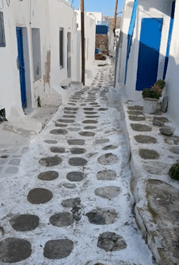
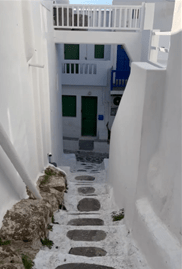
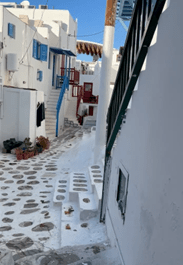
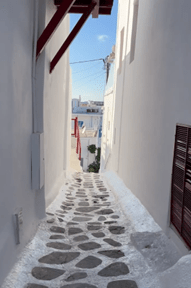
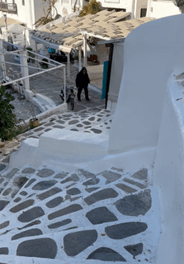
When Robie and I visited Mykonos in December, the place was an empty shell. High-end boutiques were shuttered, beaches were empty, and waterfront bars that had been packed with the international jet-set a few months earlier were locked tight behind rolling metal doors. Apart from a bakery, small grocery store and handful of restaurants, Mykonos was closed for business. But with the city to ourselves, Robie and I wandered the narrow streets greeting locals and watched a lot of sunsets.
But if off-season travel is choosing the path less taken, what does slow travel mean?
It doesn’t mean Robie and I plan to forgo modern transportation. While we’d happily travel only by train or ship, schedules are often limited and prices steep. But it does mean staying put longer and lingering in a destination after we’ve seen the sights. It’s about building a home base and taking short trips, staying five days in a town that can be seen in two, and soaking in the ambiance over a morning coffee or afternoon wine.
And when we’re not exploring new places, slow travel is about learning something different in our temporary homeland. On a sunny day we might wander unfamiliar parts of town. When the rain keeps us indoors, we’ll experiment with recreating local dishes. And anytime we find an outdoor market, ethnic grocery store or cheese shop, we’ll always make time to step inside.
On Ikaria we hiked, learned about the island’s strange history and spent a week tootling around in a rental car. In Liverpool we visited free museums and strolled around city parks. We researched headstones in one of the city’s oldest cemeteries and learned to make traditional British fare. But just because we’d labeled our plans with new terms didn’t mean slow travel came naturally.
When we arrived in Europe, Robie and I were stuck in the vacation mindset acting like tourists in our adopted hometown. Leaving the apartment early, we’d set out with a city map and list of places to see and do. But when we eventually stopped at the building where the Tate Liverpool had set up camp during renovations, we found the subject that epitomized slow travel, an hour-long documentary about bricks.
Because the one thing we all learned from Pink Floyd’s The Wall is how bricks form the barriers that alienate us.
In Harun Farocki’s 2009 In Comparison, he defines bricks as the foundation of society. They create space and organize social relations, produce shelter, construct divides, delineate relationships and determine within from without.
In the movie, Robie and I watched communities in India build unfired, conical, brick igloos filled with raw bricks they then baked. By cooking the bricks inside the igloo ovens, they formed blocks to use in new construction projects as well as small shelters for impoverished families. In Sub-Saharan Africa, men stacked bricks for a new school as the women – some with babies on their backs – encased the façade in mud. And while a Bangladeshi woman squatted in a pit slapping red clay into rectangular molds, machines in Austria sliced long terracotta planks into blocks.
But the remarkable thing about In Comparison was how spellbound I felt watching it. Where before I would have spurned wasting an hour of precious vacation to watch a movie about bricks, suddenly I found time to sit through the film twice.
Because taking time to absorb our surroundings, explore off-beat, less traveled corners of the globe and rewatch a documentary about the building blocks of civilization is the perfect description of off-season slow travel.
 Reid & Robie