
Every step is a destination.
– Anonymous
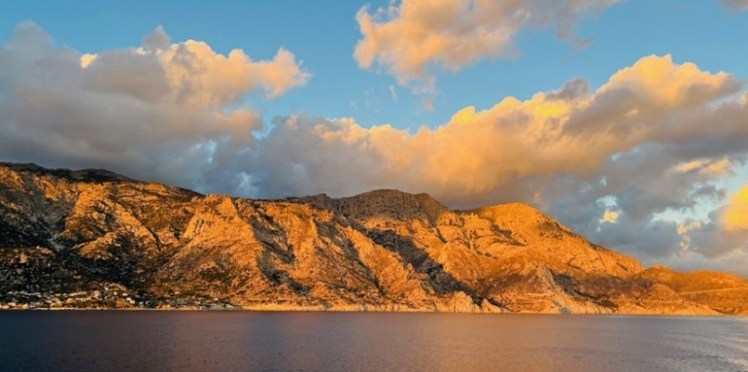
I promised my sister that on Ikaria I’d begin training for the Camino.
But with the journey still ten months away, how in shape did I want to get?
Besides, on a mountainous island everything Robie and I did involved a hike. Buying groceries meant a trek to the next town, taking out the garbage required an uphill climb to Therma’s dumpsters. To eat out anywhere but the restaurant below our apartment entailed slogging an hour roundtrip and ascending 175 feet above sea level – not once but twice.
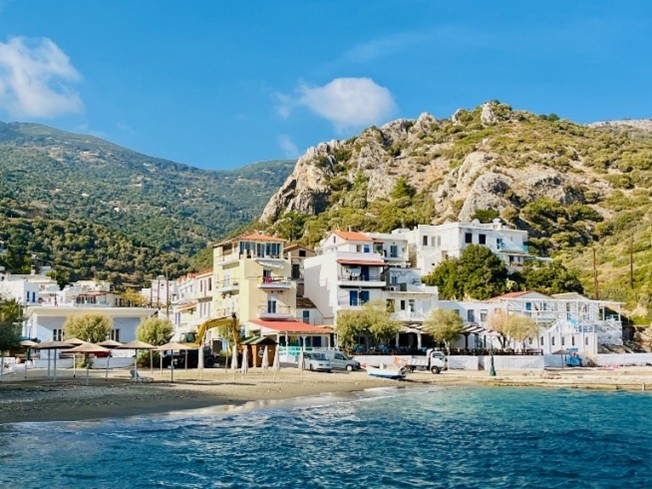
The rough terrain was good practice. To conquer the second oldest route to Santiago de Compostela, Cheryl and I will start at the southwest border of France and follow the coastline from the Pyrenees through the foothills of the Cantabrian Mountains bypassing the Picos de Europa. Near Gijón we’ll make the decision to continue along the Camino del Norte or head inland and walk the Camino Primitivo across the Cantabrian range.
While the popular, mostly flat Camino Francés crosses the largely brown landscape of Iberia’s high plateau, the Camino del Norte runs along hilly coastal paths offering seascapes, mountains and forests. Where the Camino Francés offers a path through history with stops in Burgos, Leon and Pamplona, the more challenging Camino del Norte delivers an introspective route with majestic scenery and fewer crowds. But even its climbs can’t compare to the 200-mile Camino Primitivo, a rustic, mountainous route through rural areas widely considered the most demanding path to Santiago de Compostela.
To prove I could walk the Camino, on Ikaria I laced up my Timberlands and headed out. And up.
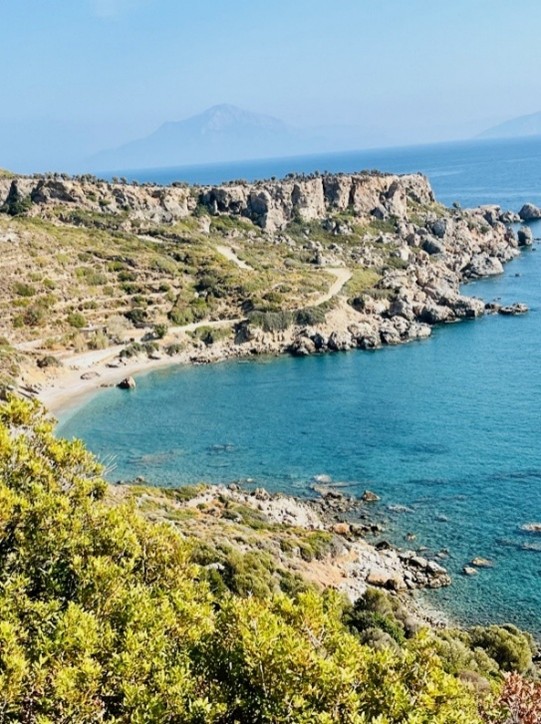
I hiked a narrow path along the coastline passing old Roman hot springs to a beach bar that, had this been summer and the place open, looked inviting.
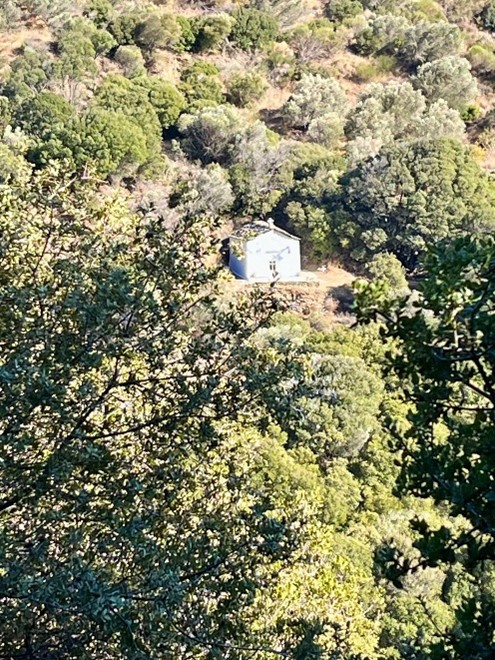
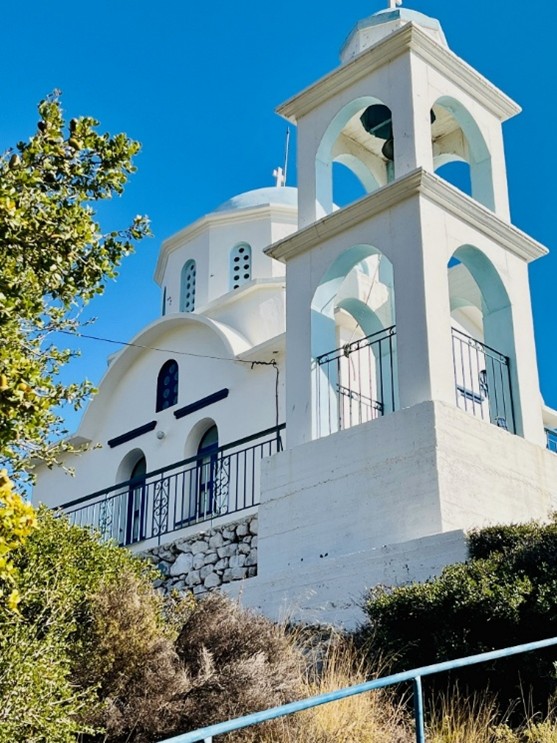
I trekked into the mountains skirting terraced backyards filled with ripe olive groves, chickens, goats and more than a few buzzing bee boxes on my way to a chapel alone on the hillside.
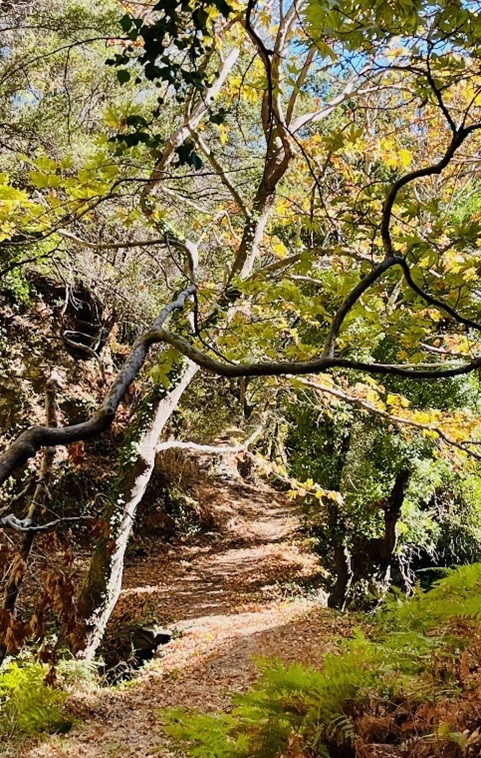
I explored wooded paths and marched around twisted mountain roads to find an abandoned monastery and the Church of the Prophet Elias atop a soaring promontory.
And I made a 10-mile roundtrip climb to see if I could reach the towering peak above Therma and look down on the island’s north shore. But after reaching 1,710 feet above sea level, I turned back. Because the only way to summit the 2,000-foot crest was a 300-foot climb over jagged rocks or walking along the island’s sole thoroughfare, a winding, shoulderless road bounded by steep cliffs and a gaping abyss.
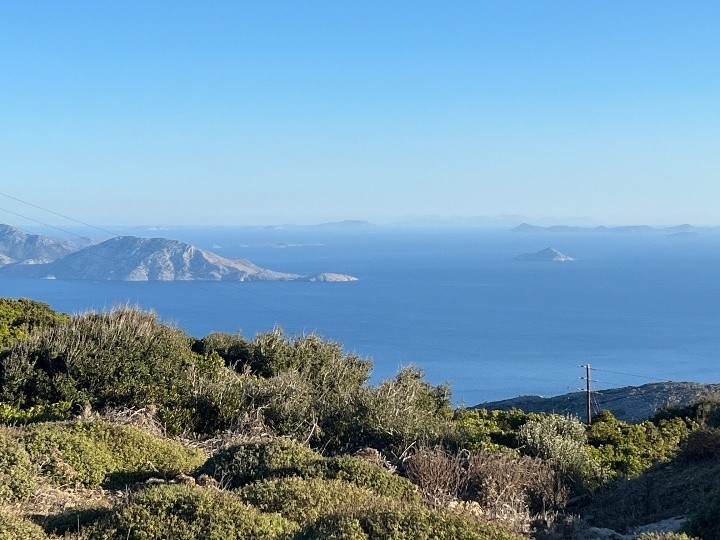
Then as the sun set earlier each day and the weather turned increasingly dreary, grey clouds and swirling meltemi winds roiled the Aegean Sea and reduced the frequency of my hikes in Ikaria. And with our 90-day tourist visa running out, it was clear I’d have to work harder at our next destination for the 50-day, 500-mile trek across northern Spain.
But come August I’ll be ready, I promise.
 Reid & Robie