
Autumn is a second spring where every leaf becomes a flower.
– Albert Camus
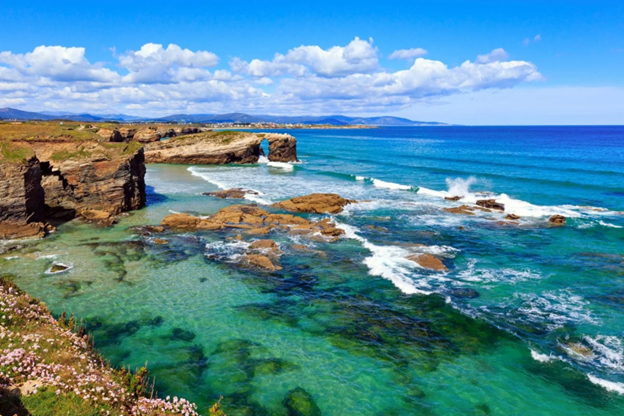
Timing is everything, and that’s especially true for travel.
When prices plummeted in the wake of 9/11, Robie and I snagged a great deal on a cruise up the Nile. After the fall of the Berlin Wall, we wandered around Prague and Bratislava before they became hip. Ahead of the tourism explosion in the Balkans, we spent seven months exploring Albania, North Macedonia, Montenegro and Kosovo. But our biggest discovery was learning the benefits to traveling in the fall.
In autumn temperatures drop, clocks fall back, nights get longer and the world awakes from a heat-induced daze. It’s when the air feels crisp, the sun warm and a bright blue sky provides the perfect backdrop for multicolored trees. Gold and scarlet leaves crunch underfoot and fill the air with a sweet, earthy scent. Birds fly south, squirrels forage for nuts and people eat pumpkin-spiced everything. Fall’s the time to celebrate beer in Germany, another World Series and weekends filled with football. Most importantly, autumn’s when kids go back to school for twelve uninterrupted weeks until Thanksgiving.
From September to mid-November planes aren’t packed with vacationing families and airfares drop from peak summer rates as hotels – often sold out from April to August – suddenly have availability. Lines disappear from the Forbidden Palace and Louvre, sunseekers depart Greek islands and locals in Warsaw welcome anyone braving the cold. So, when my sister and I decided to hike the Camino de Santiago, we planned to make the trek in the fall.
To some, summer is the best time of year and the Camino Francés the only true path to Santiago. But while Cheryl and I will set out at the end of summer, we’ll forgo the more popular route and make our way across the picturesque Camino del Norte where cooler weather and seasonal rains turn verdant hills into muddy slopes. But it’s also the original path linking Santiago de Compostela with the rest of Europe.
For seven centuries, Moors from North Africa laid claim to Spain from their base in Andalucía. By the time Alfonso II of Asturias made the first pilgrimage to Santiago’s grave, Moors controlled nearly all the Iberian Peninsula. Only a narrow strip of land along Spain’s northern coast between the Cantabrian range and the Bay of Biscay remained in Christian hands. And once word spread about St. James burial site, early Christian pilgrims from across Europe set out to traverse the Pyrenees and make the trek along Spain’s rugged north shore.
Despite protection from the mountains, the Camino was a dangerous path. Moorish incursions occasionally breached the passes and for a time their armies drove deep into southern France. After a Moorish raid burned down the first church marking Santiago’s tomb, construction began on the grand Romanesque cathedral we know today. Then as Christians reconquered more of the peninsula over the centuries, they opened a second, inland route to Santiago de Compostela with roadside monasteries, hospitals and bridges for pilgrims.
The construction of the Camino Francés led to a pilgrim golden age and turned the Path of St. James into the busiest roadway in Europe carrying more than 250,000 travelers a year for much of the 12th and 13th centuries. But when southern France erupted in religious wars, the violence, persecution and instability made it hazardous to reach Spain. As the Reformation spread across Europe, interest in Santiago waned and the Camino languished for centuries.
Following the death of Franco in 1975, Spain reopened its borders, and with the help of local conservation efforts along the Camino, renewed interest spurred a pilgrim renaissance. But with nearly half a million people converging on Santiago de Compostela a year, is there such a thing as off season on the Camino? After all, the Way of St. James is a well-worn path and not the road less traveled.
While there’s no official closing of the Camino, winter snowfall reroutes the Camino Francés to lower passes in the Pyrenees and most pilgrim facilities on the Camino del Norte close November 1st complicating schedules and forcing longer hikes. That makes waiting until mid-September to begin the 500-mile trek to Santiago too risky to contemplate. Instead, a month from today Cheryl and I will set out from the French border as many summer pilgrims arrive in Santiago to hang up their boots.
Because while fall might not be off-season on the Camino, it’s close enough for us.
 Reid & Robie
Fall is my favorite season! 🍁
LikeLike
And mine too!
LikeLiked by 1 person
This was really interesting. Thanks for teaching us about the Camino.
LikeLike
My pleasure! Hoping to learn even more on the trek to pass along.
LikeLike
Lovely coastal picture. I suppose the other scenic views along the coast are spectacular. Good choice. Also watch where you walk occasionally. And be safe.
LikeLike
It’ll be tempting only to watch the scenery, but we’ll try to keep our eye on the path once in a while too! Thanks.
LikeLike