
The Balkans are a region that produces more history than it can consume. – Winston Churchill
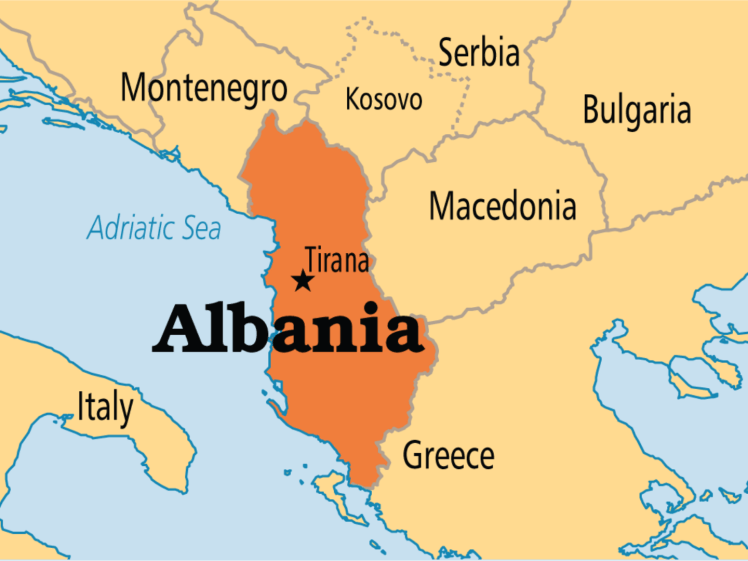
For three decades Albania was the most isolated country in the world.
While the nation has come a long way in a short amount of time, progress is slow and superstitions remain. After seven months in the country, Robie and I came up with some bizarre things about Albania.
Mascots dangle from buildings
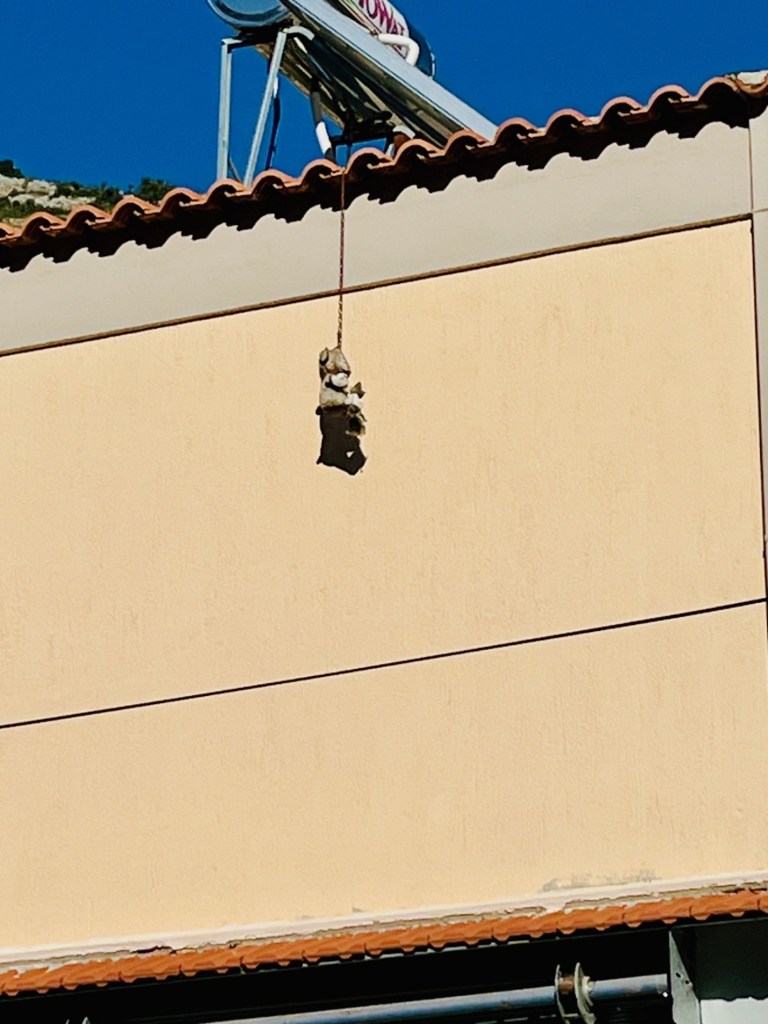
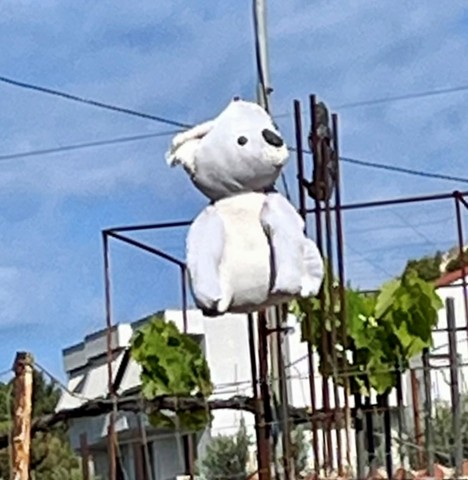
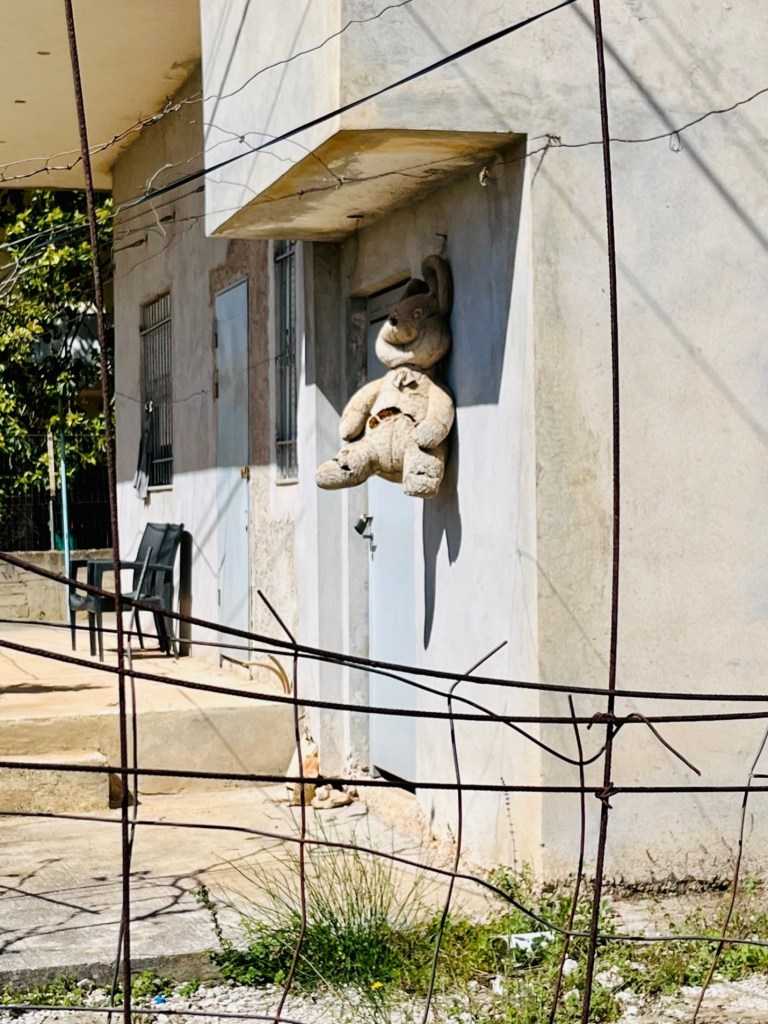
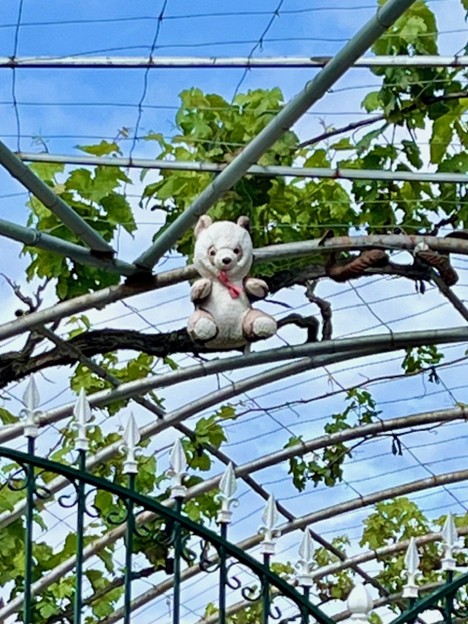
While Americans like to fly a favorite team flag or stick plastic flamingos in their front lawn, Albanians hang stuffed animals outside their homes. We were told this is to ward off the evil eye and keep neighbors from getting jealous but the dangling bears seem more like a warning to wayward koalas or lost polar bears that their kind just isn’t welcome here.
And if a homeowner doesn’t have a stuffed bear to sacrifice, there’s always old clothing lying around somewhere.
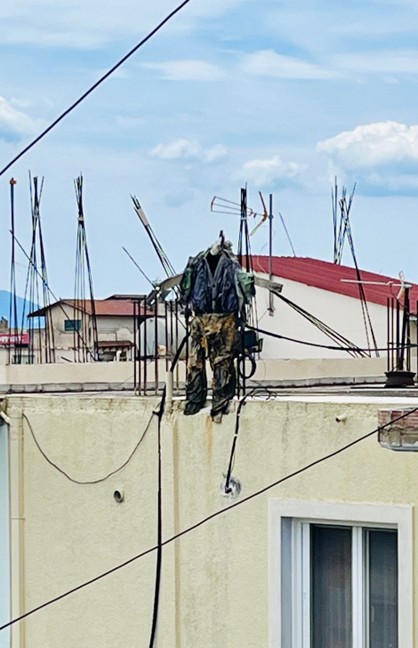

Because nothing says, “welcome to my home” and “mi casa es su casa” like a dingy teddy bear swaying at the end of a noose, the image of what seems like a small child hanging off the roof or Freddy Krueger’s laundry.
The country grows rocks
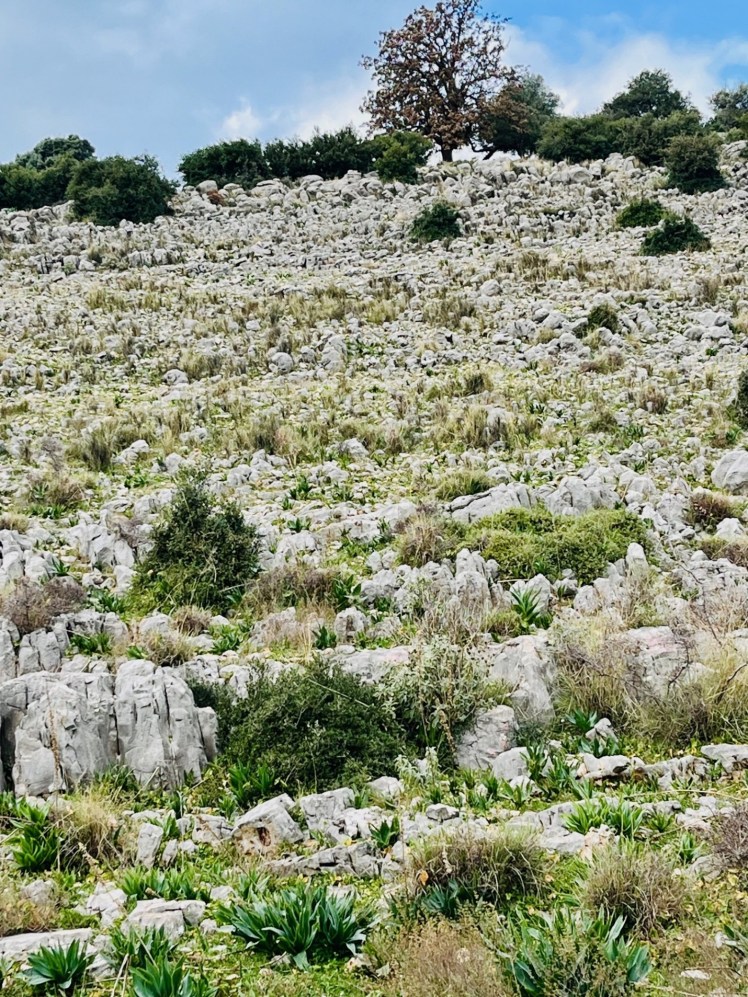
If stones were currency, Albania would be the wealthiest country on the planet.
Igneous, sedimentary and metamorphic, Albania has them in spades – on the mountains, beaches, hillsides, roadsides and fields. Concrete buildings are made from a bounty of crushed rocks while streets and sidewalks get lined with cheap cobblestone. There’s even a town nicknamed the “City of Stone” famous for its traditional rock houses and heavy stone roofs.
Apparently, it has to do with the country’s location at the junction of tectonic plates combined with limestone that’s susceptible to deformation and a prevalence of soluble carbonate. While I don’t understand it (but thanks for trying to explain, AI) I know that kids in Albania don’t play kick the can. They play kick the rock.
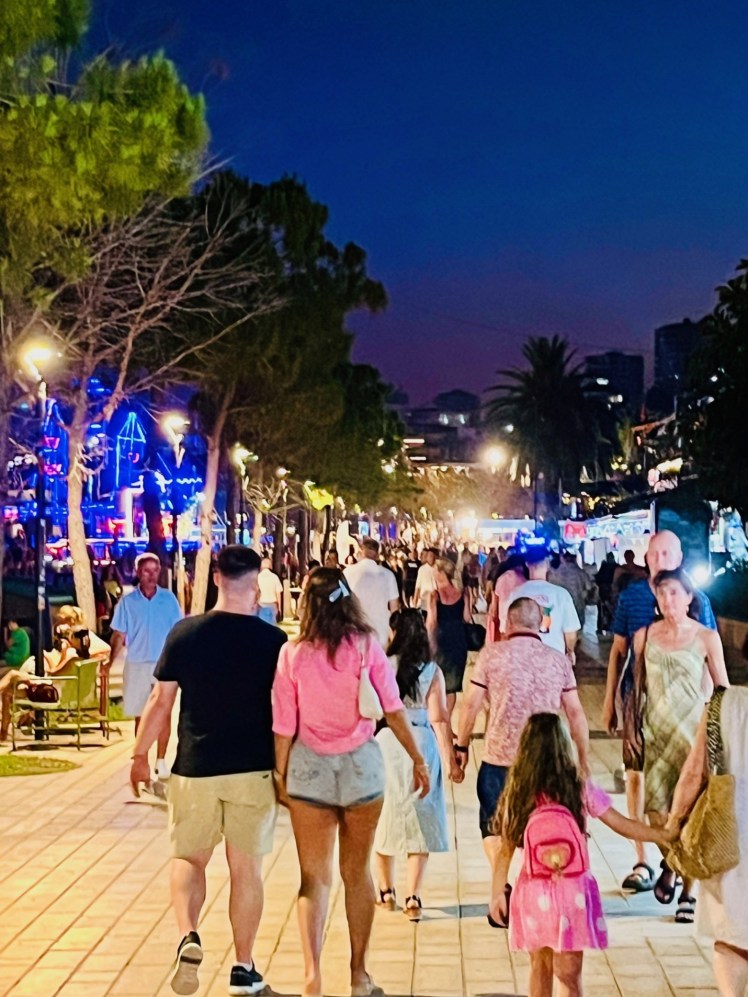
Walking in Albania is a contact sport
After learning to drive a mere two generations ago, Albanians double park, travel the wrong direction down one-way streets, and stop their cars in the street to chat with neighbors.
And they walk much the same way.
There’s no consensus among the locals as to whether they should keep left or right. Albanians don’t step aside when they stop, rarely use crosswalks and never move for oncoming traffic. Instead, they amble unpredictably down the middle of the path hand-in-hand and seem surprised anyone might look to pass.
In Albania, sweatpants are a fashion statement

I hadn’t seen so many sweatpants since the ‘70s.
I don’t mean sleek Nike and Adidas sweats preferred by pro footballers. I’m talking about vintage, baggy, cotton sweatpants with a drawstring waist and elastic cuffs. The kind your dad wore during his jogging craze and Rocky had on to conquer the steps at the Philadelphia Museum of Art.
During winter sweatpants are all men wear. They’re the go-to choice at the weekly soccer match, good enough to wear on a date, and suitable for church on Sunday. It was like a bad trip we couldn’t escape until summer when all those scrawny, pasty legs showed up in shorts.
With Italy just across the Adriatic, someone needs to infuse Albania with a little Milanese couture. And to explain that there’s really no need to wear tighty-whities beneath their swim trunks.
Albanian restaurants are family kitchens
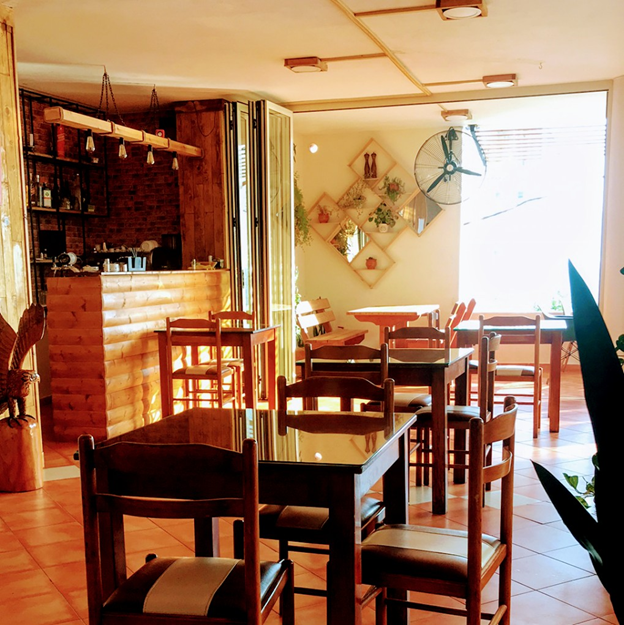
Living in a place where change happens quickly has taught Albanians to be resourceful. For some that means opening a restaurant and turning it into a business as well as the family kitchen.
In season, Kasandro in Kodrra is a fast-food restaurant. But from October to May the restaurant is closed so Alex and his extended family can gather each evening to watch TV on the oversized flatscreen, cook in the large kitchen and dine at empty tables. Because by owning a restaurant, they save on food and turn the added space into their own private living room.
Construction run amok

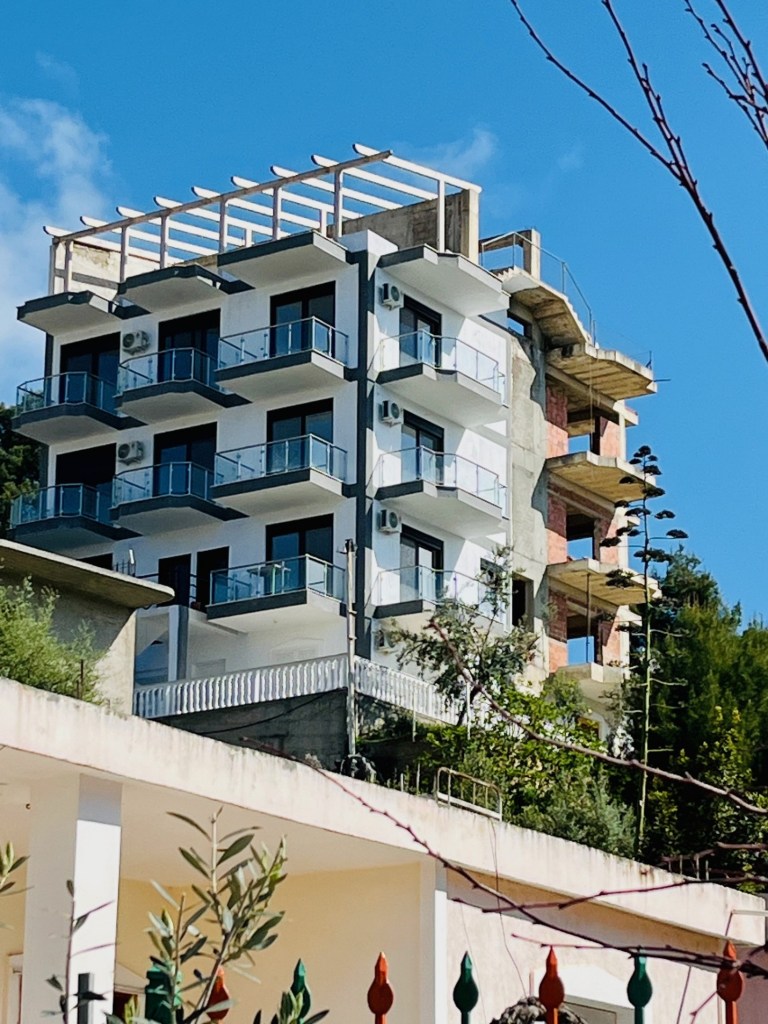
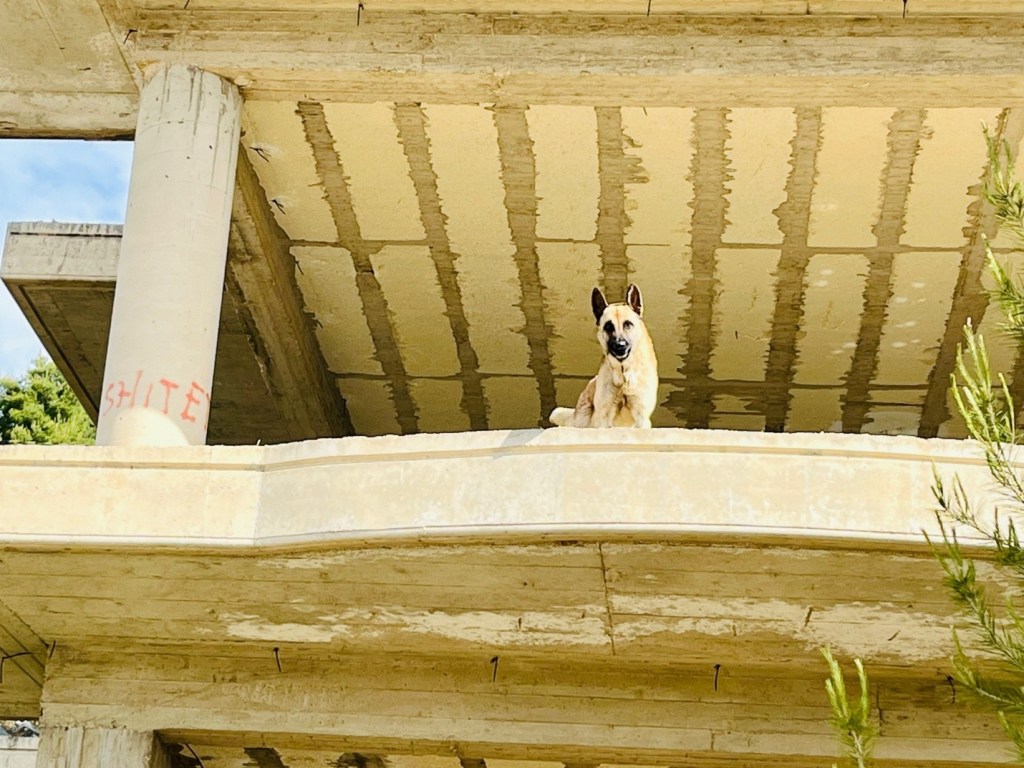
Unfinished home; Half-finished Jekyll & Hyde building; Security dog at an unfinished apartment complex
In Albania unfinished buildings, shells of homes and partially constructed apartments litter the landscape. Because here, the national pastime seems to be putting up a concrete skeleton then sitting back and waiting for someone to purchase a part of it.
The monstrosities made more sense after I read about a couple who tore down their family home and built a modern 4-story building with ground-floor shops, two floors of apartments and a penthouse with rooftop access. And the best part? It didn’t cost them a cent since the local developer took real estate instead of cash. After construction the contractor owned half the building earning rent from his shop and selling two apartments for a tidy profit.
But buying a unit in a high-rise means construction never ends as new neighbors finish building out their apartments and jackhammers reverberate through concrete walls.
The country’s infrastructure is second-rate
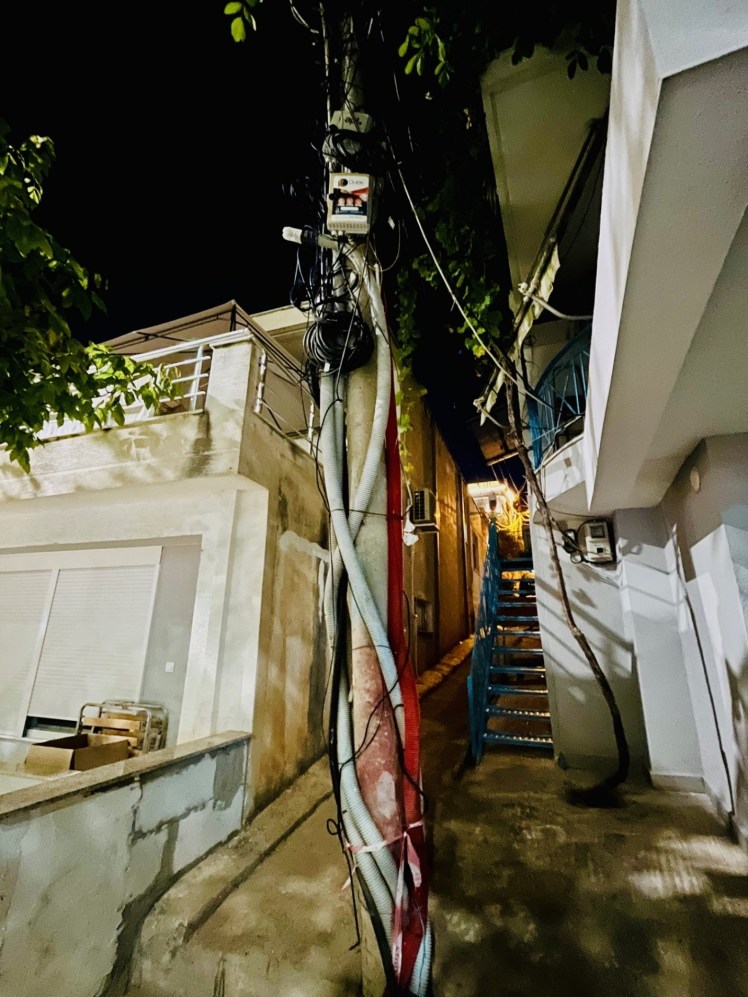
In the 1970s, isolationist policies in Albania diverted public funds to prepare for an invasion that never came. In the ‘90s, the transition to a market economy was marred by corruption, instability and civil war that further undermined investment in public works leaving a shoddy framework that remains poorly regulated.
Roads are congested and inadequately maintained. Railways are neglected beyond repair. A lack of urban planning has given rise to too few green spaces, excessive traffic and not enough parking. Poor plumbing and undrinkable water create unnecessary garbage from toilet paper that must go in the trash and bottles that increase plastic waste. And with insufficient waste removal, garbage bins overflow onto sidewalks and too many people burn their trash. Environmentally, Albania faces challenges from air and water pollution, poor waste management and deforestation while the energy sector suffers from an unstable supply with outdated power plants that consume too much energy.
Most telling, Albania’s broken infrastructure can’t support the mass tourism it so desperately seeks. Throughout the summer, the country suffers from mounds of trash, rolling blackouts, water shut offs and a massive influx of cars with no place to park.
Bunkers are everywhere
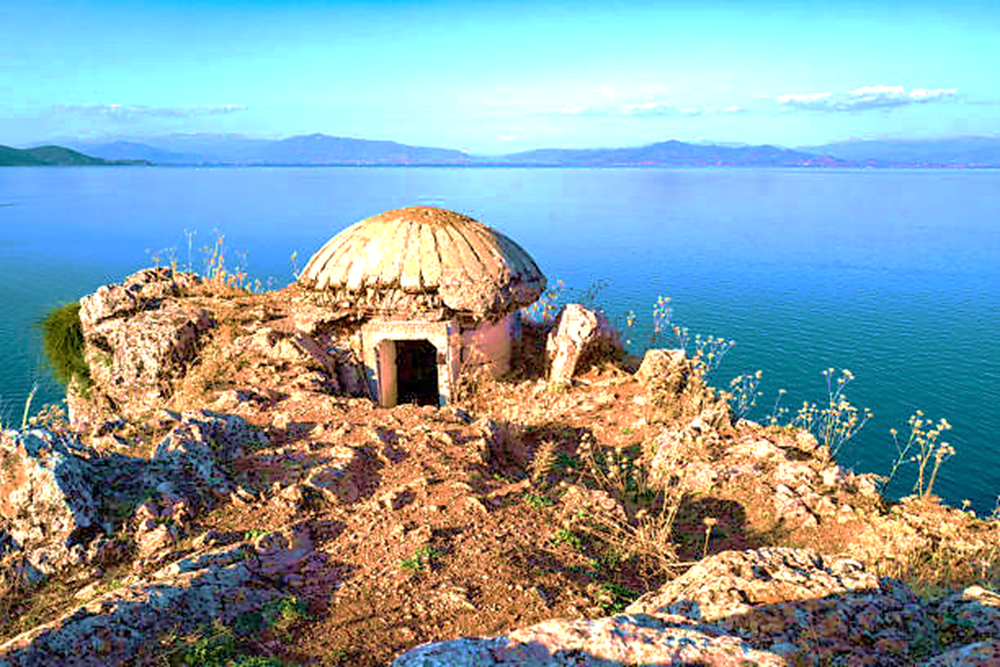
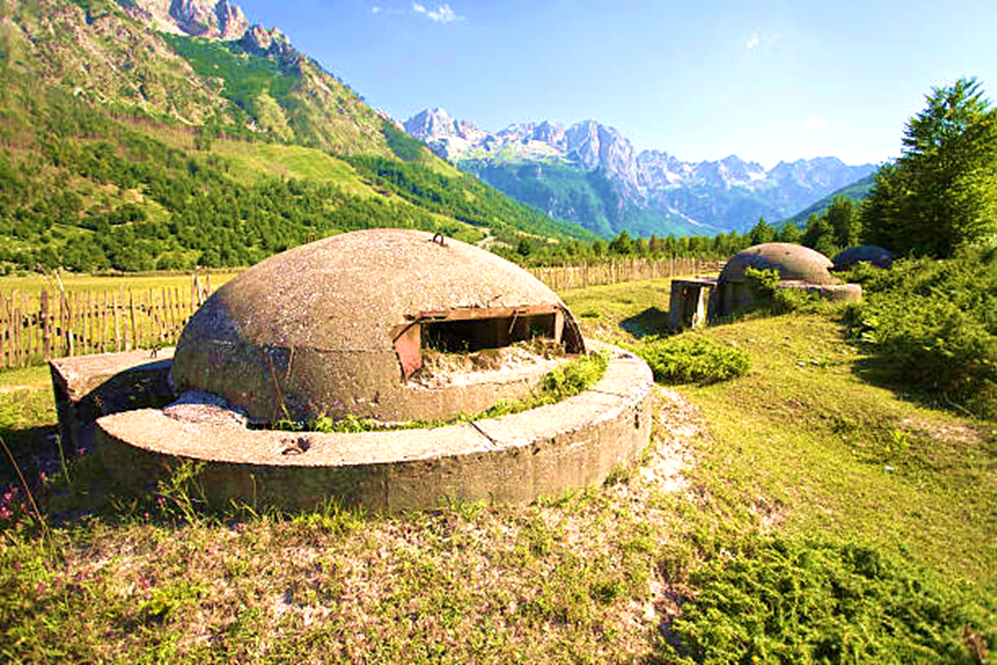
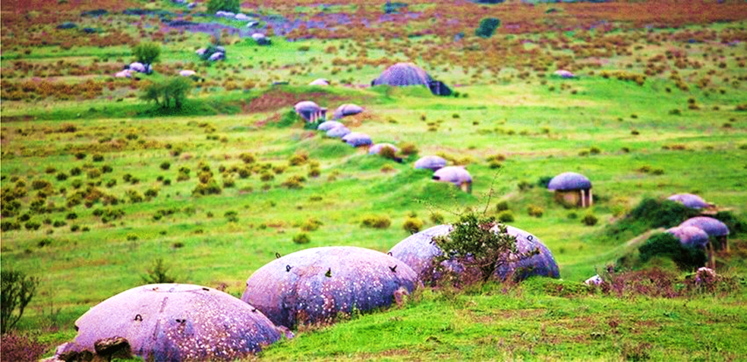
We’ve mentioned Albania’s history before, but it bears repeating.
During the Cold War, Albania withdrew from the Soviet-led Warsaw Pact and sided with China in the Sino-Soviet conflict. But after ties with Communist China cooled, the country was totally isolated. Fearing invasions by Yugoslavia, Greece, NATO and the Soviet Union, Communist leaders constructed up to 750,000 concrete bunkers, a vast building project that’s still visible across the landscape today.
While some have been repurposed like the War Bunker Bar in Sarandё, with an estimated removal cost of $1,000 a pop, most won’t be going anywhere soon.
 Reid & Robie