
In the desert, in the pure clean atmosphere, in the silence – there you can find yourself.
— Father Dioscuros
Hello all, Robie here.
When staying in one place long-term, Reid and I try and take one short trip a month. During our stay in Morocco, that included a visit to Agadir, a large port city with a rich history and interesting sights a hundred miles south of Essaouira.
Agadir
After a three-hour bus ride through the Petite Atlas Mountains before swinging out to the Atlantic coast, we arrived at the outskirts of Agadir and soon entered the city of half a million people.
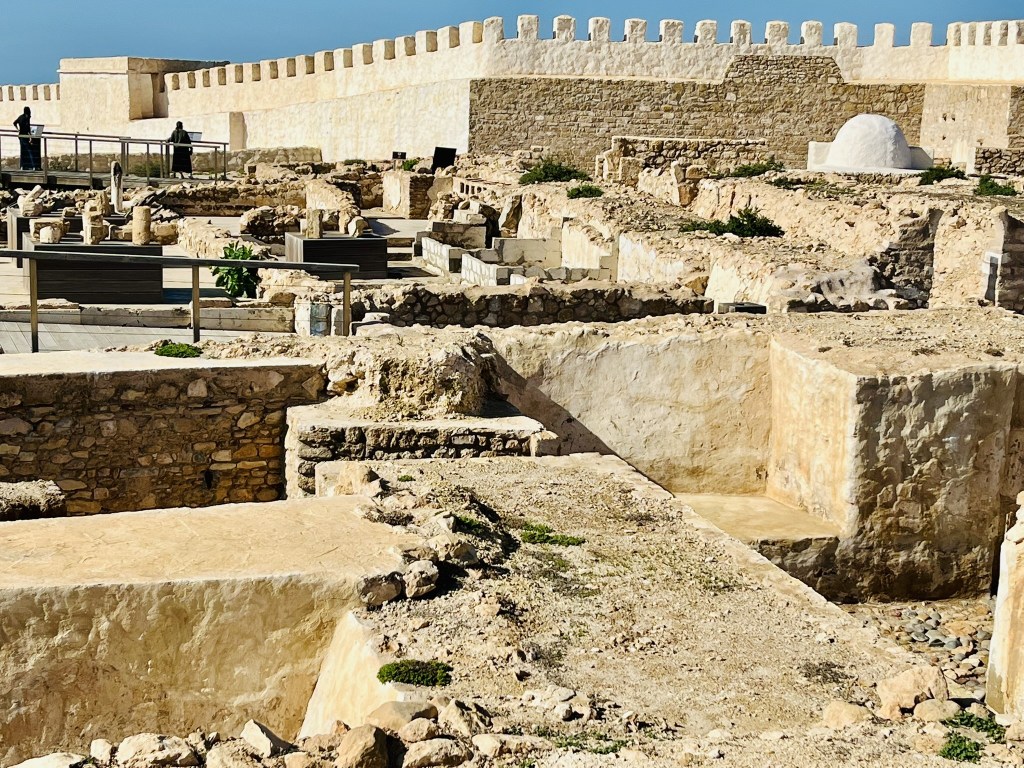
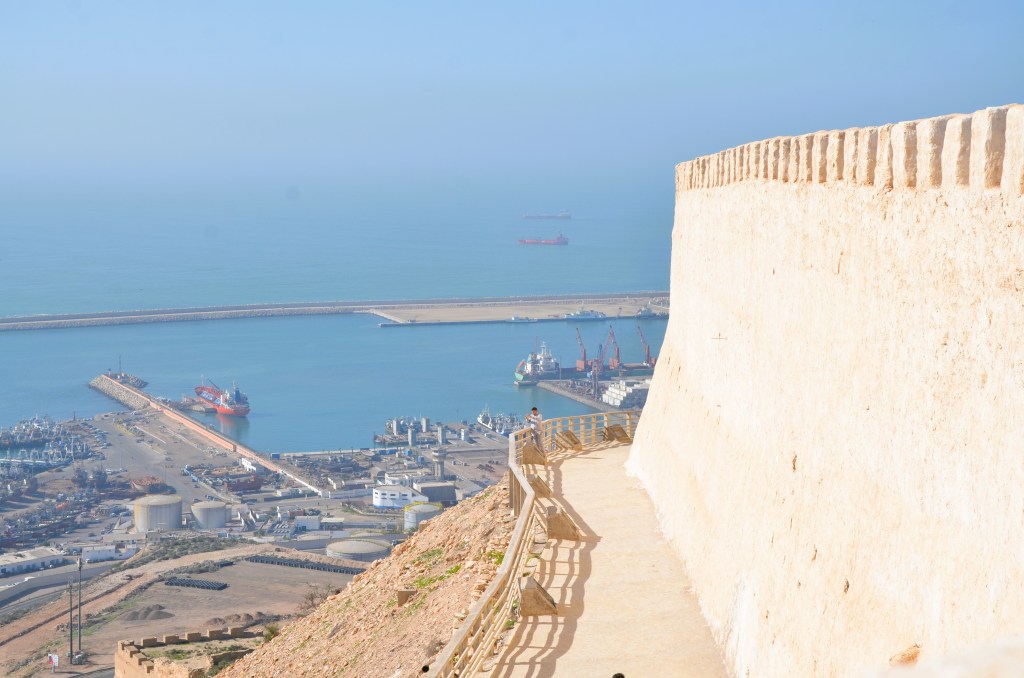
The Portuguese founded Agadir in 1505, establishing a fort and trading post to export sugar, wax and spices from sub-Saharan Africa, but their dominance was short-lived once Sultan Mohammed ash-Sheikh captured the fortress in 1541. In 1911, Agadir gained international notoriety when the German gunboat Panther arrived heightening tensions between the European powers and leading to the French Protectorate from 1912 to1956. When a massive earthquake struck on February 29, 1960, just before midnight, it destroyed the city in seconds killing 12,000 people and leaving the ancient kasbah in ruins.
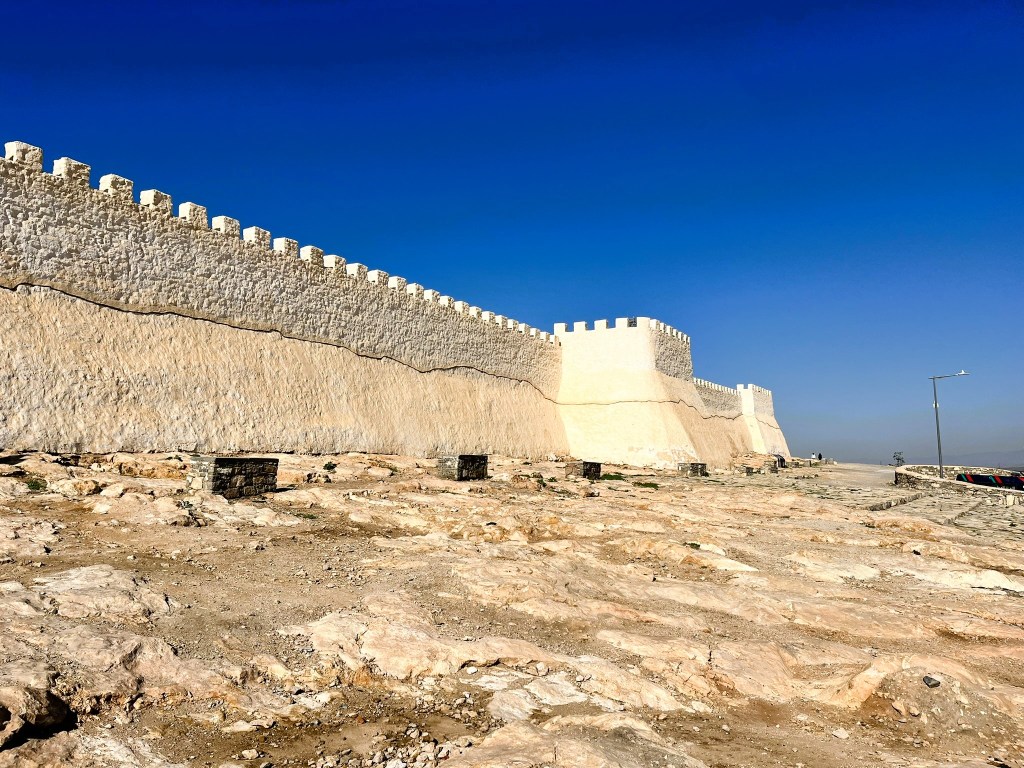
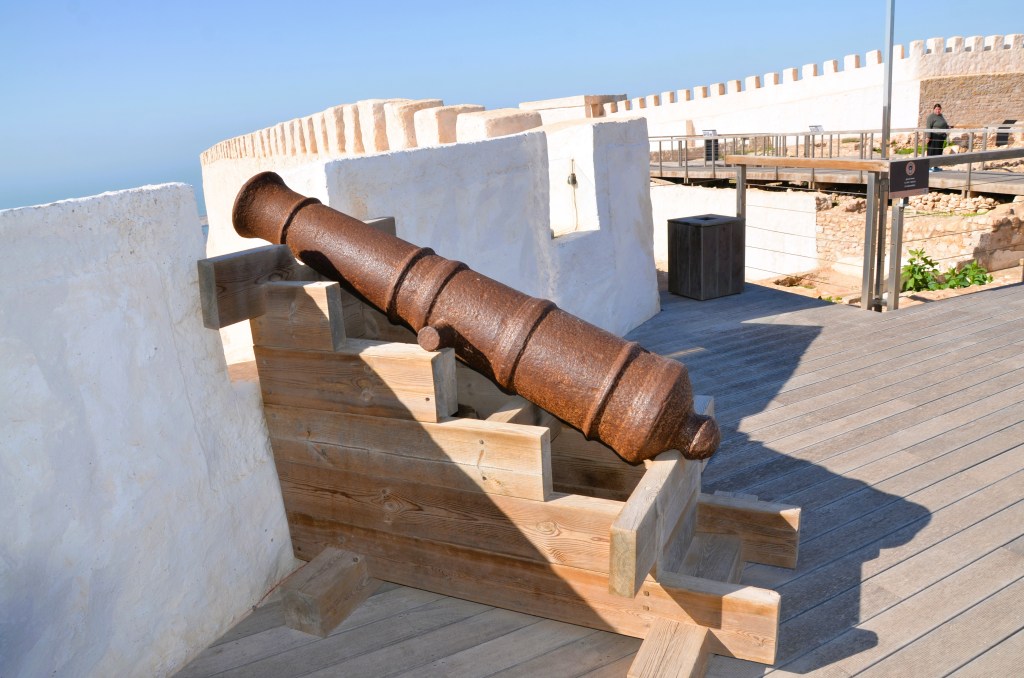
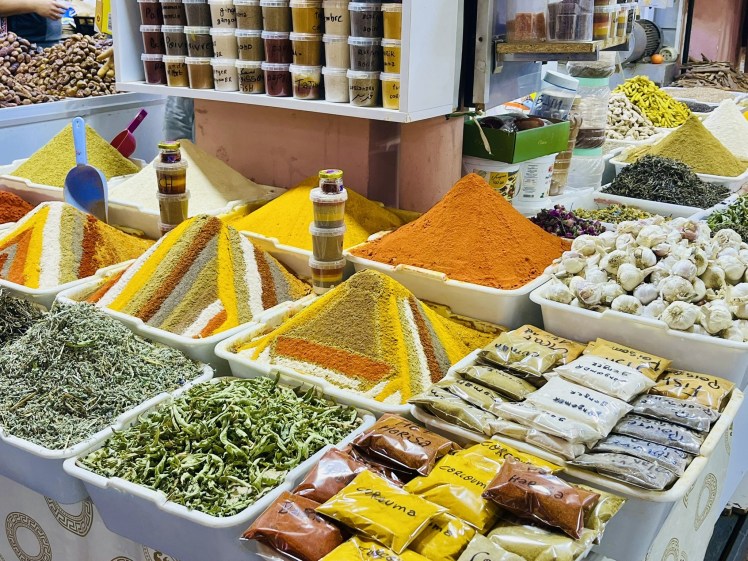
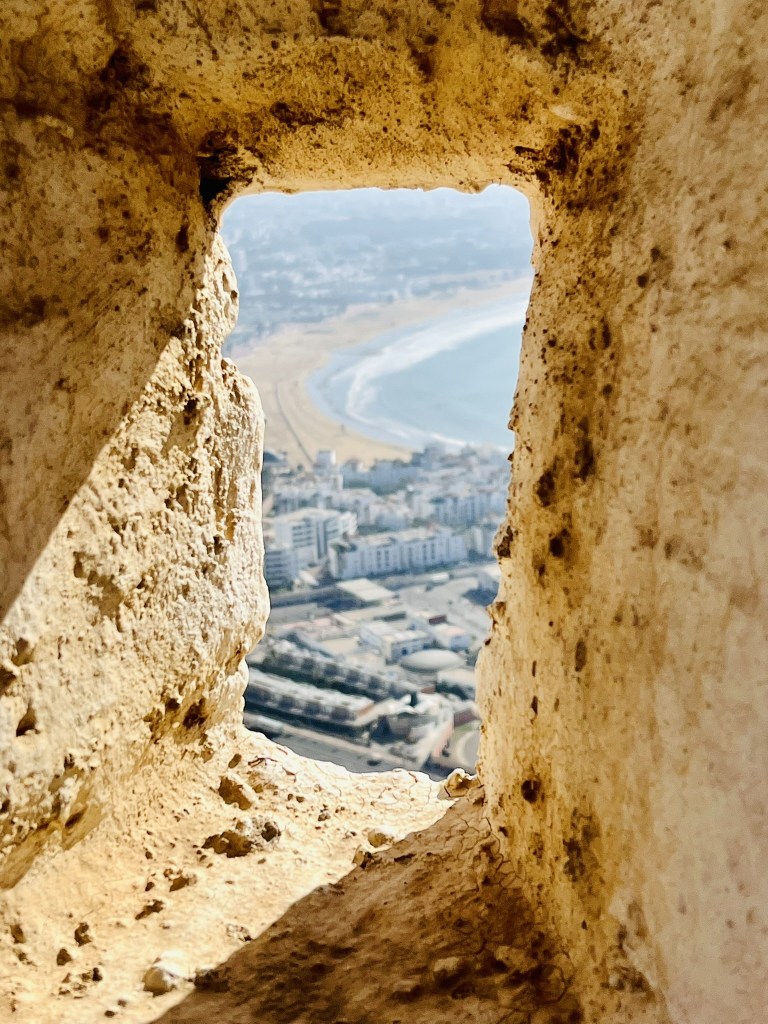
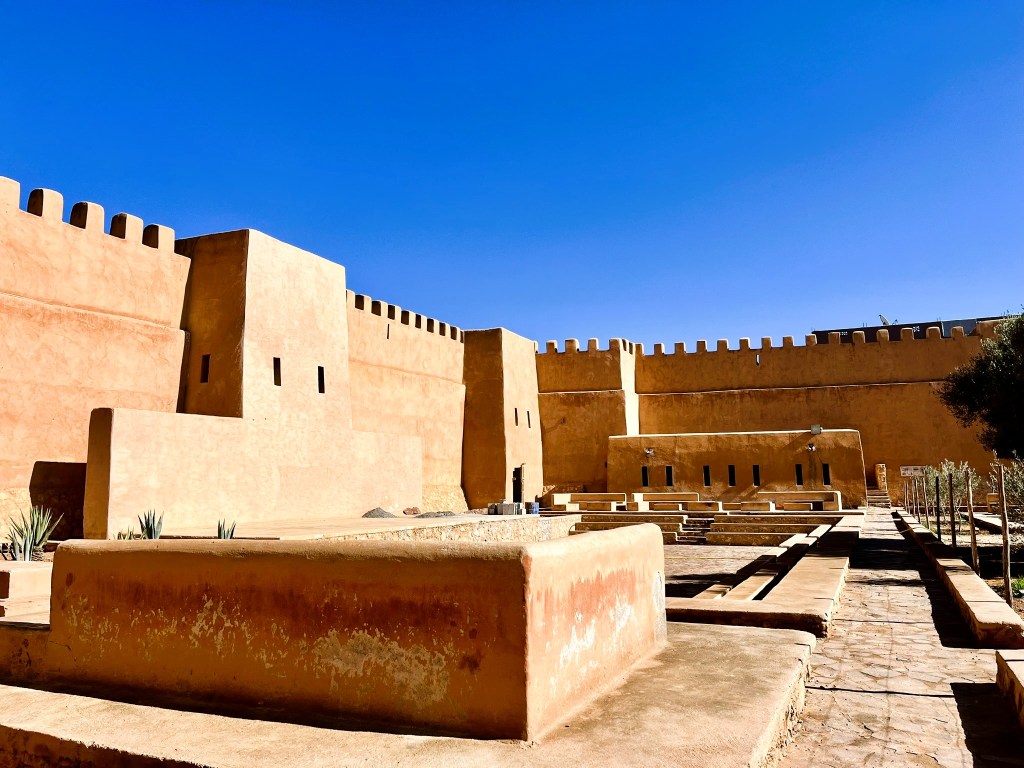
Kasbah Oufella, the fortified castle and residential center overlooking the city, has since been reconstructed, and Reid and I had a chance to visit the popular tourist site with panoramic views of Agadir and the Atlantic coast. Then, since our apartment was mere blocks from the city’s famous Souk El Had (market), we spent a wonderful day exploring the more than 6,000 shops spread out over 32 acres.
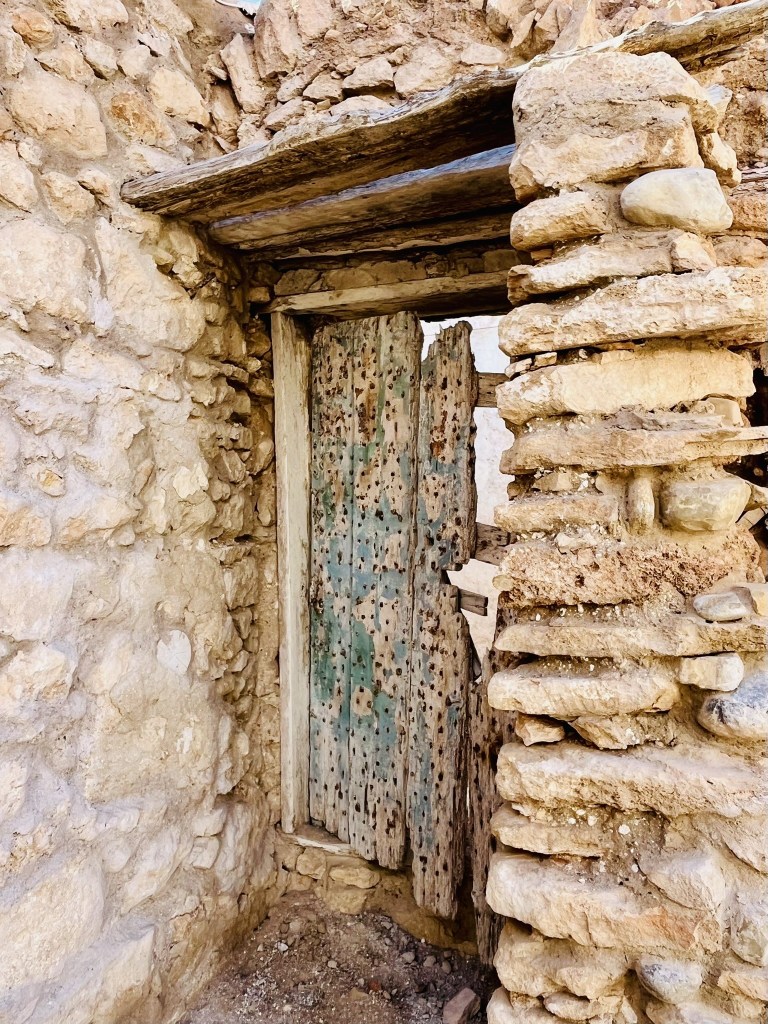
Desert Tour
When Reid and I discussed spending the winter in Morocco, I said I wanted to visit a Berber camp in the Sahara, so for Christmas Reid booked a two-day tour with an overnight in a Bedouin camp.
The evening before the tour, I got a text from our guide telling us he would pick us up at 8:30AM sharp. Arriving promptly the next morning, Hussain introduced himself and loaded our backpacks in the new 4-wheel drive Toyota 4-Runner to begin the 165-mile trip south along the coast into the El Borj Desert.
On the outskirts of Agadir, we stopped at a bridge spanning the Oued Sous River as it emptied into the Atlantic where Hussain said we would see flamingos in the brackish delta. As Reid and I looked out, we saw lots of seagulls, great blue herons and similar shore birds, but no flamingos, a tidbit we did not point out to Hussain.
The road out of Agadir wound through a lovely forest of eucalyptus trees planted 80 years ago by the French to reduce soil erosion in the sandy expanse along the coast. On the twisting road we saw many women walking under the forested path as Hussain waved to his mother-in-law and explained ladies liked “to do sports” here and take a stroll to get exercise.
Our next stop was a pottery factory in Sidi-Bibi making all manner of pottery including the famous Moroccan tagine. This two-piece, conical-shaped vessel used to cook the national dish is made from clay brought down from the Atlas Mountains. Here in the factory, the clay is then molded by a master potter, fired in a 2,000º Fahrenheit kiln before getting colorfully decorated by a local artist.
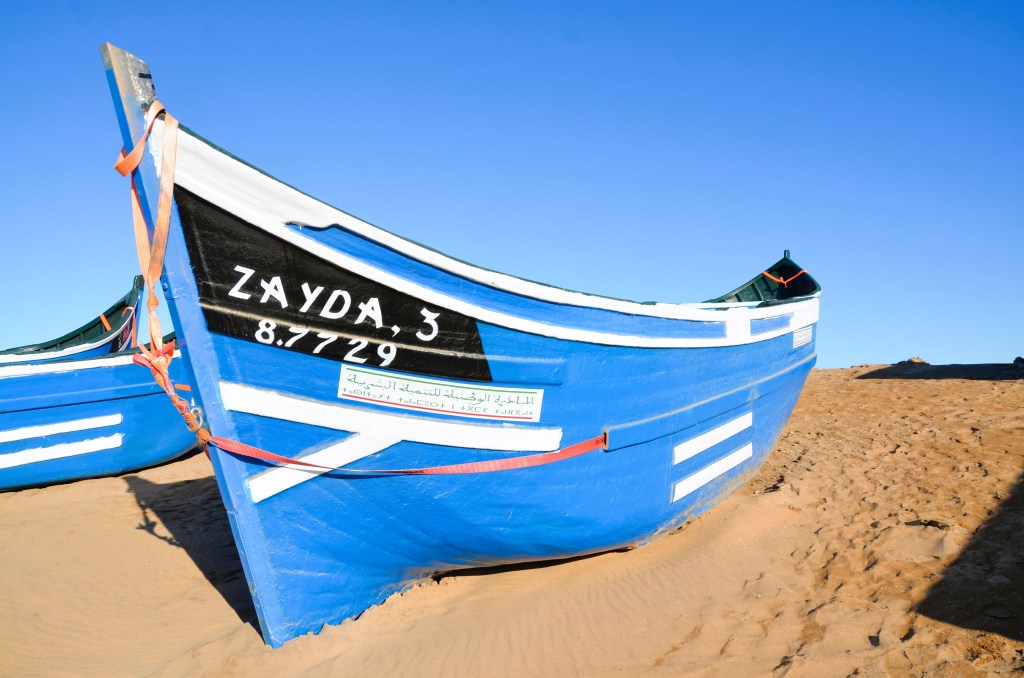
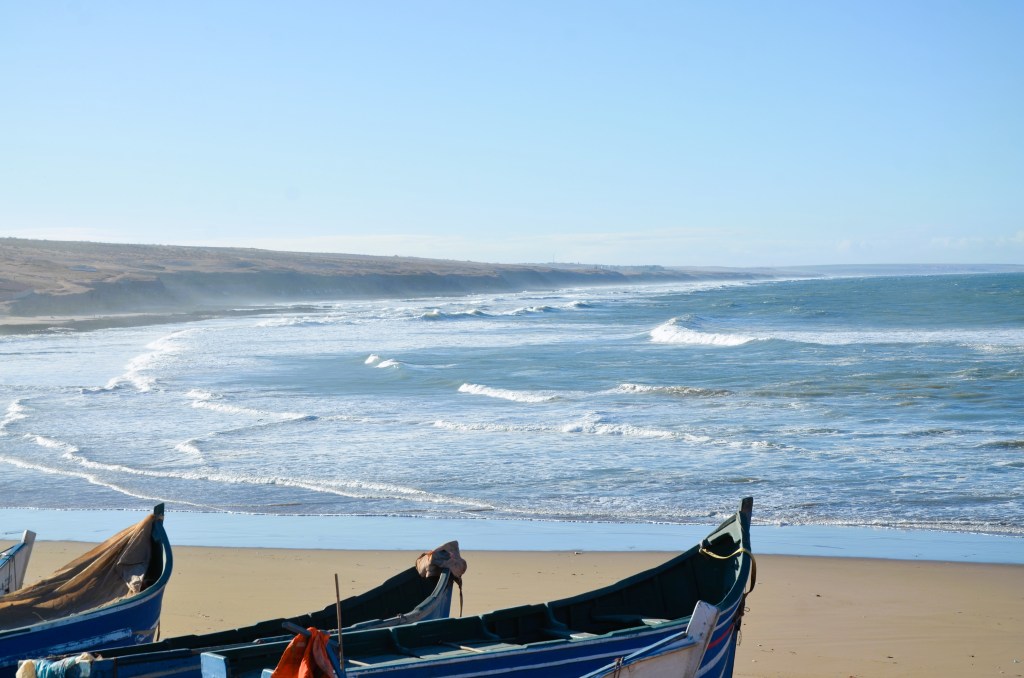
South of Sidi-Bibi we went off road as Hussain put the SUV into 4-wheel mode and we went “sand driving” through the Tifnit Dunes before arriving at a tiny fishing cooperative where small blue boats lined the beach on a day that was too windy to put to sea. Our route continued off road along the coast as we passed a large desalination plant, one of 17 in the country supplying one quarter of Morocco’s water consumption.
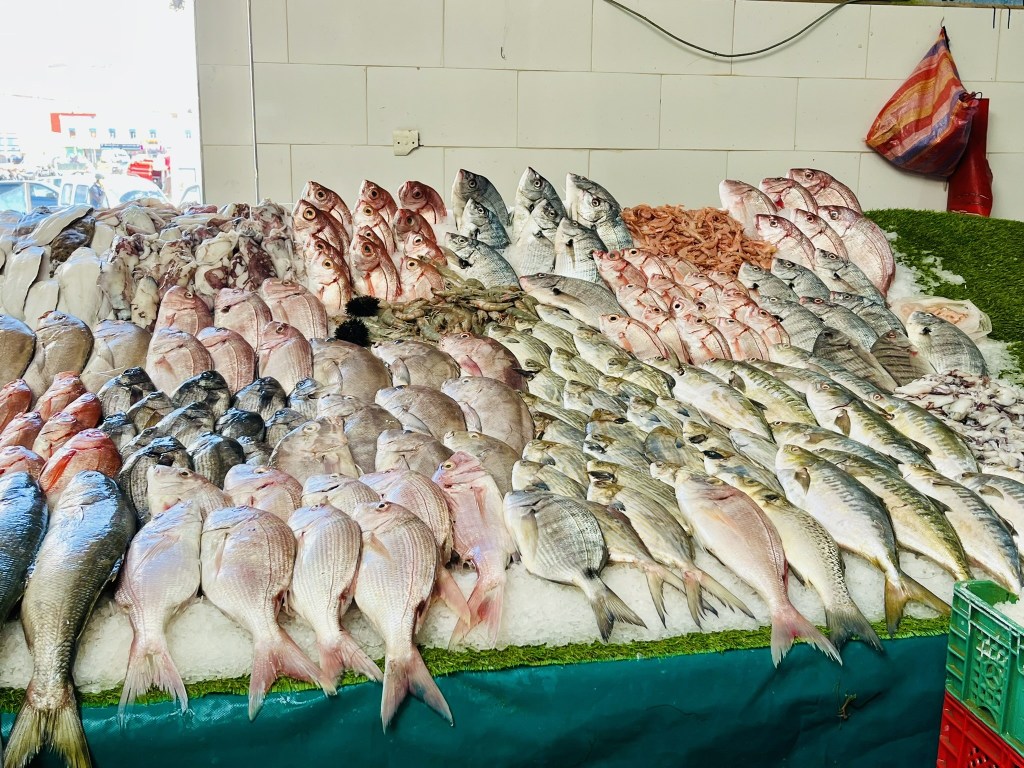
Once back on the road, we stopped for lunch in the town of Mirleft as Hussain directed us to the fish market to select fresh seafood for our meal. After choosing two whole fish recommended by the man who caught them, we added a dozen large shrimp and one whole squid. Then we then found a table at the restaurant next door and waited for our selection to be cooked on the grill. The delicious and filling meal, including salad, fresh bread and water, came to less than $15 for two of us.
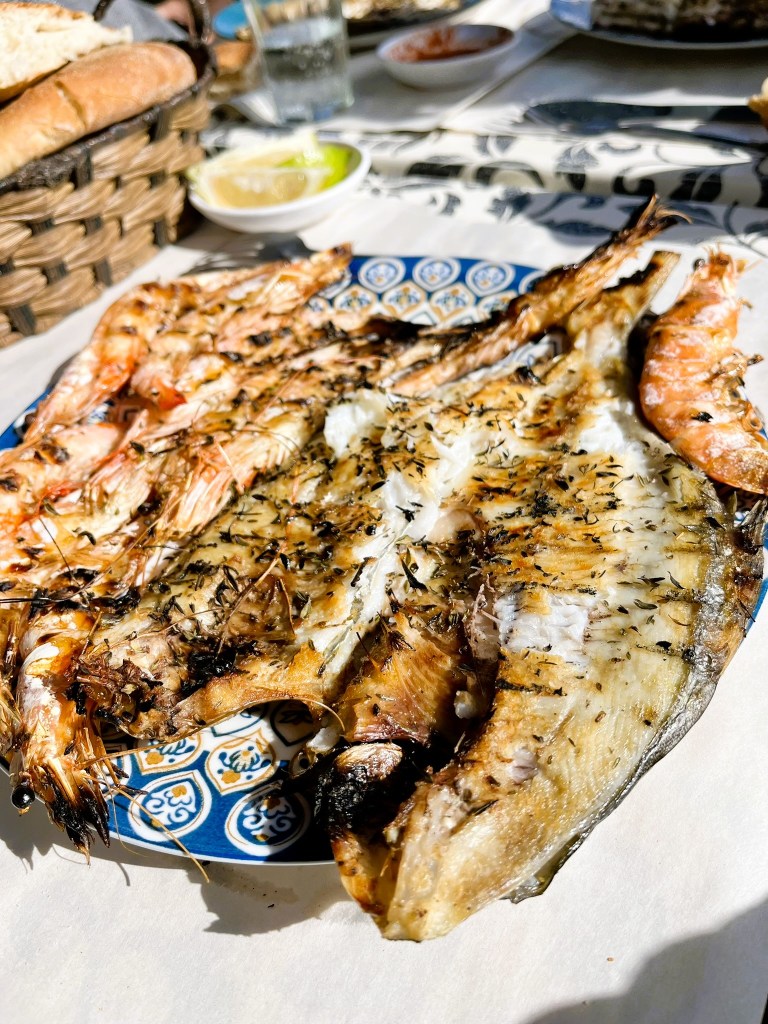
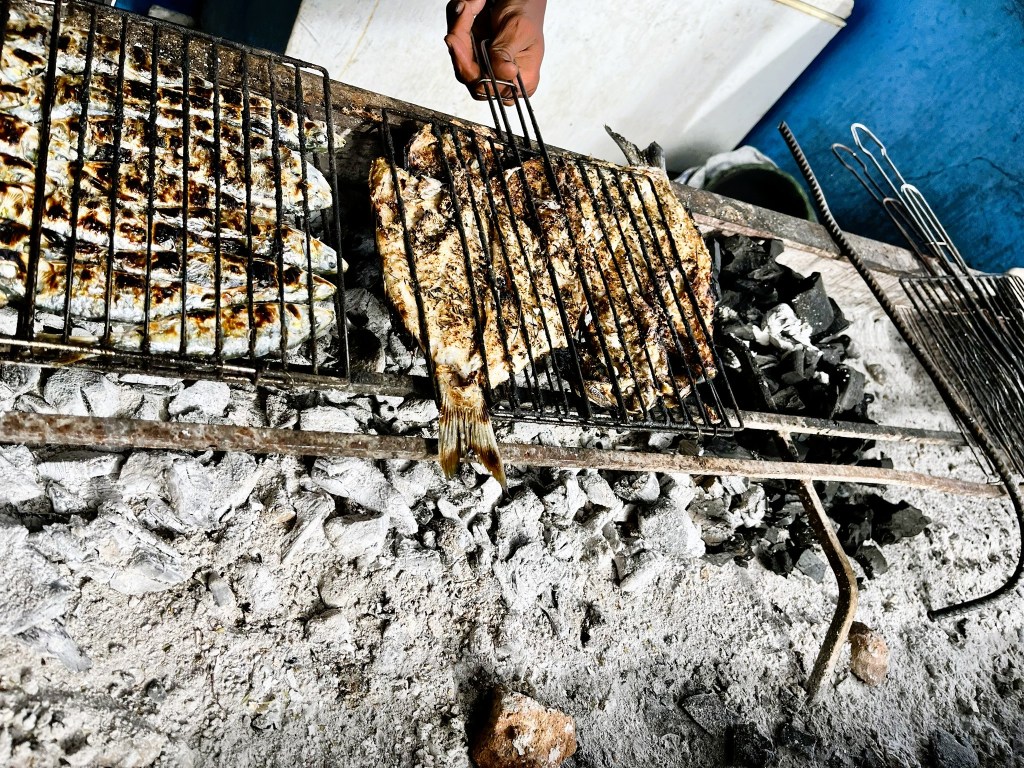
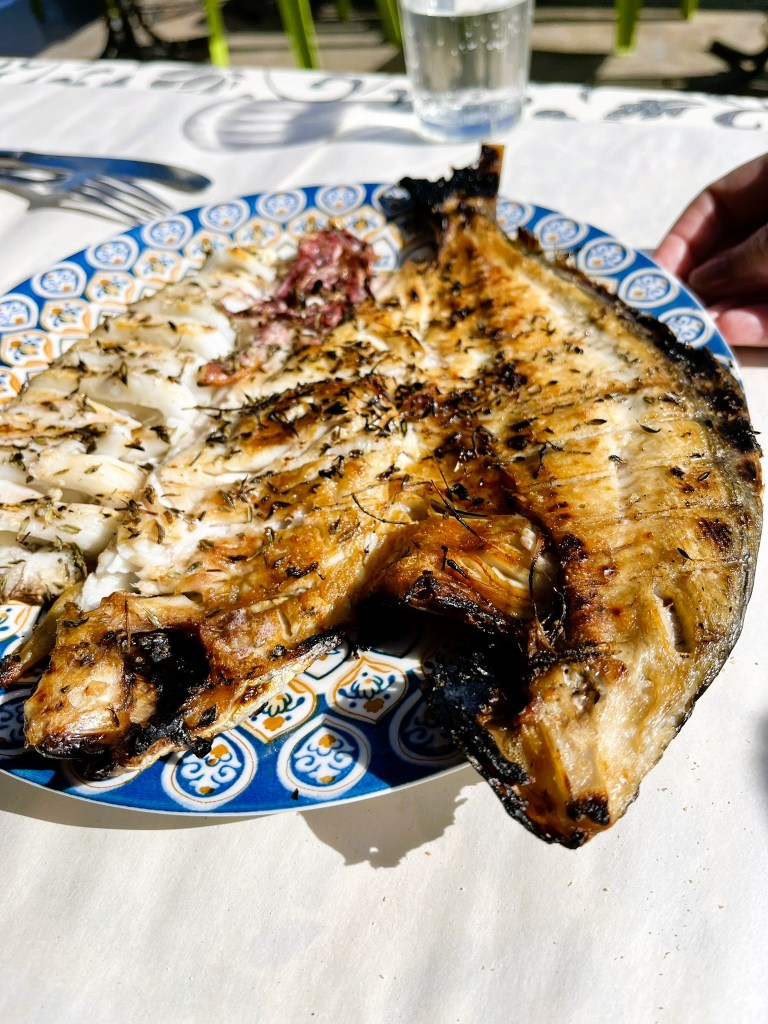
Sated, we continued the journey south along the water stopping at Legzira Beach to see the famous rock arch carved by the constant pounding of the relentless Atlantic. Next, we stopped at Sidi Ifni where a Spanish-built cable car system was built in the 1960s to transfer cargo to ships in the shallow waters. In 2000, a modern port facility replaced the unusual, less efficient contraption and now serves as a crucial port for exporting sardines.
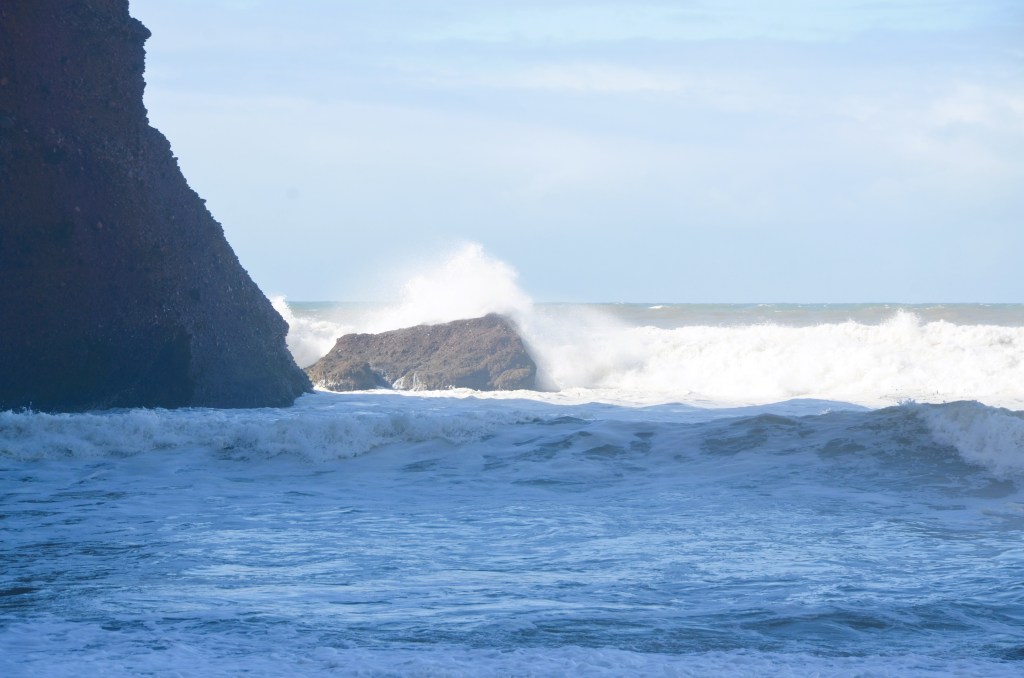
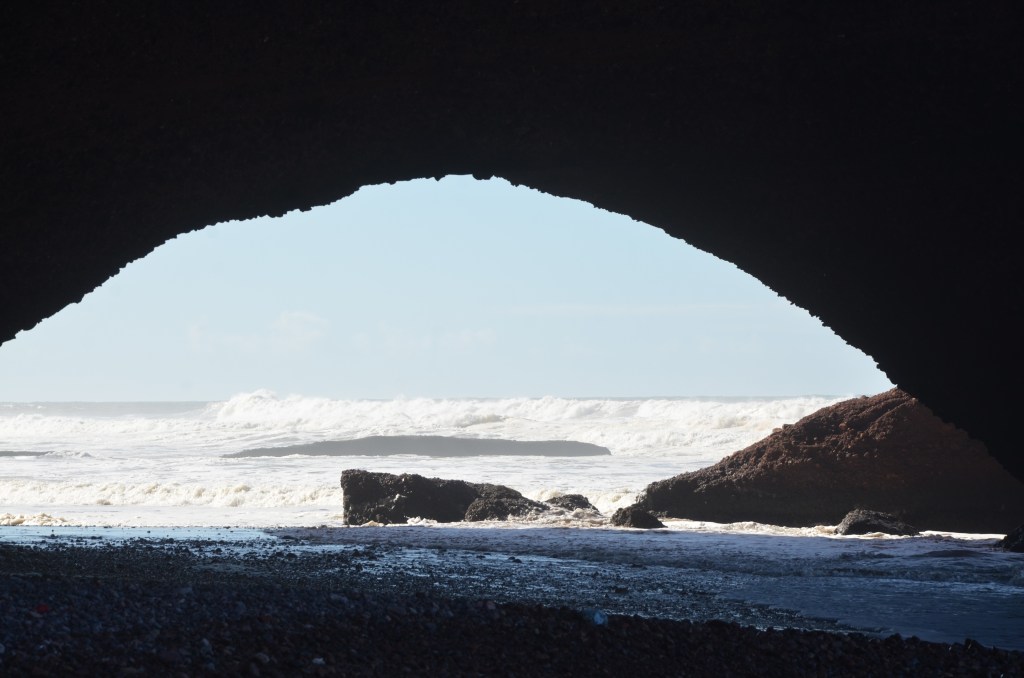
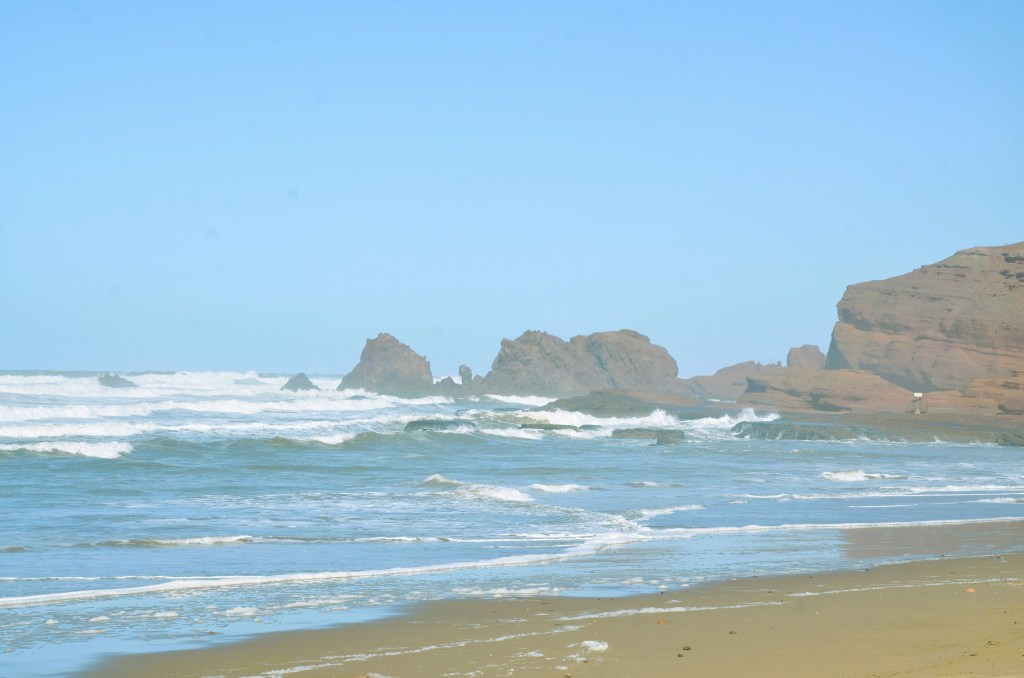
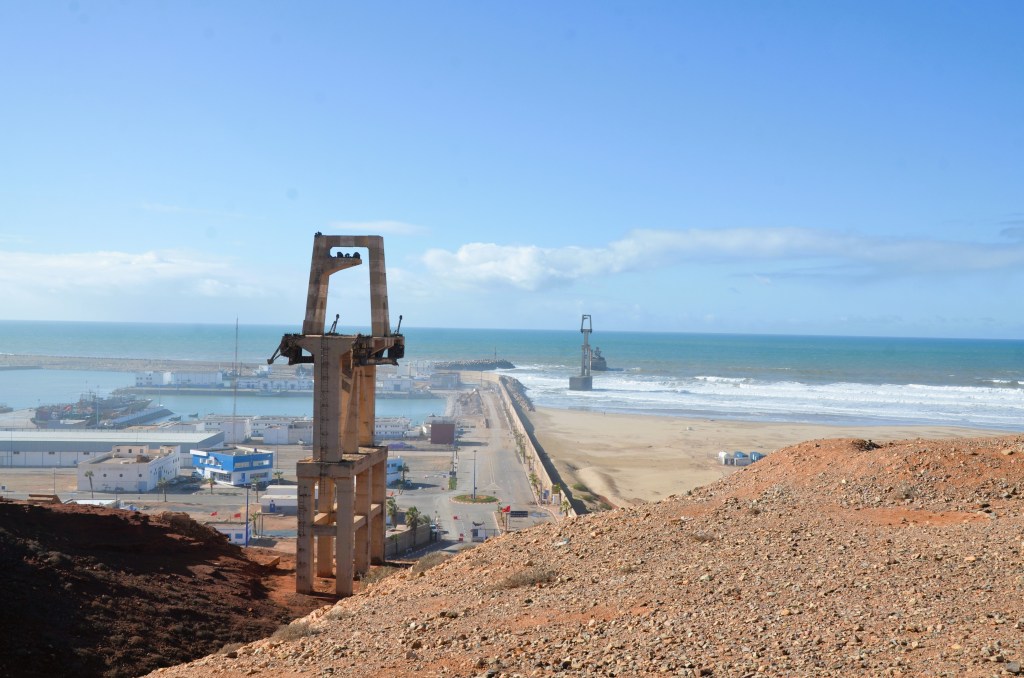
Turning inland, we again crossed part of the Petite Atlas Mountains and made a short stop at Guelmim, a city of almost five hundred thousand on the cusp of the harsh landscape known as “the gateway to the desert.” Stopping to pick up some wood for our late-night campfire, Hussain explained the various agricultural productions in the region including vast, tented greenhouses filled with fruits and vegetables exported to Europe, cactus farms used to grow prickly pear fruit, olive groves and argan trees that make oil for cooking as well as cosmetics.
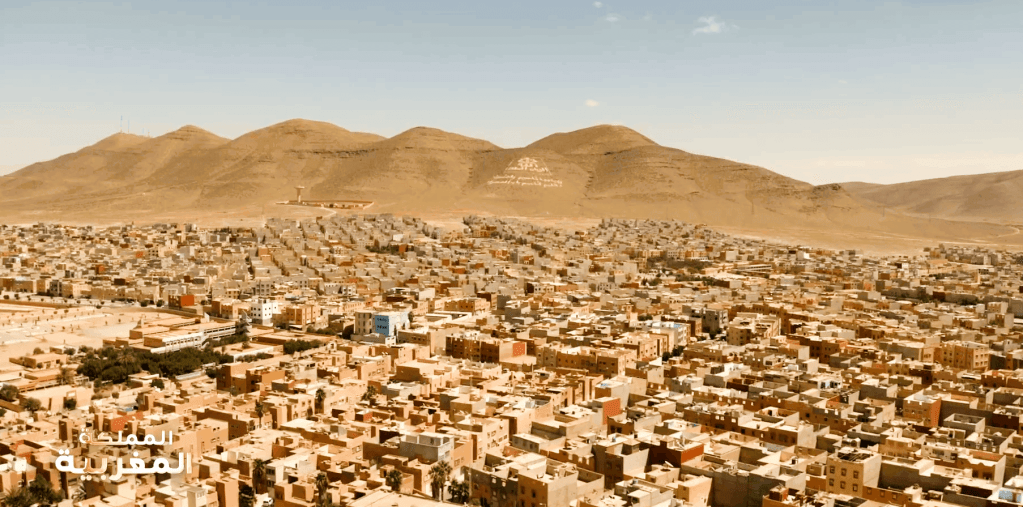
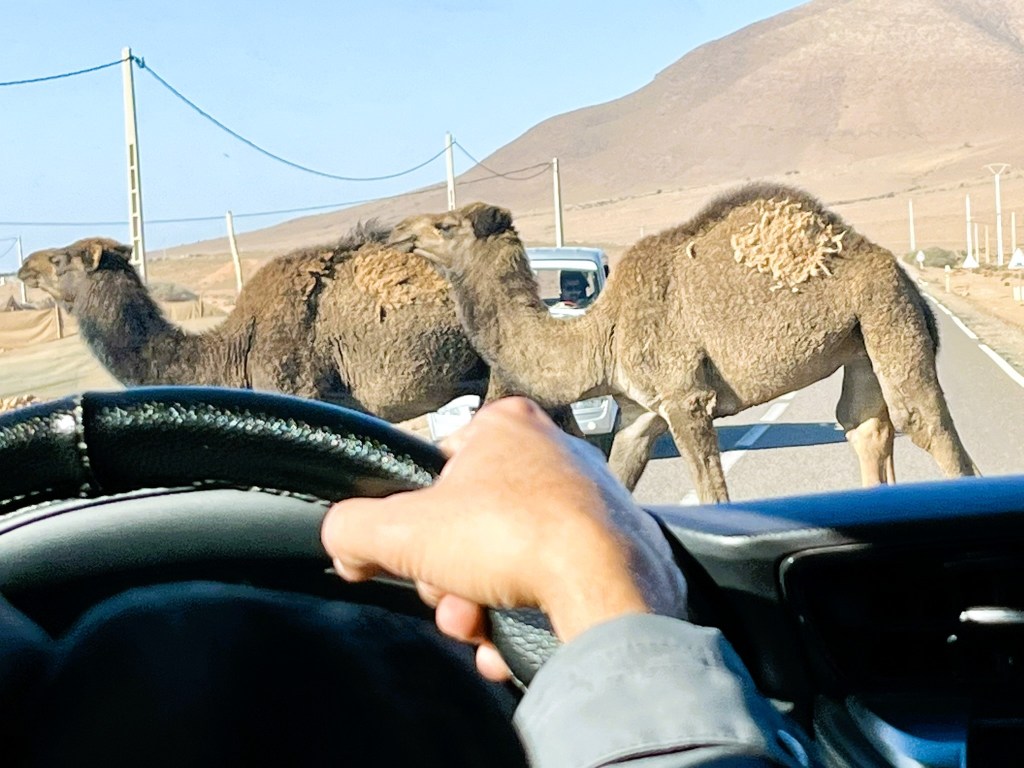
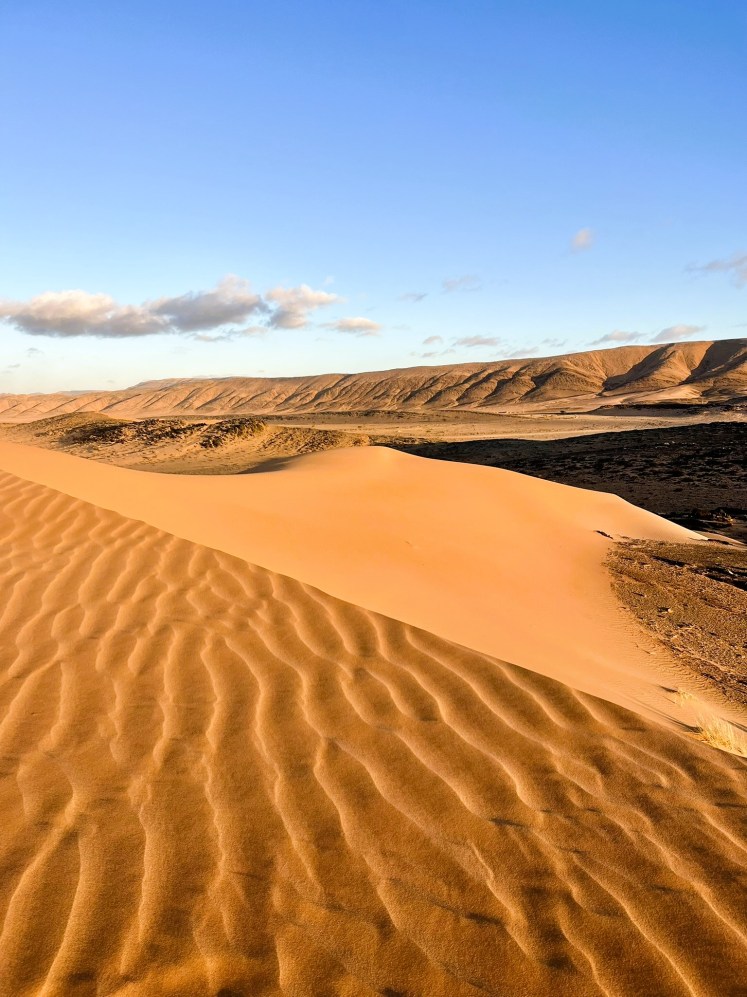
The single-lane road rippling with sand whipped by the wind continued into the desert until we turned off road for several bumpy miles. Then as the sun hung low over the dunes, we arrived at our destination, Bivouac Sahara Akajkal.
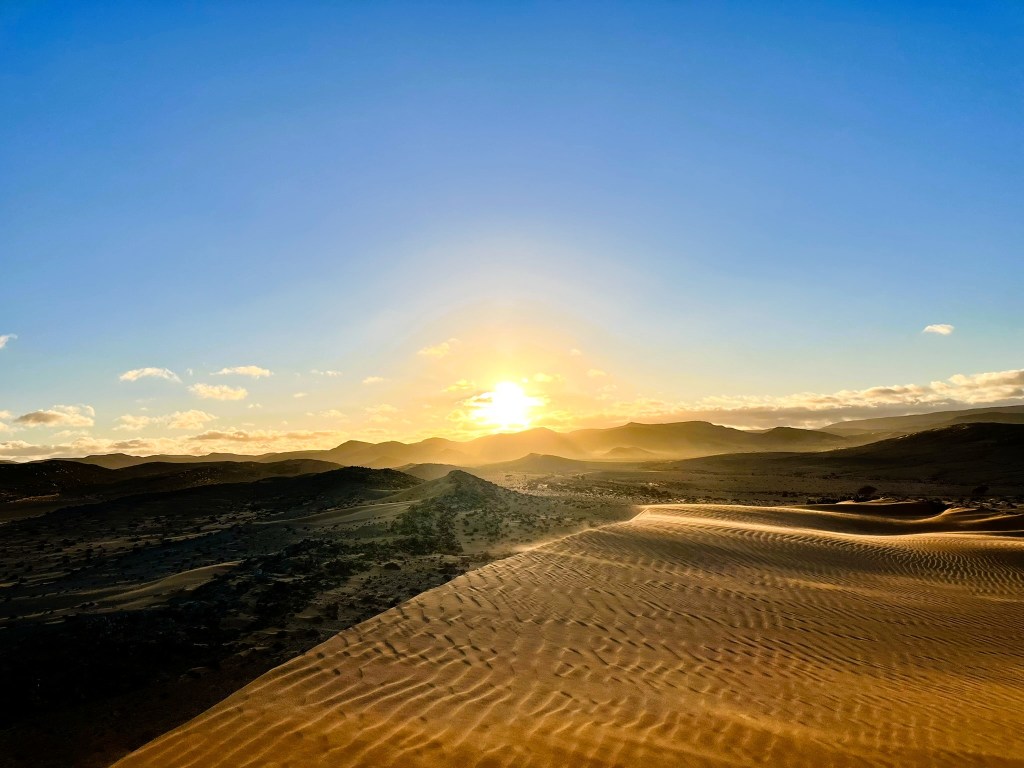
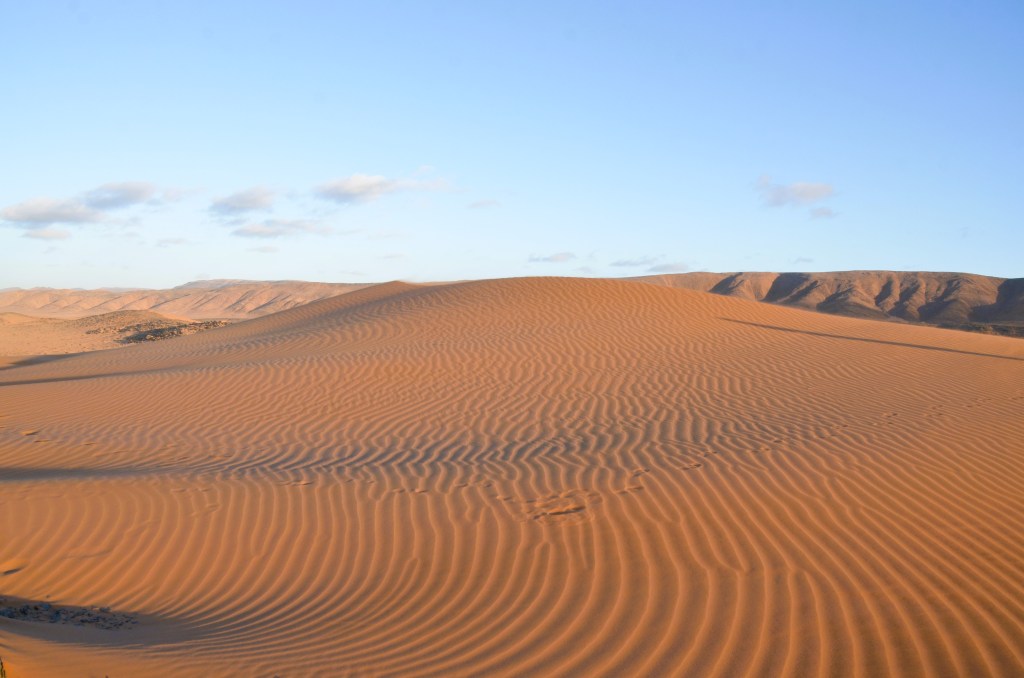
After the long journey we were warmly greeted by our Berber host, Mbarek who ushered us into the camp’s reception tent. Sitting on short cushions, we enjoyed mint tea, dates, nuts and loaves of round bread. Soon, however, we piled back into the car as Hussain drove us up a large dune to watch the stunning sunset over the Sahara.
Back at the camp comprised of eight square sleeping tents, Robie and I were the only guests. Removing our shoes, we ducked under the flap and crawled beneath the low roof held up by a center pole. The room was outfitted simply with thick, overlapping rugs and two large, padded mattresses on the floor piled high with plush pillows and heavy blankets.
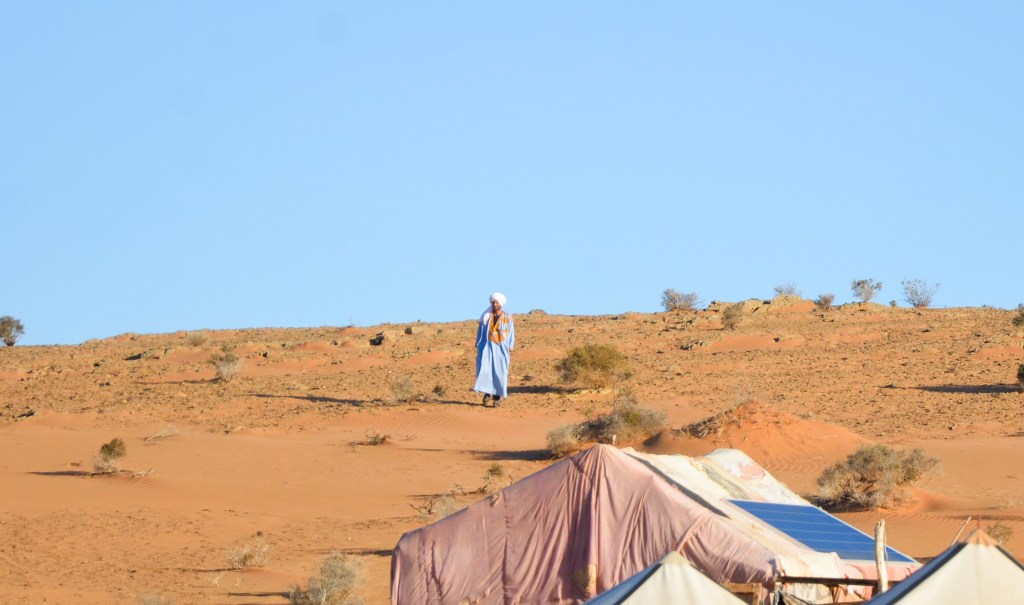
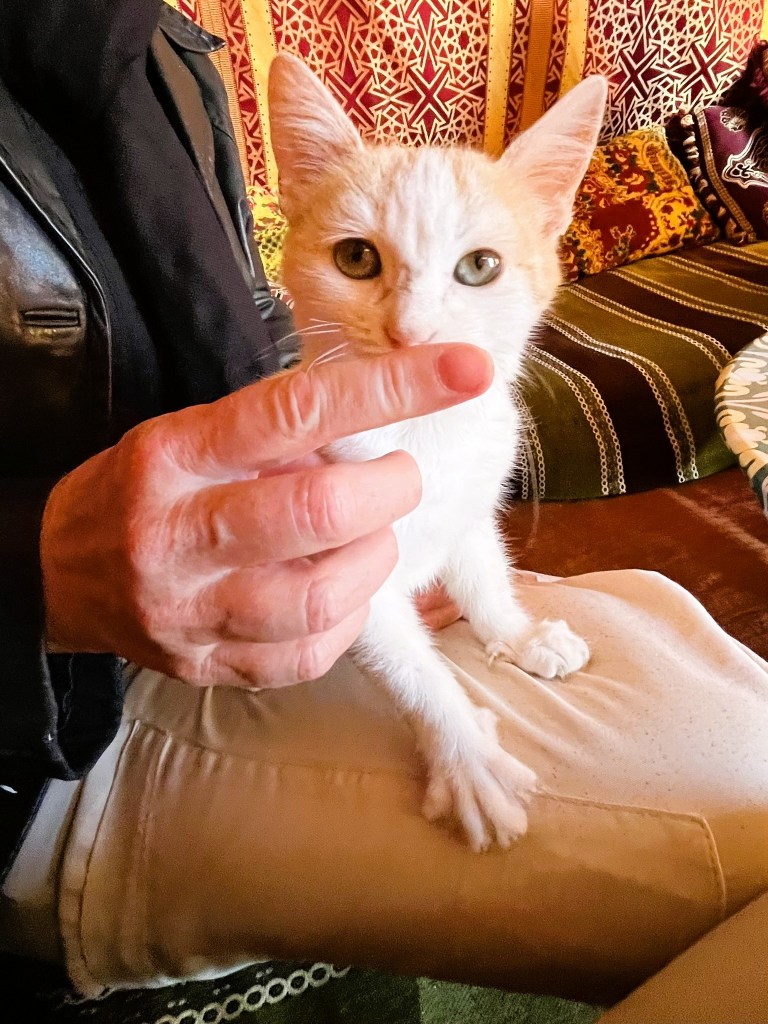
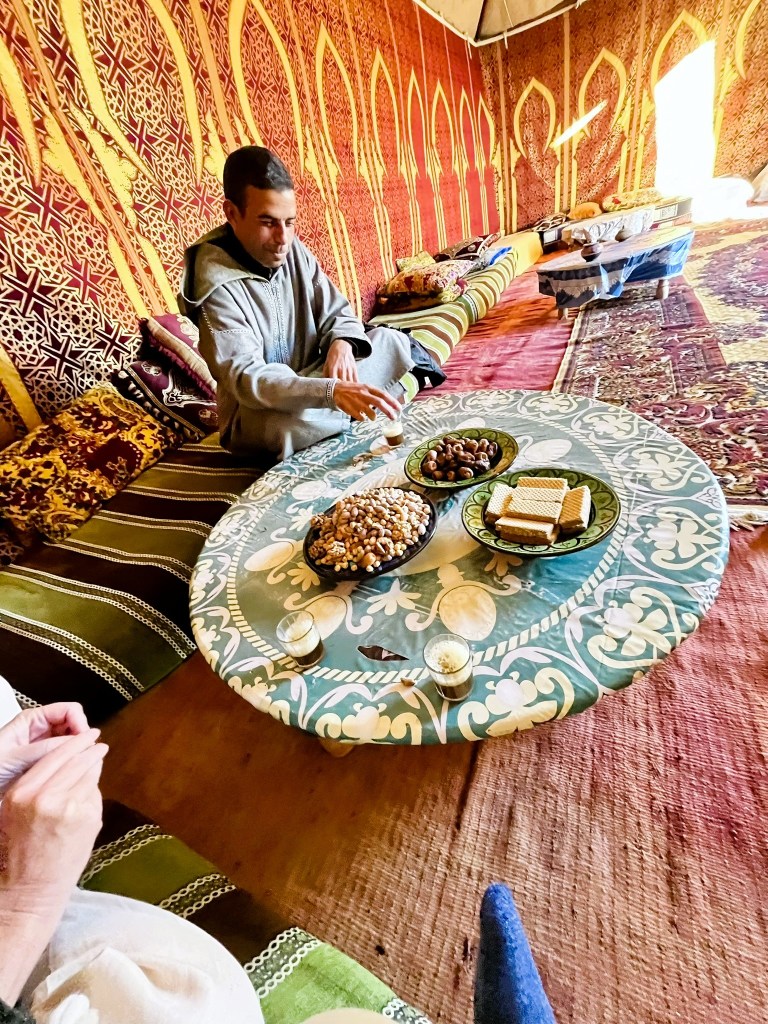
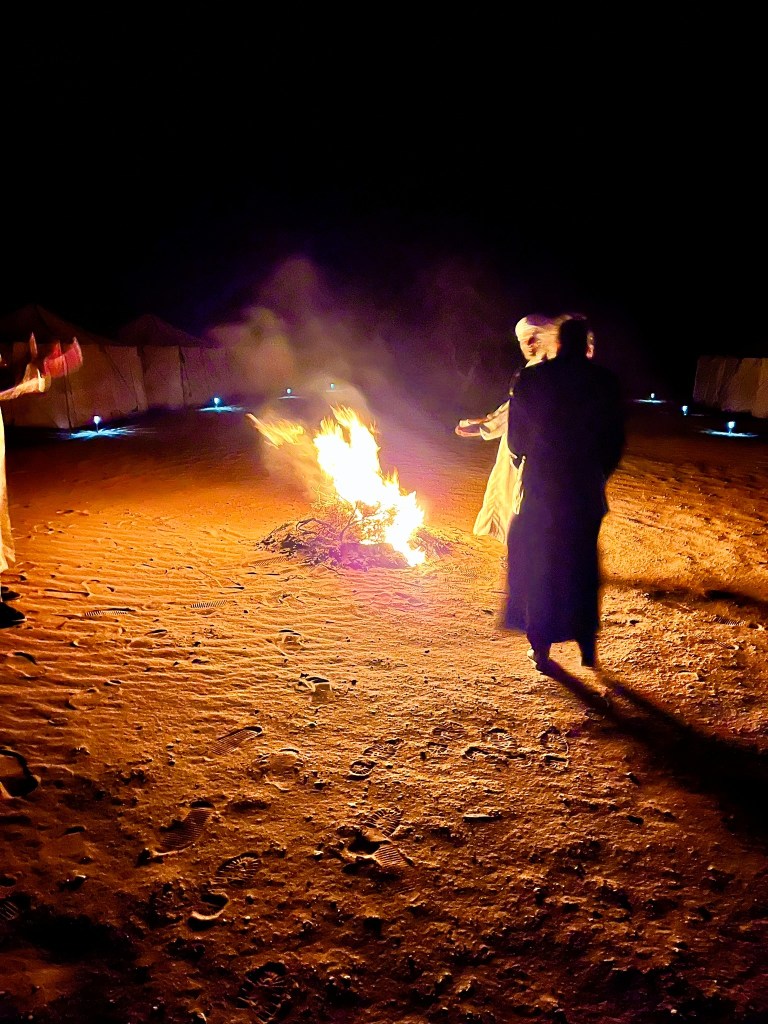
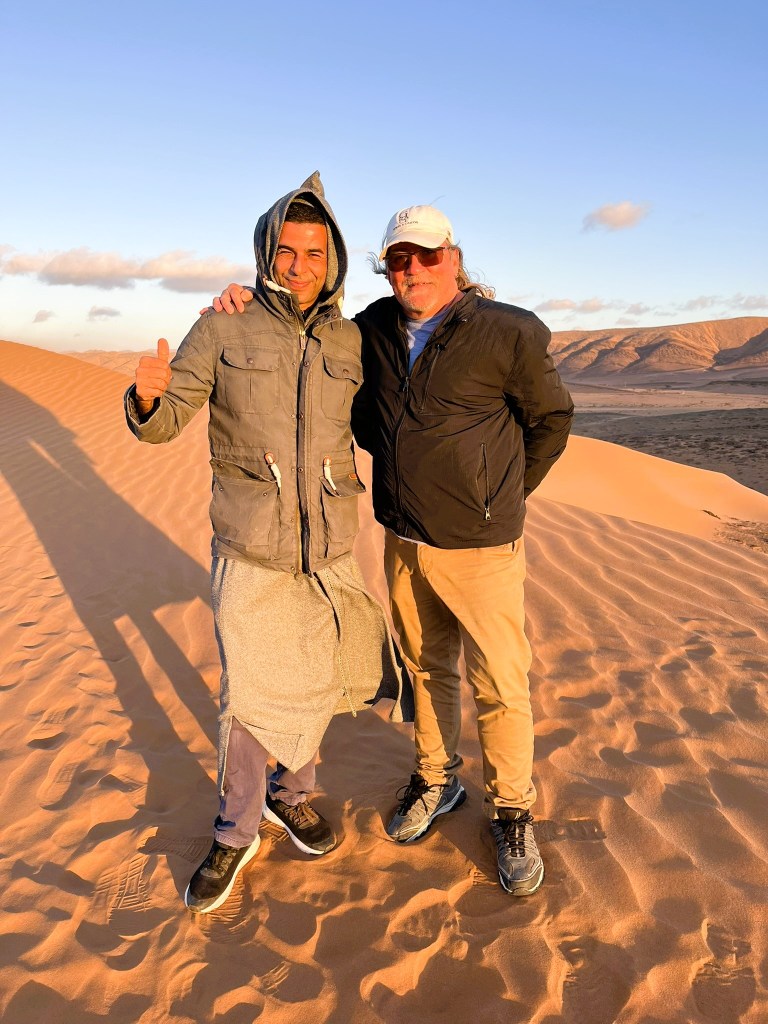
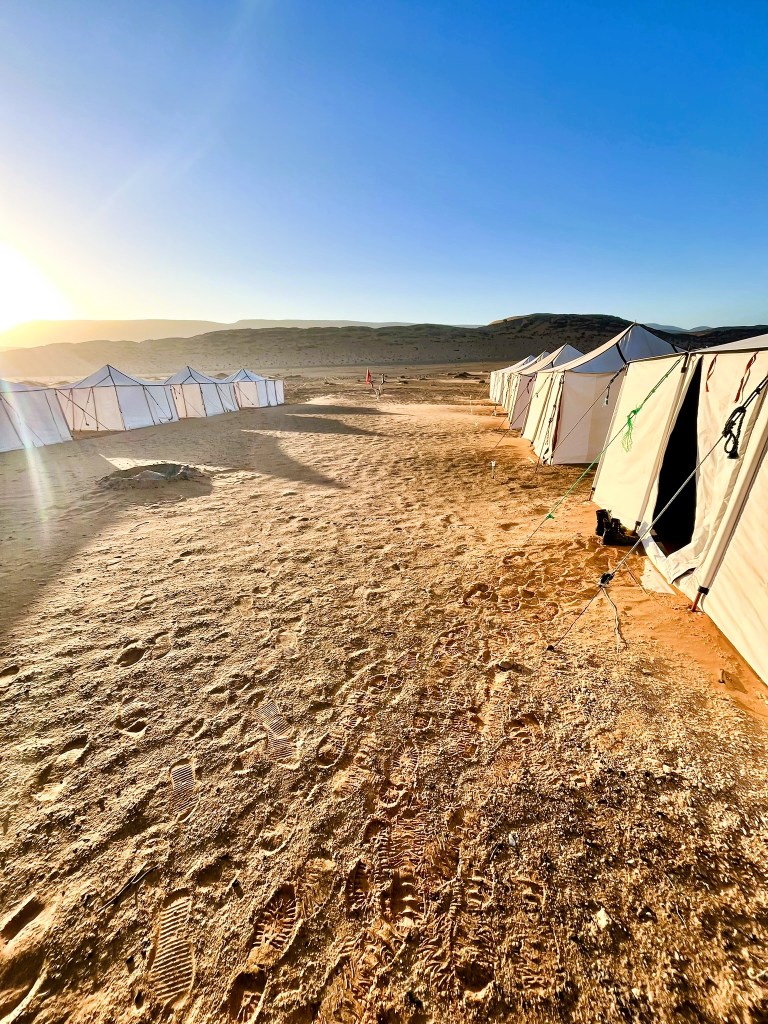
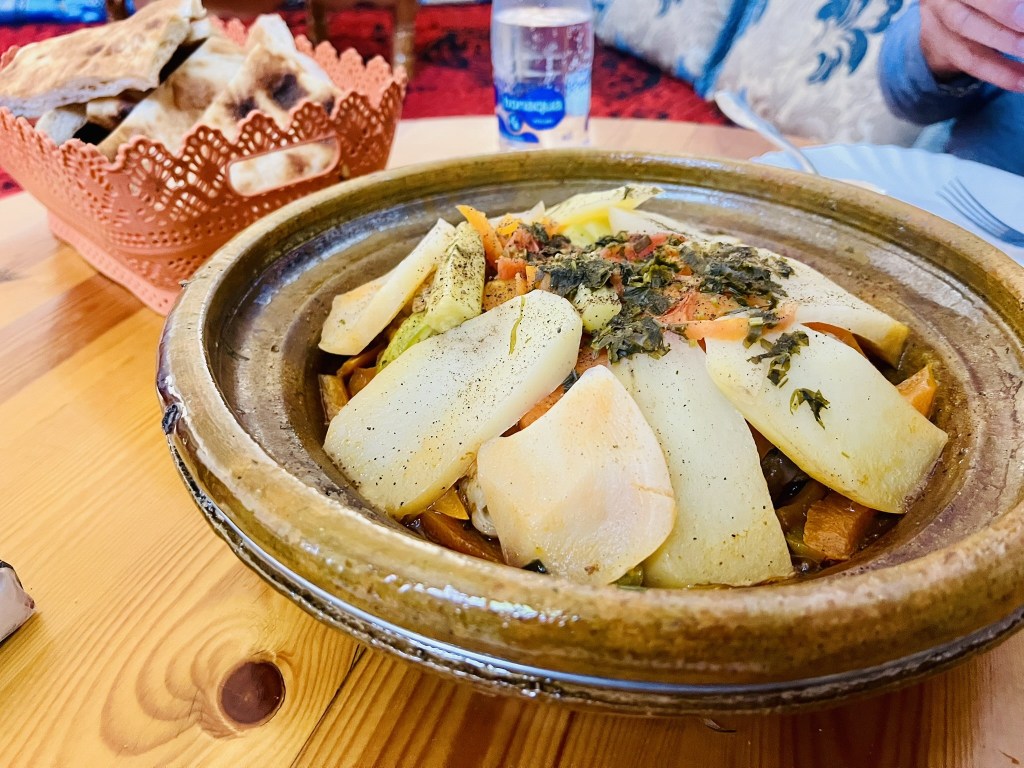
When Hussein called out to let us know it was time for dinner, we sat down to a traditional Moroccan meal featuring chicken tagine with potatoes, olives and carrots made by Mbarek in the nearby tent that doubled as our host’s sleeping quarters and the camp kitchen. After the meal, it was time for a fire, music and dancing. Mbarek brought out a large portable speaker and played traditional Bedouin music while he and Hussain danced. Soon Reid and I swayed and moved alongside them to keep warm in the chilly desert.
Before returning to our tent for the night, I walked away from the light of the fire to look at the sky since seeing the stars in the dark night was what I most wanted to experience. The sight was glorious to behold as my eyes quickly identified the Big Dipper, Little Dipper and the hourglass shape of Orion and his belt bright and clear overhead. As I scanned the heavens, I saw so many stars invisible amid the ambient light of modern cities.
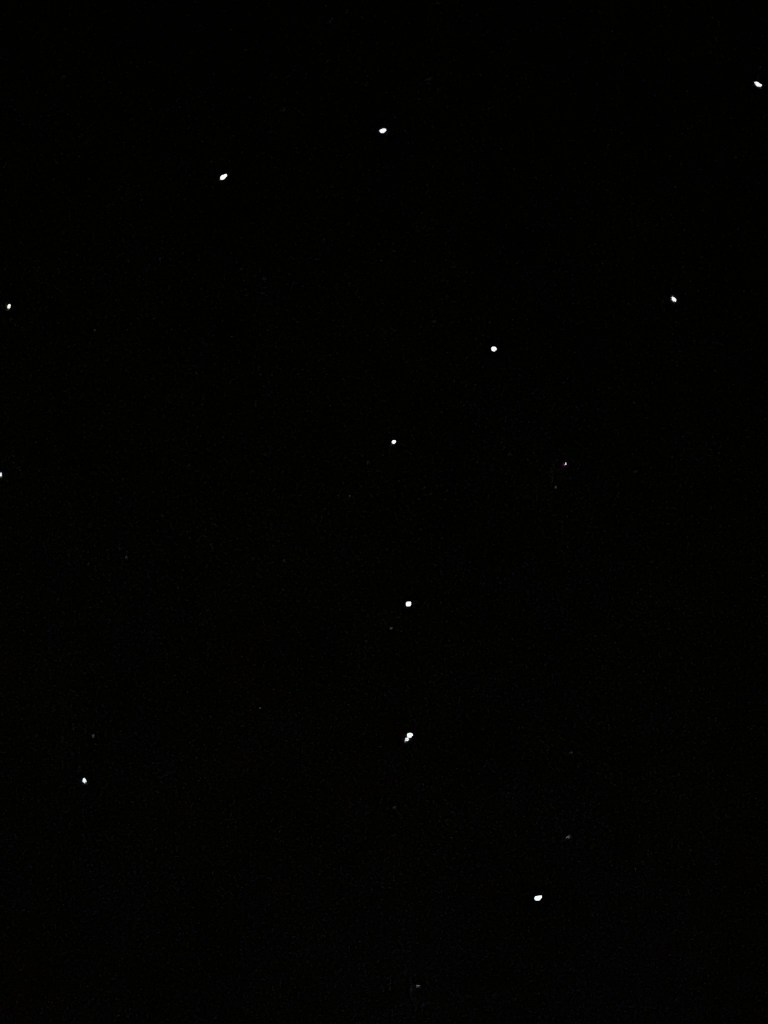
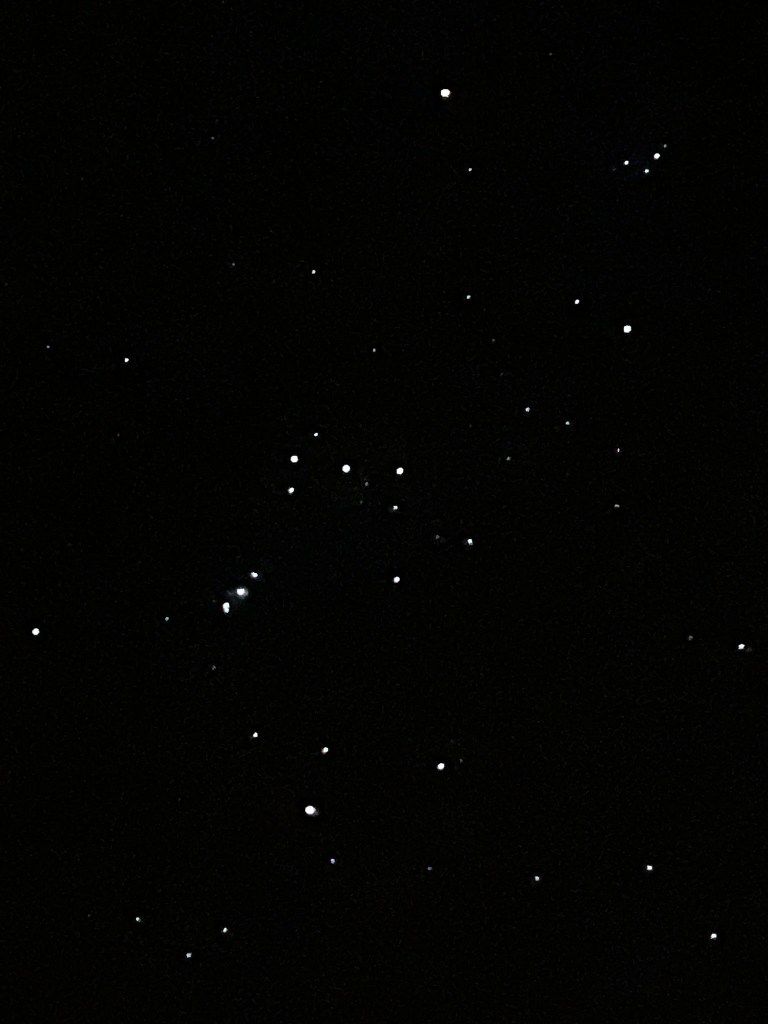
After keeping warm beneath thick Berber blankets during the cold December night, the morning dash from our tent to the camp outhouse was jarringly refreshing, and following the breakfast of hard-boiled eggs, cheese, olives, raw honey and more round Moroccan bread, it was time to thank our gracious host and leave this beautiful place in the desert.
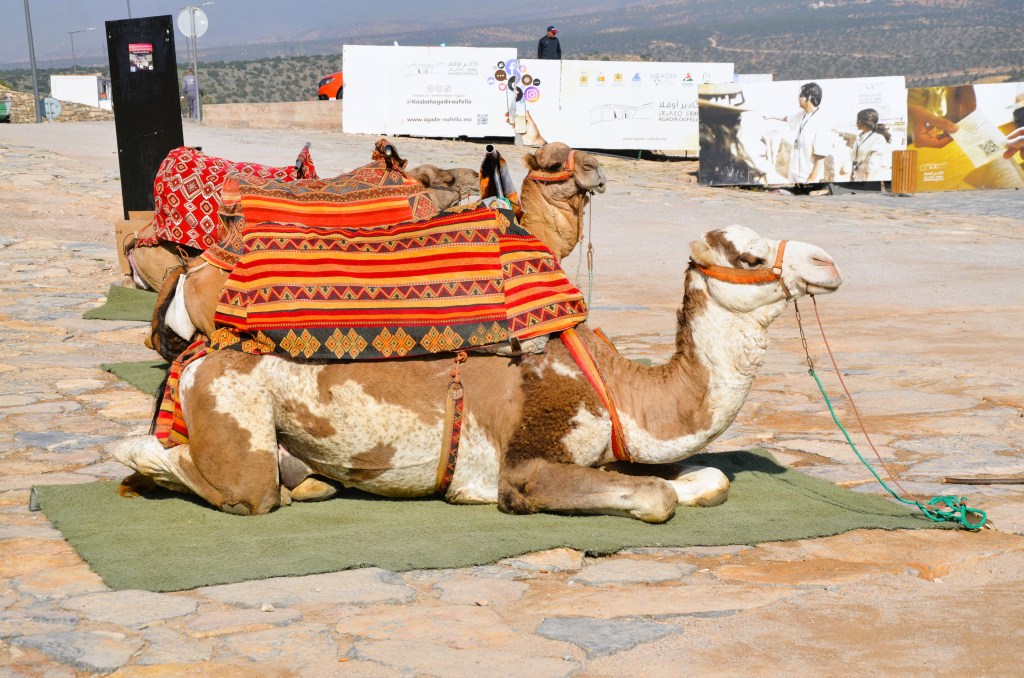
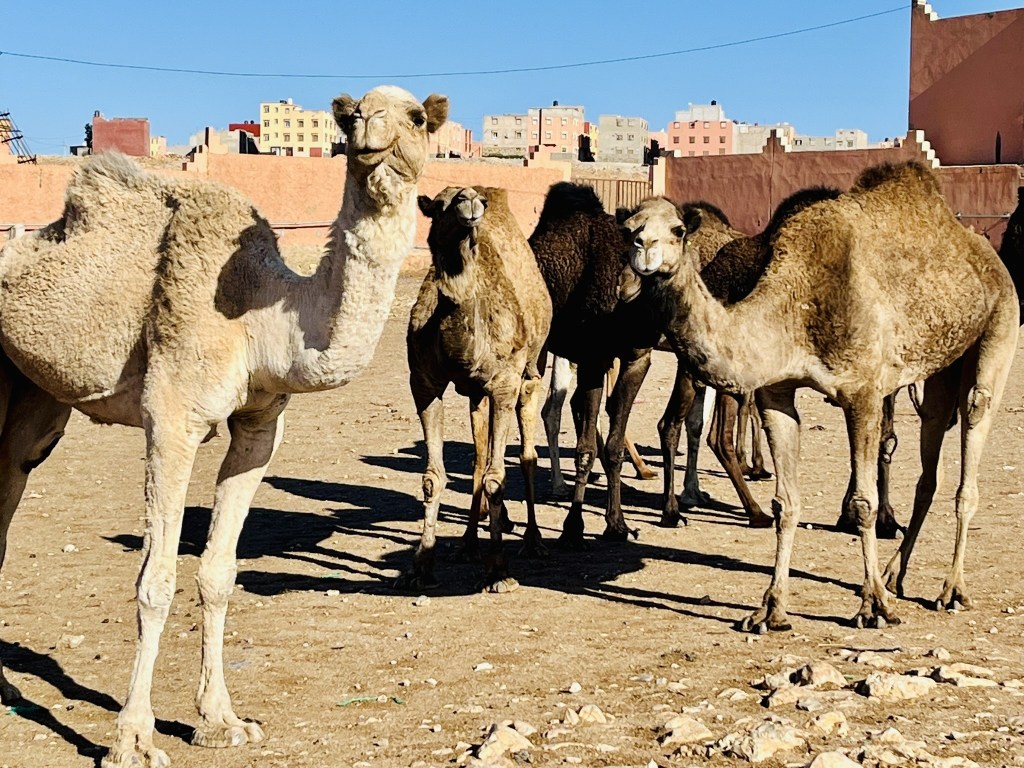
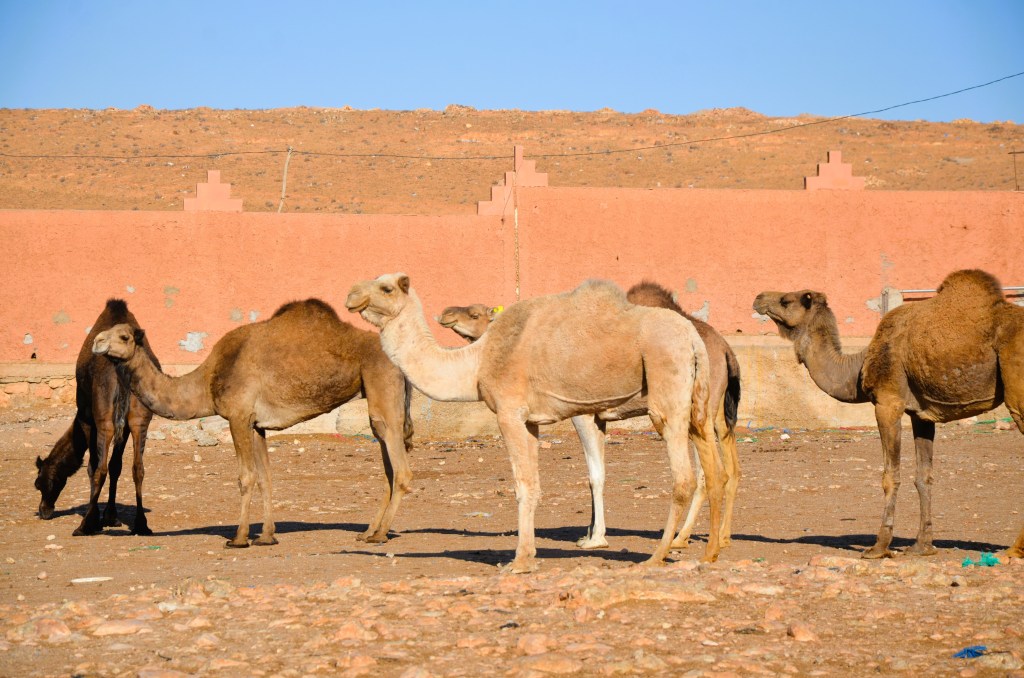
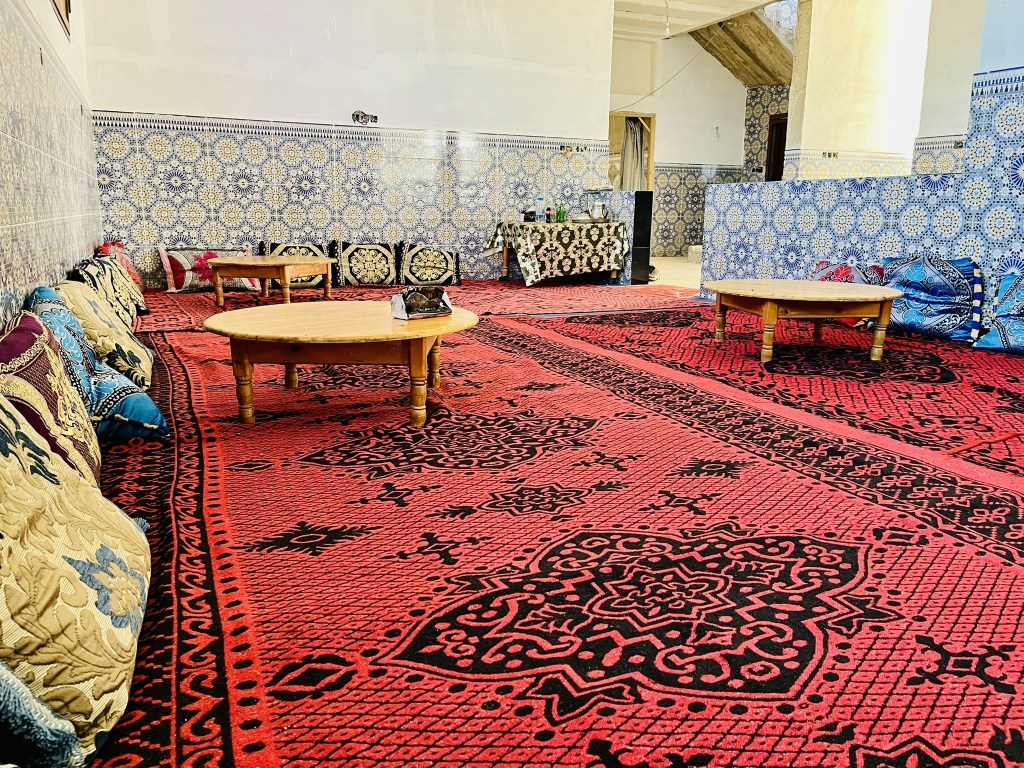
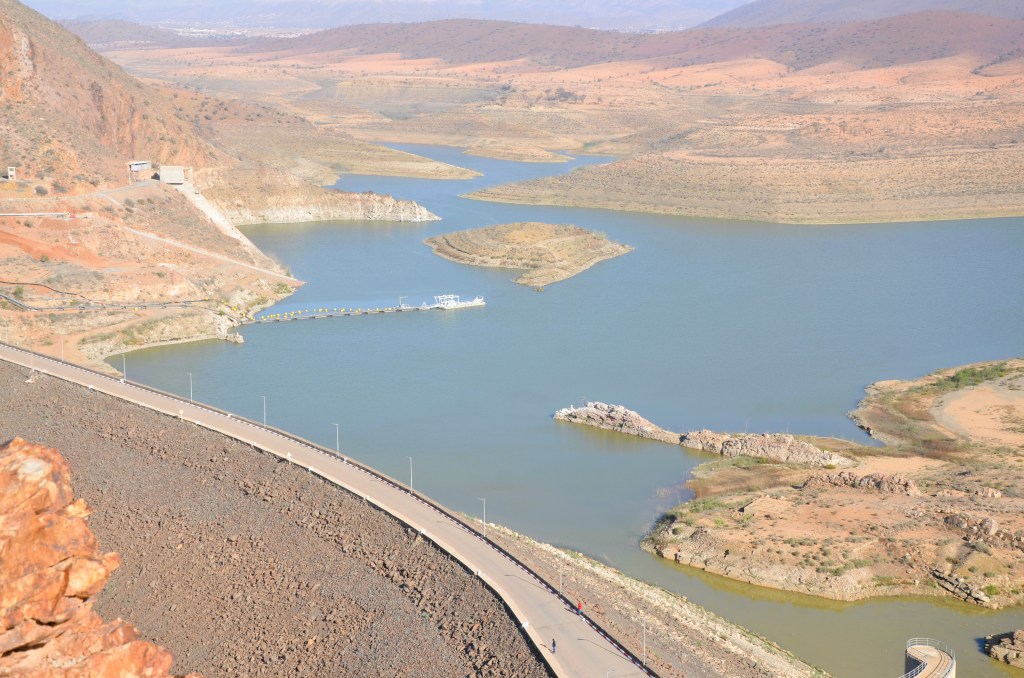
On the drive back to Agadir, we stopped at a camel market, visited a jewelry workshop in Tiznit, viewed the dam at Inkass, and ate lunch inside a traditional Berber home.
With security checkpoints posted on the road to virtually every city, our car got stopped as we were leaving Tiznit. Hussain gave the officer his manifest and Reid and I provided our passports. The officer took them to the makeshift office across the road and spent several minutes thoroughly examining them as we waited by the car. He soon came back, handed us our passports and said in English, “Welcome.”
Back in Agadir, we said a heartfelt thanks to Hussain for his knowledgeable guidance on the journey.
After he left, I gave Reid a big hug. Though our time in the desert was short, it was a special trip that I will never forget.
 Reid & Robie
Reid came through for Robie big time on the Berber excursion! That’s amore!
LikeLiked by 1 person
Thank you, Miguel.
LikeLiked by 1 person
Beautiful photograph, I love the texture and color
LikeLike
What a great description of Morocco! Thanks so much for sharing.
LikeLike
Wow, great images
LikeLiked by 1 person