
Marrakech is more than a city, it’s a feeling – the warmth of the sun, the scent of spices, and the chatter of locals all come together to create a magical ambience. — Unknown
Hello everyone, Robie here.
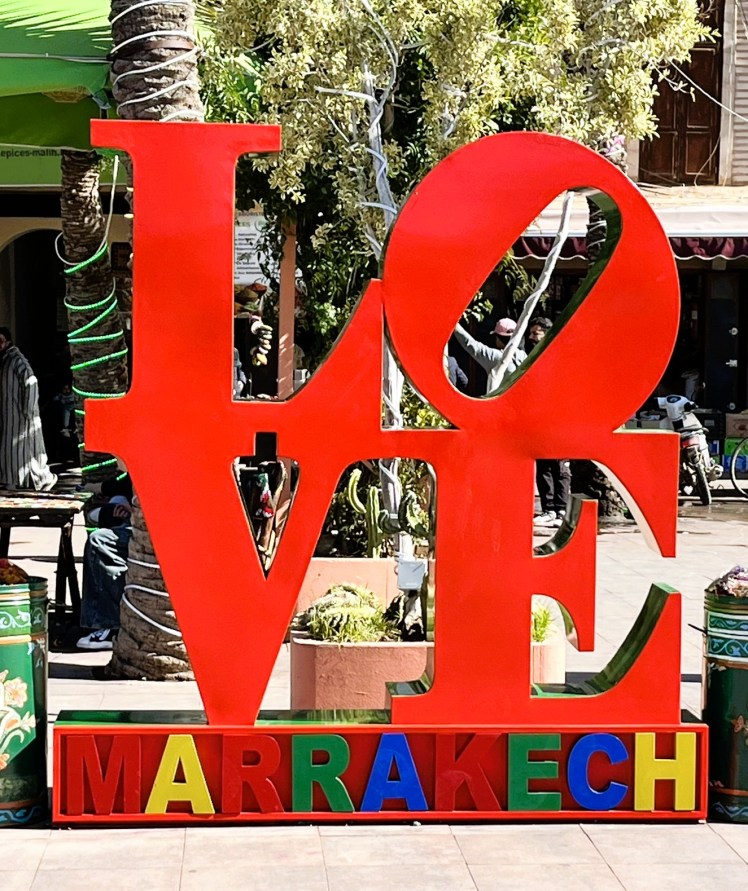
After eighty days in Essaouira and a trip to the Sahara, Reid and I went to Marrakech for a week to wind-up our stay in Morocco.
Known as the Red City from the clay used to build the city’s walls, Marrakech is located at the base of the High Atlas Mountains offering views of their snow-capped peaks in January. This lively, energetic city filled with traffic and the aroma of spices, offered a much different vibe from quiet, laid-back Essaouira.
Here’s a look at some of the places we explored in Marrakech.
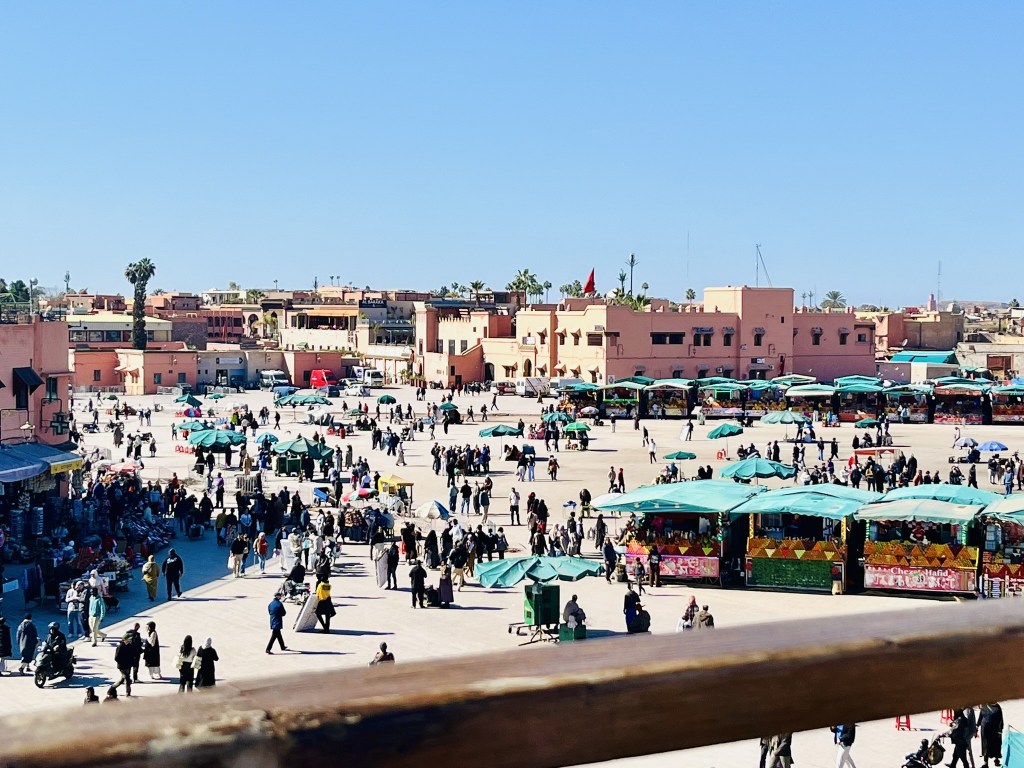
Jemaa el-Fna
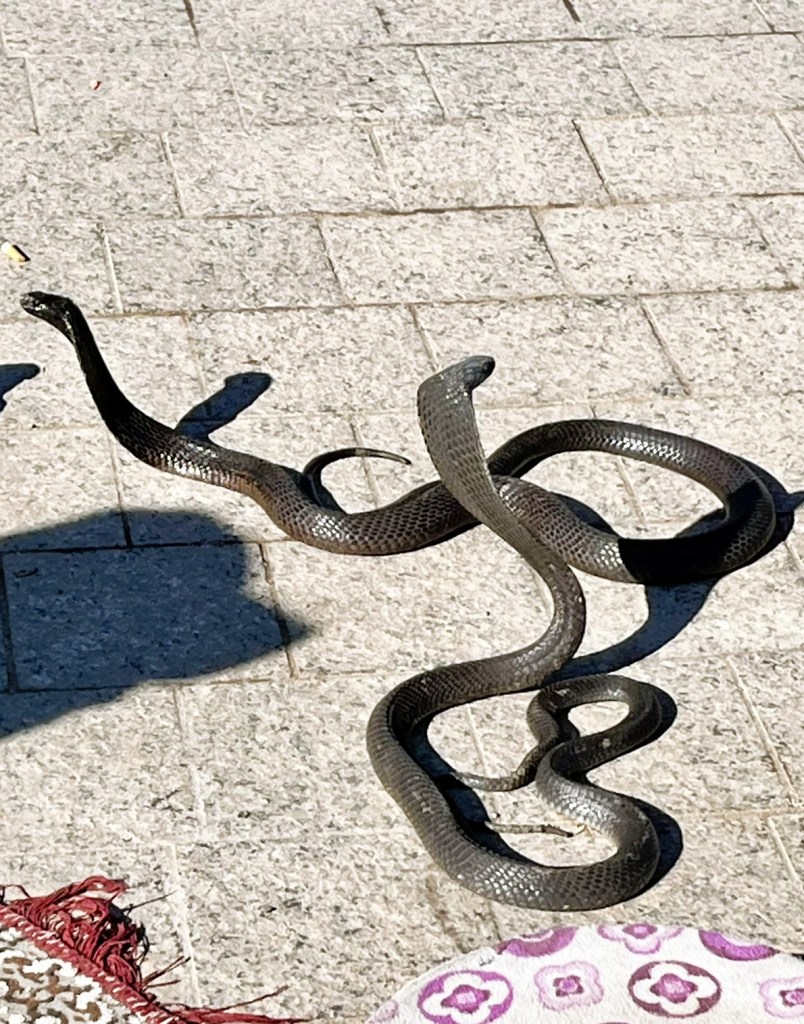
Our foray into the city began at Jemaa el-Fna, Marrakech’s main square. A UNESCO World Heritage site, this vibrant central gathering space has been buzzing with activity for nearly a thousand years. During our visit we discovered snake charmers playing Pungis as cobras swayed hypnotically and watched monkeys perform for the crowds. Juice vendors shouted to anyone within calling distance and women offered Reid decorative henna tattoos.
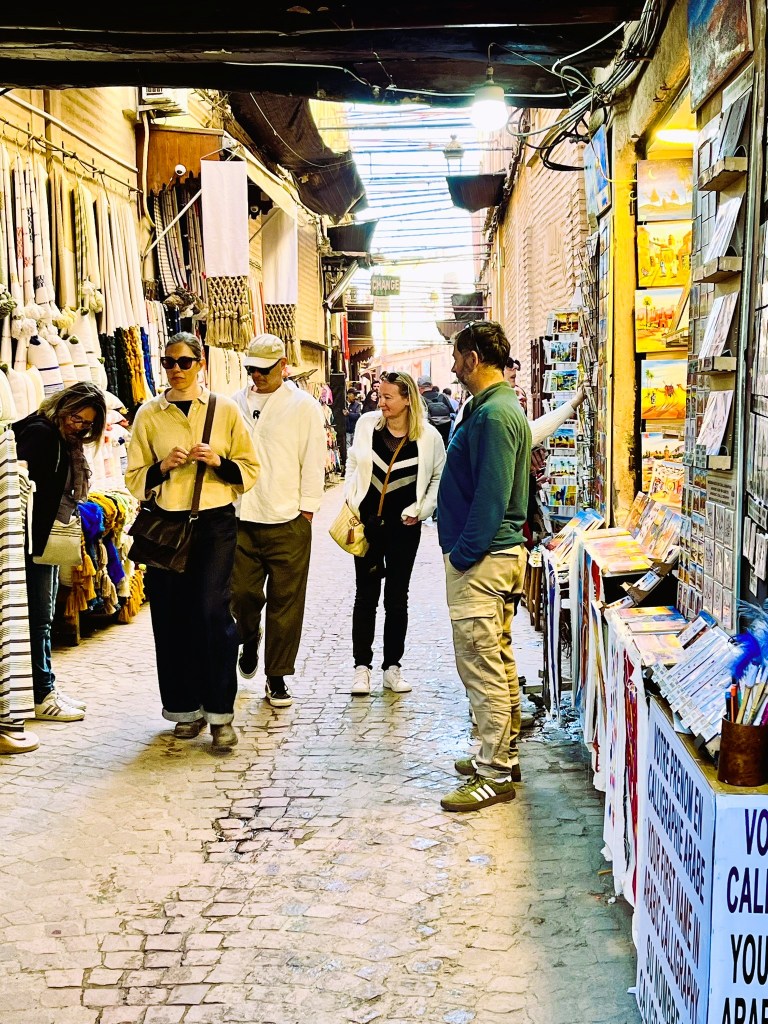
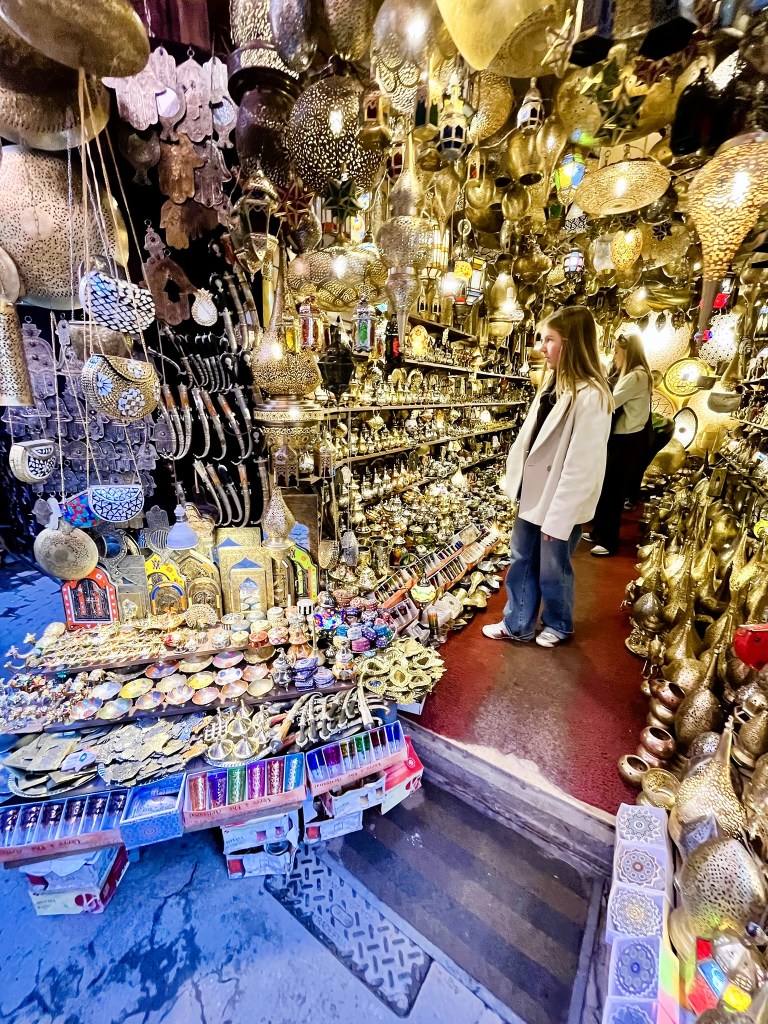
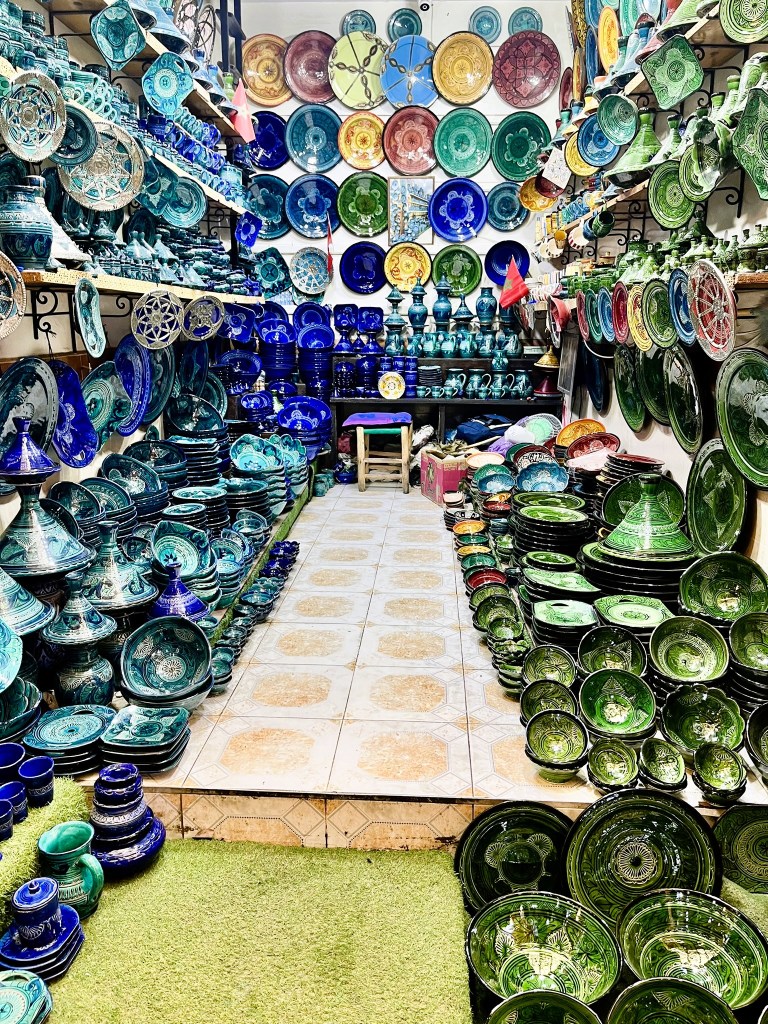
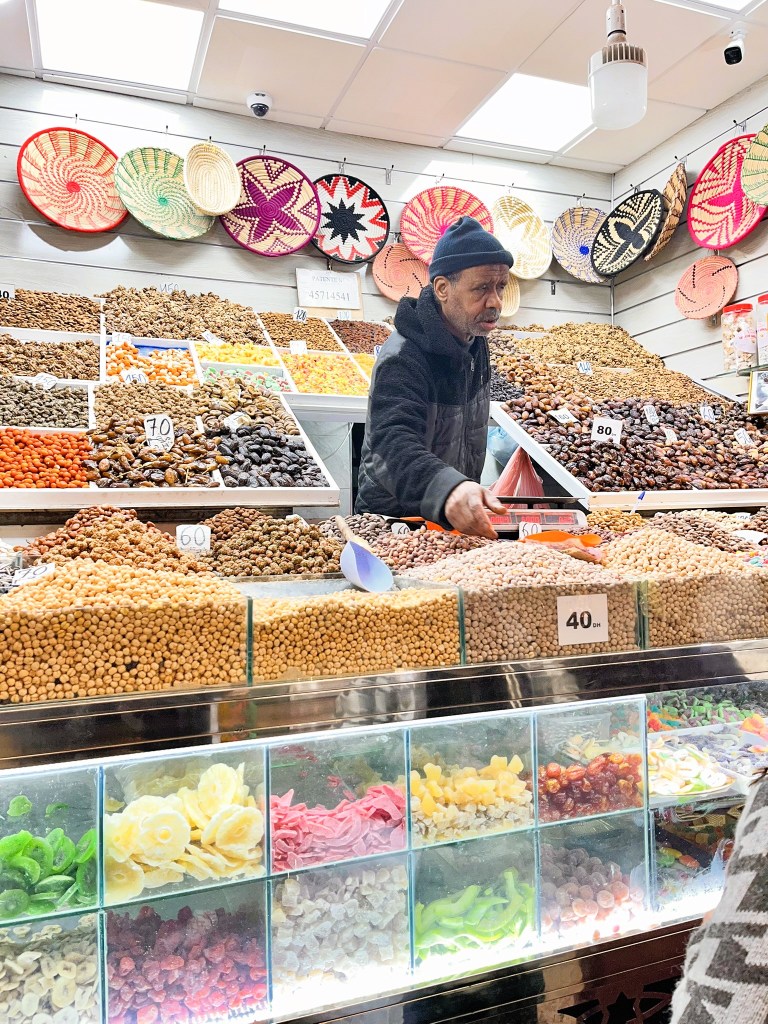
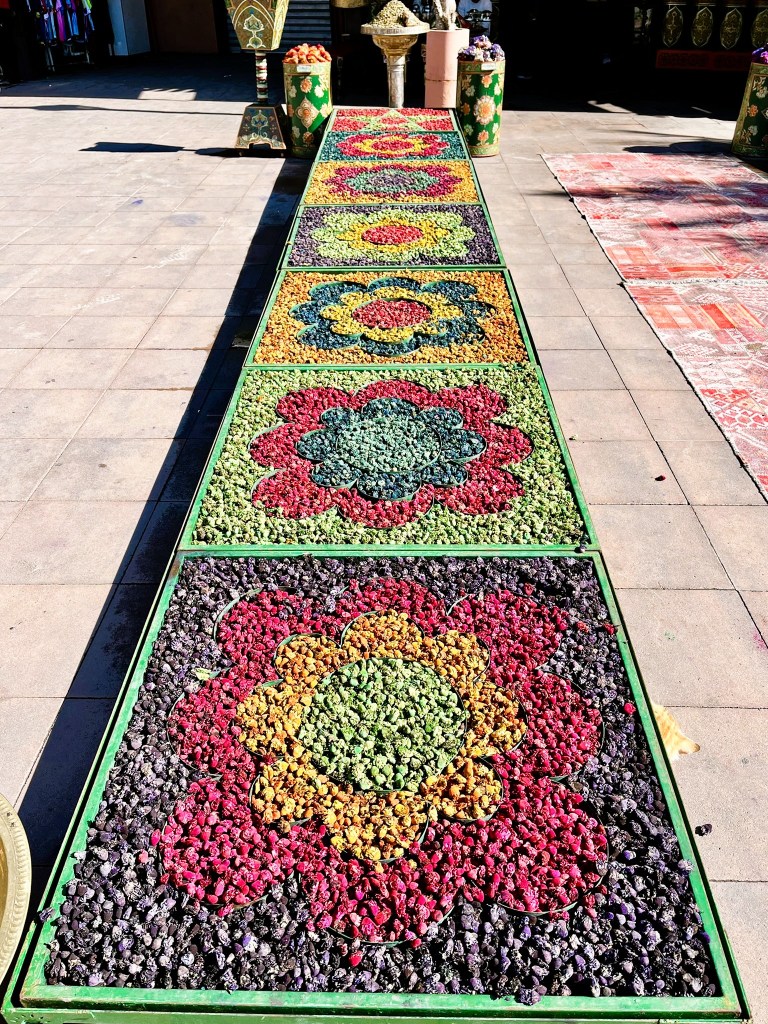
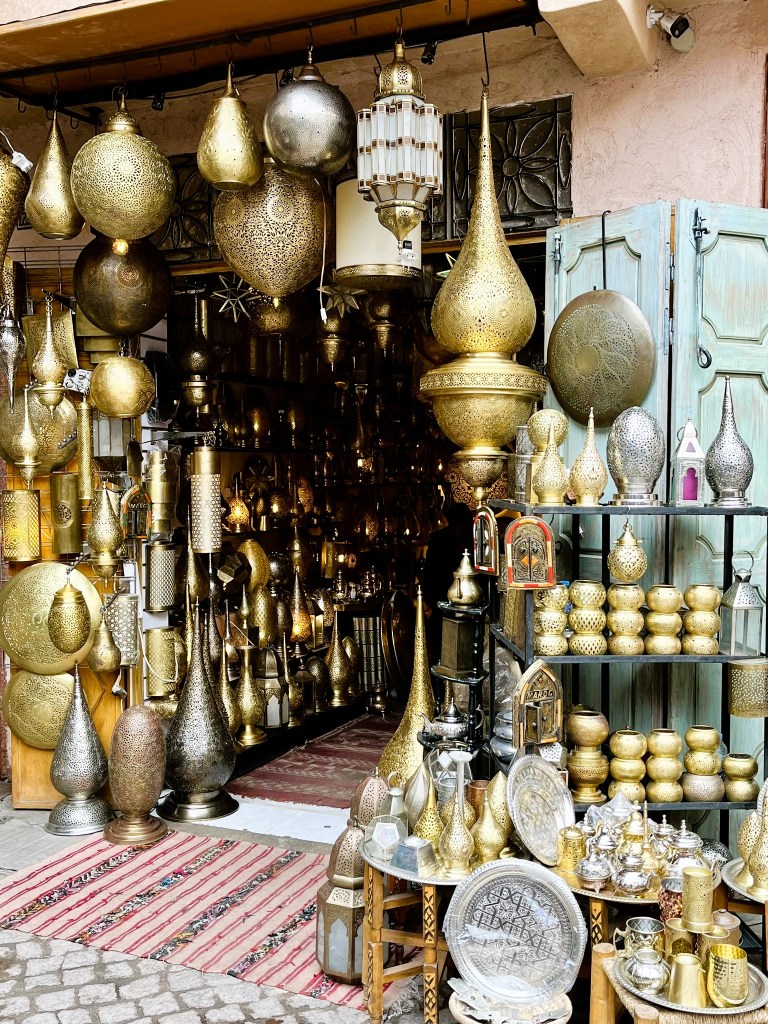
With plenty of eateries lining the square, we found a rooftop restaurant and sat down to enjoy the local cuisine and look out across the lively scene. When we left, Reid and I wandered down small alleyways and meandered through narrow lanes of the souk gawking at the array of merchandise including rugs, leather goods like shoes, purses and belts, handmade jewelry, paintings, and of course pottery and cookware made by hand.
Inside the walls of the medina, we visited two beautiful palaces showcasing exquisite Moorish architecture.
Dar El Bacha Palace
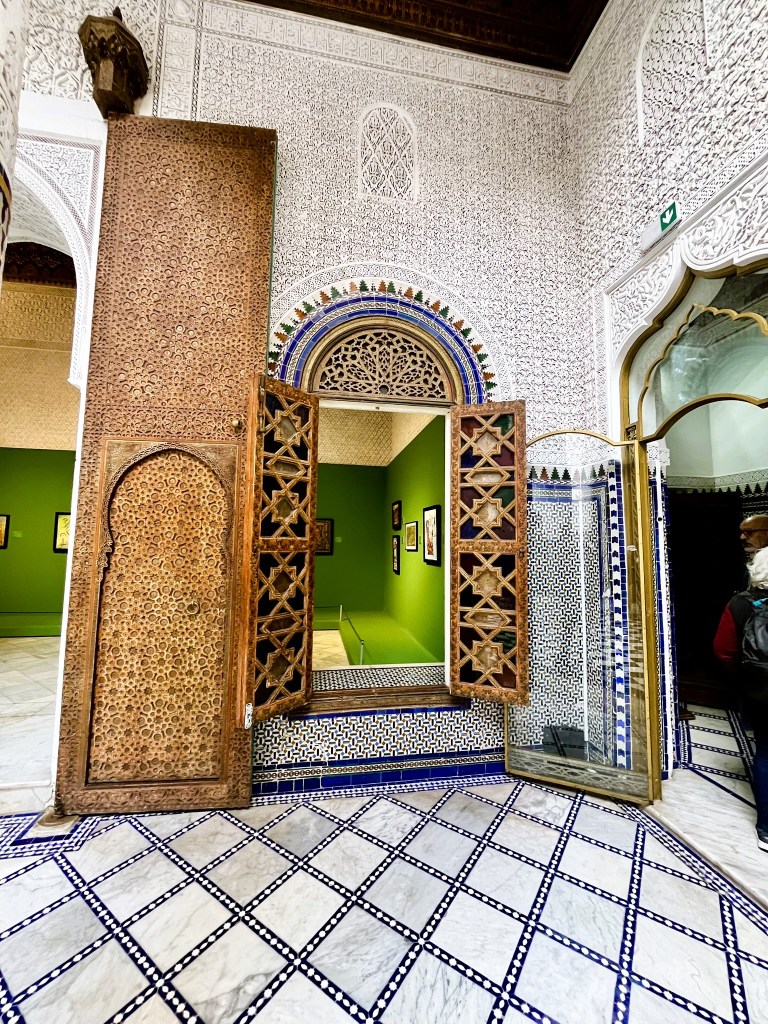
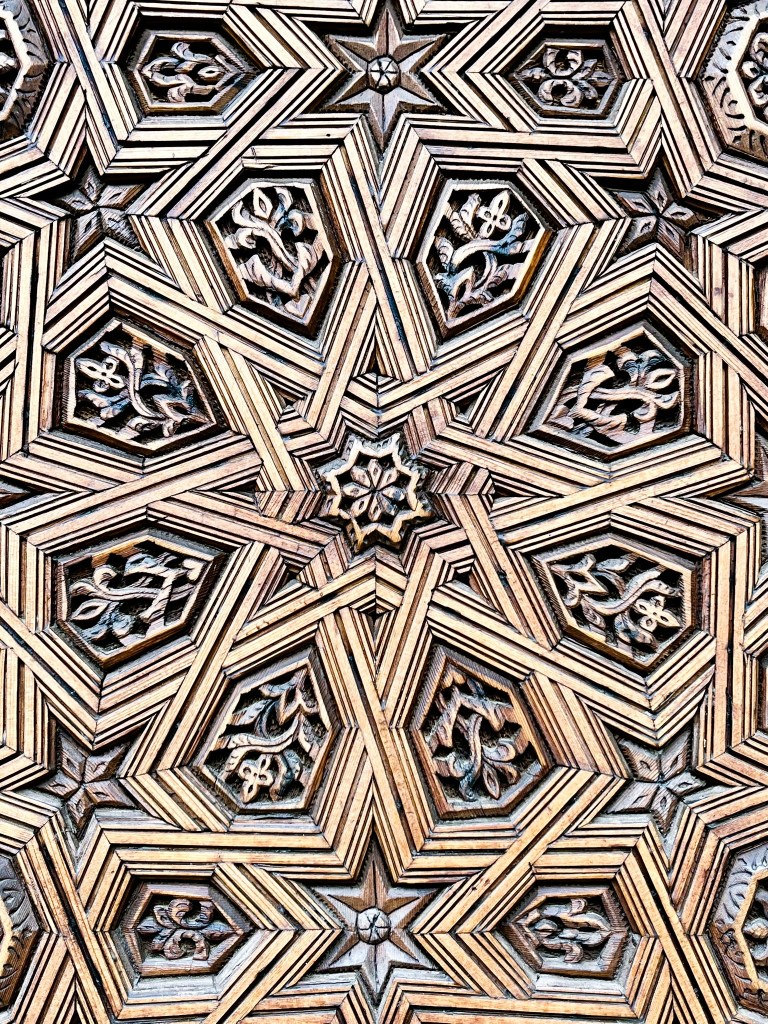
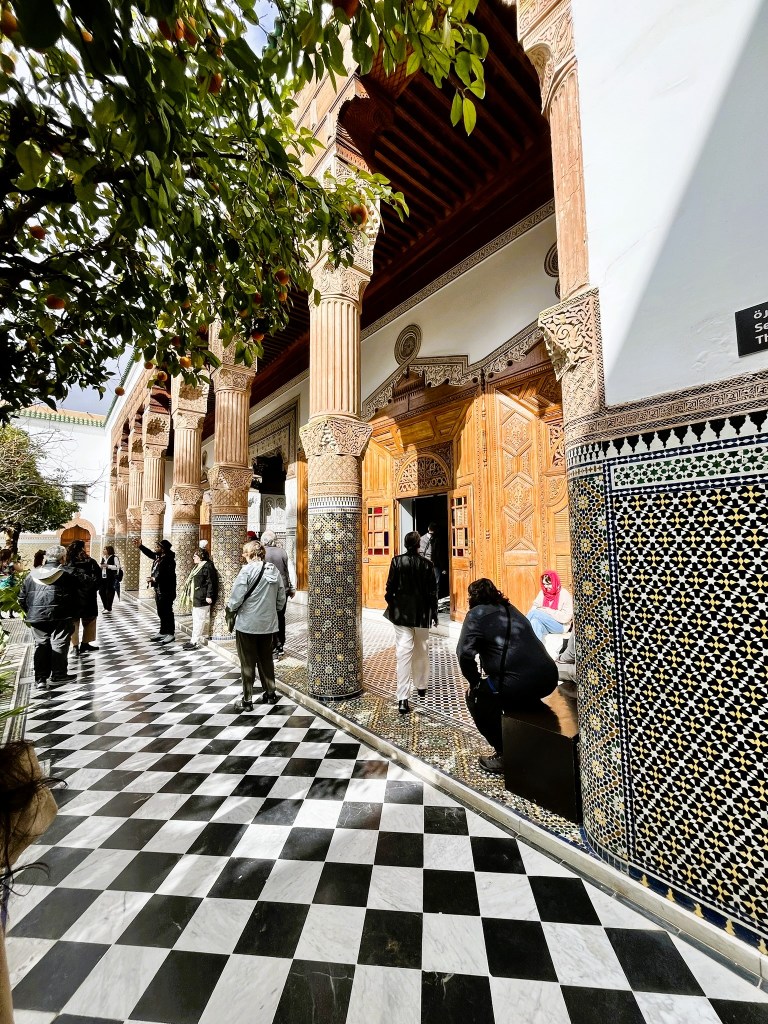
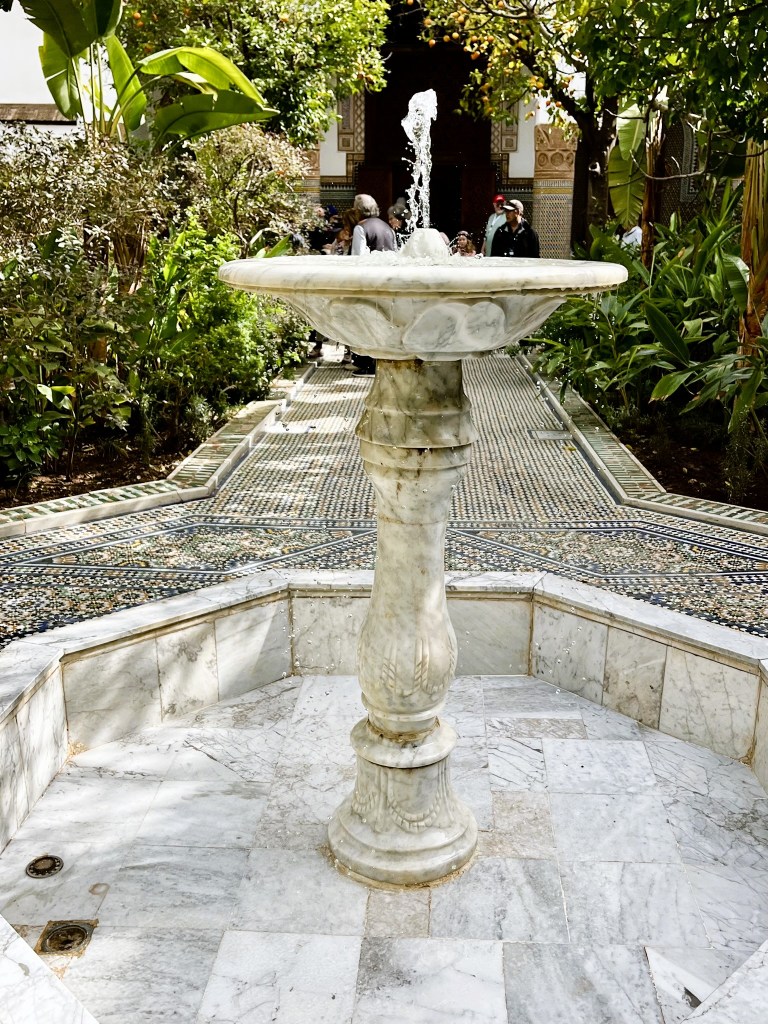
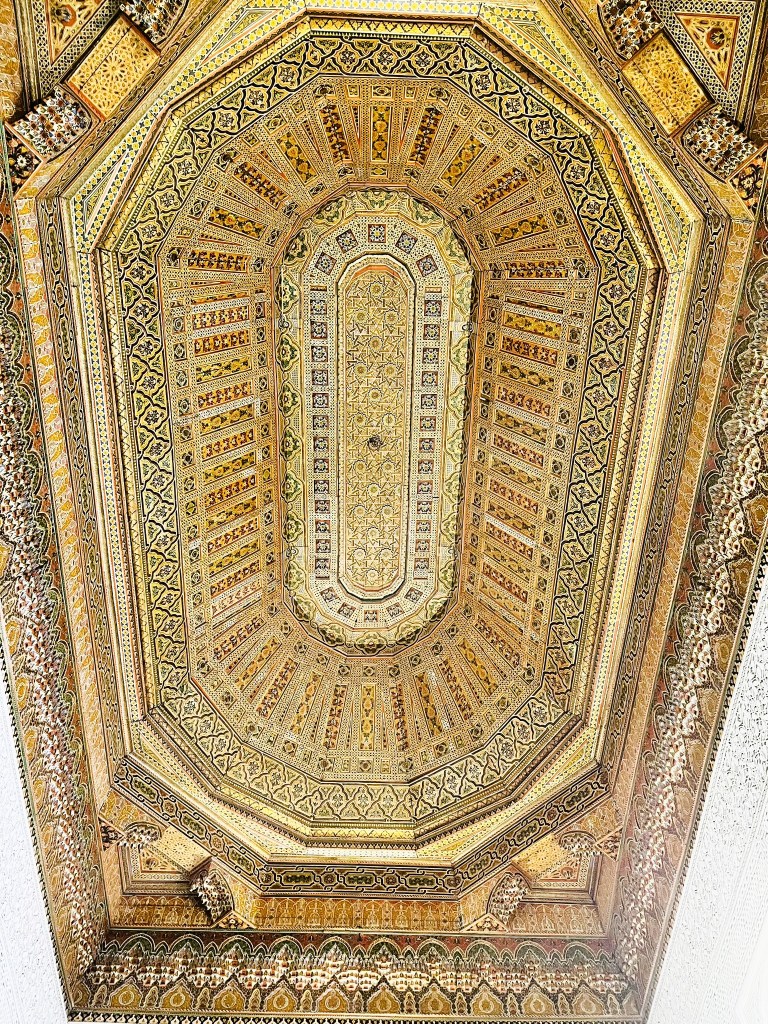
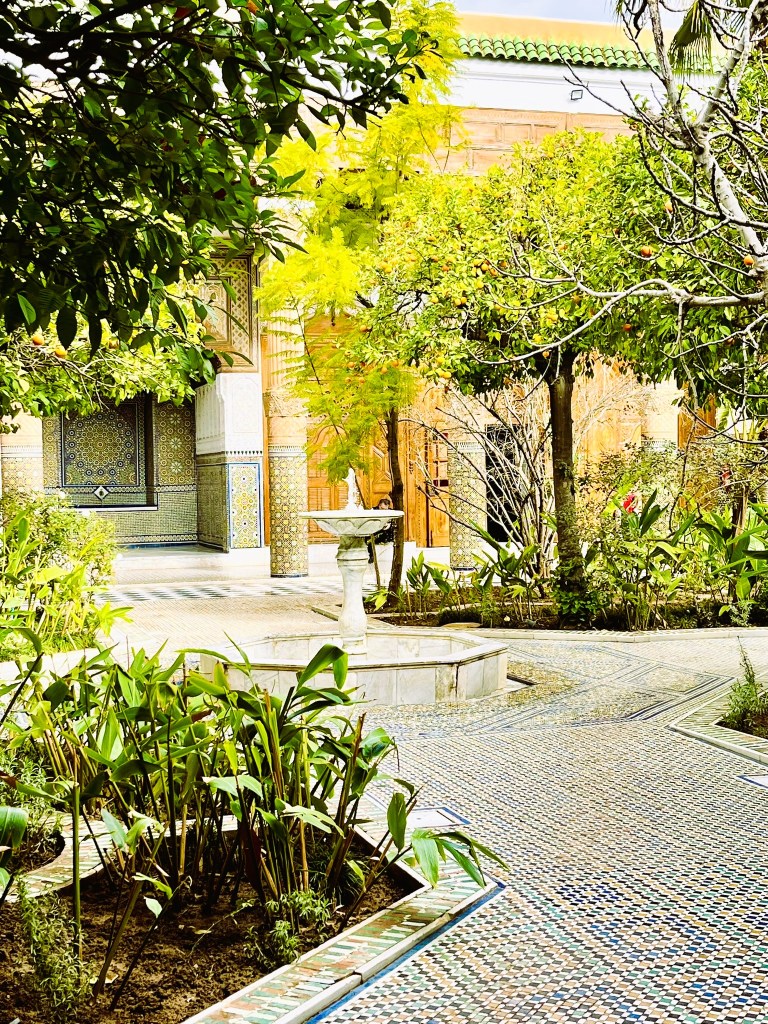
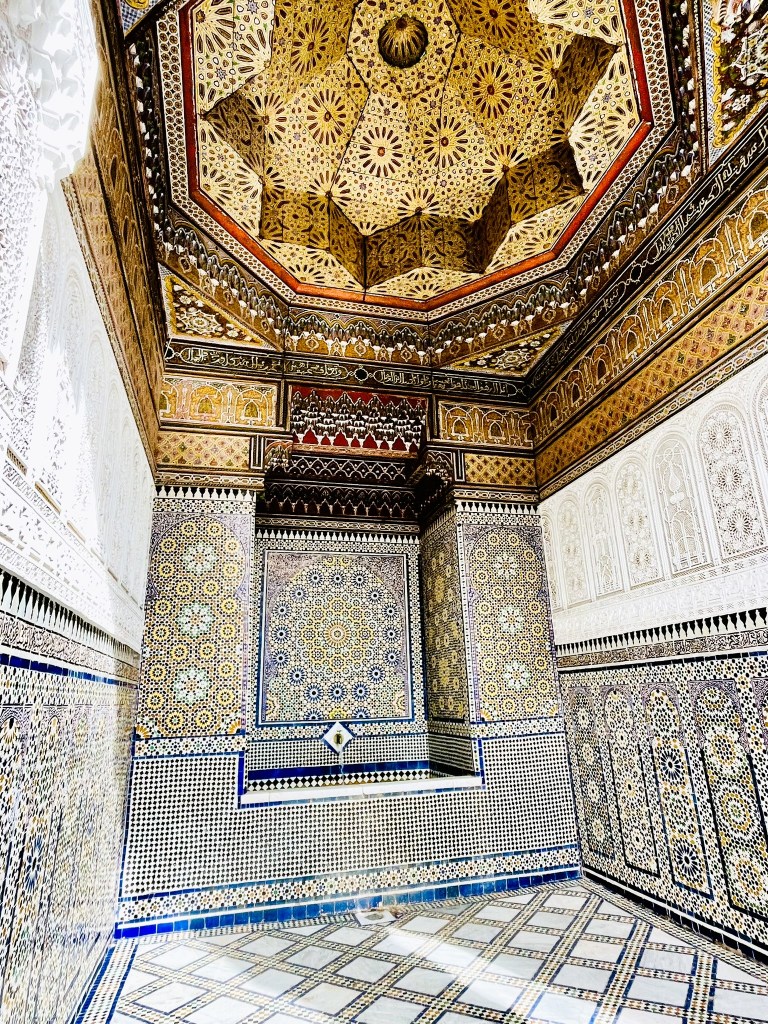
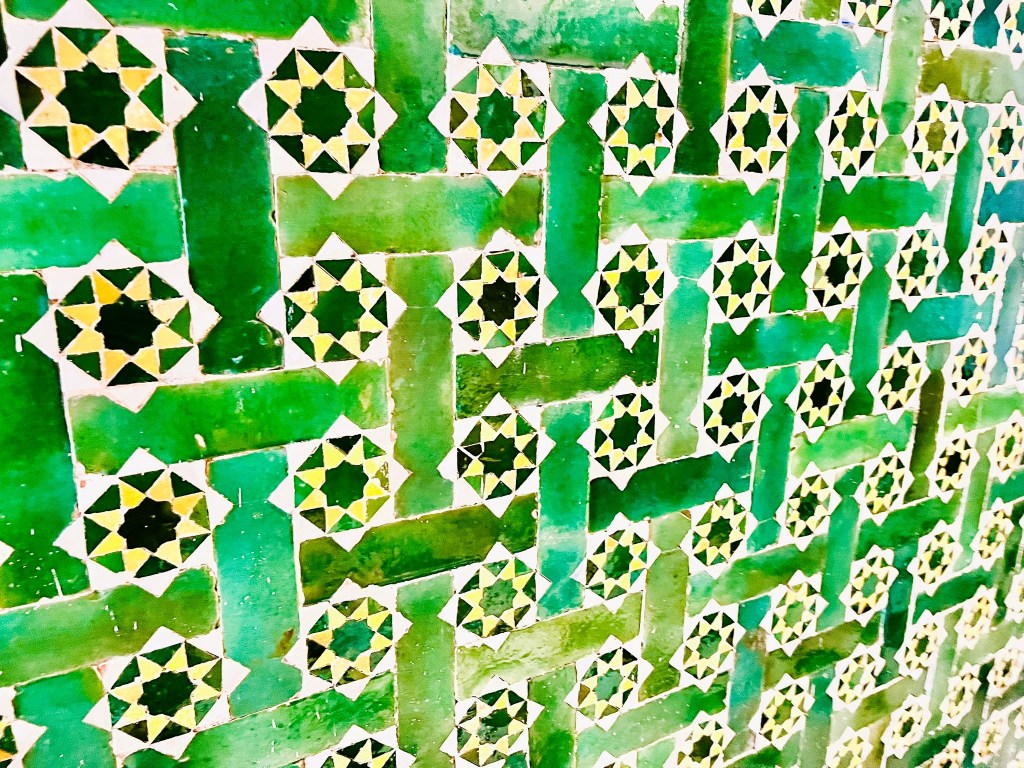
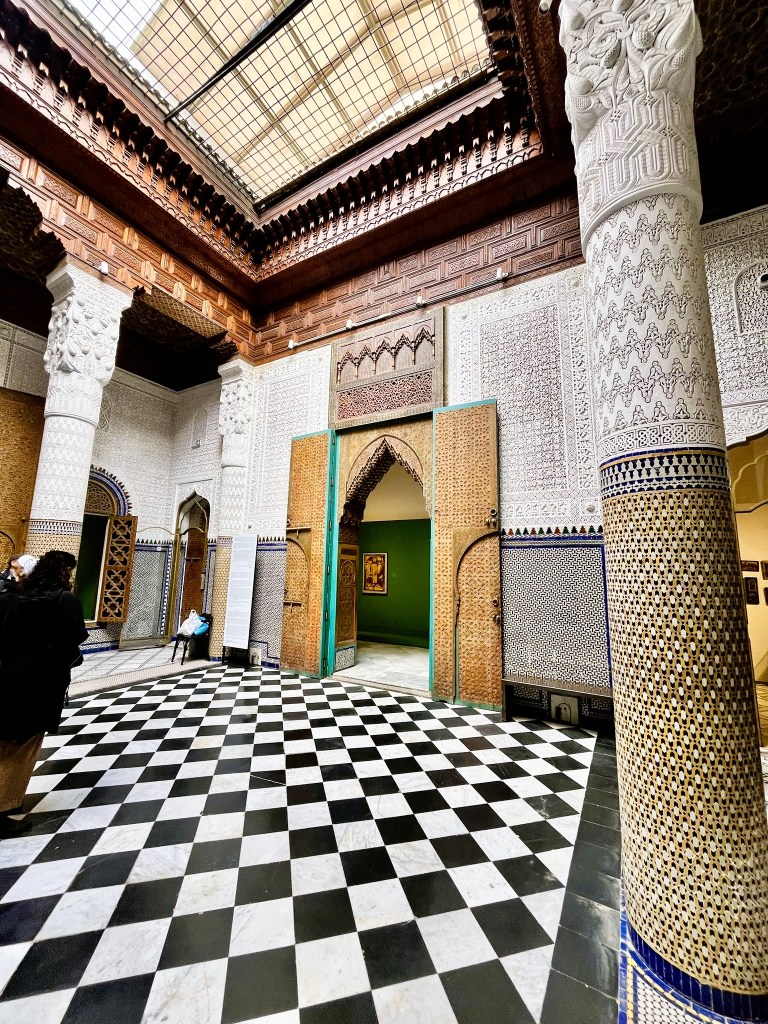
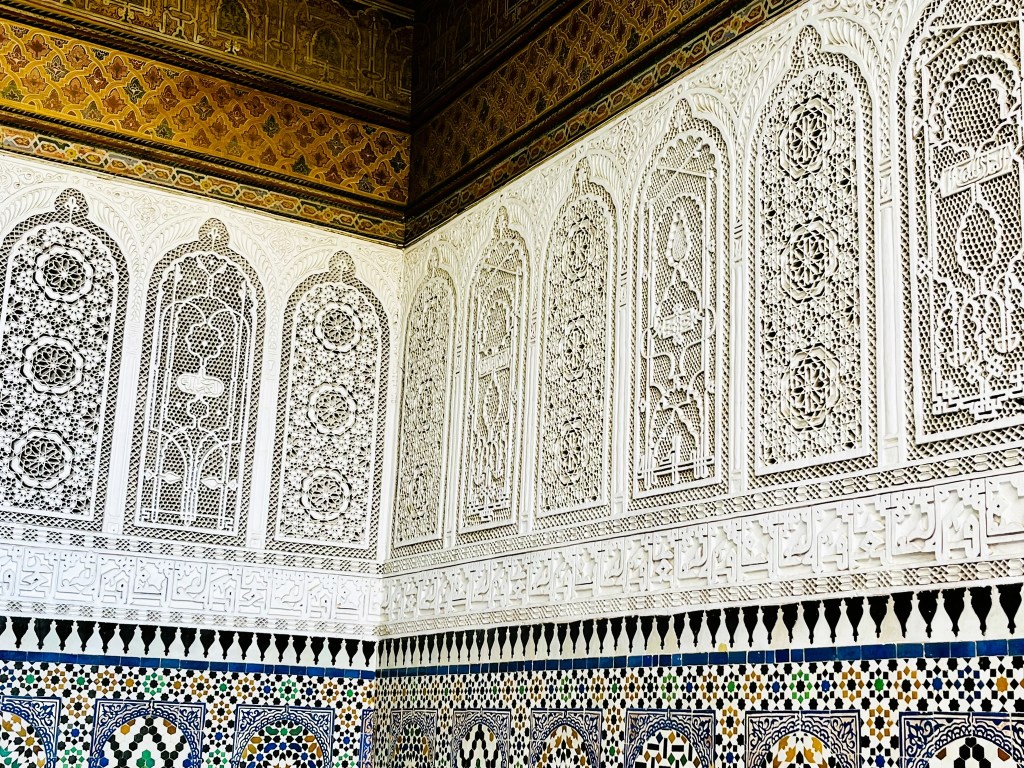
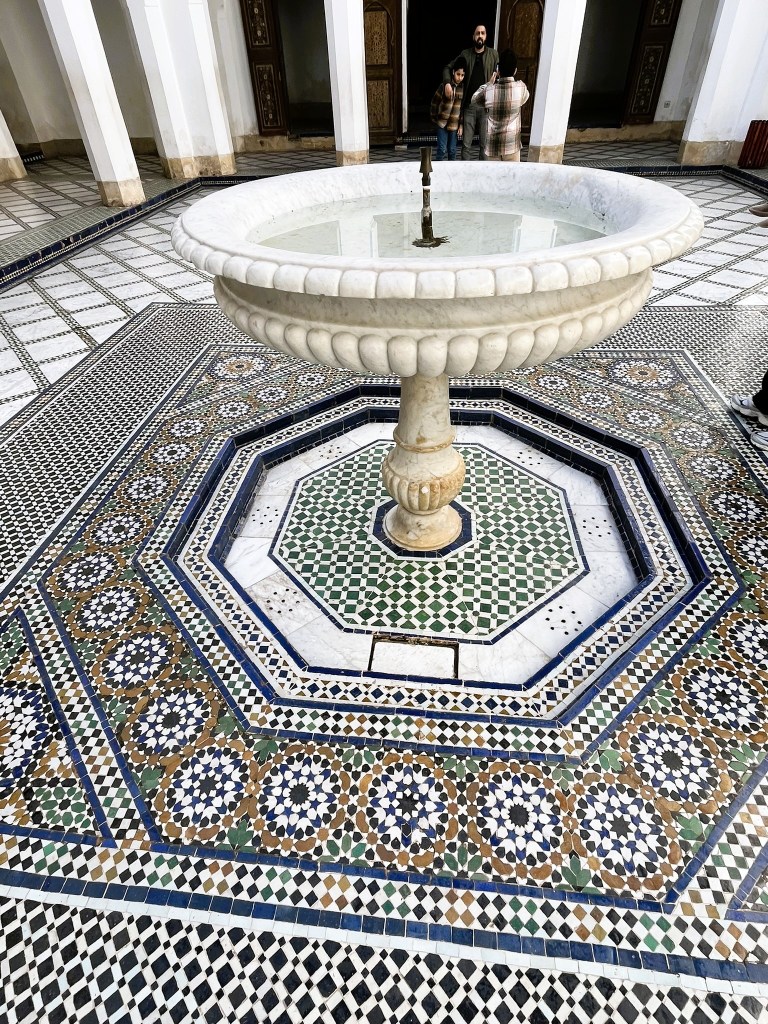
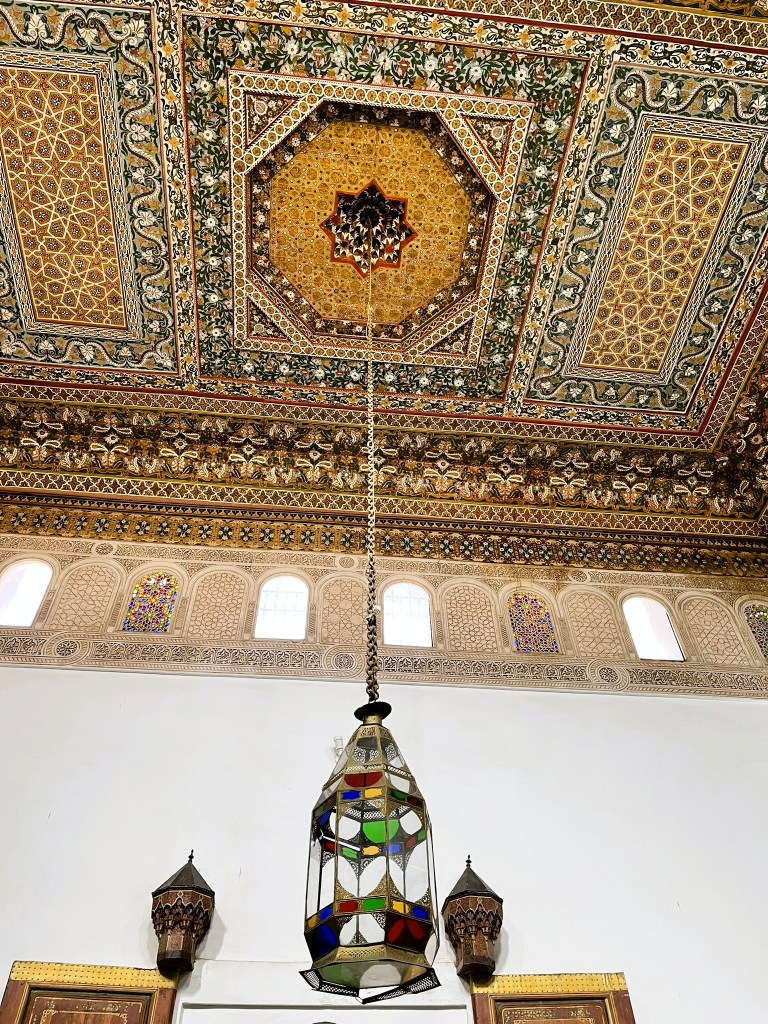
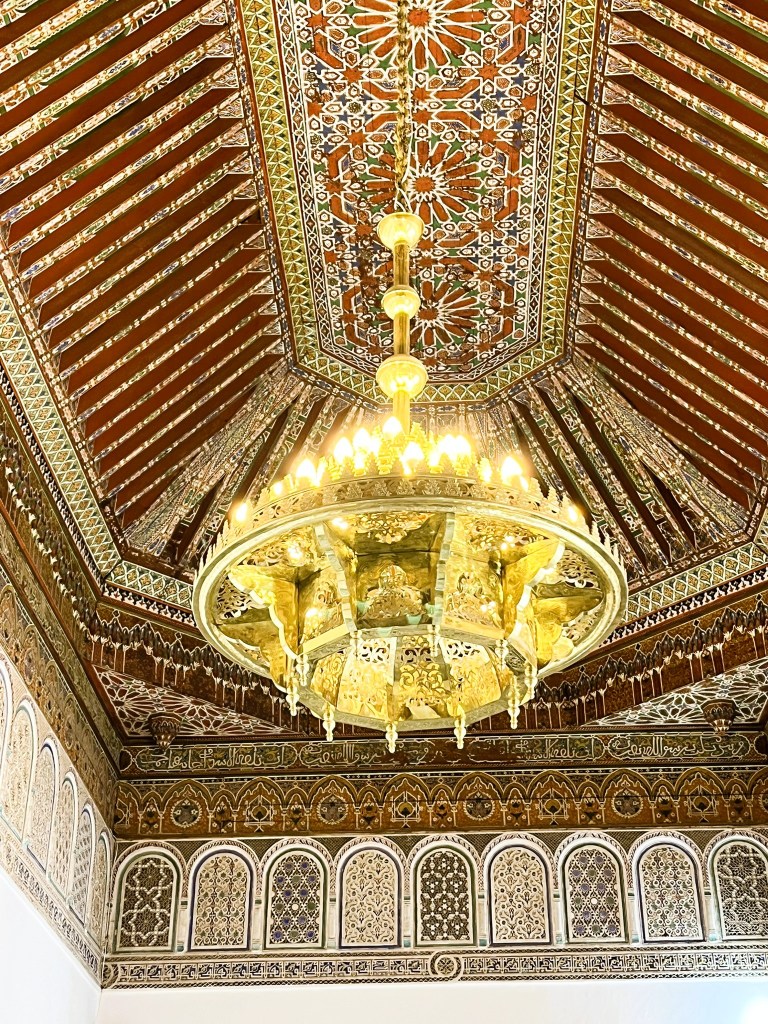
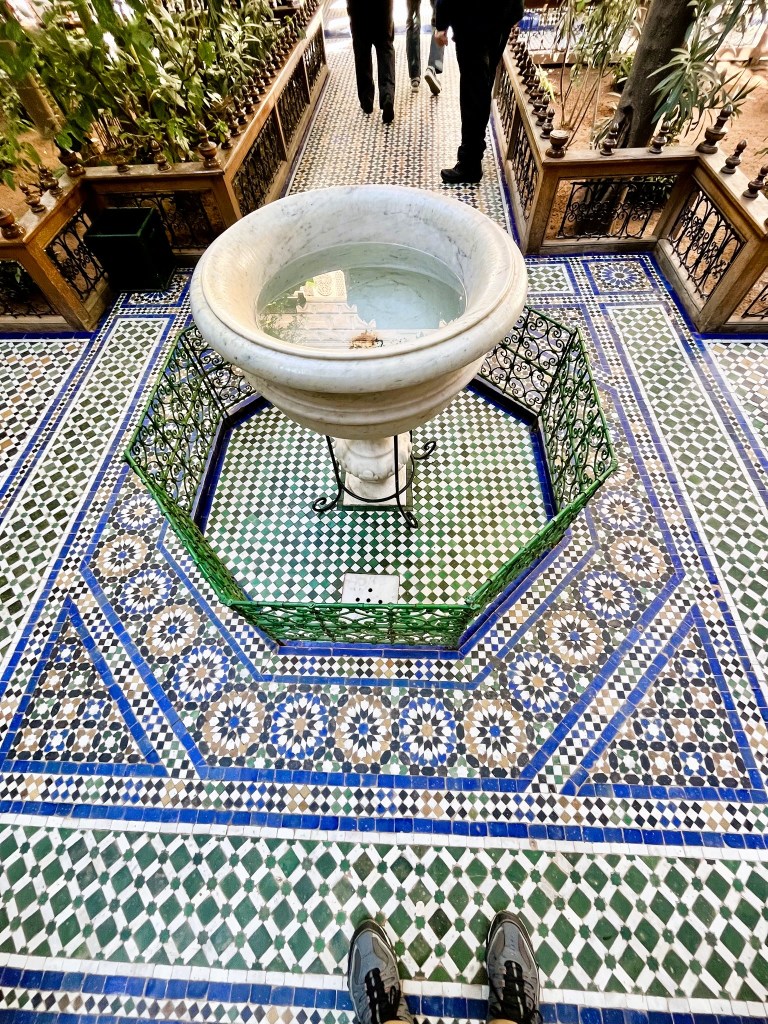
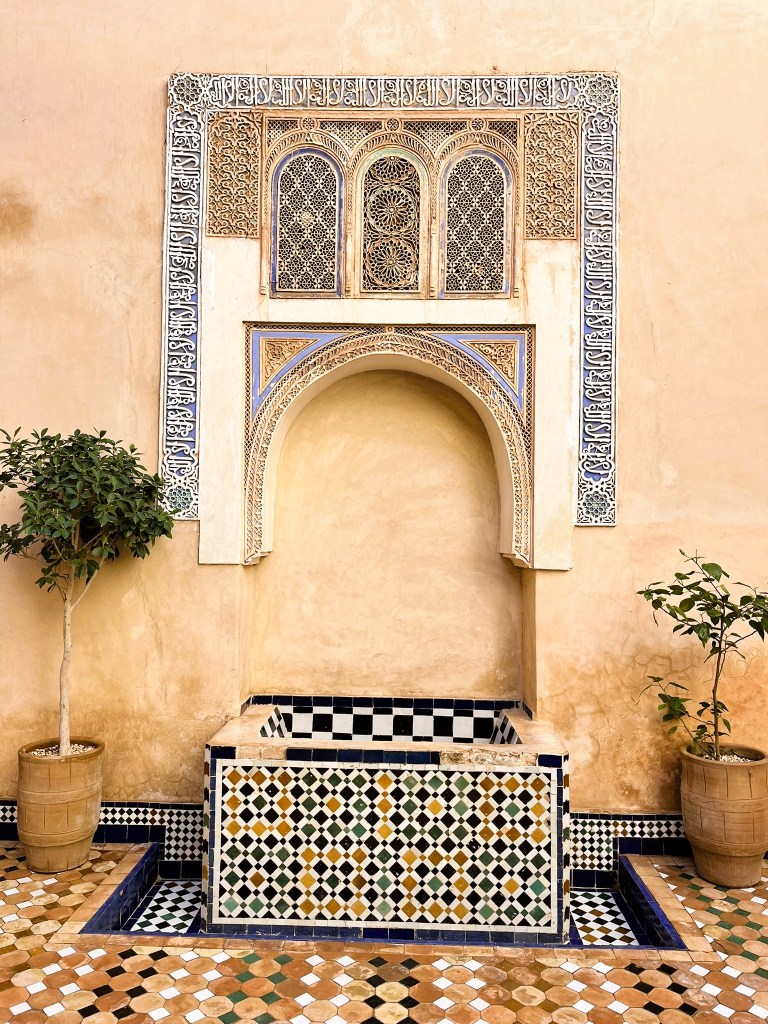
Called the “Palace of the Pasha,” Dar El Bacha is a stunning example of Moroccan architecture and craftsmanship. Built in 1910, this magnificent palace features traditional elements like beautifully landscaped gardens, carved cedarwood ceilings and intricate, handmade, intentionally imperfect tiles known as zellige.
Constructed for Pasha Thami El Glaoui, an influential figure during the early 20th century, Dar El Bacha reflected the power of “the Lord of the Atlas” as he welcomed local dignitaries, foreign emissaries, artists, and writers.
Bahia Palace
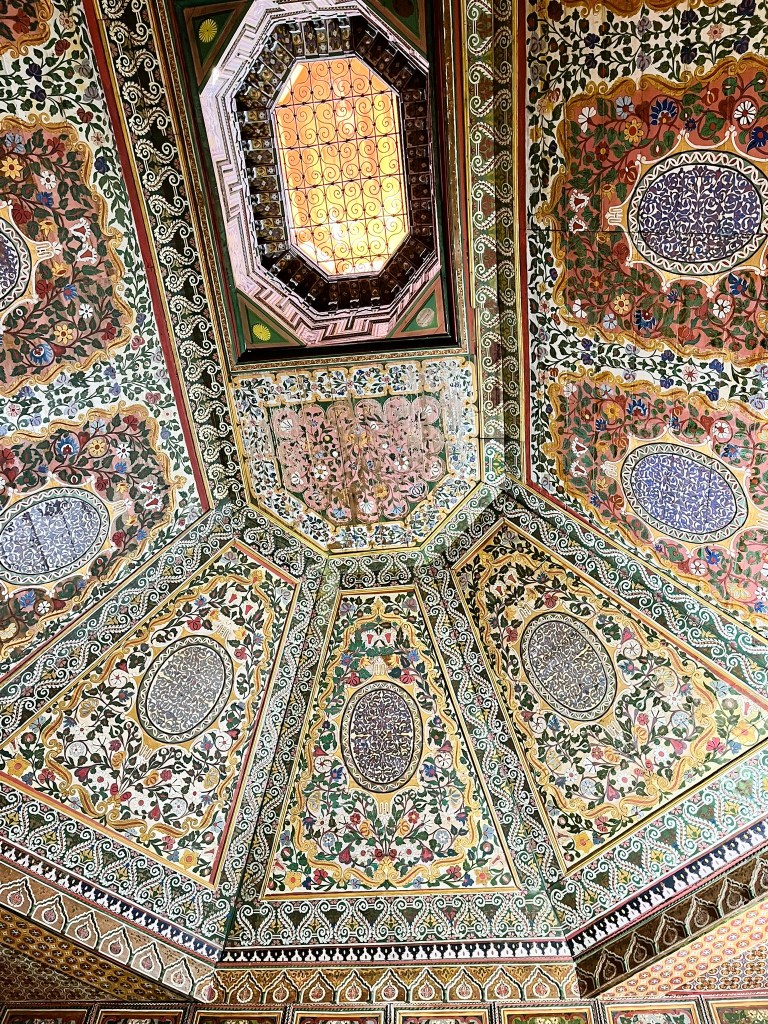
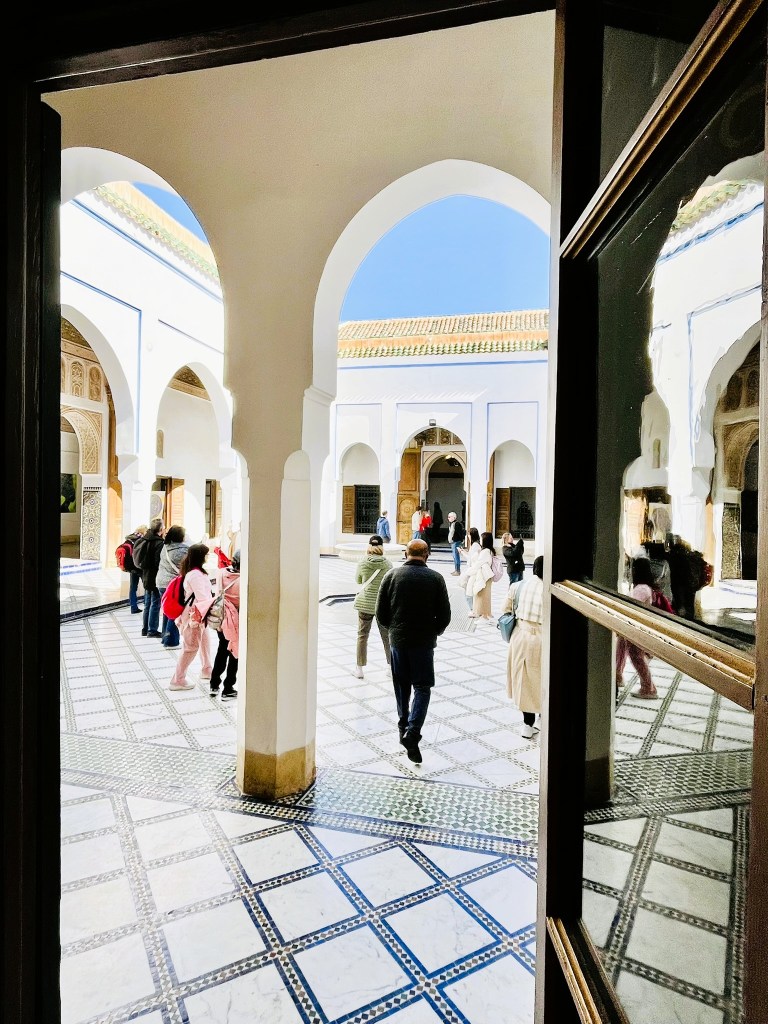
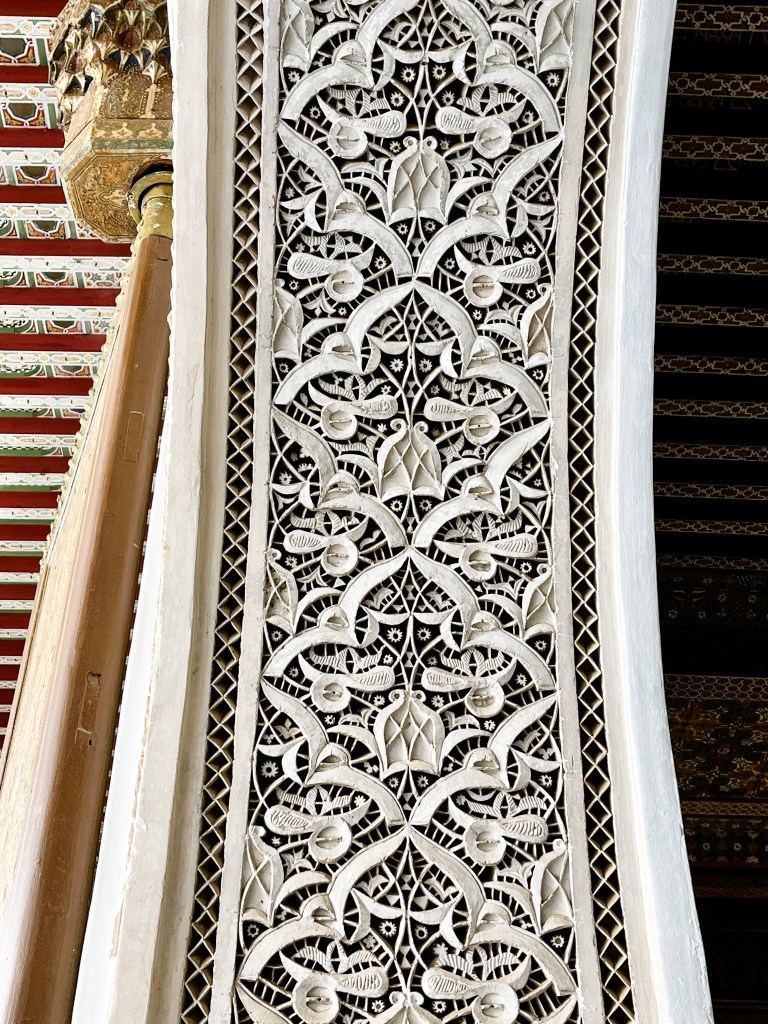
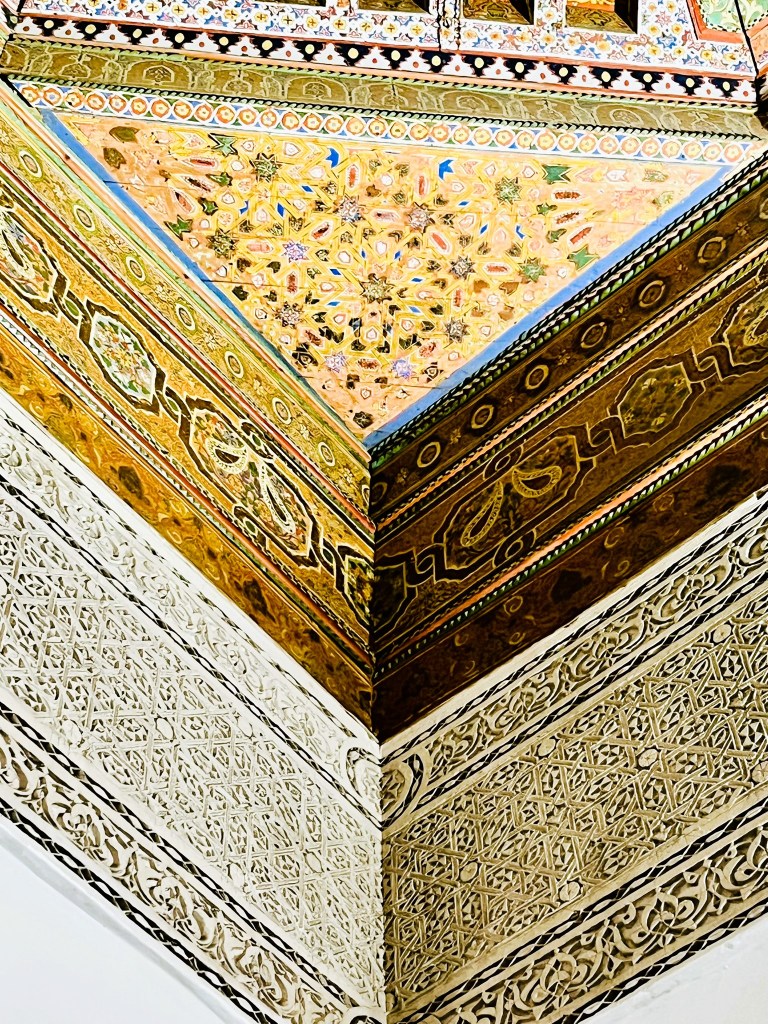
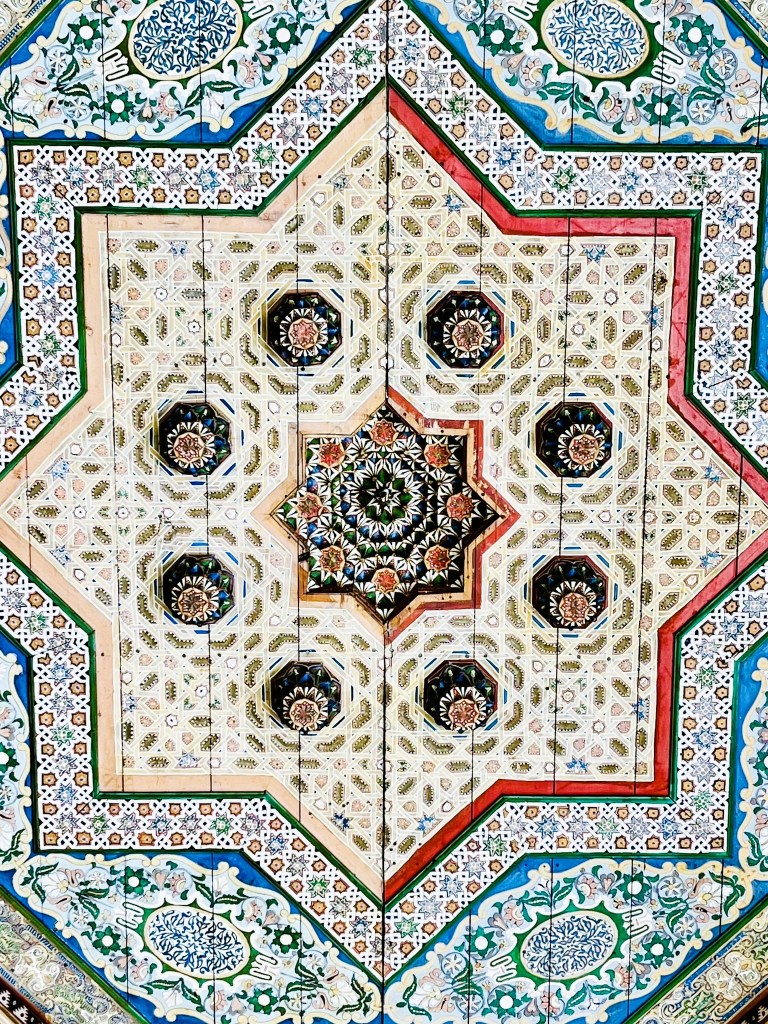
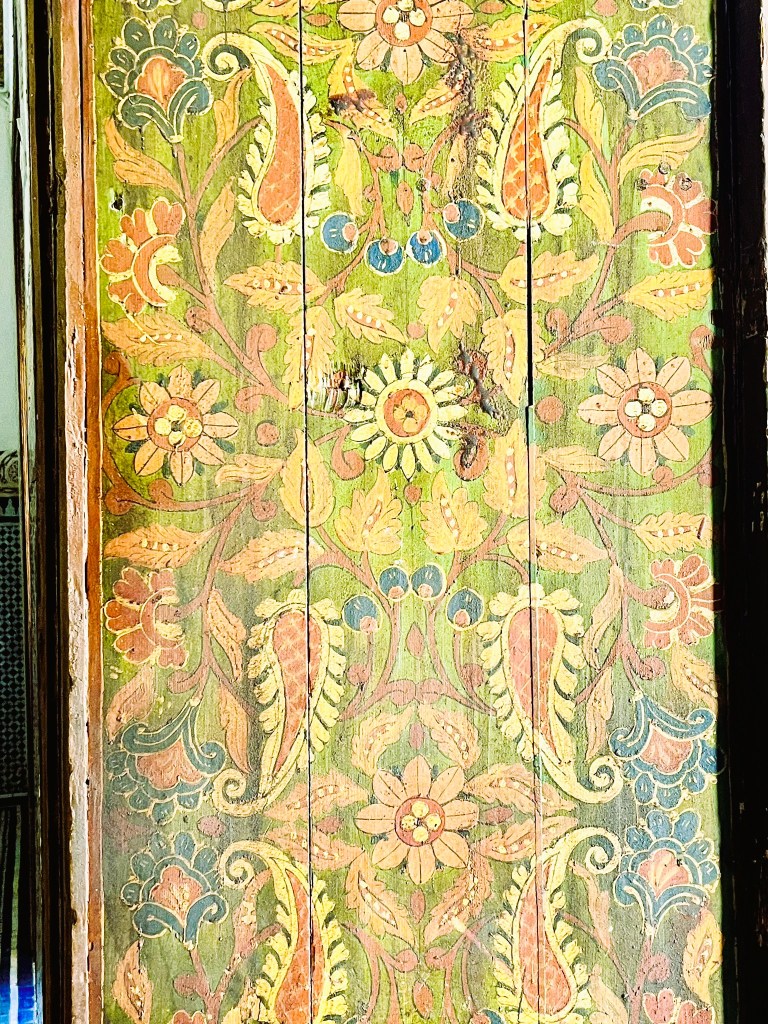
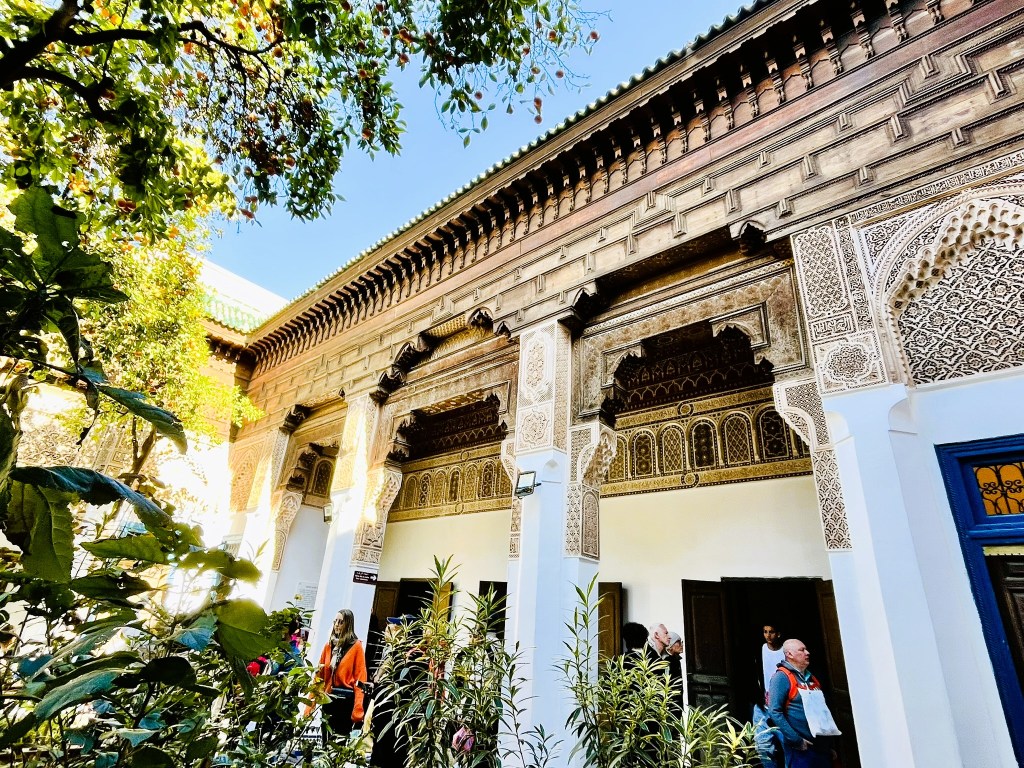
A masterpiece of Moroccan and Andalusian design, the stunning 19-century Bahia Palace was considered the greatest palace of the era.
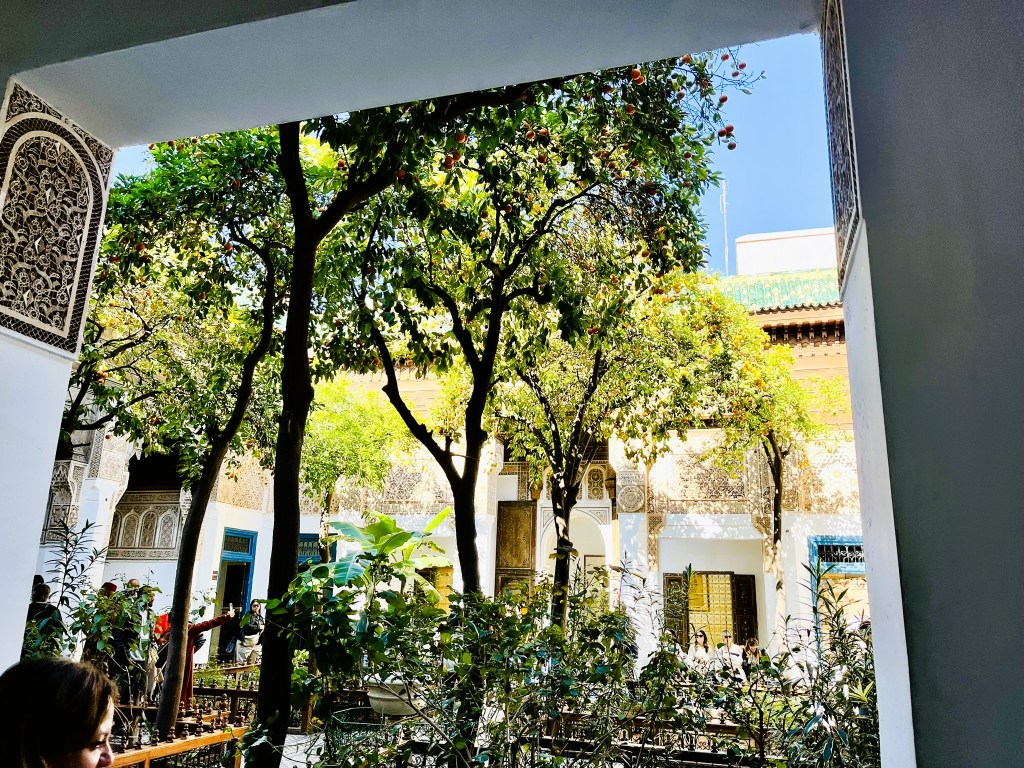
Built in the 1860s, the residence featured a garden with central basin surrounded by rooms to house the concubines and wives of the Grand Vizier Si Moussa. The son of a black slave, Si Moussa had worked his way to the top of the sultan’s court. After his death, Si Moussa’s son Ba Ahmed replaced him as vizier until the sultan’s untimely death. Then, to ensure the succession of the young heir, Ba Ahmed became regent to the 14-year-old sultan and de facto ruler of Morocco, an impressive political achievement for the grandson of a slave.
During his time as regent, Ba Ahmed expanded Bahia Palace by adding private quarters and reception halls to create a maze-like layout with 160 sprawling rooms surrounded by beautiful gardens.
Ben Youssef Madrasa
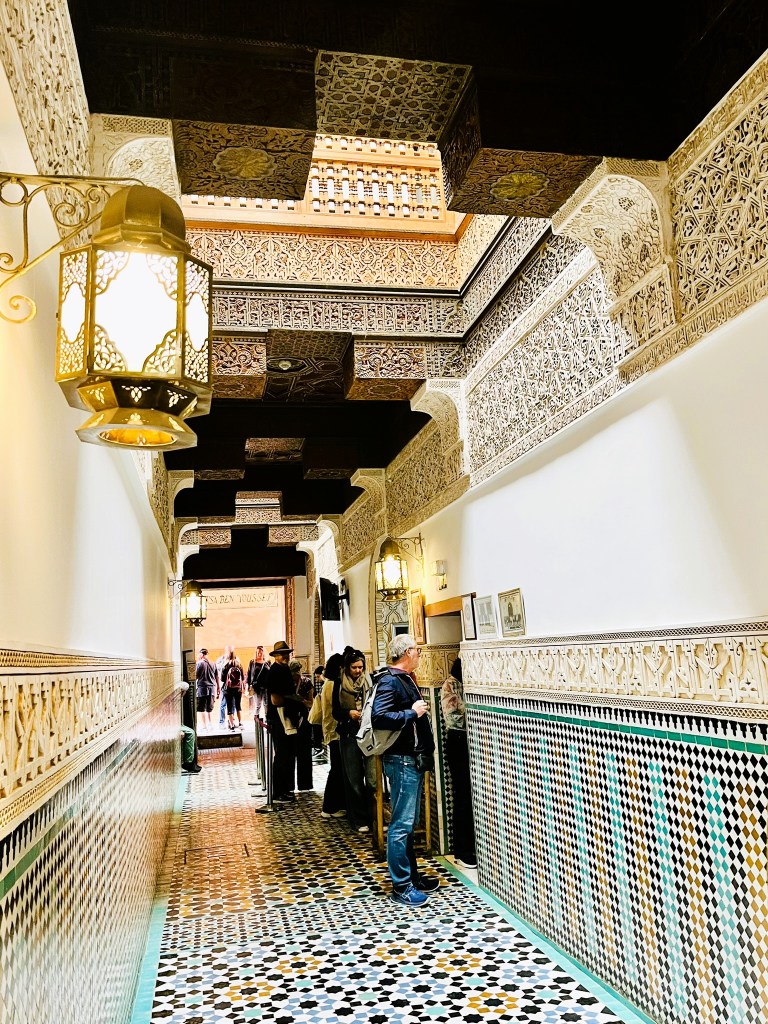
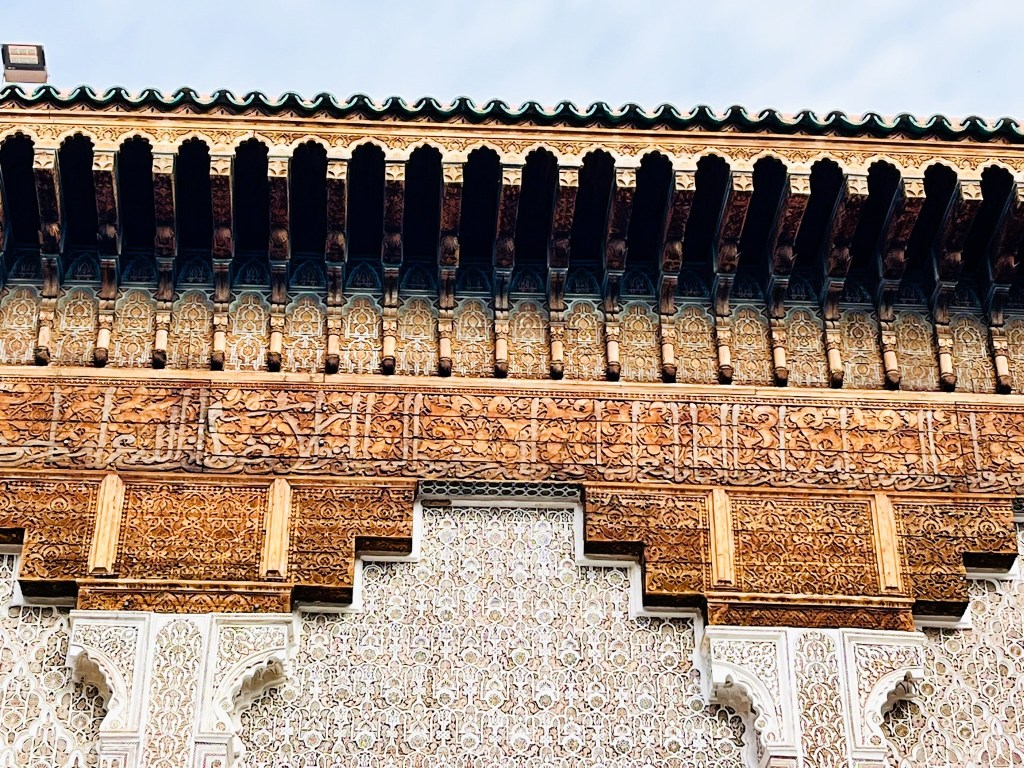
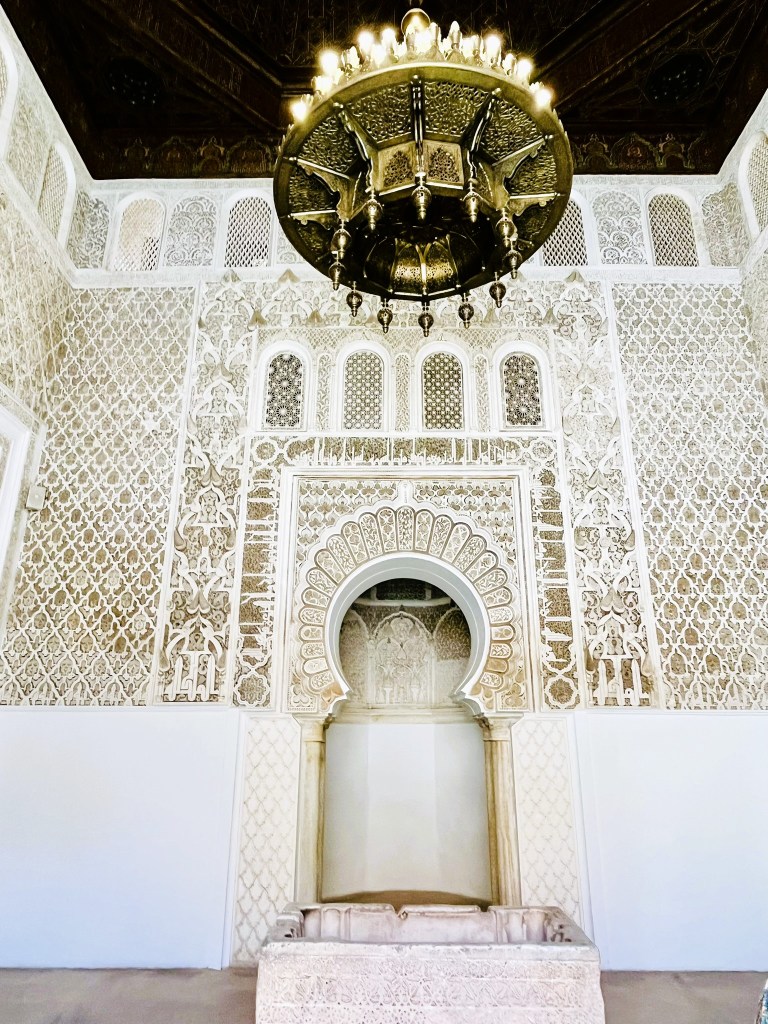
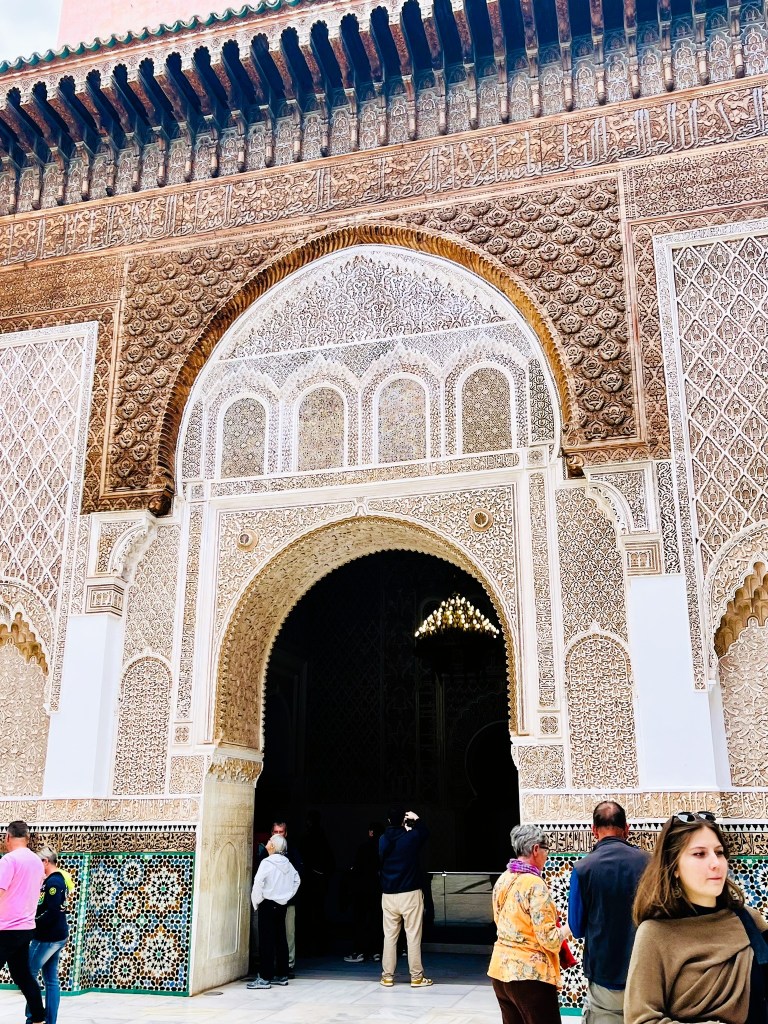
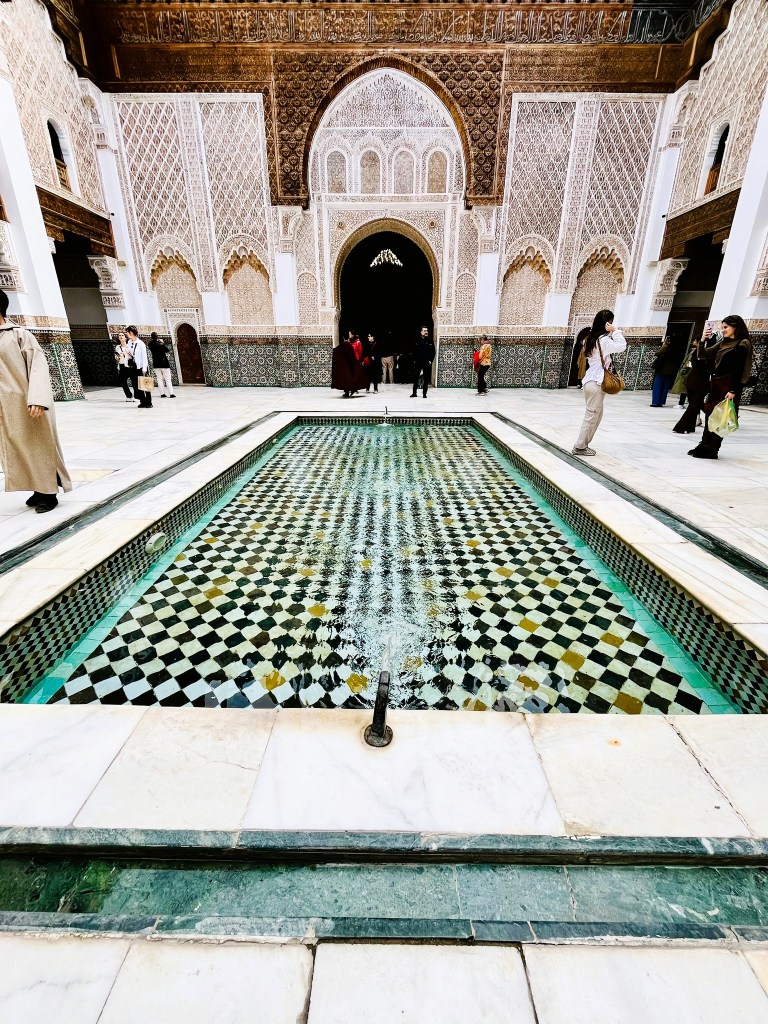
In the Islamic world, a madrasa is an elite institution of higher learning. Located in the heart of Marrakech’s ancient medina, Ben Youssef Madrasa offers a peek inside one of the city’s pre-eminent schools, a university that once drew students from across North Africa to study science, philosophy, medicine, mathematics, and religion.
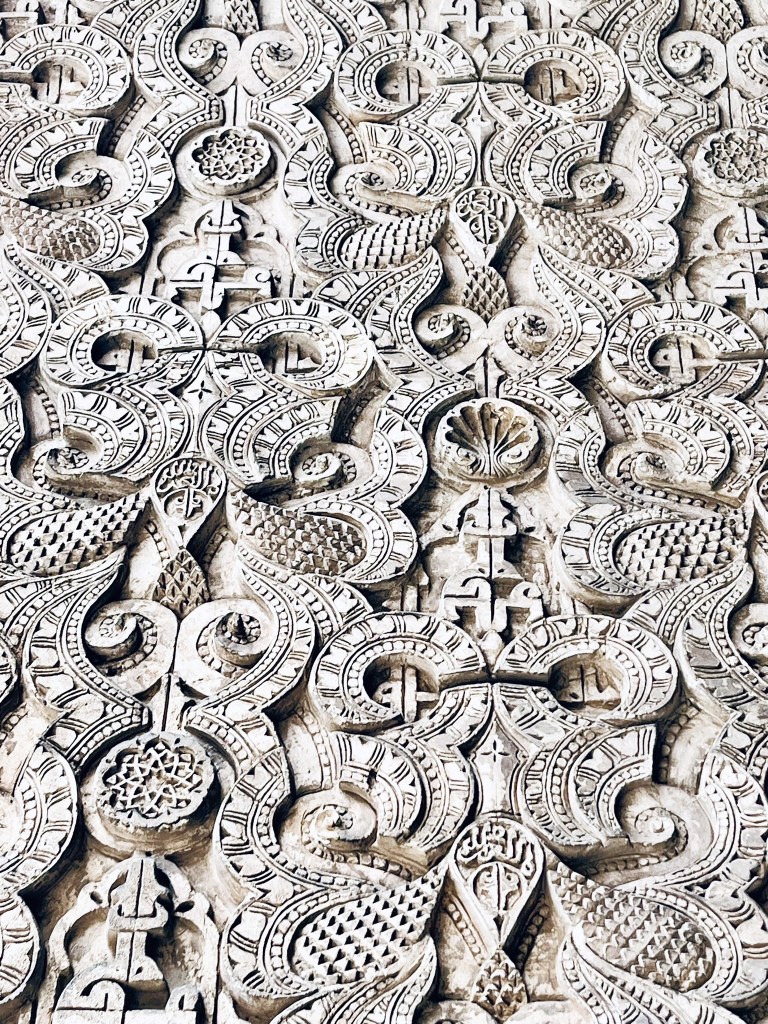
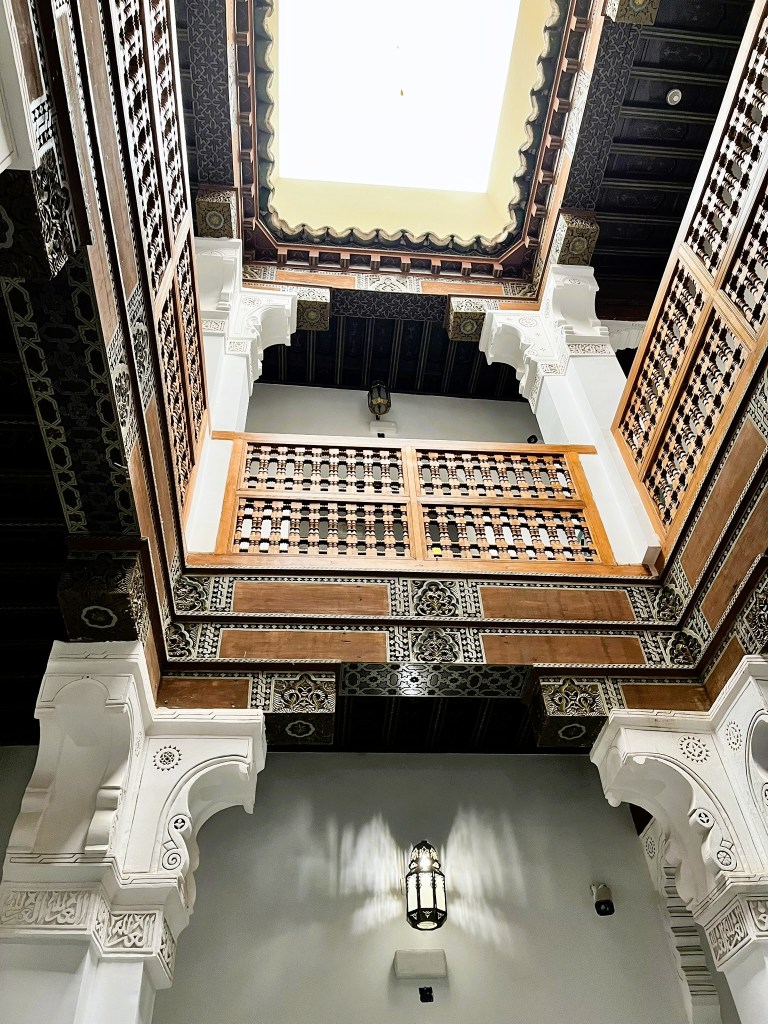
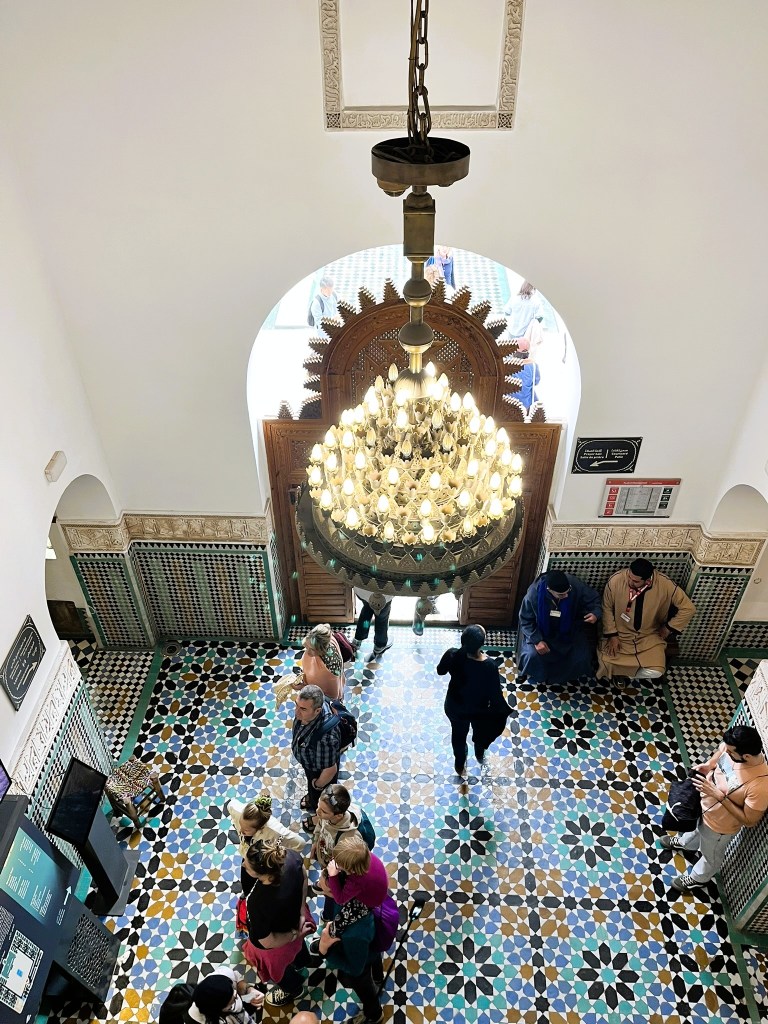
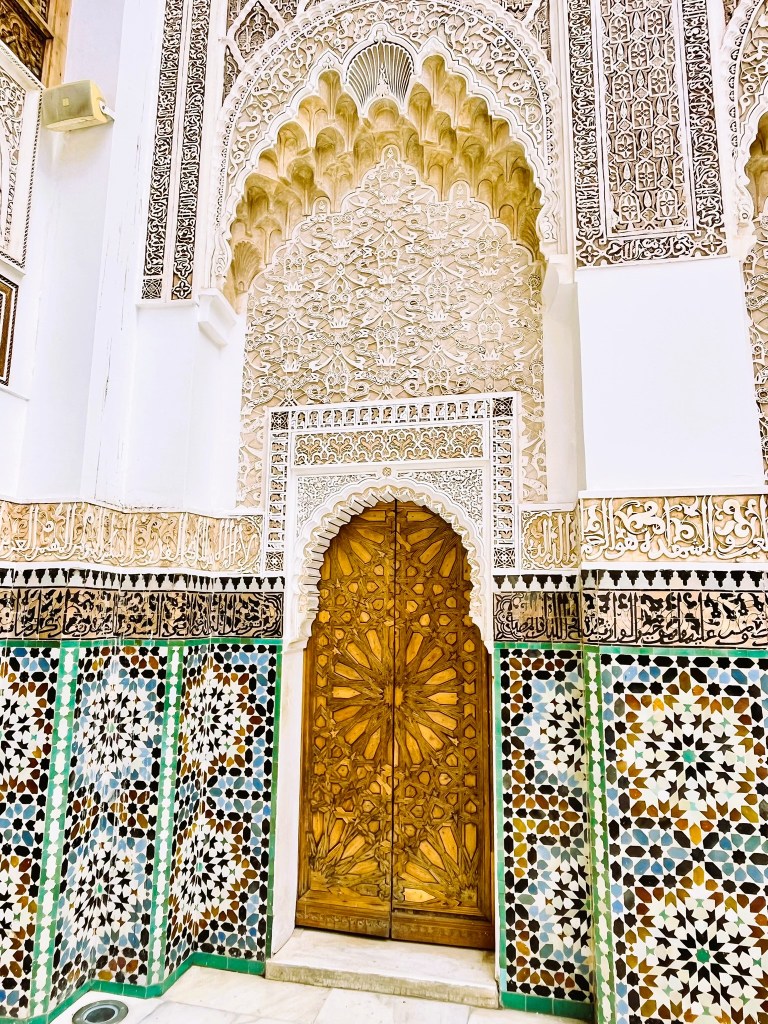
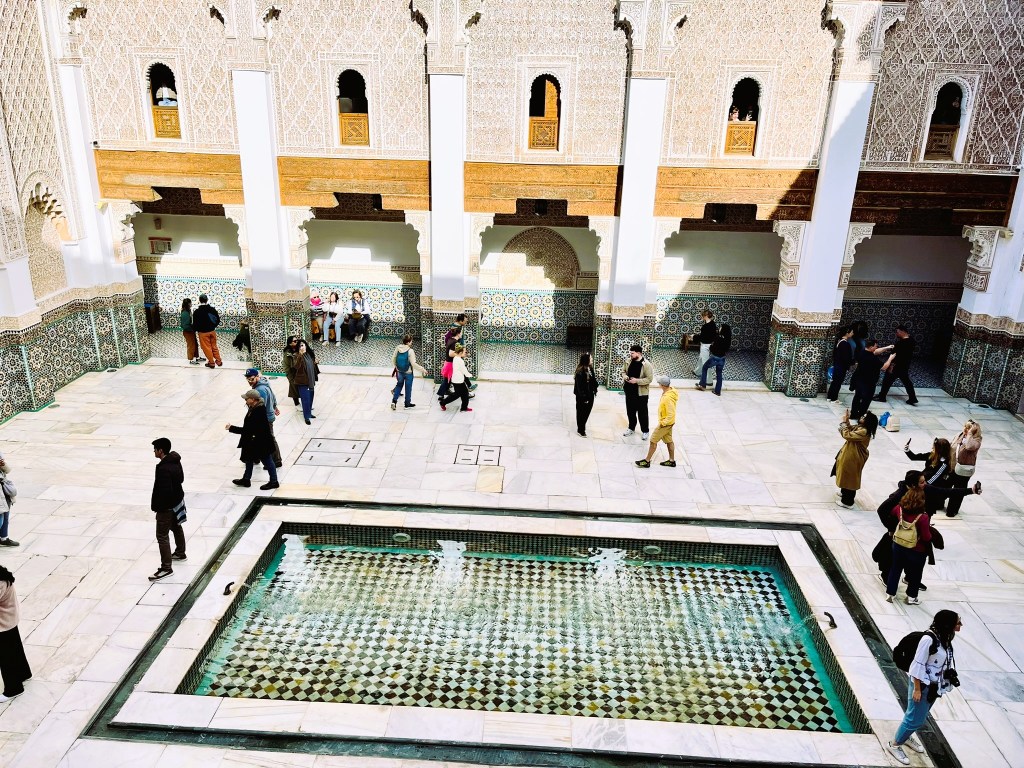
Now a museum, the madrasa has been beautifully restored to its original splendor with handmade zellige tiles in floral and geometric motifs and the intricately carved wooden doors of the students’ dorms. While the living quarters were small, students often spent their days reading, studying, and praying in the calm serenity of the central courtyard.
Reid and I hope you enjoyed this tour of places we saw in the Red City. Next week we’ll pick up where we left off and detail two magnificent gardens you won’t want to miss on your next visit to Marrakech.
 Reid & Robie