
I think that the ideal space must contain elements of magic, serenity, sorcery and mystery.
– Luis Barragan
When the busy souk and crowded alleyways of the Marrakech medina got too overwhelming, Reid and I set out to find serenity in the peaceful green spaces of the Red City.
Le Jardin Secret
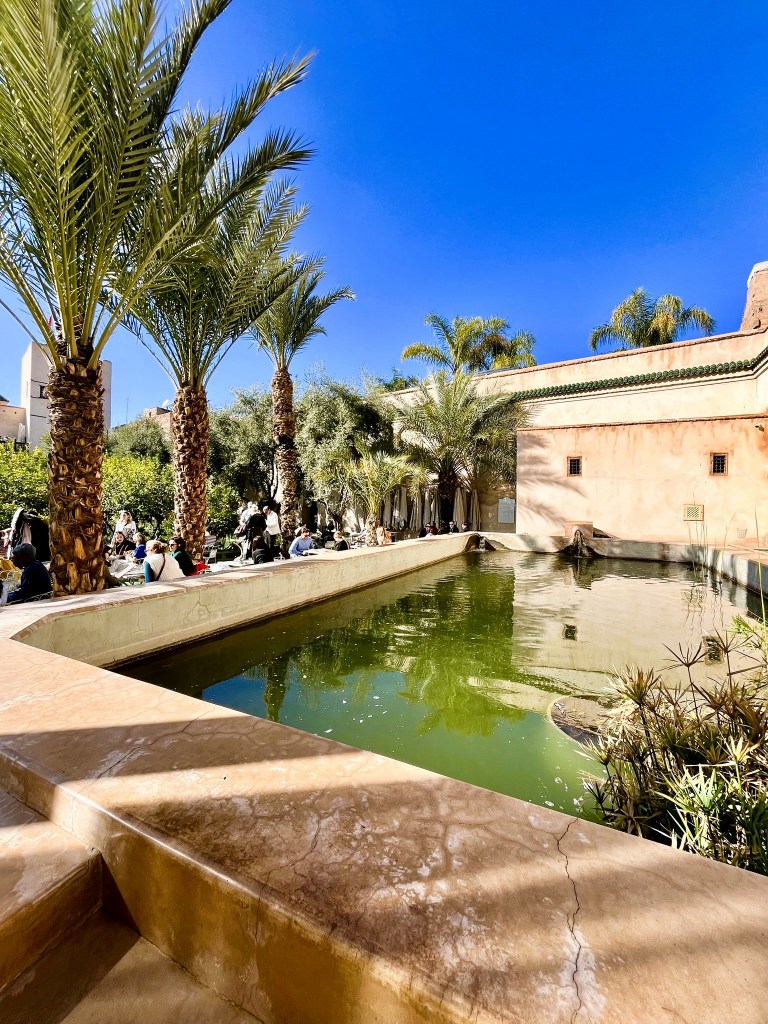
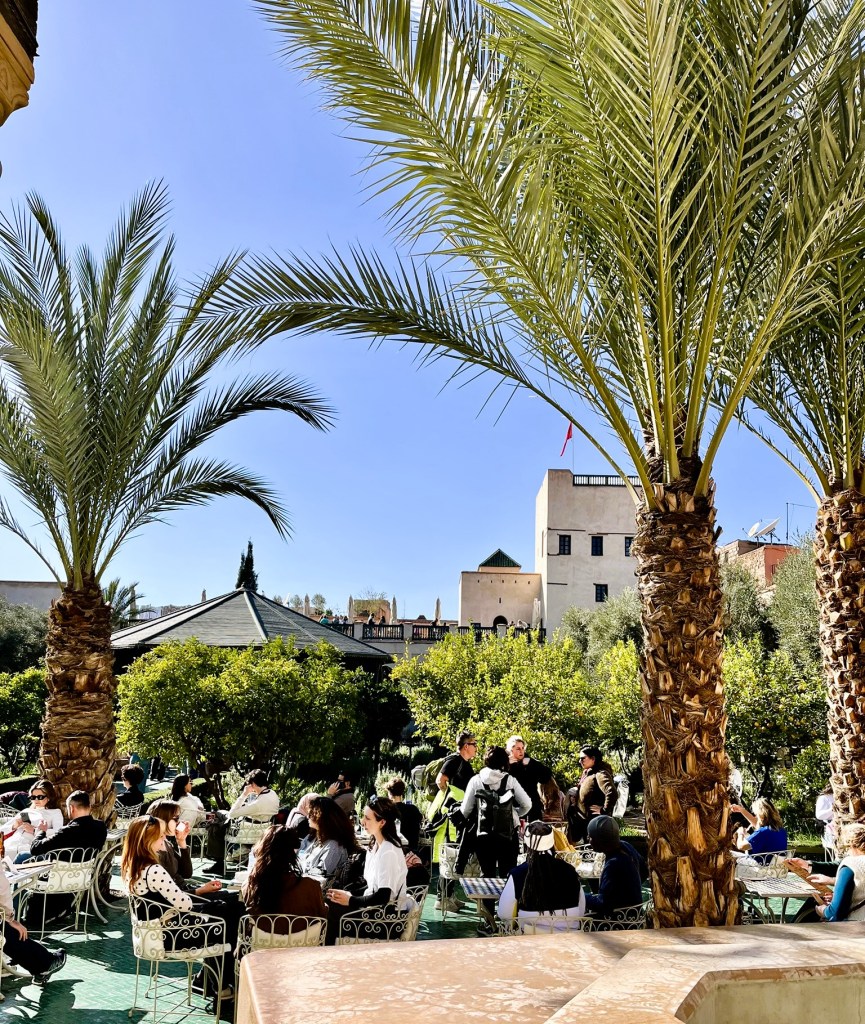
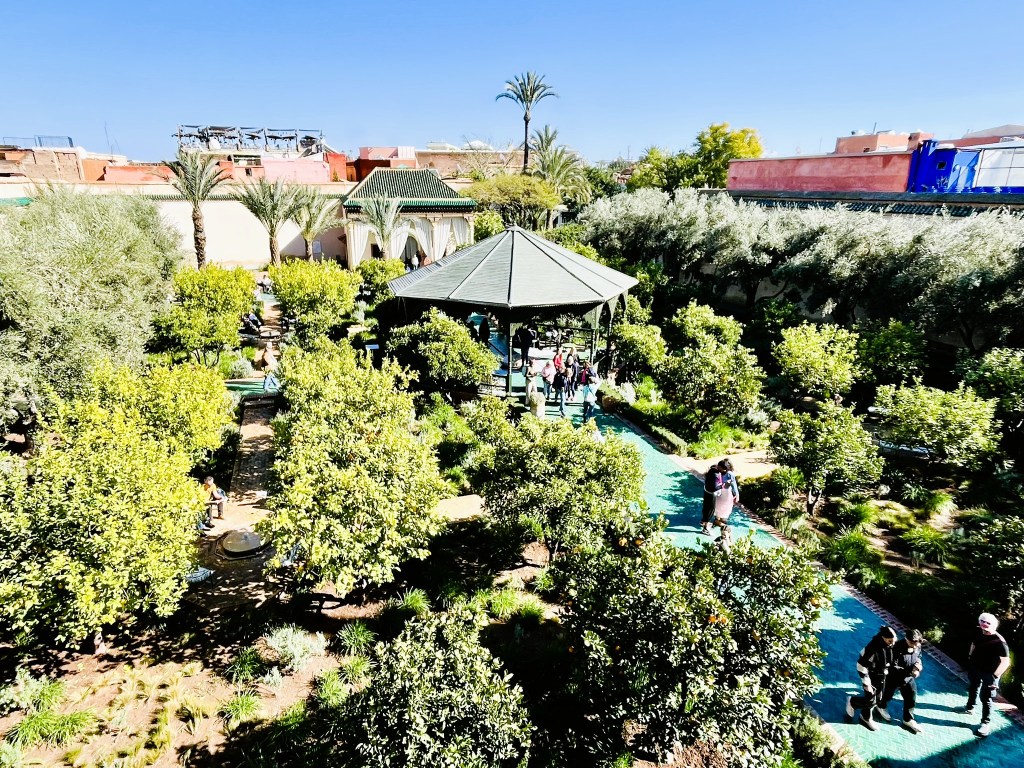
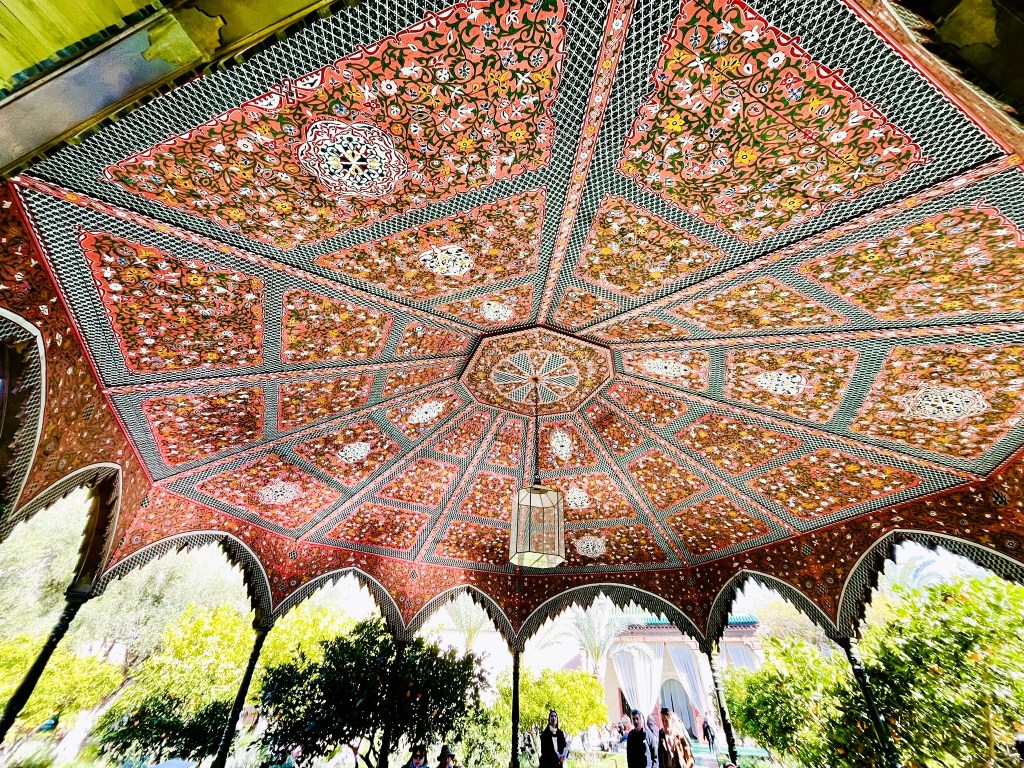
Situated in the Mouassine quarter of the medina, this restored 400-year-old palace complex features two distinct gardens.
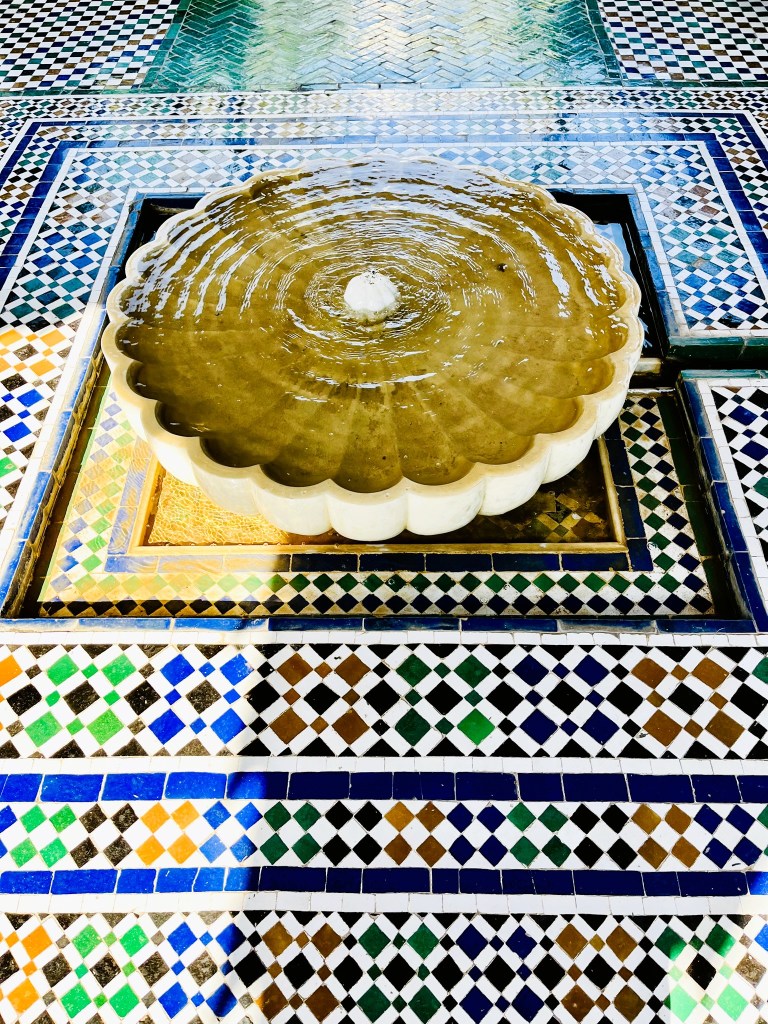
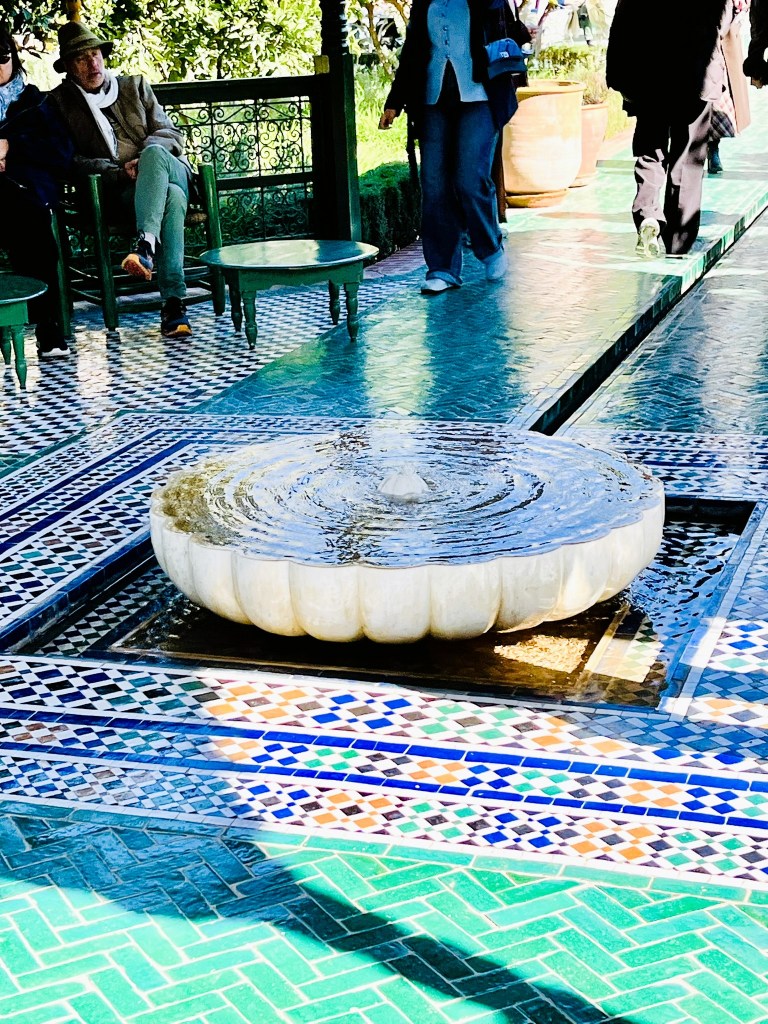
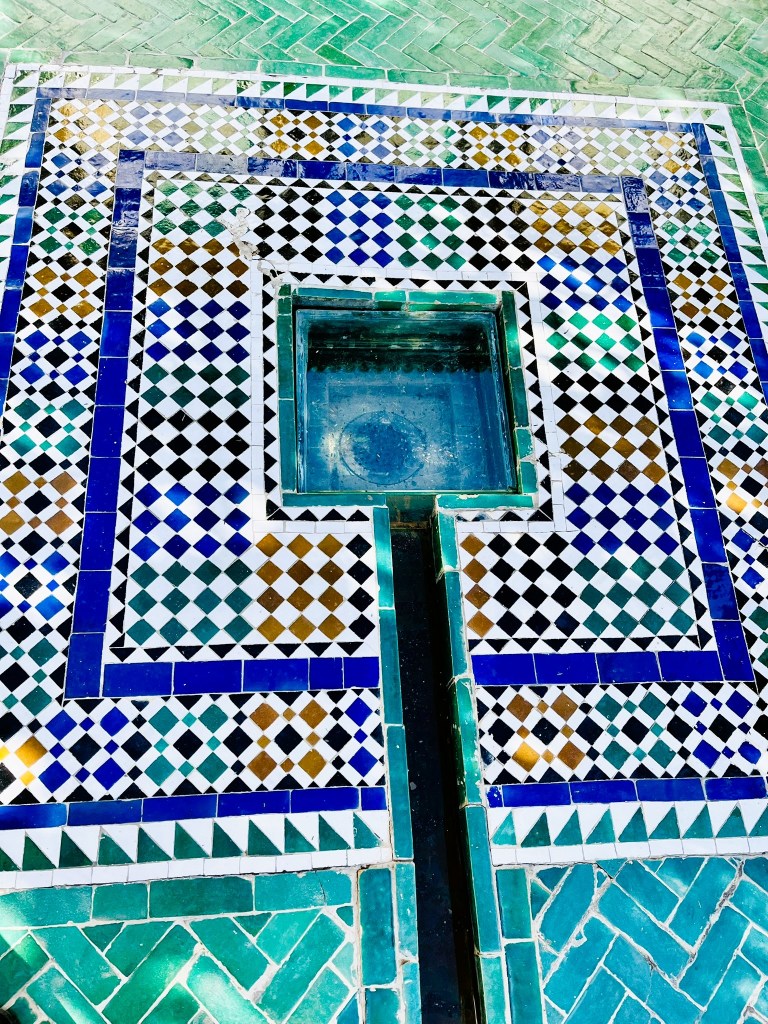
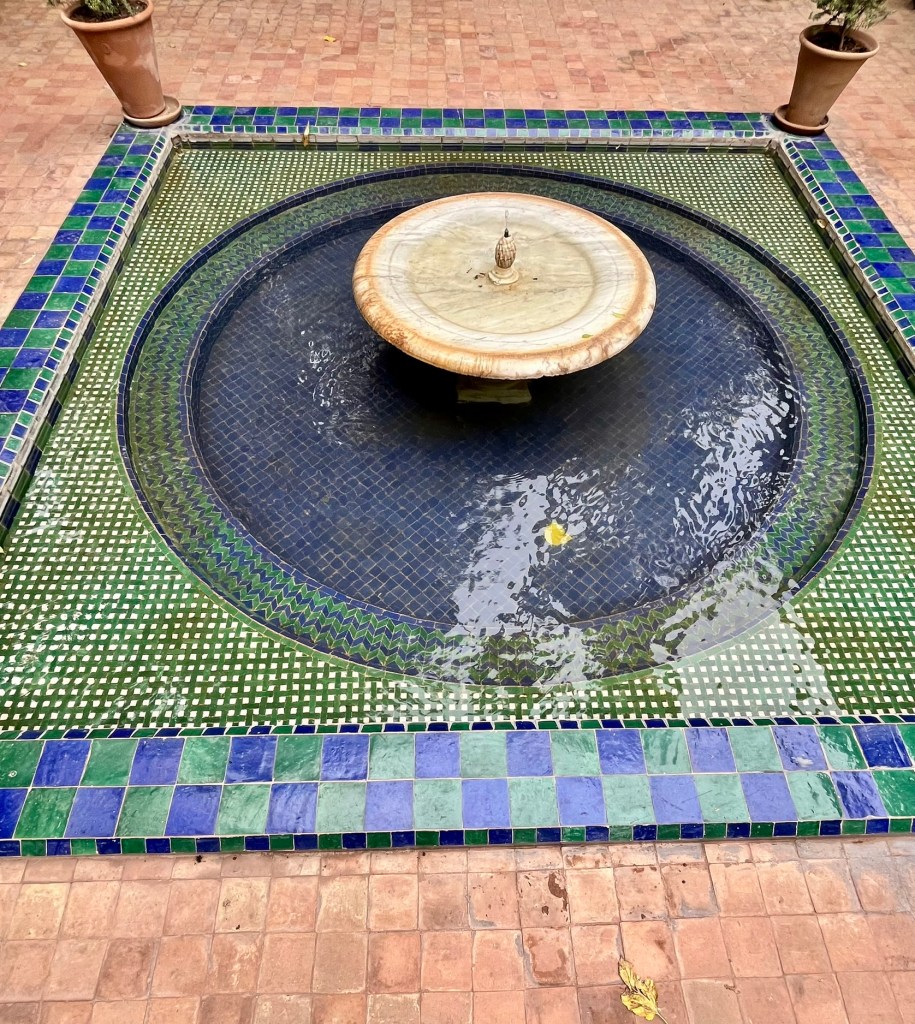
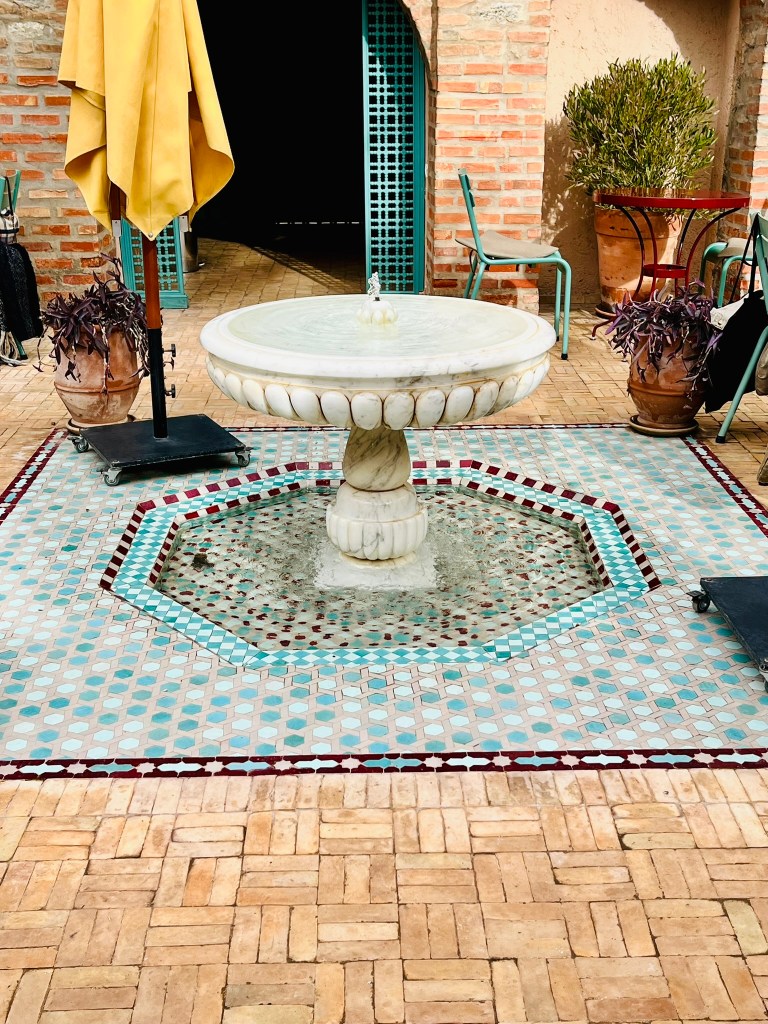
The Islamic Garden represents a tranquil paradise following the 16th century principles of Chahar Bagh, or the Four-Fold Design. Inside the walled enclosure, this inward-looking sanctuary offers a peaceful, private atmosphere for contemplation. It features a geometric four-quadrant layout representing the four rivers of Paradise from the Persian tradition. Water, delivered through straight, narrow, green zellige tiles brings nourishment to the plants, provides a cooling effect and reminds us that water is both life and reflection. The plantings follow a structured, geometric pattern separating fruit trees like citrus, fig, olive and pomegranate from aromatic herbs such as lavender, rosemary and thyme providing not only nourishment but a sweet aroma.
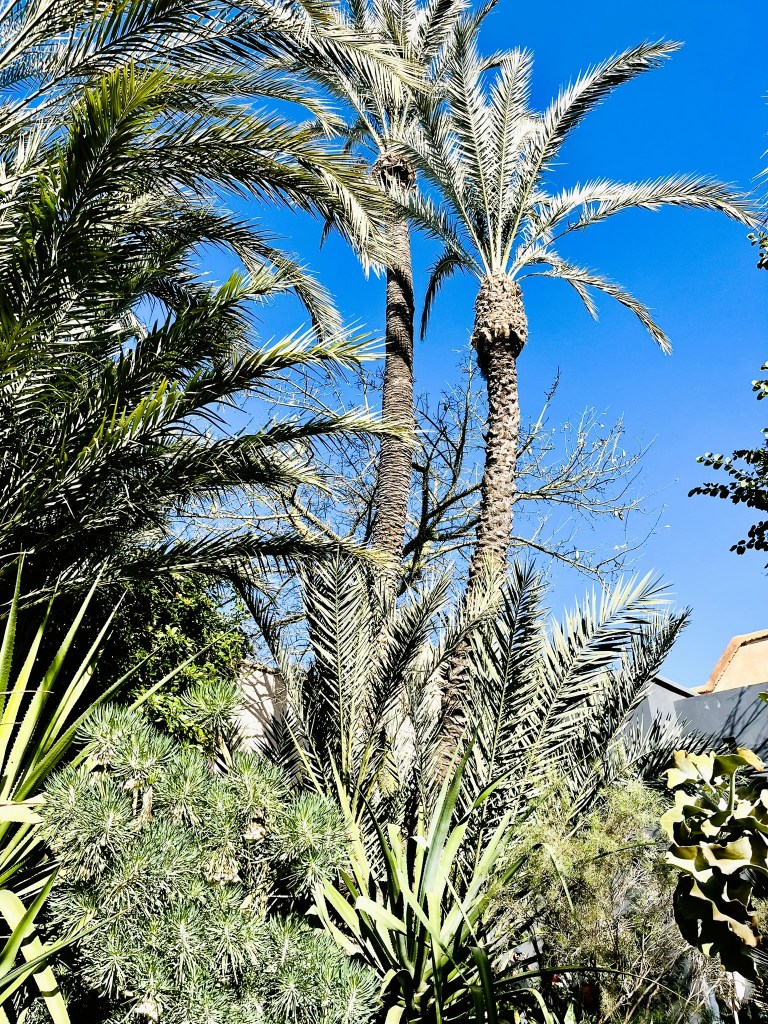
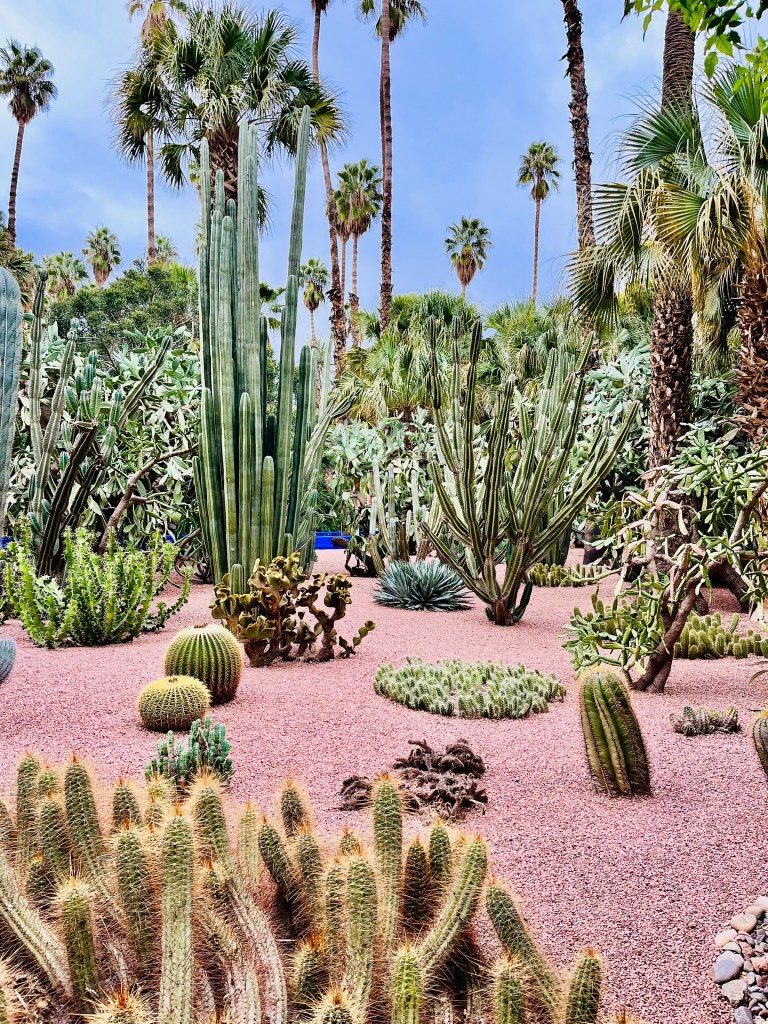
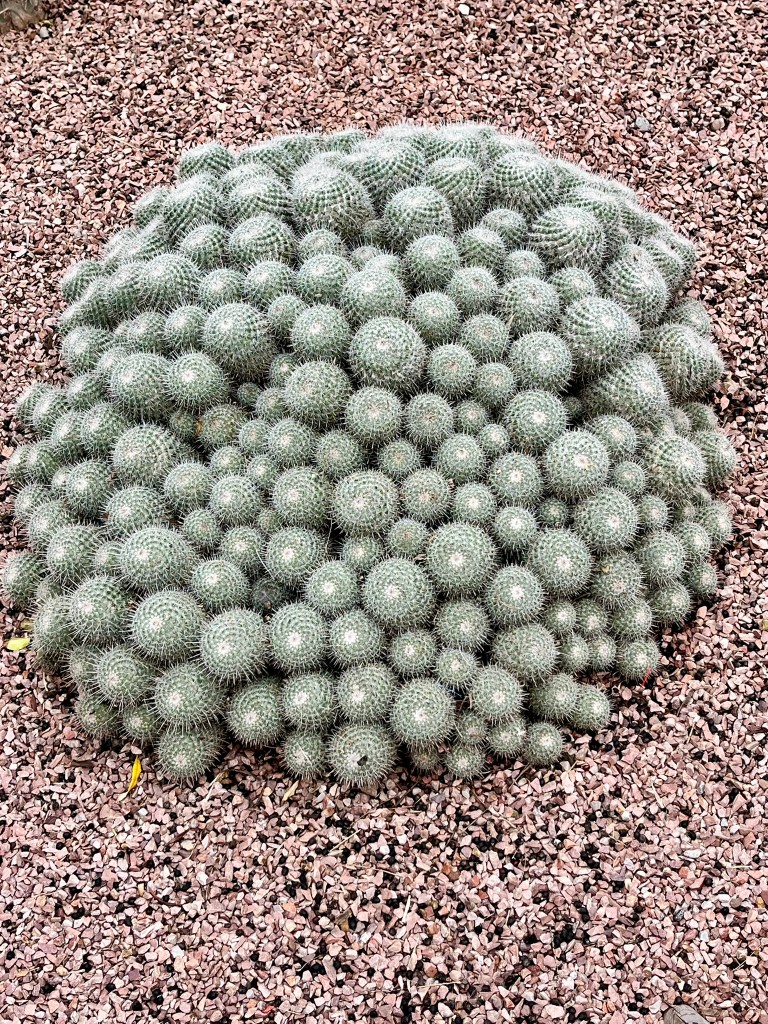
By contrast, the jungle-like Exotic Garden showcases plants from around the world. With trees and shrubs from South Africa, succulents and cacti from Mexico, grasses and perennials from Australia, the garden evokes an atmosphere of mystery with plants not typically found in Northwest Africa. With gravel paths running between the foliage, the garden invites visitors on a stroll through the dense, green, flowering mix of plants.
Originally built during the Saadian Dynasty, the palace fell into disrepair. After being meticulously restored in the 19th century, it reopened to the public and now features a boutique, bookshop and two cafés while preserving the gardens’ historical and cultural significance.
Jardin Majorelle
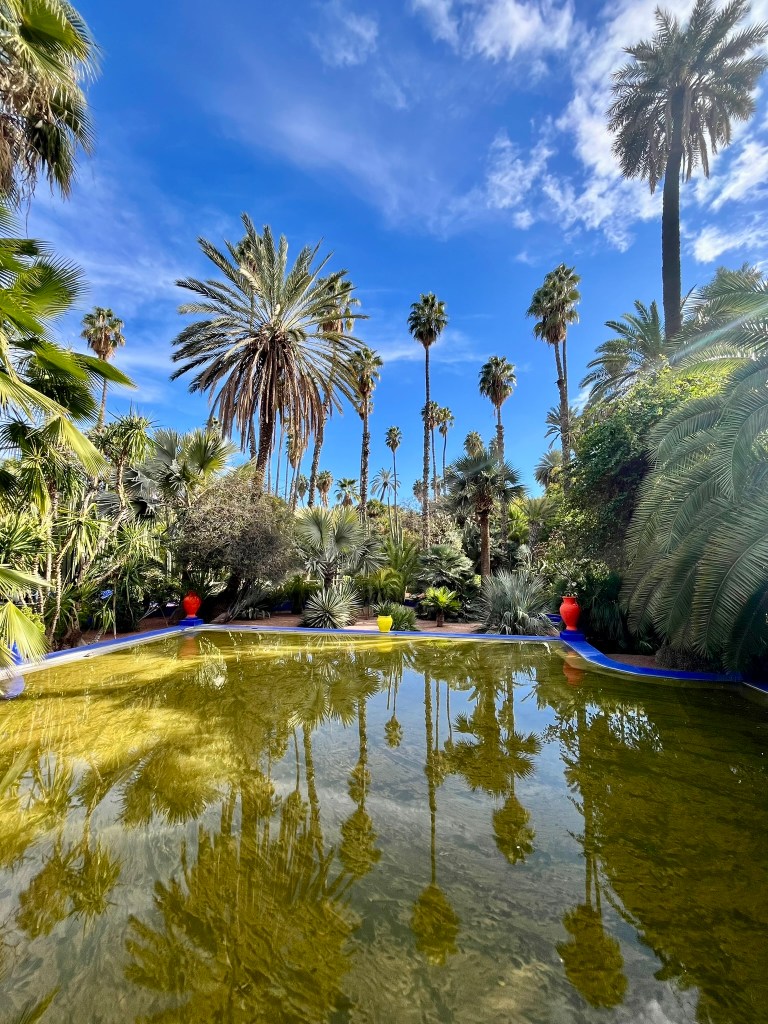
Originally designed by French artist Jacques Majorelle in the 1920s, this lush, two-acre botanical oasis was neglected and overgrown following Majorelle’s 1962 death. In 1980 the site was purchased and restored by French fashion designers Pierre Bergé and Yves Saint Laurent.
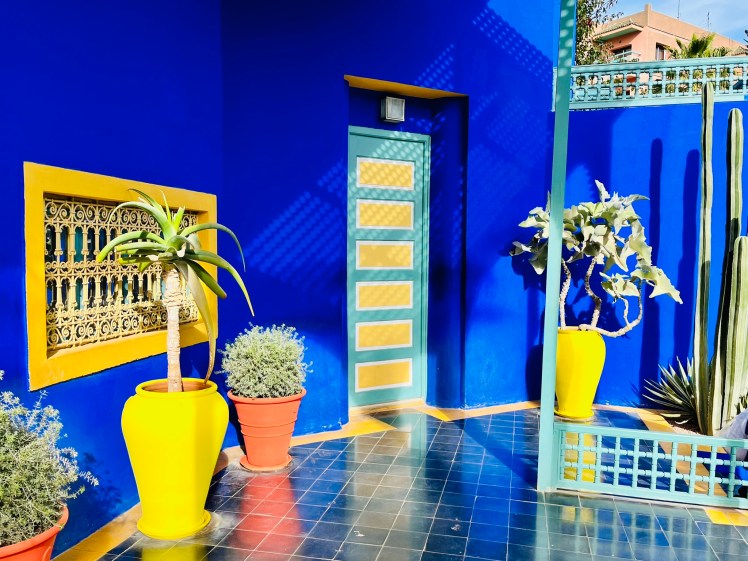
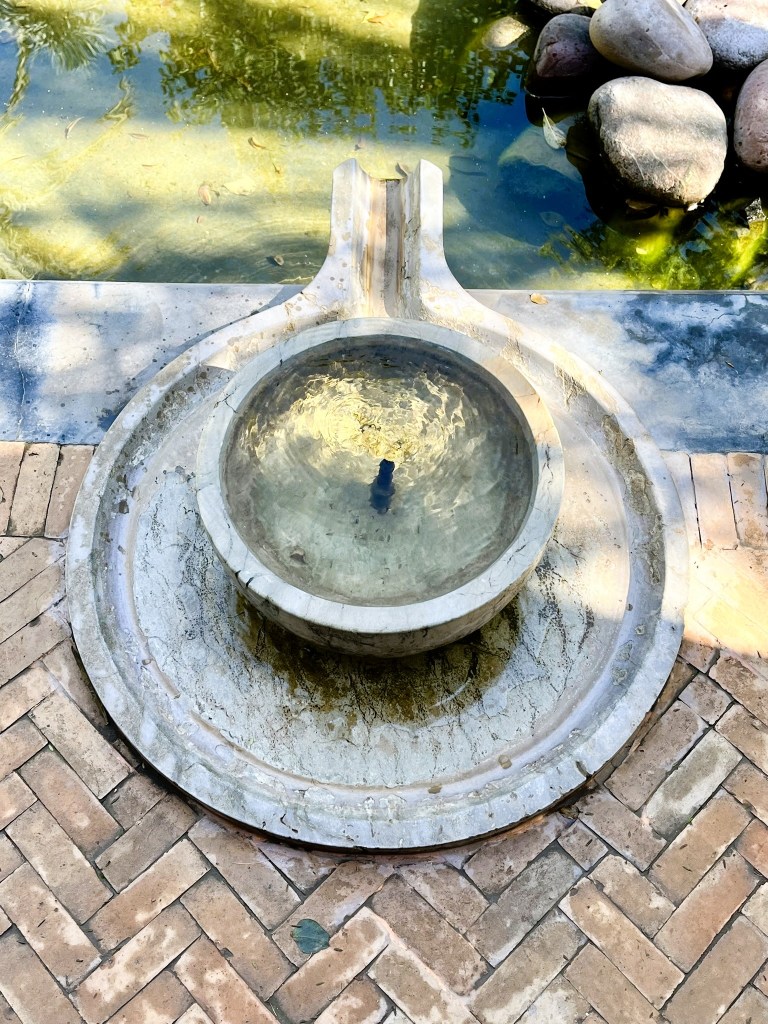
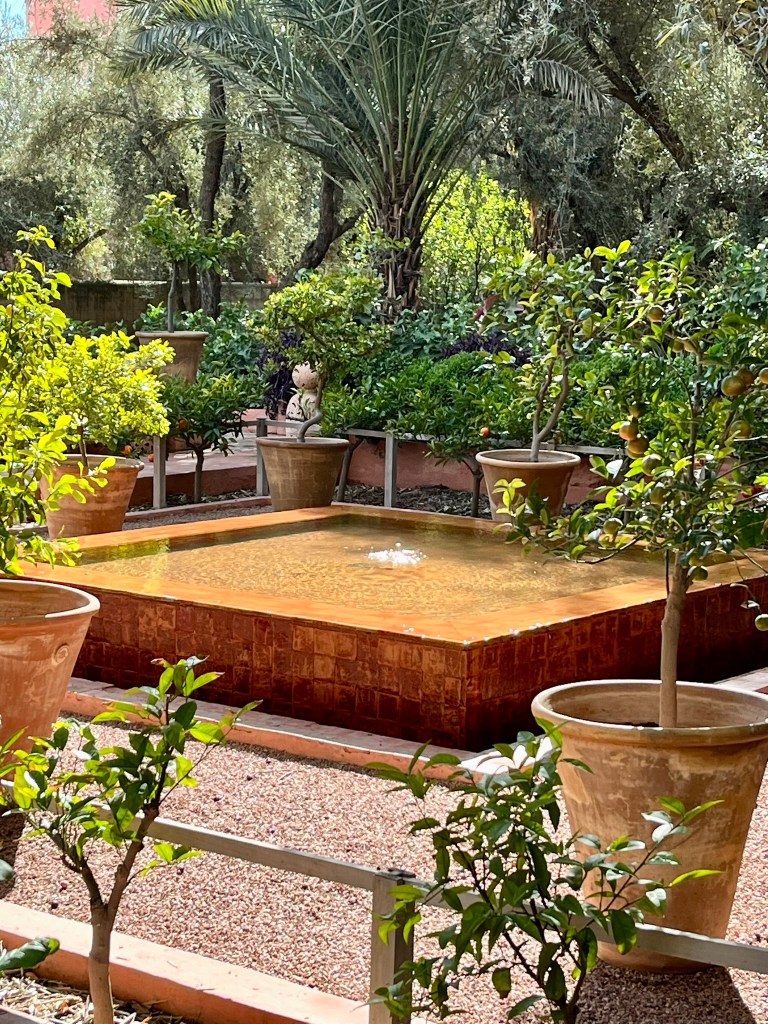
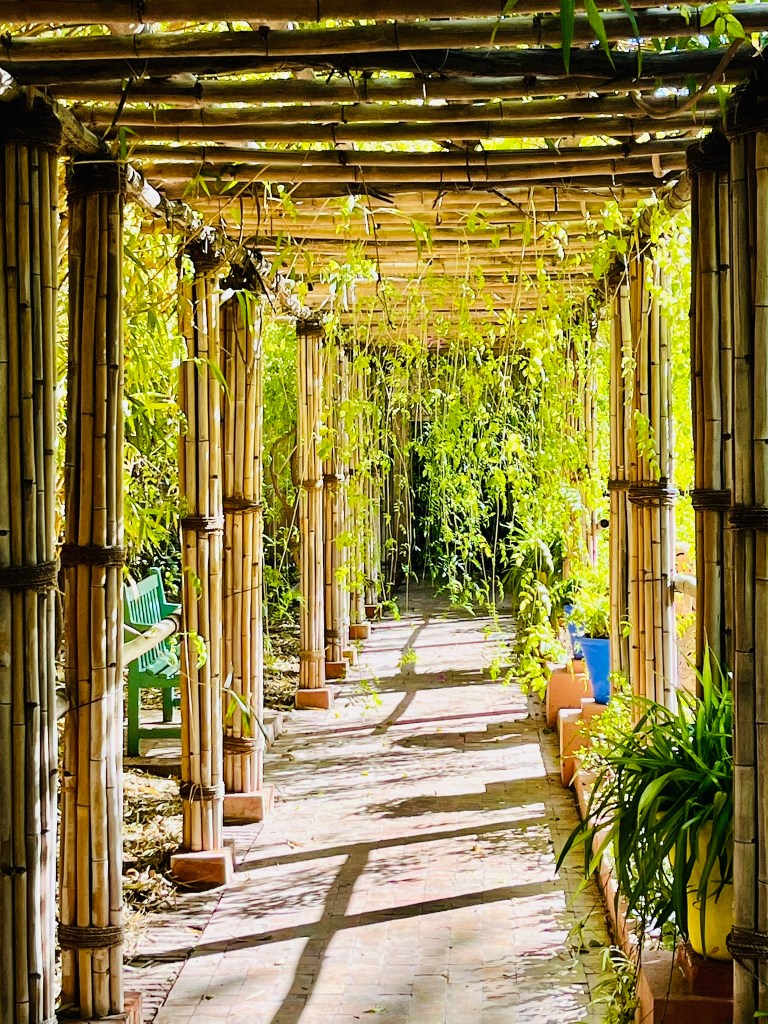
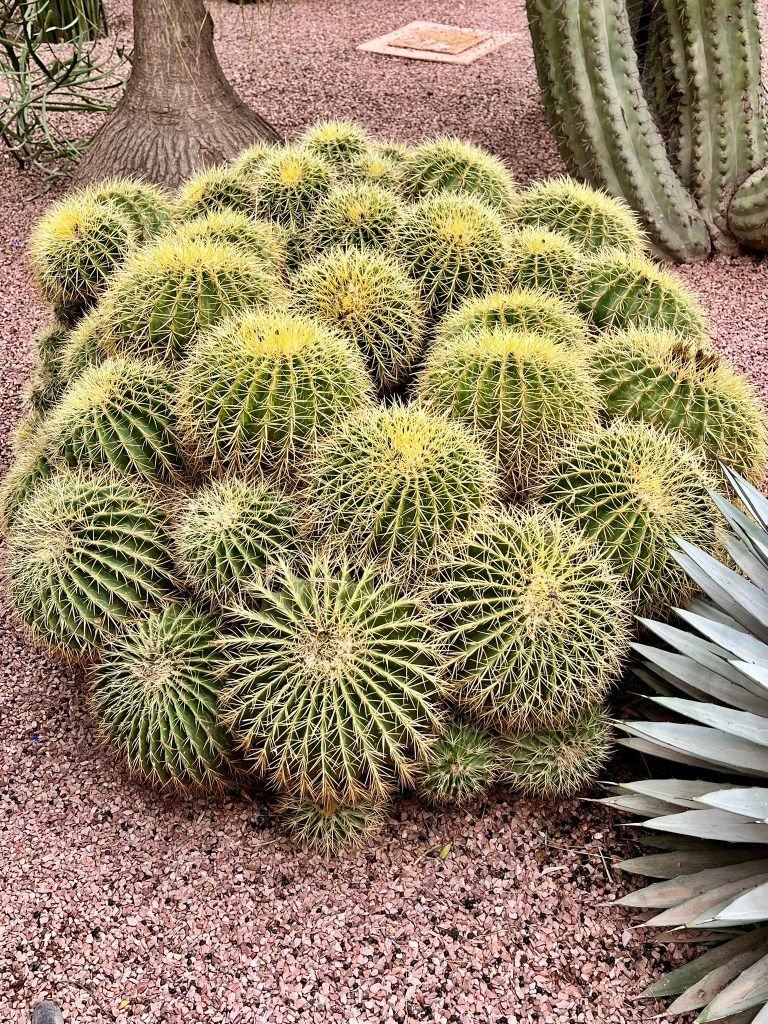
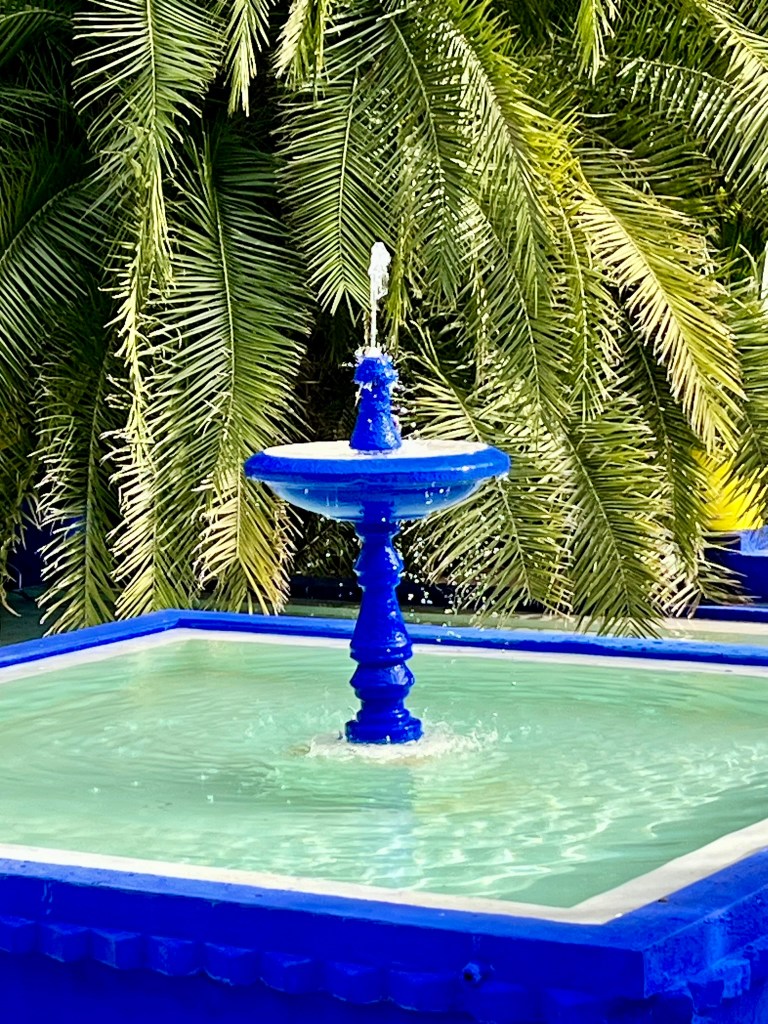
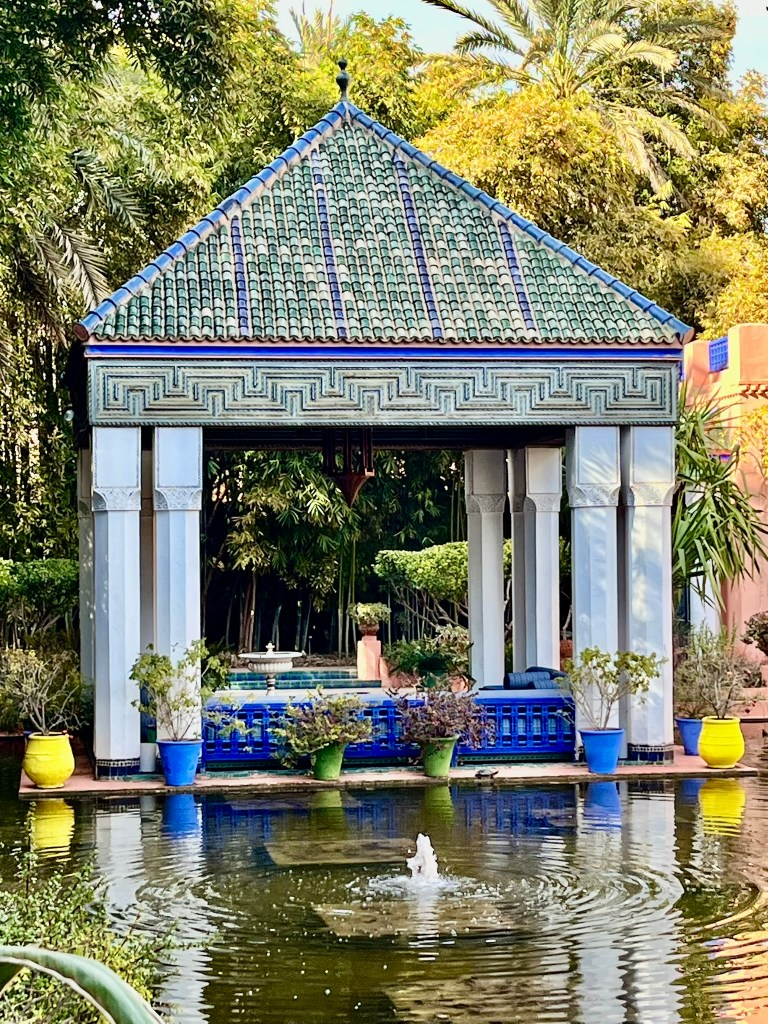
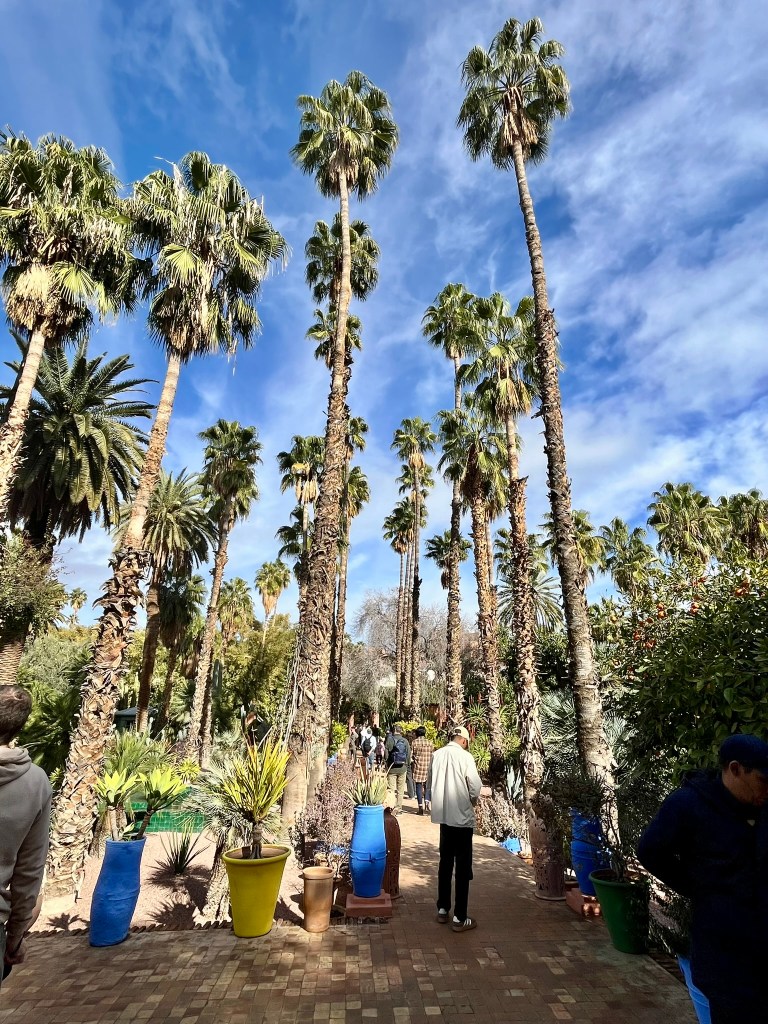
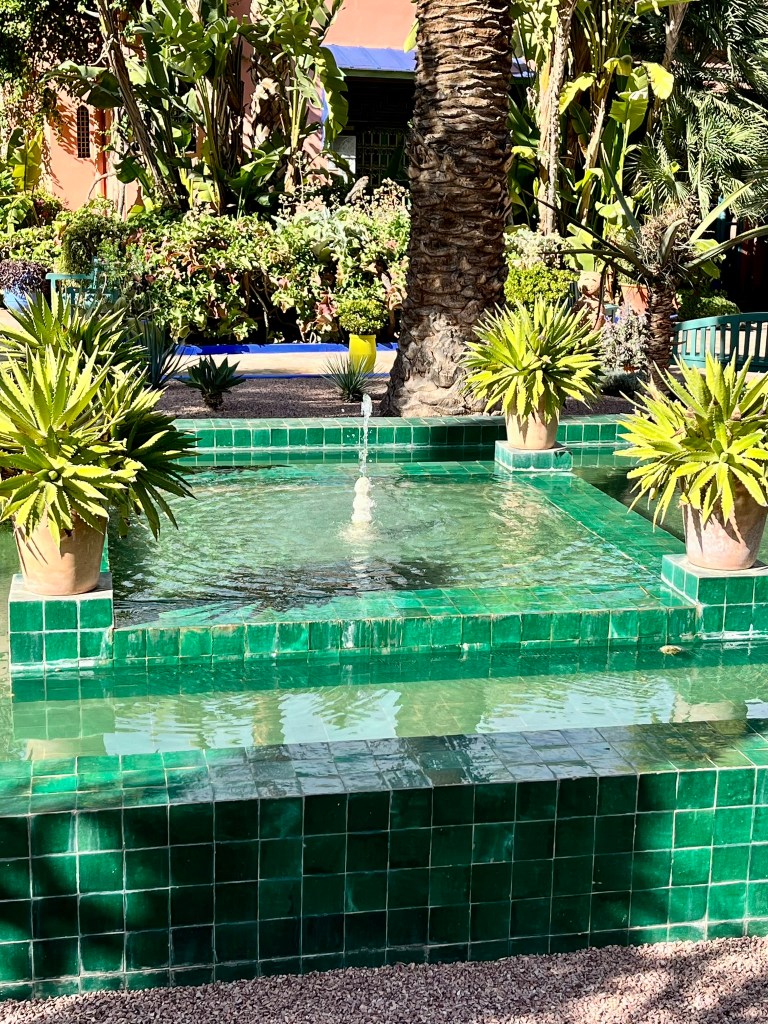
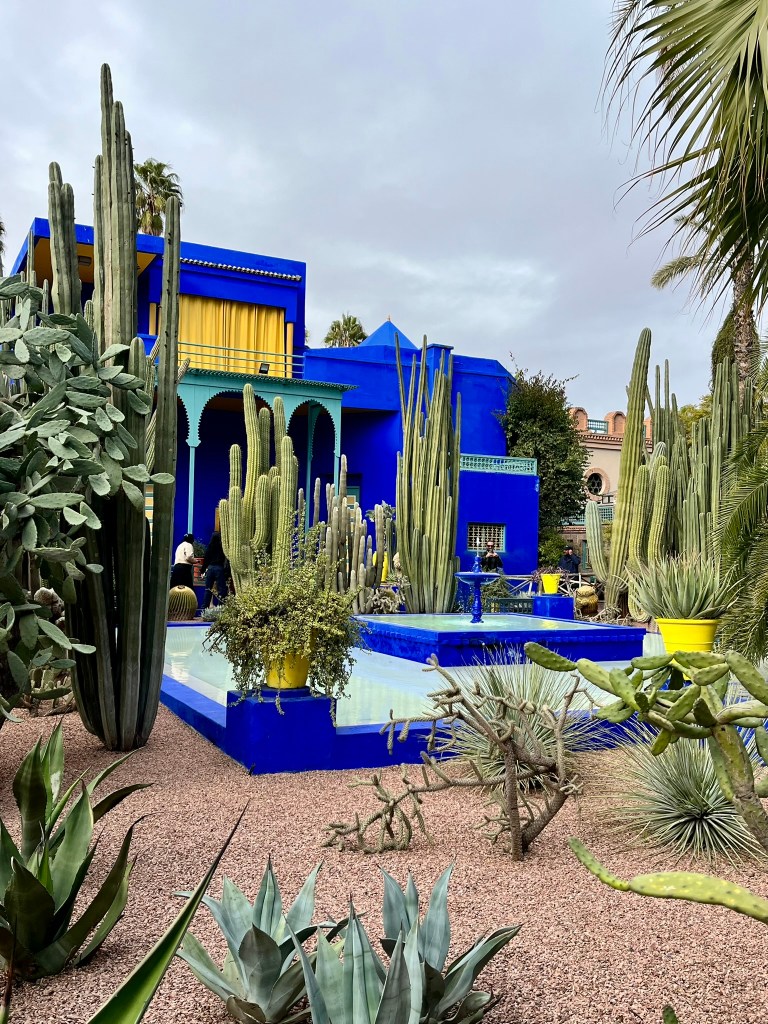
Today the garden is home to more than 135 species from five continents including important collections of cactus, yucca, bamboo, bougainvillea, banana trees and coconut palms. Designed with intersecting pathways, water lily ponds and bubbling fountains, the garden is structured around a central, vibrant “Majorelle Blue” Art Deco villa that features a Berber Museum. Painted a unique, intense shade of cobalt blue inspired by Moroccan tiles and architecture, the color – along with brilliant yellows and more subtle greens – adorn the garden’s walls, pots and fountains.
Conclusion
Visiting Marrakech was an assault on the senses that occasionally felt overwhelming. Fortunately, the Red City is also filled with beautiful, serene gardens that offer peace, tranquility and the space to recover from the sights, aromas and sounds of Morocco.
 Reid & Robie