
Morocco is a beautiful place, incredibly beautiful, and also captivating.
– Fatema Mernessi
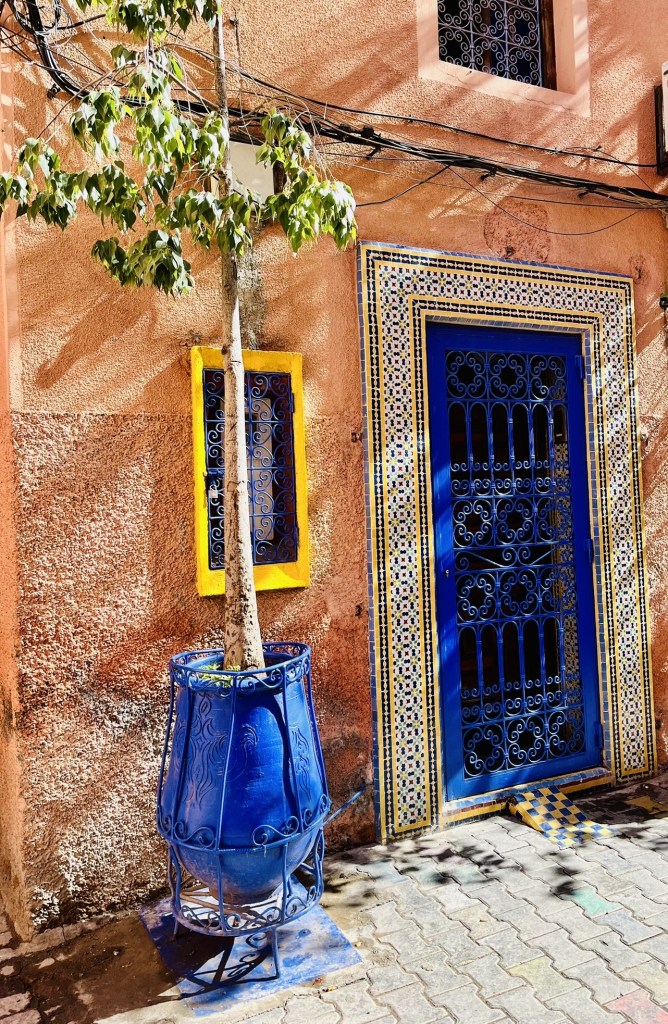
It can be hard figuring out where to stay in a new city, especially in a sensory-rich destination that might feel overwhelming.
More than a place of diverse landscapes with snow-capped mountains, wind-swept coasts and Saharan dunes, Morocco takes visitors across a geographic and cultural bridge spanning Africa, Europe and the Arab world. The crowded and chaotic cities blend Islamic, Berber and European cultures. The colorful, bustling markets fill with a perfume of pungent spices and sweet herbs. Vendors beckon like carnival barkers. Motorbikes rumble and weave down narrow alleyways while the drone of the imam hums above the din five times a day.
The frenzied backdrop in Morocco makes deciding where to go and choosing the right accommodations more critical than usual. As we set out to research the options, Robie and I wondered whether staying in a two-story traditional Moroccan house known as a riad was best or if we’d feel more at home in a modern space? Did we want the amenities and services of a hotel or the extra space of an apartment? Should we stay in the thick of the action in the medina or on a quiet street in a residential neighborhood? With so many options to choose from, we spent hours combing through places we thought would fit our needs before selecting five accommodations across three Moroccan cities. Now, after three months in North Africa, we confidently recommend all of them.
Why Essaouira?
This quiet coastal town on Morocco’s west coast is charming and relaxed. Known for its picturesque medina, fleet of blue fishing boats and impressive fortress set between desert and the sea, Essaouira’s broad bay makes it a top destination for watersports while a slower, laid-back pace blends local Berber culture with European influences to give the town a bohemian vibe.
Once we settled on Essaouira to spend the winter months, Robie booked a charming, brightly lit one-bedroom, two-bathroom apartment at the south end of town. While we prefer to position ourselves in the heart of the city during short trips, the private, modern condominium complex on a quiet street seemed better-suited to a seasonal home than the small, dark, more traditional accommodations available in the medina.
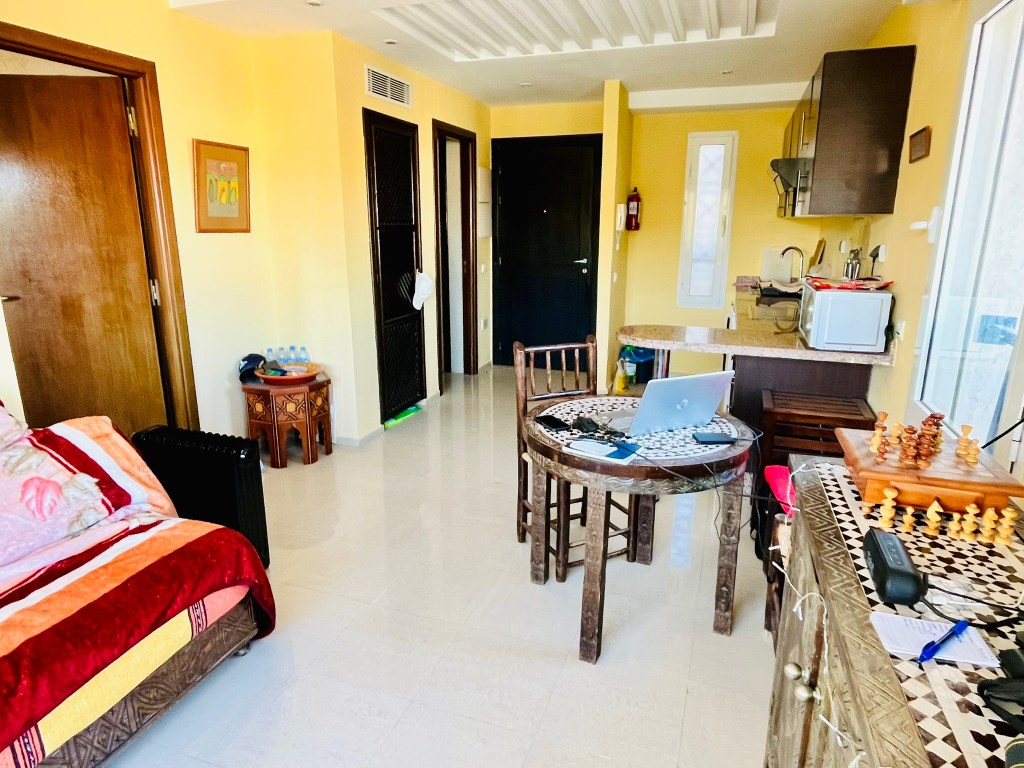
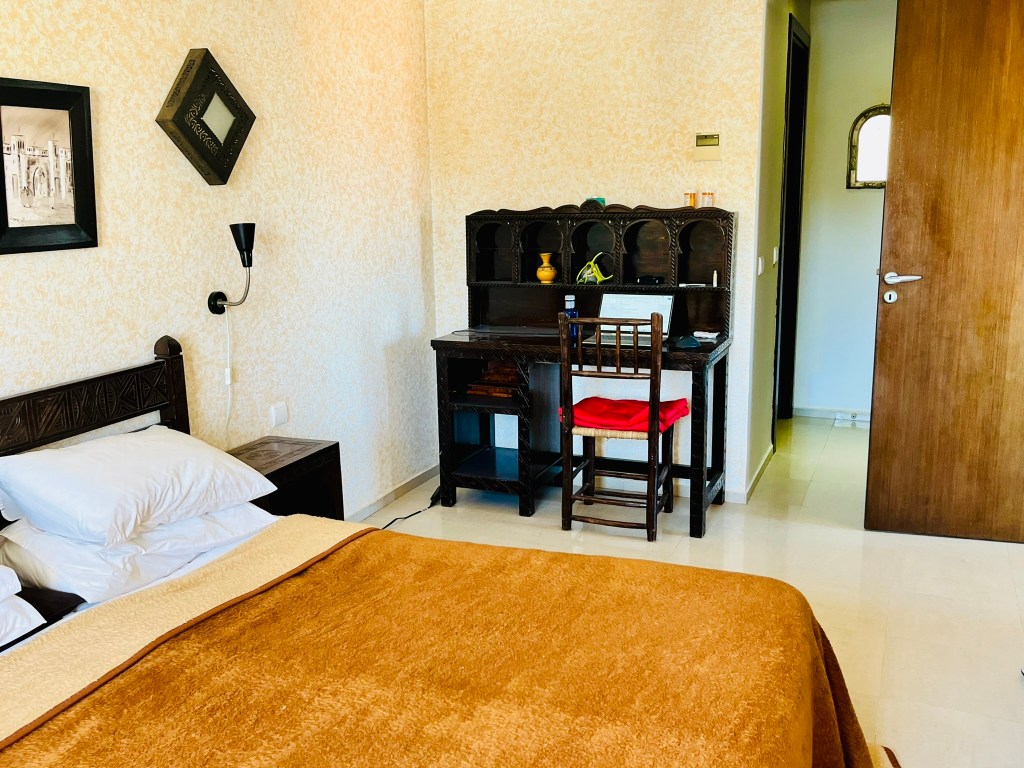
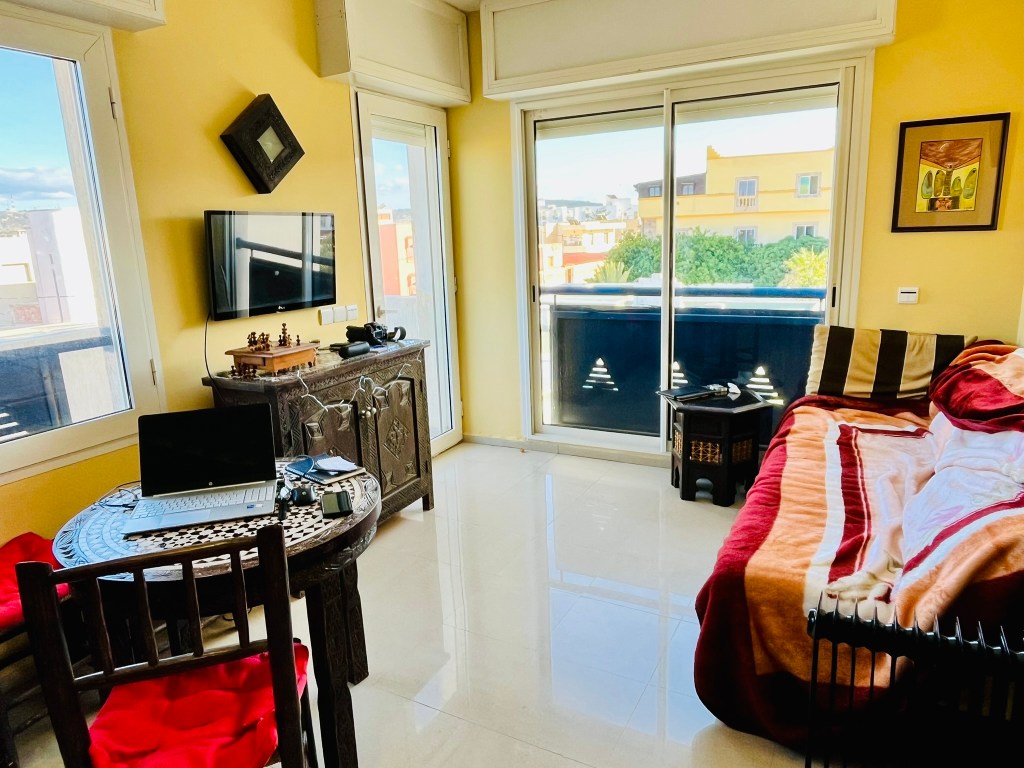
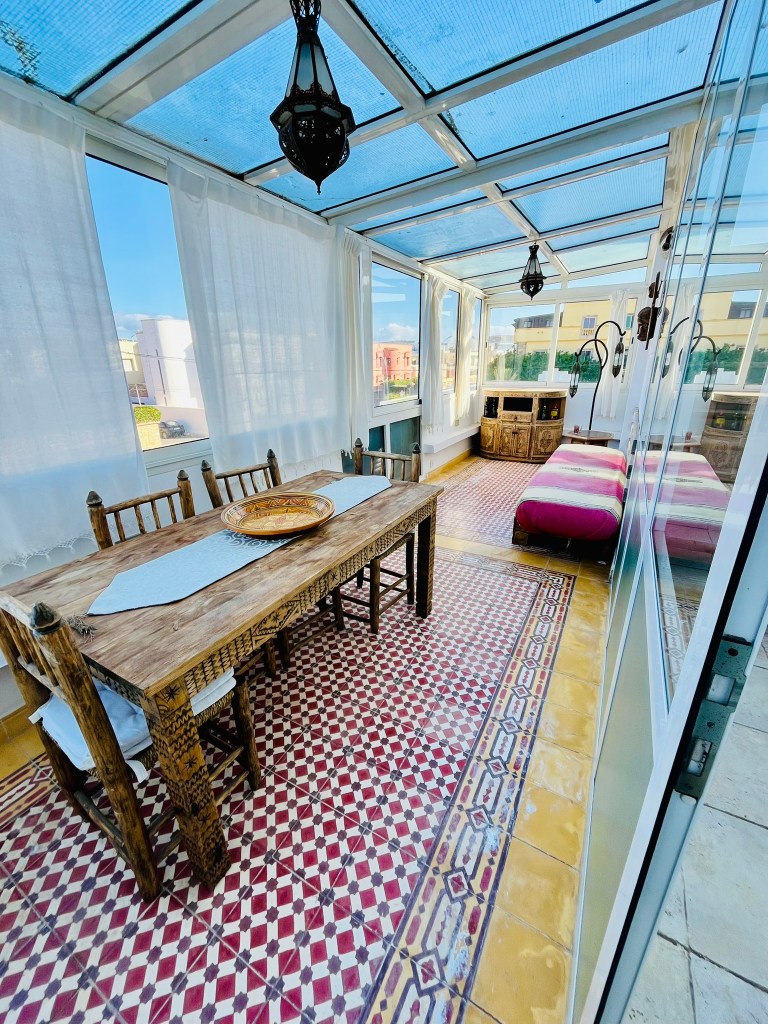
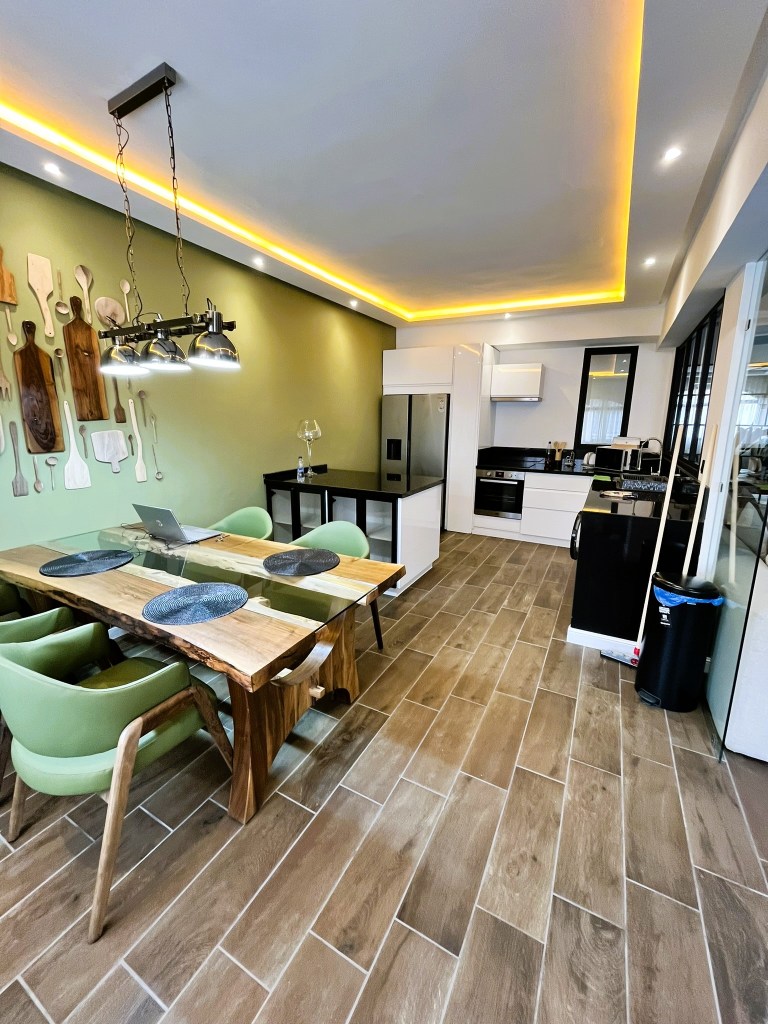
The second-floor apartment included a private, fully enclosed sunroom where a large wooden dining table was ideal to set up shop and work while a desk in the bedroom and another small table near the kitchen gave us options when the wintry weather came far enough south to render the sunroom too cold for long hours of travel research, writing or editing videos.
In the living room we had a flatscreen TV and comfortable daybed that doubled as a couch. A twin bed added to the large bedroom next to a sizable queen mattress allowed the apartment to accommodate four guests for a short stay while the dresser and built-in armoire provided ample space for two nomads carrying everything they owned. While the kitchen had the usual pots, pans, knives and cooking utensils, it lacked an oven. Fortunately, the apartment was fitted with a washing machine, the one appliance we insist on for long-term stays.
Located across the street from the water, our apartment was steps away from the beach and 45 meters (50 yards) from horse and camel rides in the sand where a trio of restaurants catered to European expats. A few blocks the other away, Av. Princesse Lala Amina was filled with local restaurants offering delicious, cheap tagines and meat platters as well as Il Forno di Mogador, a pizzeria with Neapolitan-style oven for our traditional weekly pizza night.
Essaouira’s promenade is lined with waterfront cafés and restaurants where Robie and I spent afternoons watching windsurfers and enjoying brilliant orange sunsets. In the streets behind the apartment we discovered local markets where Moroccans shopped for meat, produce and bread while the occasional jaunt to a large Carrefour grocery store was a twelve-minute walk away. With cheap cab fare costing 80 dirhams (about $0.87) for trips anywhere in town, we stocked up and returned with a trunk load of food.
The apartment provided convenient access to everything we needed in Essaouira including our favorite outing, a twenty-minute stroll to the medina for inexpensive nous-nous (a coffee drink similar to cappuccino), café noir (espresso) or Moroccan whiskey (mint tea) with our friend O’Brien at Café de Paris where we sat for hours listening to strolling musicians and watching the lively parade of tourists.
Returning to our quiet residential neighborhood, Robie and I were well looked after by the staff at Hotel Riad Zahra, a 23-room inn next to the apartment that was also run by our hosts. The comfortable rooms with traditional Moroccan décor, ensuite bathrooms, satellite TV and Wi-Fi offers suites with balconies and ocean views, a terrace, swimming pool and two restaurants featuring Spanish and Moroccan cuisines.
Having our hosts run the nearby hotel meant it was the ideal place to put up friends and family visiting us in Essaouira. Plus, the staff took care of cleaning our entryway, laundering our linens and handling any issues in the apartment, so when the heater stopped working and the door on the refrigerator broke, the hotel handyman showed up to fix both within the hour.
For our three months in Essaouira, the apartment at Beachlife Condos was the perfect oasis of calm, a place we could enjoy the beautiful waterfront, taste mouthwatering Moroccan cuisine and experience the excitement of the medina while still escaping the hectic energy in town.
Available on Airbnb. Or reach out to us directly and we can connect you.
Agadir and the Desert
The capital of Amazigh culture, Agadir is the largest Berber city in West Africa.
Derived from bárbaros meaning “barbarian,” Berber was the term used by Romans to describe non-Latin-speaking people in North Africa. Referring to themselves as Amazigh or “free people,” Berbers are the main indigenous group from Egypt to the Canary Islands wholly distinct from the Arab-Islamic people that conquered North Africa in the 7th century and their nomadic Bedouin tribes that followed. Located in Central Morocco, Agadir is also the gateway to the Sahara and before spending the night in a Berber camp in the desert, Robie and I spent three days in this seaside city.
Spread across thirteen acres, Agadir’s famous Souk El Had is one of Africa’s largest urban markets offering everything from handmade goods to fresh produce, restaurants, jewelry, clothes, furniture, appliances and electronics. Wanting to explore the bazaar, Robie and I chose accommodations near the action, a seven-minute walk from the teeming market yet in a quiet neighborhood tucked down a residential street. With the apartment’s central location, we also had access to inexpensive cabs happy to take us to the beach, Agadir Art Museum or cable car station for an aerial trip to see the historic kasbah.
While modern, Riad al Salam Apartment offered traditional touches like a living room lined with couches for ample seating. There was a washing machine, kitchen filled with natural light and a dining table that sat six with a highchair for families with young children. Two bedrooms allowed the apartment to accommodate five people comfortably yet still feel intimate enough for two.
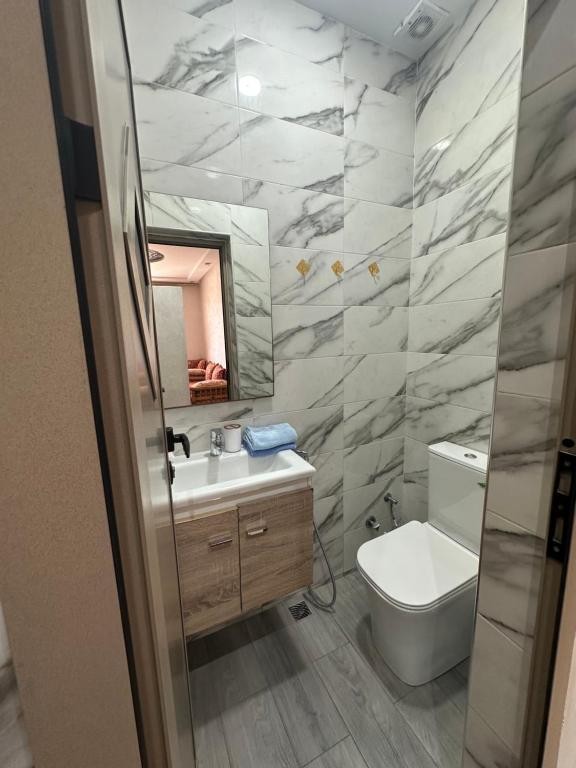
Our host Khaled met us outside and provided a thorough walk-through of the space showing us how to use the gas stove, where to find extra blankets and towels, and how to make the most of our stay. Despite my doubts regarding the small bathroom that lacked a shower curtain, my fears were dissipated under the ample pressure and hot, flowing water from the showerhead.
Available on Booking.com.
After our trip to a Berber camp in the Sahara, Robie and I returned to Agadir for a night before an early morning bus trip back to Essaouira.
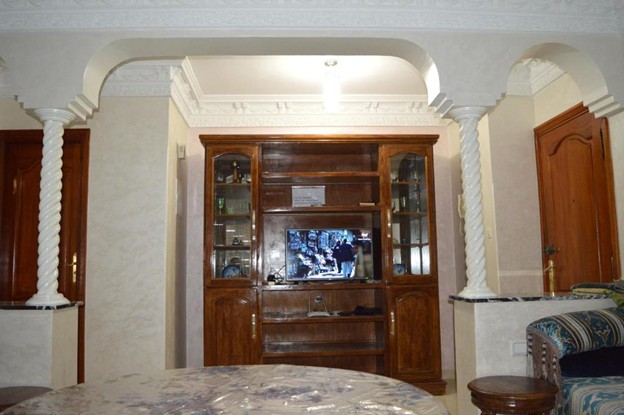
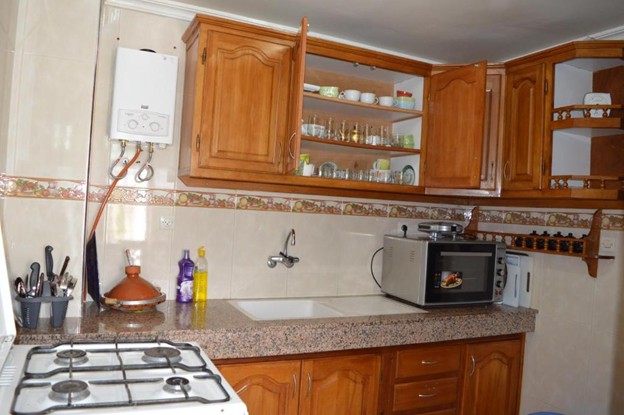
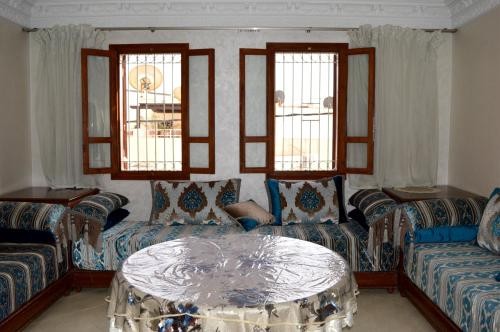
Needing little more than a place to sleep near the station, I searched for a hotel along Ave. Abderrahim Bouabid only to discover the closest hotel was 1.2 kilometers away (three-quarters of a mile) and twice as expensive as the expansive, $40-a-night one-bedroom apartment 650 meters (about 700 yards) from the depot.
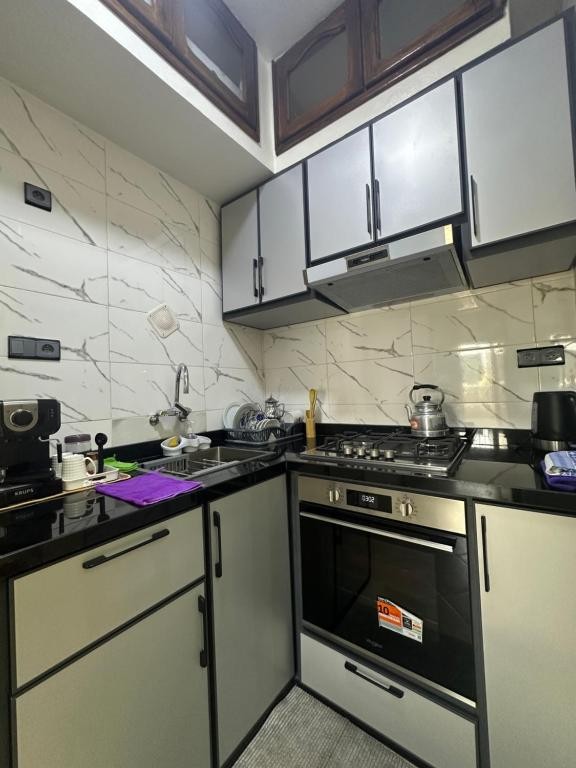
The contemporary residence with traditional living room and dining area featured a new bathroom and kitchen with modern appliances and washing machine. While more space than we needed for a 14-hour stay, the apartment was the perfect location for a short stroll to Agadir’s bus station in the rain, and despite the road construction in front that made finding the place a bit of a challenge, the upgraded roadway and improved sidewalk will soon make getting to and from the depot even easier. Plus, since host Ali lives in the building, he was readily available to greet us after the official check-in time.
Available on Booking.com.
Mysterious Marrakech
No trip to Morocco would be complete without a visit to one of the county’s bustling cities. While the White City of Tangier beckoned on the Mediterranean and the ancient, weblike maze of Fez’s old city enticed us, Robie and I decided to spend our final week in North Africa in Marrakech.
Known as the Red City, Marrakech’s location three hours east from Essaouira made it a convenient choice. The lively souks, ornate palaces, views of snow-capped mountains and serene garden oases are just a few of the reasons Marrakech is Morocco’s most visited city. Plus, easy access to Europe and the Middle East meant Robie and I could catch a nonstop flight from Marrakech to almost anywhere. But first we needed a place to stay in the Red City.
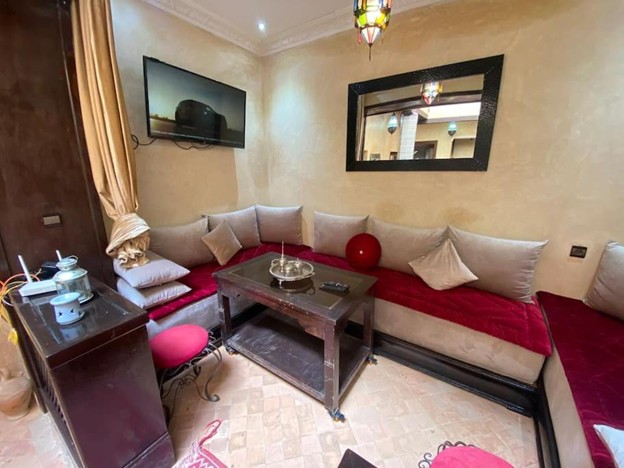
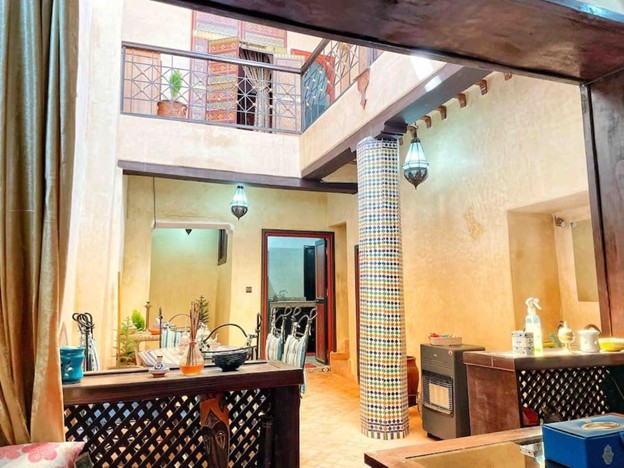
While many traditional homes across Morocco have been converted into hotels, when Robie and I found Petit Riad authentique, an amazing, two-bedroom, two-bathroom, three-story traditional riad in the heart of Marrakech’s medina, we thought we’d hit the jackpot. Apart from the beautiful décor, the private apartment came with a large kitchen, two comfortable living areas and private, rooftop terrace.
Located near the Dar El Bacha Museum, this gem inside Marrakech’s 1,000-year-old city center is designed for exploring the colorful bazaars, ancient palaces and winding alleys of the medina. Then, at the end of a busy day, we could unwind and escape the commotion of the city on the apartment’s rooftop terrace.
After provisionally booking the space, we discovered the riad didn’t have Wi-Fi. While that would have been fine for a day or three, our planned seven-night stay seemed too long to go without internet access so we cancelled. Then every time we made our way to the medina and strolled past Petit Riad, we sighed wistfully imagining how amazing it would be to stay inside.
Formerly available on Booking.com.
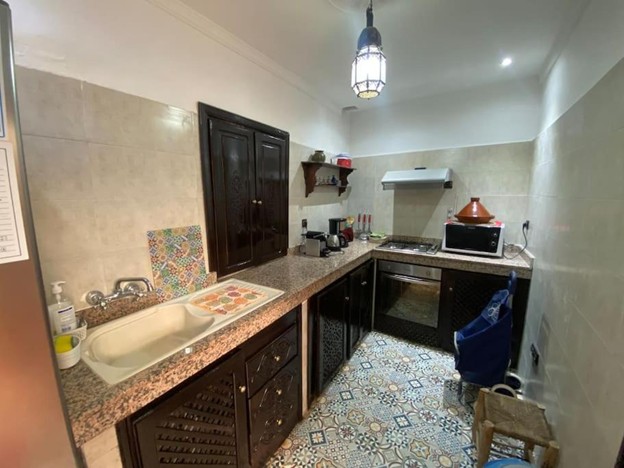
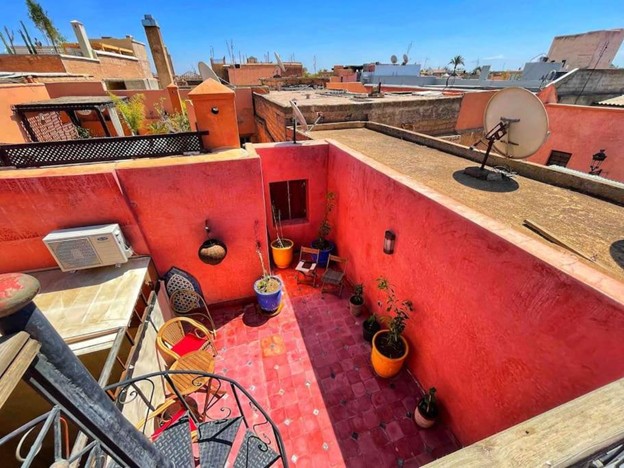
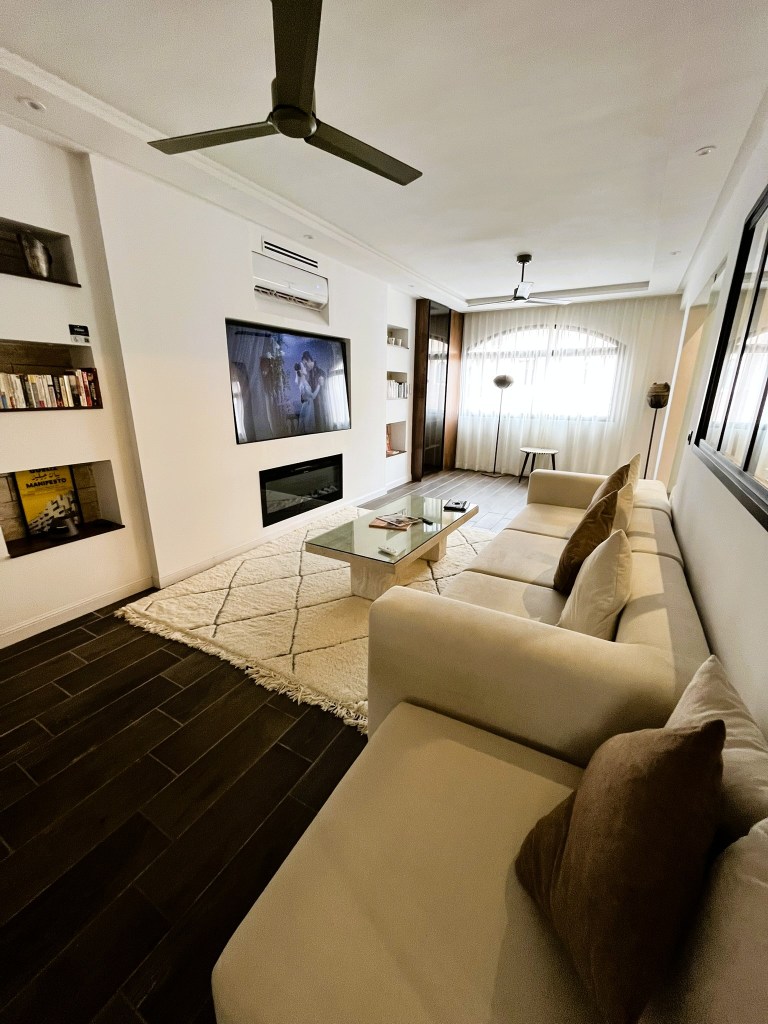
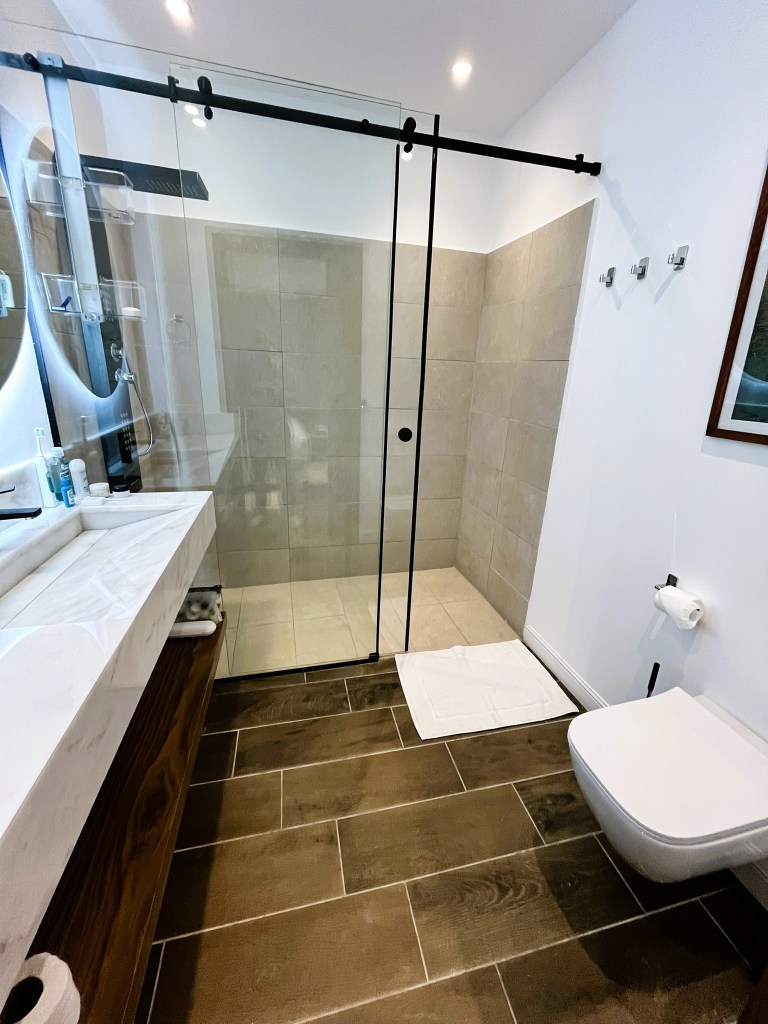
During our final week in Morocco, Robie and I stayed a 10-minute walk from the Marrakech medina at Appartment Luxe 2, a contemporary residential building conveniently nestled between the souk and Hivernage, a chic, upscale district known for luxury hotels, trendy clubs and high-end brands. Though we didn’t visit the nighttime hotspots or shops, we happily took advantage of the neighborhood’s array of international restaurants enjoying sushi for the first time in over two years.
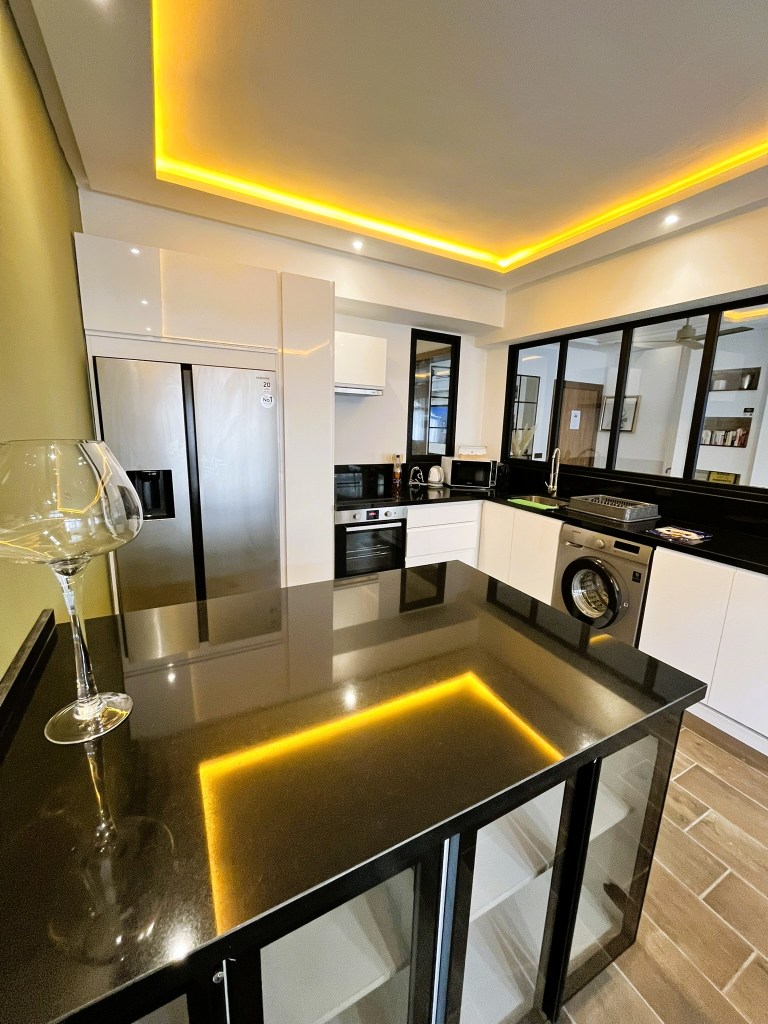
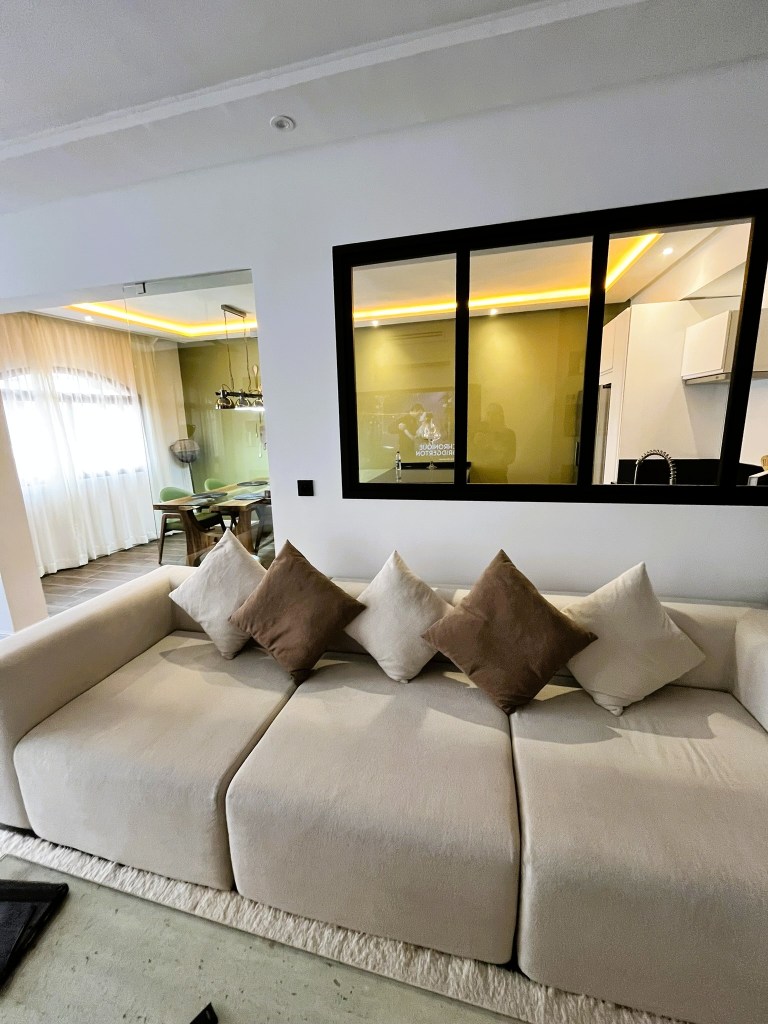
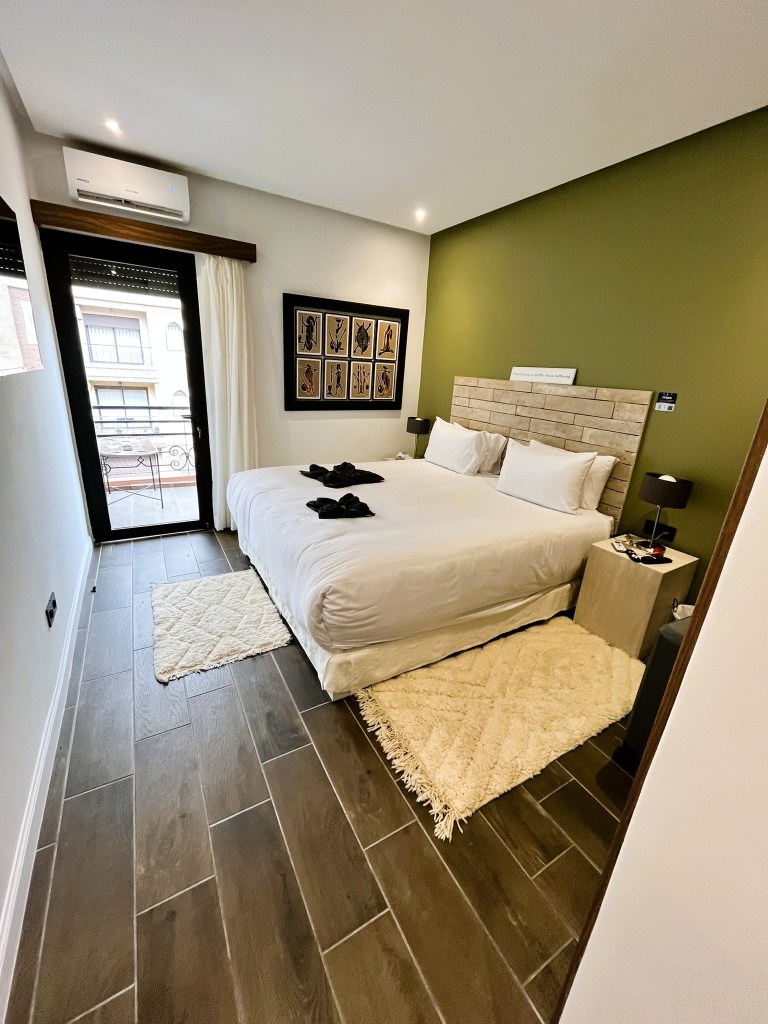
The well-lit, elegant apartment featured two luxurious bedrooms, each with its own balcony or terrace and ensuite bathroom. The oversized living space had a decorative fireplace while the kitchen included a blender (a rare find in any rental apartment) and open dining area.
The owners were extremely accommodating, accepting our request for an early check-in and late check-out. Asmae, a lovely young lady, greeted us in front of the building and showed us to the fifth-floor apartment where a helpful QR code provided detailed information on the space. Soon we had the house rules and Wi-Fi password at the touch of our phones as well as instructions to control the temperature, use the oven and operate the extra-large flatscreen TV. There were even lists of nearby restaurants and attractions as well as numbers to call in case of emergency. It was the easiest, most concise way to access information in a foreign city and unfamiliar place.
Available on tygmi.com.
For those looking to experience Essaouira, Agadir or Marrakech, we hope our suggestions are useful. Wherever your Moroccan dreams take you, you’ll be enveloped by the scent of mint tea, charmed by fragrant tagines and welcomed by warm and wonderful hosts.
 Reid & Robie