
This book is dedicated to all Yankees in the hope that it will teach them how to talk right.
– How to Speak Southern
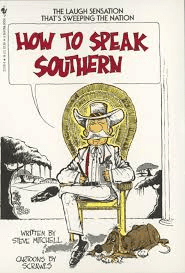
Before I moved to Texas, I read Steve Mitchell’s helpful little handbook How to Speak Southern to explain why my new neighbors pronounced “eye” like “ah,” said “Ahmoan” when they meant “I mean,” ate “aigs” instead of eggs, used “ain’t” frequently, pronounced oil like “earl,” referred to everyone as “ya’ll,” were always “fixin’ to” do something and continuously inquired if I wanted to join them by asking, “Ya’wntoo?”.
One of the reasons Robie and I thought Liverpool would be a good place to start this adventure was that in England people speak English. But on our first afternoon in town, Robie asked a host at the British Music Experience to recommend someplace local for lunch. And when the man rattled off a string of words I couldn’t understand while making lots of hand waves to explain how to get to the place he called Me Boils I just nodded and smiled confident that we’d never find it.
Robie however, was more determined. Pulling out his cell phone he began typing the name into Google Maps. “That’s M-Y…?”
“Me Boils,” the guy repeated.
“M-E …?” Robie tried again.
“Me Boils, M-A space B-O-Y-L-E-S. Get the scouse. That and a cob of chuck’s ther specialty,” he added. And while Robie typed, I quickly led us outside before my head exploded.
Ma Boyle’s Alehouse & Eatery opened as a coffee shop in 1860 until Mrs. Kay Boyle turned it into an oyster bar. But since 1974 her namesake restaurant has served lunch, dinner, weekend brunch and traditional Sunday roasts from the back corner of the Tower Building near the waterfront.
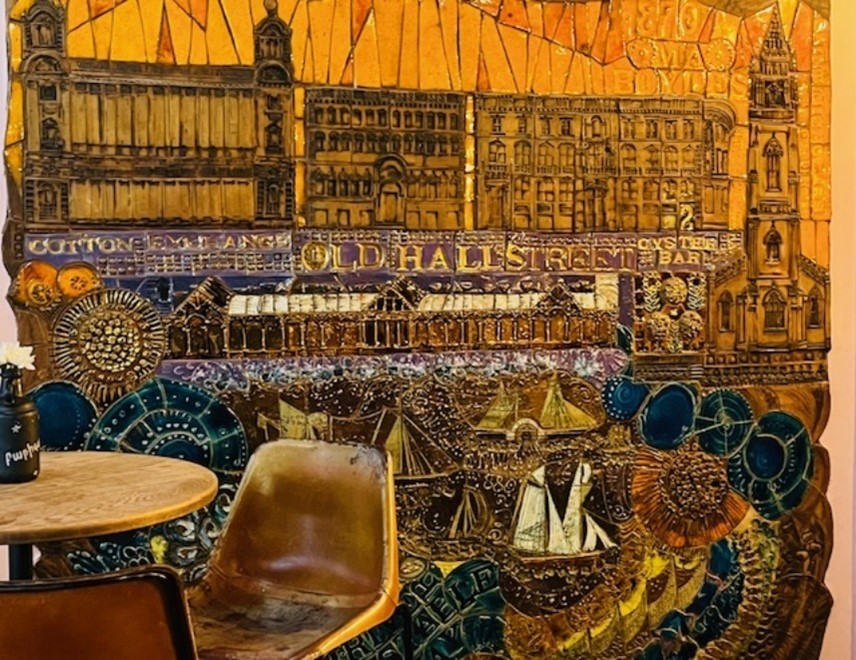
Hammered tin art on the wall at Ma Boyle’s
On the menu we found something called scouse (the name rhyming with louse, mouse or house) where Robie and I had the choice of Ma’s Classic Scouse (described as a stew), Scouse Pie (stew baked into a flaky crust), and Blind Scouse (no description provided). All three came with a slice of brown bread, the presumed “cob a chuck” we’d been forewarned about.
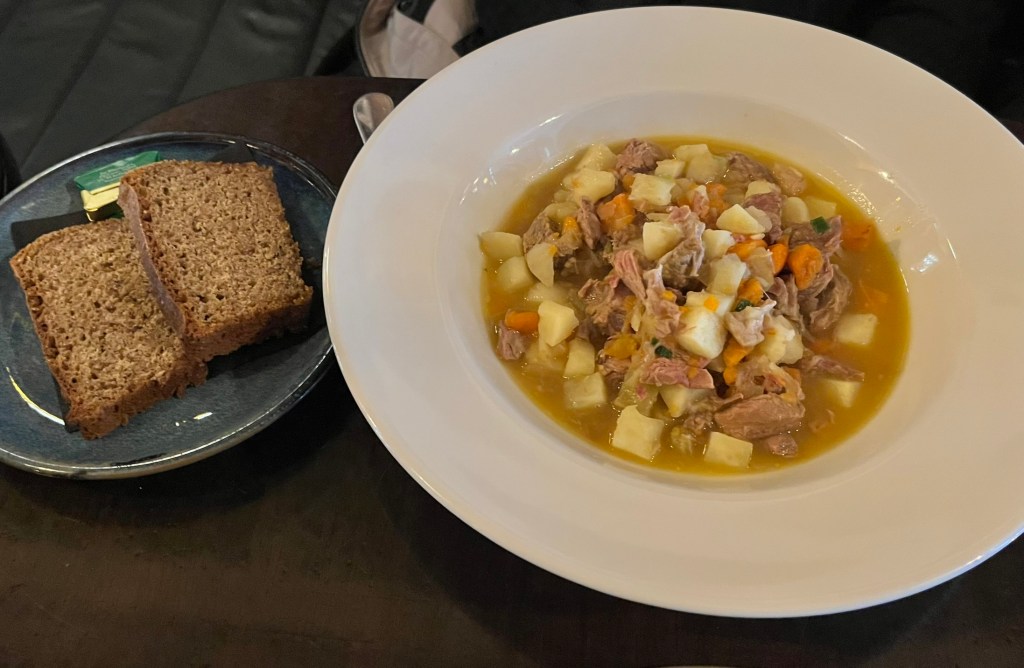
Ma’s Scouse with a cob a chuck
After a little research I learned the original word Lobscouse was derived from lob meaning “lout, clown or country bumpkin” and later shortened to make Liverpool’s native dish. And I further read that, “Scouse is to Liverpool what Bouillabaisse is to Marseille, or Schnitzel to Vienna, but unlike many of the dishes identified with their place of origin, Scouse is derived not from a gourmandizing love of food, but from sheer grinding poverty. It is a simple stew made from the cheapest cuts of meat, usually mutton, boiled with potatoes and onions. The meat, indeed, is optional; and without it the stew becomes ‘blind’.”
Well, that explained the Blind Scouse on Ma’s menu, but the lessons didn’t stop there. Nor did the unappetizing descriptions of Liverpool cuisine. “In most restaurants a large selection of bottled sauces, ketchups, pickles, mustards, etc., will be found permanently on the tables. Their function is to obliterate the taste of the food they accompany (and visitors will soon discover that some of it is well worth obliterating).”
Another source explained the etymology of Lobscouser as referring to a sailor or a tar, which “like so many Liverpudlians, is of uncertain origins” thanks to the city’s international port. But scouse didn’t just describe an inedible stew or a native of Liverpool. It also referred to the local dialect which thanks to the million Irish immigrants seeking refuge during the potato famine helped the locals “turn up” the end of their phrases and give scouse a curious, sing-song lilt.
And it wasn’t only spoken scouse that required translating. Robie and I were confused by signs and postings that explained that “part of the chapel is alarmed” at the Liverpool Cathedral, informed us “when red light shows, wait here” on a sidewalk with no intersection, and alerted us to “changed priorities ahead.” But whose priorities? And where was the list of new ones?
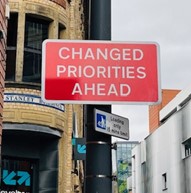
Liverpool street sign
Our second week in Liverpool Robie and I stopped by the local pub to watch soccer and get to know some of our new neighbors. Fortunately, we’d been primed about scouse humor at the Museum of Liverpool which described the frequent, sharp banter between locals as good-natured teasing and “unique among the usually reserved English.” So, following a barbed back and forth between two guys over a controversial play, when the man next to me asked if I understood their humor, I assured him, “I understand the ribbing just fine. It’s only the words I can’t make out.”
The next weekend I found a copy of Lern Yerself Scouse, and armed with this helpful little dictionary and phrasebook Robie and I returned to the pub to sit with the wacks (guys) and have a few bevvies (drinks) while watching ‘a game a footie’ (soccer) on the telly (TV).
During the first half we listened to how Liverpool F.C.’s goalie “cudden stop a pig in a jigger” (was doing a poor job) while another hometown player had “both legs in one knicker” (likewise wasn’t playing well). An unpopular player elicited cries of “send ‘im across de park” (an offer by the Liverpool fans to send the guy to Everton F.C., the other team in town) and when the referee made a questionable call he was told to “buy a bewk” so he could learn the rules of the game.
Fortunately, Liverpool turned it around in the second half as we heard murmurs of “now dere shaping” (apparently playing in their usual good form). When a player on the opposing team appeared to go down easy, he was said to be “doin’ the dyin’ swan” (taking a dive) and the Liverpool footballer (soccer player) was told to “pull ‘is leg off an’ ‘it ‘im wid de soggy end” (tackle the guy more forcefully next time).
A player on the opposing team “were from ere to de Pier Ead off” (clearly offsides) while another “‘ad de laces out twice,” (hit the ball with his hand). But my personal favorite was when a Liverpool player rolled around on the field clutching his leg and a fan in the far corner yelled, “Gerrup! Dur’s money in de game!”
Because some things don’t need translating.
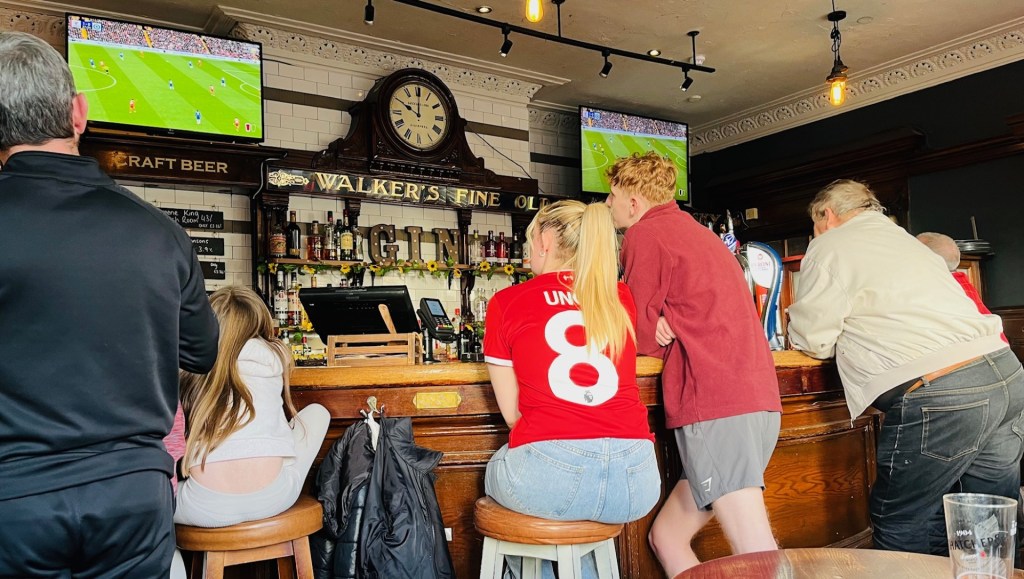
Full house at Willow Bank Tavern for a Liverpool F.C. match
 Reid & Robie