
You cannot trust people who have such bad cuisine.
– French President Jacques Chirac
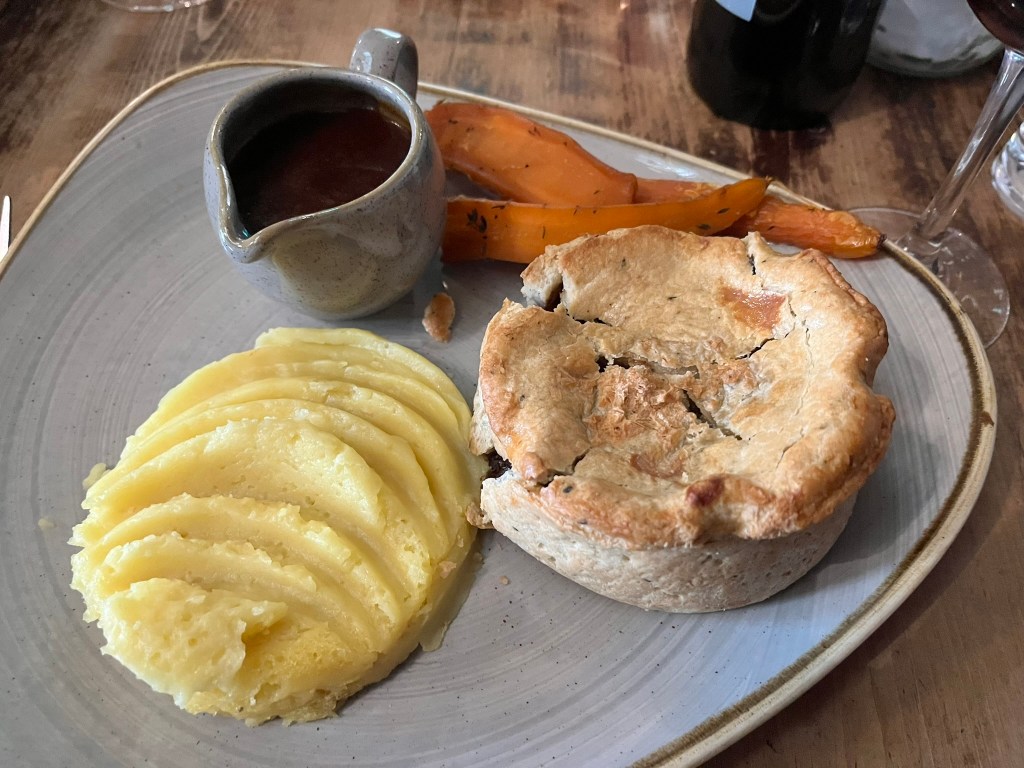
The best part about British cuisine are the names.
While Italians love their women with pasta alla Norma, pizza Margherita and the indelicately named pasta puttanesca, France offers less appetizing fare that sounds like rat patootie (ratatouille), Coke in a van (coq au vin) and croaks (croque monsieur and croque madame). But the Brits know how to catch the eye on a menu with offerings like Bubble and Squeak, Tipsy Laird, Toad in the Hole, Bangers and Mash, Soused Herring, Spotted Dick, Singing Hinnies and Eton Mess.
No offense to Jamie Oliver, Nigella Lawson, Paul Hollywood or Gordon Ramsay but history will never accuse the Brits of elevating world cuisine. Colorless, stodgy and unexciting, English fare is mired in bland ingredients and centuries-old recipes that were necessary when the island was isolated, fresh vegetables were rare, cows were used for milk and butter, and only the aristocracy ate meat from vast hunting estates. And since many traditional British dishes are neither nutritious nor delicious, the English may be the best food marketers in the world. After all, they came up with cute names to convince generations of children to put all manner of strange concoctions in their gobs.
Bubble and Squeak is the sound of simmering potatoes with leftover cabbage from the Sunday roast. Spotted Dick is a steamed pudding with dried fruit. Jellied Eel is not something we’d recommend for your next PB&J. Unless you like eels rolled into a gelatinous mess. And Laverbread isn’t a crusty loaf of delicious baked bread. It’s seaweed boiled with oatmeal and bacon.
While the English aren’t known for making great breads, they adore putting all manner of savory things under, into, or rolled up inside a flaky pastry like Beef Wellington, Cornish Pasty and Steak and Ale Pie. Add dessert into the same crust and you’ve got a Bedfordshire Clangor, a convenient “carryin’ packet” and full meal with meat and vegetables on one end and a sweet, jammy dessert at the other. But for endearing names, it’s hard to beat the Stargazy Pie, a mix of potatoes, egg and bacon topped with pie dough and studded with whole, small fish peeking their little heads out.
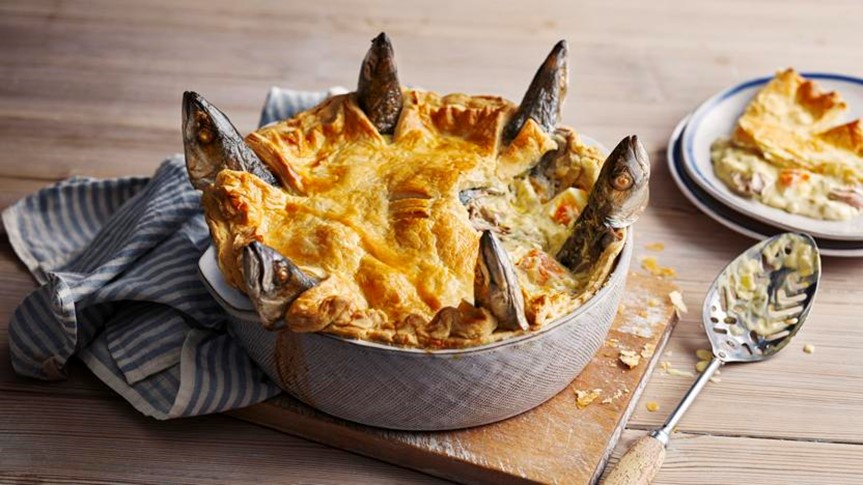
Stargazy pie
With their penchant for food marketing, it should come as no surprise that the English were the first to showcase cooking on TV. In 1936, the BBC launched a program called London Characters featuring people like Rosina Dixon singing as she rolled out dough to “keep the pastry light.”
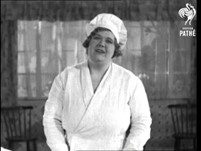
Rosina Dixon rolling out pastry dough
But you’d be forgiven if you thought British cooking shows started with Two Fat Ladies. Because I know I did.
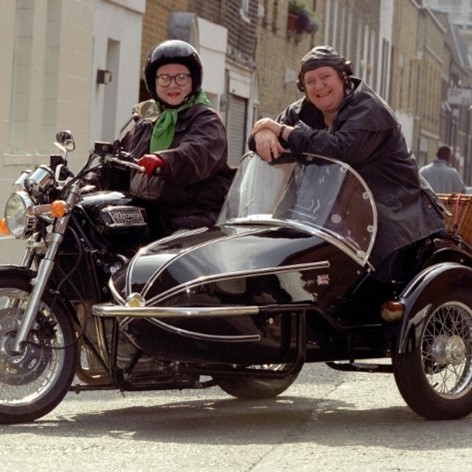
Two Fat Ladies
Starring Clarissa Dickson Wright and Jennifer Paterson, the program follows two of television’s least likely chefs gallivanting across England on a Triumph Thunderbird motorcycle fitted with a sidecar. Along the way, they make strange meals with delightful names. Meatloaf gets a makeover as Roast Hedgehog. Smoked haddock, rice, hard-boiled eggs and raisins sound better as Kedgeree. And Mousse of the Egg seemed interesting until I learned it was eggs mixed with anchovies and whipped cream.
In many episodes, Clarissa and Jennifer stretch expensive cuts of meat by adding potatoes, eggplant, mushrooms and even oatmeal. And when Robie and I noticed the lack of meat options in the grocery aisles, we realized the skill would come in handy in Liverpool. Because instead of being surrounded by beef steaks and chucks, roasts and loins, hindquarters, front quarters, midsections and ribs, suddenly we had a vast array of sausages.
According to “the voice of the British pig industry,” the National Pig Association estimates that more than 400 varieties of sausages are sold each year to the staggering tune of £530 million making sausages England’s most consumed meat product and a feature in many recipes.
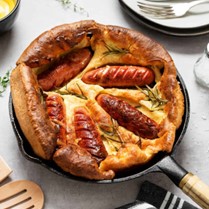
Toad in the Hole
Toad in the Hole is a one-pan wonder of sausages bathed in Yorkshire Pudding (a savory Dutch baby for any Millennials in the crowd). Potato Piglets are cored potatoes stuffed with sausage. Beef Olives are sausages wrapped in paper-thin strips of beef and Scotch Eggs are hard-boiled eggs encased in sausage then deep-fried. Because if I learned anything from years of going to the State Fair of Texas it’s that everything tastes better after a bath in hot oil.
As a recent transplant from the Lone Star State, Robie was determined to cook beef. Starting with something called Thin-Cut Beef Steaks, he sautéed the lean slices until they were tough and rubbery and tasted nothing like steak. And though braising an indeterminate cut of “beef joint” was more successful, it wasn’t what Robie craved. But with the high cost of beef in England, he soon turned to less expensive meats.
The last time we bought lamb in Dallas, six small lollipops set us back $70. In Liverpool, we got four for £4. In Liverpool two duck breasts were £4 instead of $25, fresh mozzarella was 68 pence, fifteen eggs were less than £2 and four avocados were just 89 pence.
In Britain, produce is seasonal and inexpensive. During the summer, grapes were sold in half-pound containers and cost £1. By fall, the portions had shrunk by two-thirds and skyrocketed to £6. In our tiny apartment bok choy, tomatoes, mushrooms, corn, carrots and frozen peas were always in rotation. Because Brits love their mushy peas.
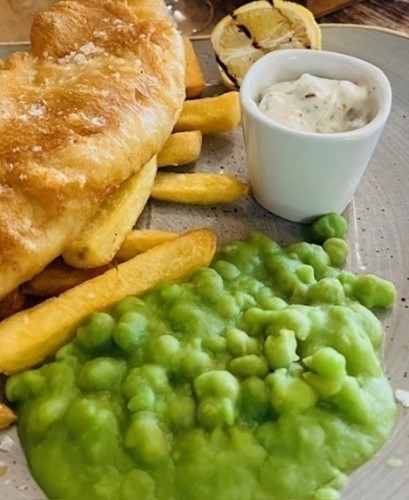
Mushy peas served alongside fish ‘n chips at the Philharmonic Dining Rooms, Liverpool
The English fondness for fun adjectives made our Liverpool grocery receipts read like a well-worded menu with streaky bacon, creamery butter, wonky lemons, squeezy honey, purple sprouting broccoli, mango fingers, pineapple lollys, aubergine instead of eggplant, courgette in place of zucchini and porridge in lieu of oatmeal. I mean, what kid wouldn’t curl his nose up at something called arugula yet dive into the peppery greens known as rocket?
Even for native English speakers, Robie and I sometimes needed help at the market. Because in Britain coriander isn’t just the dried seeds of the plant, it’s also the fresh leaves of cilantro. Gammon is ham, prawns are shrimp and an iced lolly is a popsicle. Cow juice is fresh milk and conny-onny’s condensed milk. Crisps are chips and chips are French fries. A toastie is a grilled cheese and a sarnie’s a sandwich. And while biscuits are cookies if you’re hoping to find crackers, check out the ‘cheese biscuit’ aisle. Because Brits don’t have the flaky, buttery rolls Southerners know as biscuits.
Yet despite learning where most things lived on the shelves and what they were called, some of the ingredients Robie and I expected to find were oddly rare. Salmon was expensive and always frozen despite Scotland’s proximity just up the road. And for a country known for cheese, if it wasn’t English cheddar, it was imported or simply not available.
For cheddar fans, England is nirvana. Categorized by texture, age and color, Robie and I had the choice of young, mild white cheddar, medium-aged pink cheddar, blushing aged red Leicester cheddar, and crumbly extra mature cheddar. Then there were cheddar cheese spreads flavored with onion and chive or cranberry and caramelized onion. But there wasn’t any orange cheddar because American producers add food coloring to give it that golden glow and no self-respecting Brit will touch it.
But after a few weeks of heavy Steak and Ale Pie, Scouse and fried Fish ‘n Chips, Robie and I craved bold, fresh flavors. And thanks to Liverpool’s diverse population, we found plenty to keep our tastebuds happy. For a little spice, we ate nachos and cochinita pibil tacos at Madre Mexican Restaurant.
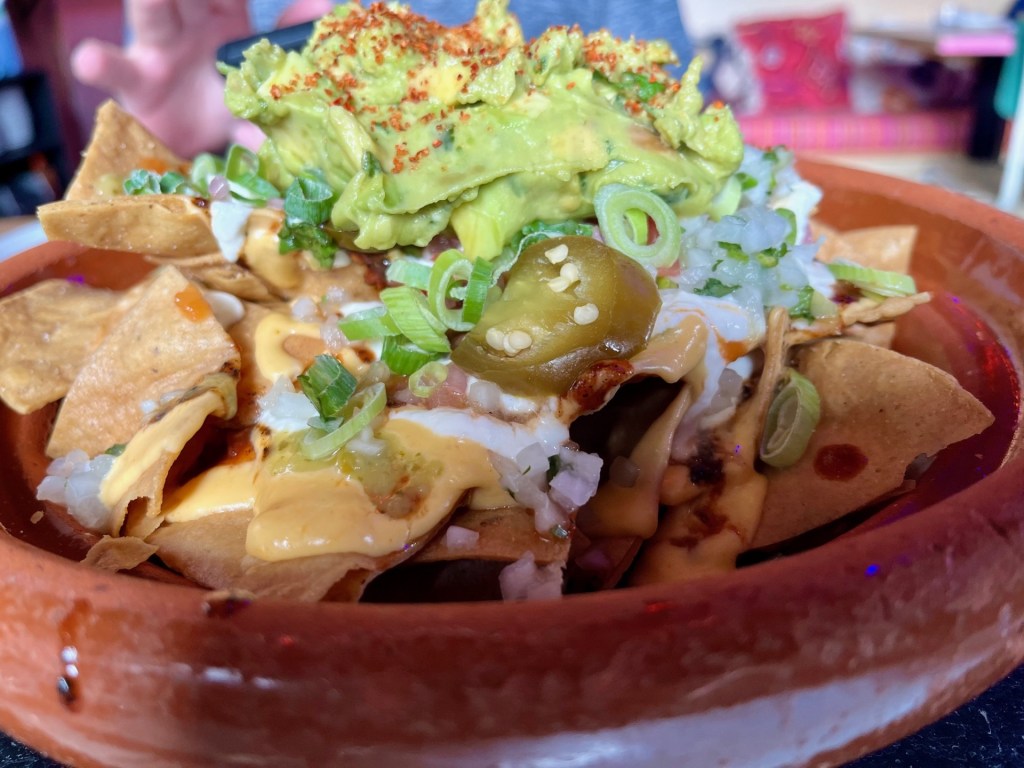
Nachos at Madre, Liverpool
When we wanted seafood, we went to a Spanish tapas bar and when we needed a dose of fresh veggies, we ate Greek.
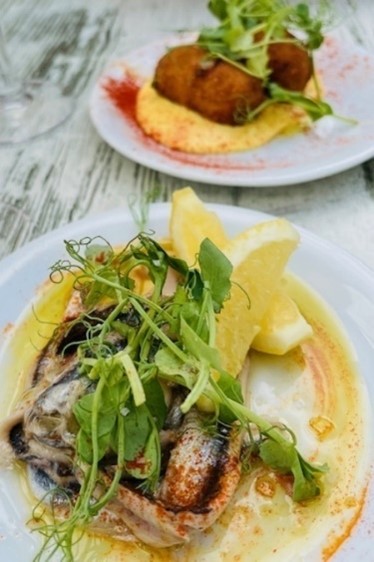
Spanish anchovies marinated in lemon with ham and cheese croquettes in the background.
But mostly we ate close to home since the aroma of meat roasting on a spit made it hard to pass the Kurdish restaurant on the corner. And when the meal started with a complimentary cup of soup, it seemed the perfect way to combat rainy Liverpool afternoons.
More importantly, just steps from our apartment Robie got to indulge his craving for meat with platters of tender lamb kebabs and roasted tomatoes served alongside pillowy flatbread and fluffy Persian rice.
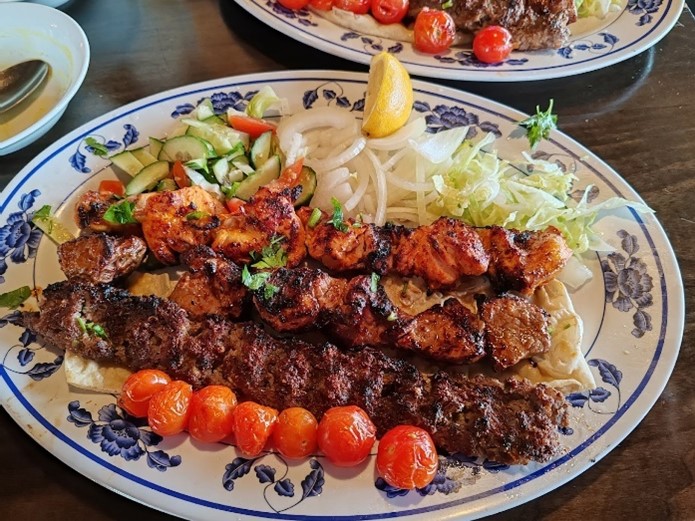
Lamb and chicken kebabs at Real Taste, Liverpool
And I didn’t have to look up another recipe that called for sausage.
 Reid & Robie