
The code is more what you’d call “guidelines” than actual rules.
– Captain Barbossa in Pirates of the Caribbean
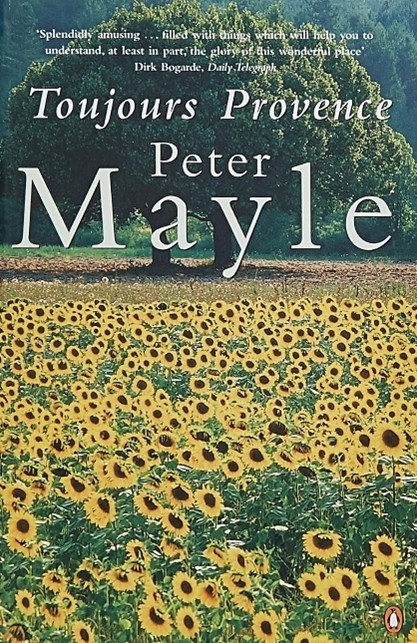
When Robie and I started cleaning out the house and preparing for this adventure, I made an exception to my rule about not reading a book twice. Because like Captain Barbossa, I believe rules should be more like guidelines.
As I culled my library boxing up titles I’d read to recycle at the used bookstore, a small hardback tugged at my memory. Despite annual purges, the volume had remained on the bookcase for more than a decade, untouched but not unseen. And when I reshelved it, I vowed to reacquaint myself with the author and try to remember why I’d held on to the manuscript so long.
I first uncovered the jacketless hardback at a book swap during our cruise around the Caribbean. When Robie and I reached the Dominican Republic and turned east sailing against currents and trade winds, I sought an escape from the monotony of waking before dawn to sail in the night lees and anchor before the sun’s rays heated the land and turned our leisurely sail into a beat against the elements. And after dropping anchor in some small harbor, Robie and I spent the afternoons reading.
Somewhere along the southern coast of Puerto Rico I was transported from the blue waters and swaying palms of the Caribbean to the south of France where billowing sunflowers, truffle-hunting pigs and long naps under tall shade trees were part of the tous les jours.
The second in a series of four books, Toujours Provence follows Mayle’s best-selling hit, A Year in Provence two years after the original blockbuster, a book I hadn’t read but which wasn’t a prerequisite to enjoying the sequel or his eventual third book in the series, Encore Provence.
From the author’s days as a former advertising exec, Mayle uses his keen observation and sharp wit to describe expatriate life as he and his wife continue to navigate the customs of their adopted homeland. Structuring each chapter as an anecdote, Mayle paints a beautiful and evocative image of Provence through the mundane: eating at restaurants, getting medicine for a sick relative in town for a visit, adopting a stray dog and interacting with his neighbors. In Mayle’s hands, the French countryside and language become characters that immerse readers in Provençal culture.
But there’s plenty of strange things happening here too. After buying truffles for a friend, Mayle clandestinely sneaks them into England. And when the author discovers a few gold Napoleon coins buried under his hedge, his neighbor digs up Mayle’s backyard like the Caddyshack gopher.
In addition to his cagey neighbor, we meet a former French policeman selling high-end home security systems and Régis, the gourmand perpetually dressed in a tracksuit, as well as British vacationers who find their way into Mayle’s house hoping to be rewarded with a free copy of his book.
But more than anything, Tourjours Provence is about eating, drinking and the French love for food. With Mayle as our guide we go truffle hunting, take a grand picnic to celebrate the author’s 50th birthday, get schooled on pastis, visit the caves of Chateauneuf de Pape and take a peek backstage at the dishes Pavarotti likely ate between arias during a sold-out performance at the Antique Theater of Orange.
When talking about food, Mayle leaves nothing on the table.
We eased into lunch like athletes limbering up. A radish, its top split open to hold a sliver of almost white butter and flecked with a pinch of coarse salt; a slice of saucisson, prickly with pepper on the tongue, rounds of toast made from yesterday’s bread, shining with tapenade. Cool pink and white wines…. The alouettes sans tete (headless larks, but not literally) were hot and humming with garlic, and Michel decided that they deserved a more solid wine…. Salad came, and then a basketwork tray of cheeses, fat white discs of fresh goat cheese, some mild Cantal, and a wheel of creamy St. Nectaire from the Auvergne…. Scoops of sorbet were offered, and an apple tart, sleek with glaze, but I was defeated.
Alongside the array of dishes, Mayle describes the French passion for food.
It’s the atmosphere generated by a roomful of people who are totally intent on eating and drinking. And while they do it, they talk about it; not about politics or sport or business, but about what is on the plate and in the glass. Sauces are compared, recipes argued over, past meals remembered, and future meals planned. The world and its problems can be dealt with later on, but for the moment, la bouffe takes priority, and contentment hangs in the air.
Yet it is the author’s musing on the solitary life of a writer I enjoyed most.
“Writing is a dog’s life, but the only life worth living.” That was Flaubert’s opinion, and it is a fair expression of the way it feels if you choose to spend your working days putting words down on pieces of paper.
For most of the time, it’s a solitary, monotonous business. There is the occasional reward of a good sentence – or rather, what you think is a good sentence, since there’s nobody else to tell you. There are long, unproductive stretches when you consider taking up some form of regular and useful employment…. There is constant doubt that anyone will want to read what you’re writing, panic at missing deadlines that you have imposed on yourself, and the deflating realization that those deadlines couldn’t matter less to the rest of the world. A thousand words a day, or nothing; it makes no difference to anyone else but you. That part of writing is undoubtedly a dog’s life.
What makes it worth living is the happy shock of discovering that you have managed to give a few hours of entertainment to people you’ve never met.
So, how did Toujours Provence stack up after reading it again?
Did I enjoy reading it? Very much. The series of well-written, laugh-out-loud vignettes is a lighthearted, quick read. As one reviewer wrote, “I loved the book so much that I want to retire in Provence myself.” Or perhaps even higher praise from the person who said, “A good read. Staying on my bookshelf to be read again.” As for me, anything that inspires grabbing a crusty baguette and creamy French cheese is always welcome.
Did I learn something new? Definitely. Who knew there were such characters lurking in the south of France? The wary truffle hunter, Mayle’s shifty neighbor and the man teaching his frogs to sing La Marseillaise. But within the text are more than a few French words and phrases, and as one reviewer noted, “The last straw was the constant interruption of the narrative with ‘teaching French’ sections since not a paragraph went by without having to look up a translation.”
Does it make me want to pack my bags? Yes, because all great writing about far-off places and foreign cultures makes me want to explore the region in person. But calling Toujours Provence a travel narrative would be a misrepresentation. In this follow-up to A Year in Provence, the author delves into the details, adventures and frustrations of life as an expatriate.
Does it inspire me in other ways? Yes, and after reading the vignettes again I remembered why the book had remained on my shelves. Toujours Provence was the book that first made me want to move overseas, to immerse myself in a foreign culture, experience all the delightful and quirky things that made it unique, and then laugh about them.
Have you read Toujours Provence or Mayle’s other books in the series? We’d love to hear what you think of them.
 Reid & Robie
Wow! Amazing!
LikeLike