
You’re not Albanian if you don’t have a Nokia phone, a Samsung TV and a Mercedes-Benz.
– local saying
If Dante wrote The Divine Comedy today, the first circle of Hell would be reserved for Albanian drivers. While Italians can’t keep within the lanes, Chinese cabbies don’t know how to read and Mexicans run red lights like they’re being chased by a horde of masked Lucha Libre wrestlers, Albanians behind the wheel are their own rare breed.
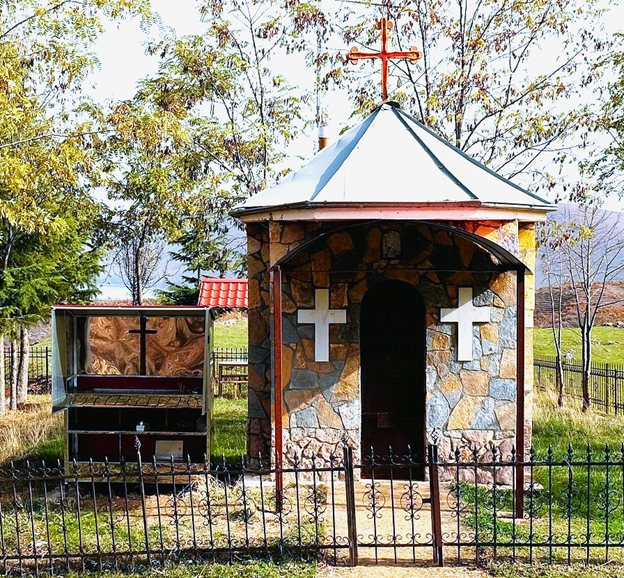
Daredevils pass slow-moving trucks on twisting mountain curves lined with roadside altars commemorating those who tried – and failed. Taxis unload passengers in the middle of busy intersections, drivers block traffic to visit with neighbors, and cars purposefully speed the wrong way down one-way roads daring oncoming traffic to flinch like they’re trying to win a game of chicken.
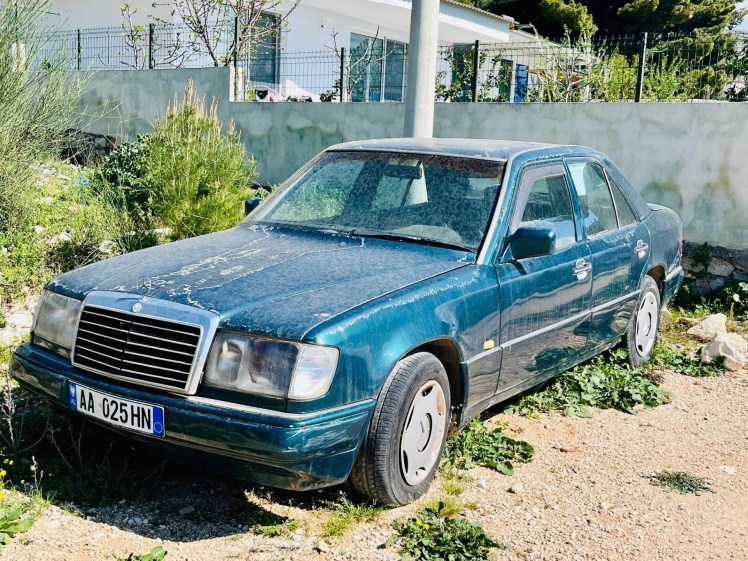
It should come as no surprise that Albanians aren’t great drivers since for most of the 20th century owning a car was prohibited. In 1991, on the eve of communism’s collapse, Albania was home to 3.25 million people but had only 5,000 automobiles reserved for party elites. So when a new regime lifted the ban on private ownership, car imports skyrocketed. And with their hard-earned buying power, Albanians didn’t just go out and pick up any old clunker, they got the best beat-up Mercedes-Benz money could buy.
For decades the German car company enjoyed unprecedented, free advertising as newspapers in the 1920s showed King Zog getting chauffeured around town in a stylish, black Mercedes-Benz 770 and grainy news reels from the 1960s depicted dictator Enver Hoxha inspecting bunkers in his fleet of Mercedes. But in a country where people mostly got around on foot, only a handful of two-lane highways connected major cities, and it would be years before the government added control devices and traffic lights in the capital.
Outside Tirana today, stop signs are rare and traffic lights nonexistent while many small towns are only accessible via treacherous mountain roads on switchback curves bounded by precarious cliffs but few guardrails. In major metropolitan areas the most prominent road signs are the “no parking” graffiti spraypainted on buildings and sidewalks underscoring the country’s lack of urban planning and serious shortage of parking.
Cars pull onto the sidewalk obstructing pedestrians, empty lots turn into car parks and vehicles double park with confounding frequency. People stop in the road to shop or join friends at a café because as one local explained, “Albanians always pull over in front of their destination” until honking alerts them it’s time to play Tetris on four wheels.
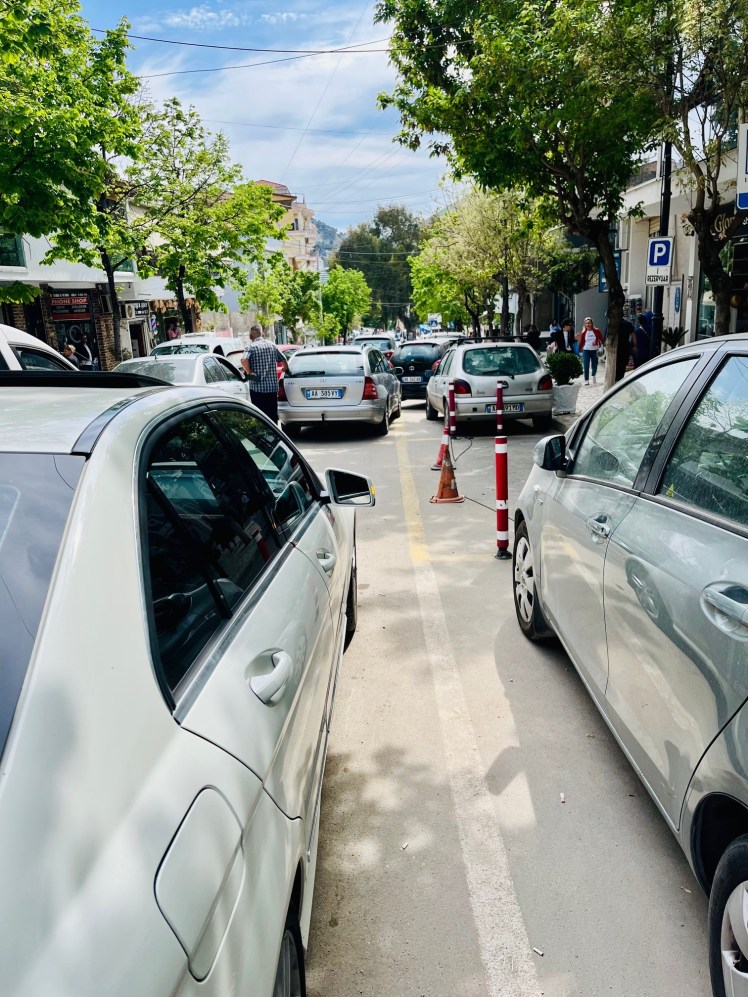
But if rules are few, Albanians are surprisingly well-mannered amid the chaos. No one minds when two lanes funnel down to one because of cars double parked on both sides. Drivers frequently stop when they see pedestrians peeking around parked cars and slow to take turns at intersections without stop signs. And beyond notifying an absent motorist his car is blocking the way, horns are rare and hand gestures reserved for friendly waves.
As Albanians adjust to life with automobiles, their love for Mercedes-Benz continues. Because Albania isn’t just home to the most Mercedes per capita in the world, it’s where old, vintage models of the three-pointed star go to die.
 Reid & Robie
Amazing!
LikeLike
Albania is a unique country.
LikeLike
I really like the title of this one.
LikeLike
Thank you!
LikeLike