
Everywhere is within walking distance if you have the time.
– Steven Wright
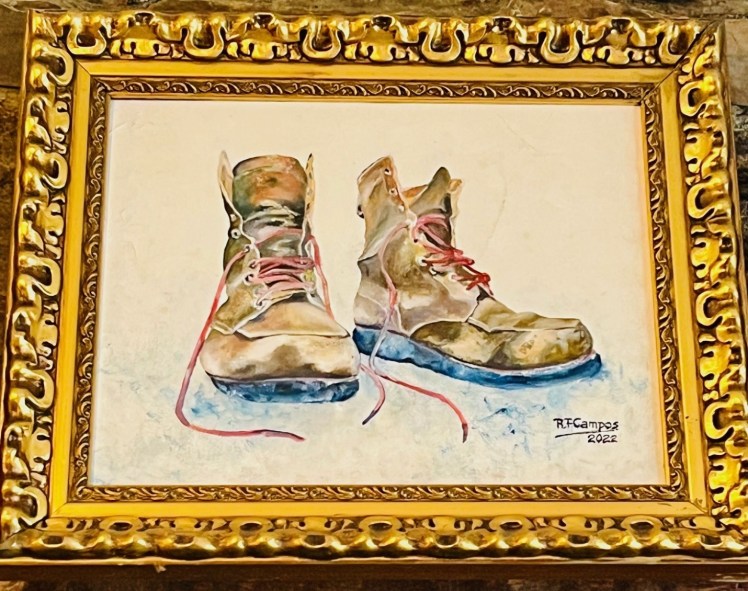
For many the Camino ends in Finisterre, a three-day hike west of Santiago where views of the boundless North Atlantic give the cape its name as the End of the World. But the rightful terminus is in Santiago de Compostela.
So why is Santiago de Compostela considered the third most important pilgrimage in Christendom after Jerusalem and Rome? Who is St. James? And what, after all, is in the cathedral at Santiago de Compostela?
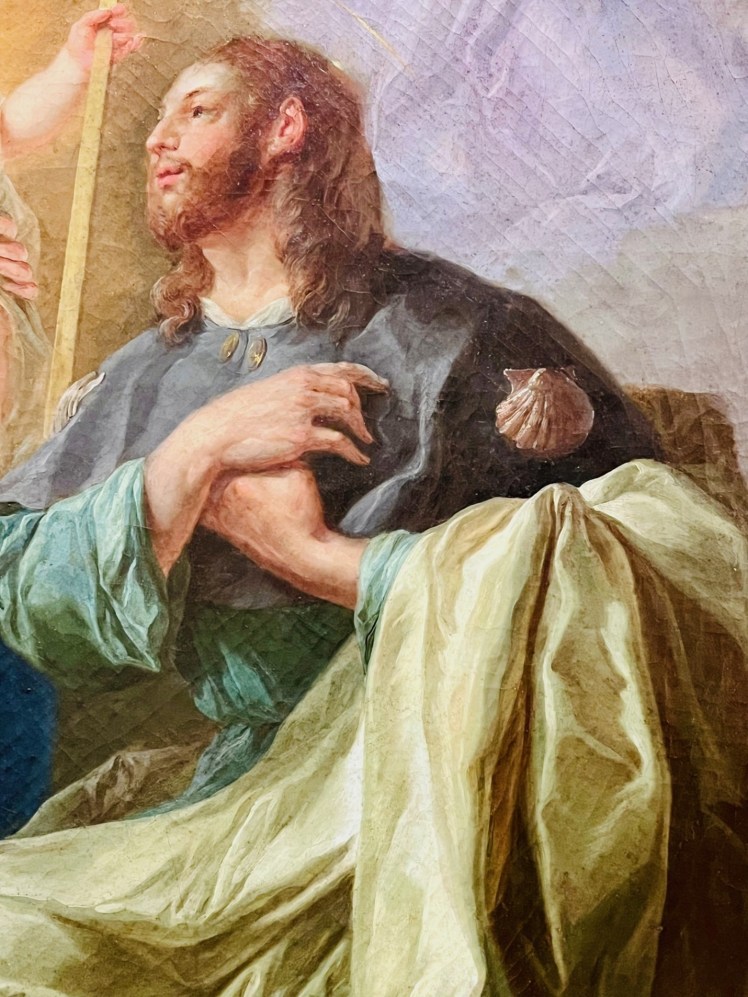
History of the apostle James
The apostle James (known as Santiago in Spanish), son of Zebedee, was born in Bethsaida. Like his father and brother, he was a fisherman until Jesus called him to be a fisher of men. Along with Peter and Andrew, James and his younger brother John were the first of the twelve disciples (Mark 1:16-20).
As a member of Jesus’ innermost circle, James witnessed significant events like the raising of Jairus’ daughter from the dead (Mark 5:35-42 and Luke 8:49-55) and the Transfiguration (Mark 9:2-4). James was also one of the few apostles present during Jesus’ time in the Garden of Gethsemane (Mark 14:32-42 and Matthew 26:37-45). And James is the only disciple whose martyrdom is recorded in the Bible (Acts 12:2) when he was beheaded on the order of King Herod Agrippa I.
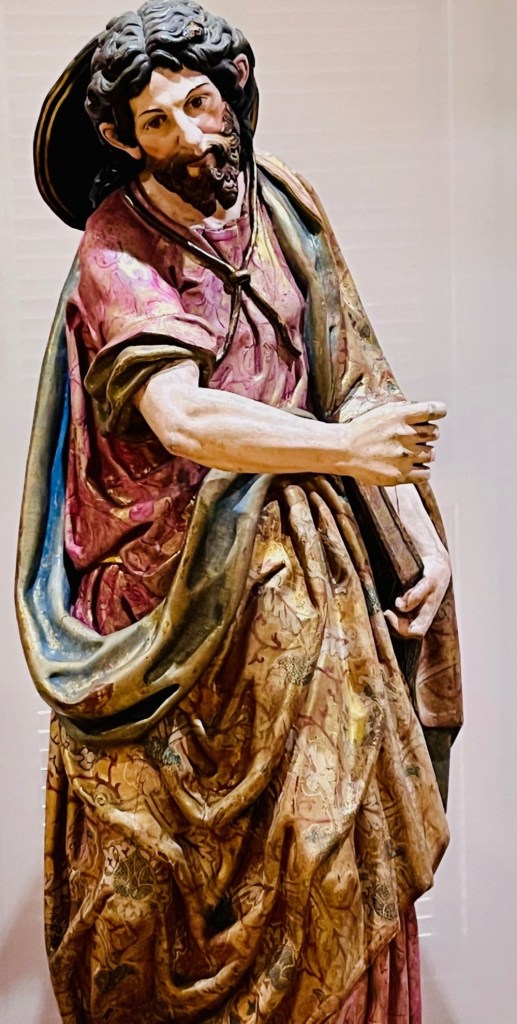
Legend of St. James
Following the crucifixion James is said to have traveled to Hispania (modern-day Spain) to convert the pagans. While in Zaragoza James became discouraged and prayed for strength on the banks of the Ebro River. There he saw an apparition of the Virgin Mary who appeared to him on a marble pillar. Though still alive and living in Jerusalem, Mary encouraged and reassured James providing him with a wooden statue of herself as a sign of support. Then she instructed him to build a church on the spot where the apparition occurred, the Basilica of Our Lady of the Pillar in Zaragoza.
Returning to Jerusalem James was arrested and executed. After his death the apostle’s two disciples, Theodore and Athanasius, placed his body in a rudderless, stone boat, got in and set themselves adrift. The boat not only floated, it was guided by angels across the Mediterranean through the Pillars of Hercules to the shores of Galicia in northwestern Spain. Upon landing the disciples sought a burial place for James’ body but were met with cunning resistance from the pagan, Celtic Queen Lupa.
Feigning assistance, Queen Lupa sent Theodore and Athanasius to the court of a rival king where they were imprisoned. Miraculously freed the men then accepted a pair of wild bulls from Lupa to transport James’ body. After they made the sign of the cross the bulls were instantly tamed and yoked themselves to James’ coffin. Allowed to roam freely the animals eventually stopped in a forest under an oak tree where Athanasius and Theodore buried the apostle’s body and remained guarding the tomb until their deaths.
For centuries James’ tomb lay forgotten. Until 813 AD when a hermit named Pelayo saw a shower of strange, bright lights hovering over a forest. Investigating further Pelayo found a tomb hidden among the vegetation and inside the remains of three bodies, one of whom had been decapitated. Alerting the nearby church, Pelayo and Bishop Teodomiro determined these were the bodies of St. James and his disciples. Naming the location Campus Stellae (for “field of stars”), the words were later adapted and added to the city where James was buried, Santiago de Compostela.
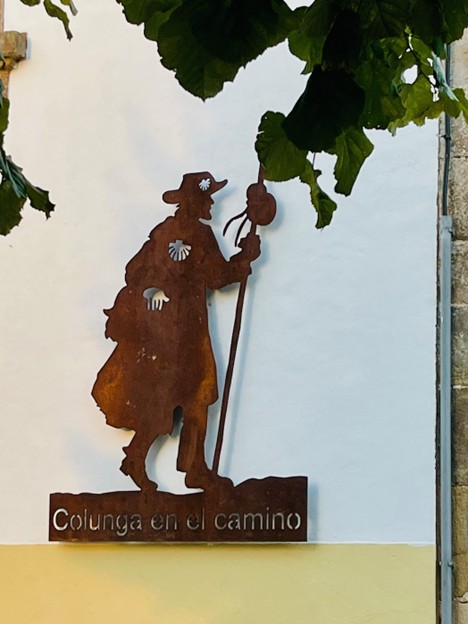
Origins of the Camino de Santiago
Learning about the discovery of the apostle’s grave, King Alfonso II of Asturias left his court in Oviedo and walked 200 miles to Santiago’s tomb.
The route Alfonso walked is known today as the Camino Primitivo, the most demanding way to Santiago with fewer towns, longer distances, limited services and steep mountain terrain. Arriving in Santiago Alfonso ordered a small chapel built above James’ tomb. In the years that followed Alfonso’s son erected a church to replace the original chapel. And when that church was destroyed during a Moorish raid another was built on the site until construction began on a massive Romanesque cathedral.
As word of the saint’s burial place spread it spurred the need for a pilgrims’ path. For two centuries the coastal Camino del Norte was the route Europeans traveled to reach Santiago de Compostela. Once Christian armies secured the region surrounding León from the Moors and King Garcia I moved his court from Oviedo to León, an alternate route along the Camino Francés opened.
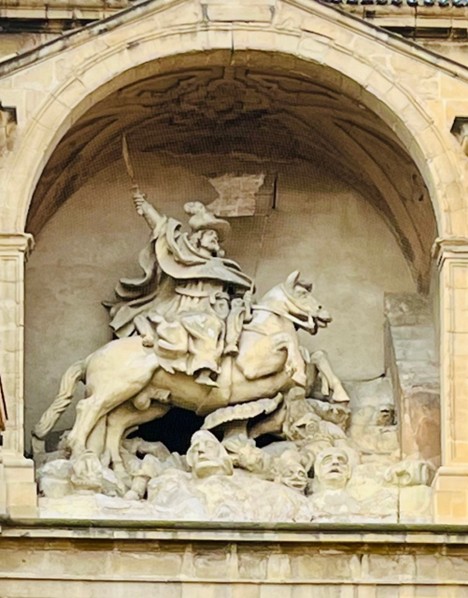
Story of Santiago Matamoros
During the Reconquista the legend of St. James (Santiago) the Moor-Slayer (Matamoros) emerged at the Battle of Clavijo.
According to the myth, King Ramiro I of Asturias was outnumbered and facing a battle-hardened Muslim army from North Africa. After taking refuge in a castle for the night Ramiro heard St. James promise victory in a dream. The next day Santiago could be seen on a white stallion brandishing a sword as he led the Christian army from the front slaying thousands of Muslims with the battle cry, “Dios ayuda a Santiago!” (God help Saint James!). Later, Ramiro dictated the vow of Santiago committing all Christians to make a pilgrimage to Santiago de Compostela in gratitude for the victory.
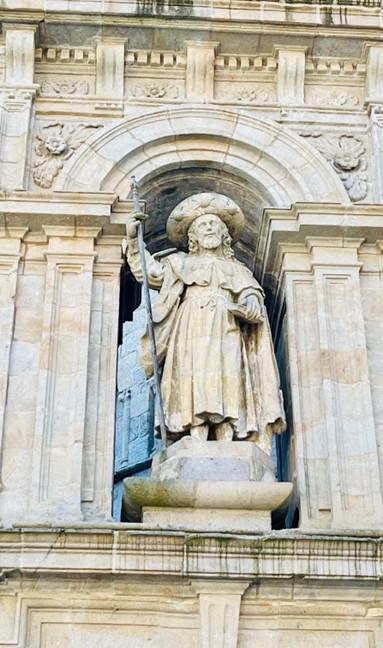
Santiago and Spain
The mythical vision of Santiago Matamoros turned a humble apostle into the symbol of Christian reconquest across Spain where the image of him on horseback, sword in hand, became the emblem of Christian resilience against Islam for centuries.
A medieval religious and military order dedicated to the saint pledged to protect pilgrims traveling to the shrine of St. James and defend Christian territories along the border of Al-Andalus, the name given to Moorish Spain. At its peak the Order of Santiago was the most powerful and prestigious military order in the world. After the fall of Al-Andalus at Granada, Ferdinand and Isabella incorporated the Order into the Crown placing it under royal control.
As the patron saint of Spain, Santiago’s feast day (July 25, the date of his death) is celebrated across the country with processions, concerts and fireworks. In Santiago de Compostela the city is filled with cultural and religious activities, theatrical performances, concerts and street parties while High Mass is attended by government officials as well as members of the Royal Family.
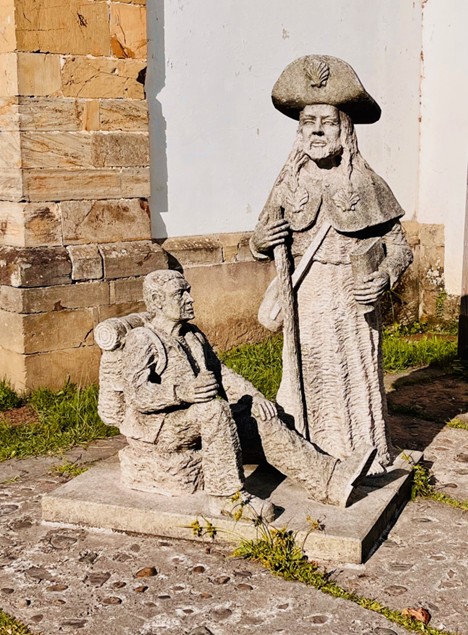
Miracles attributed to St. James
In addition to the tale of leading Spain to victory on the battlefield, other miracles are attributed to St. James. There’s one about a pilgrim falling into the sea who’s carried to port by the apostle, a knight who’s cured after Santiago touched him with a shell and a knight who was miraculously freed from prison thanks to St. James interceding.
But the two most enduring tales begin with a 15th century German family who stopped overnight on their way to Santiago to pray at the tomb of Saint Dominic de la Calzada. When the daughter of the local innkeeper had her advances spurned by the German couple’s son, she hid a silver cup in his luggage and had him arrested for theft and sentenced to hang. Though distraught, the youth’s parents continued their pilgrimage and upon their return to reclaim their son’s body, they found him still hanging from the gallows but miraculously alive.
Demanding to see the judge, the couple found him just as he was sitting down to lunch. Eager to dine on the succulent rooster and hen already served him, he replied to their claims, “Your child is no more alive than the animals on my plate.” As soon as he spoke, the birds jumped up and started singing, and the innocent youth was taken down and released from the gallows.
A second, long-held miracle happened in O Cebreiro, a small mountain town where the Camino Francés crosses into Galicia. Local lore has it that a peasant farmworker attending mass every day caught the attention of the parish priest who recognized the lad’s devotion for coming to church in all kinds of weather – rain, sun, snow and storms.
On a particularly cold and rainy day when the mountains were nearly impassable, the farmhand arrived as usual. When the old monk realized the lad was soaked to the bone, he told him it wasn’t worth sacrificing his health on such a day. Immediately, the bread used to represent Christ’s body turned to flesh and the wine to blood, staining the altar red as the cup overflowed.
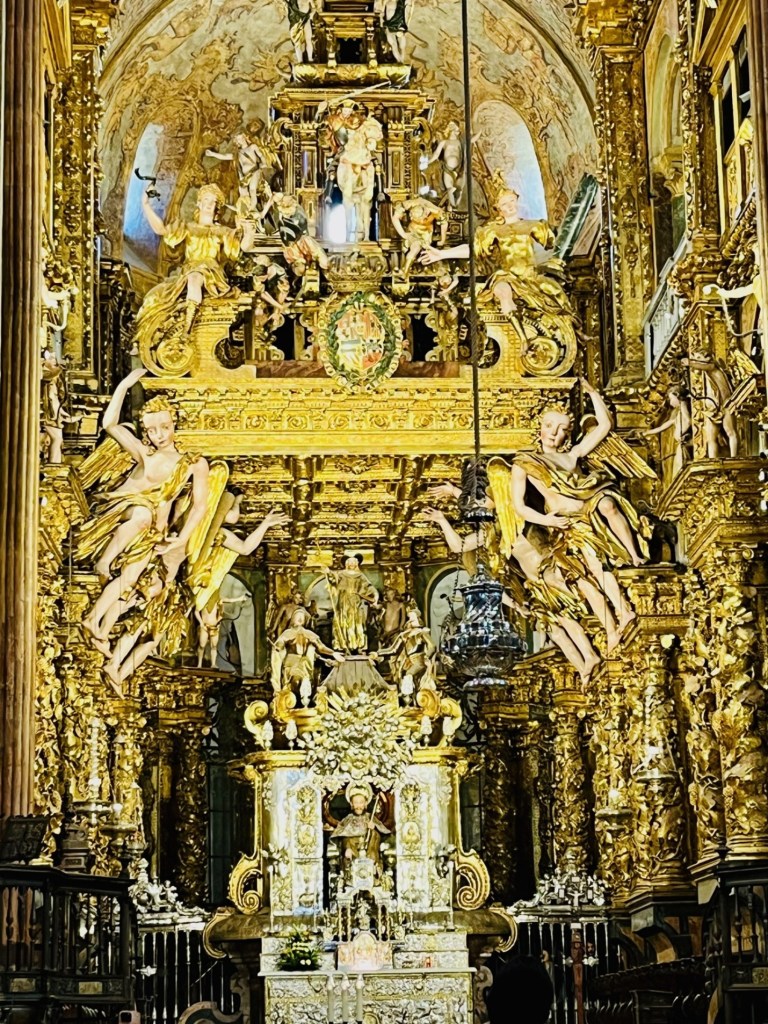
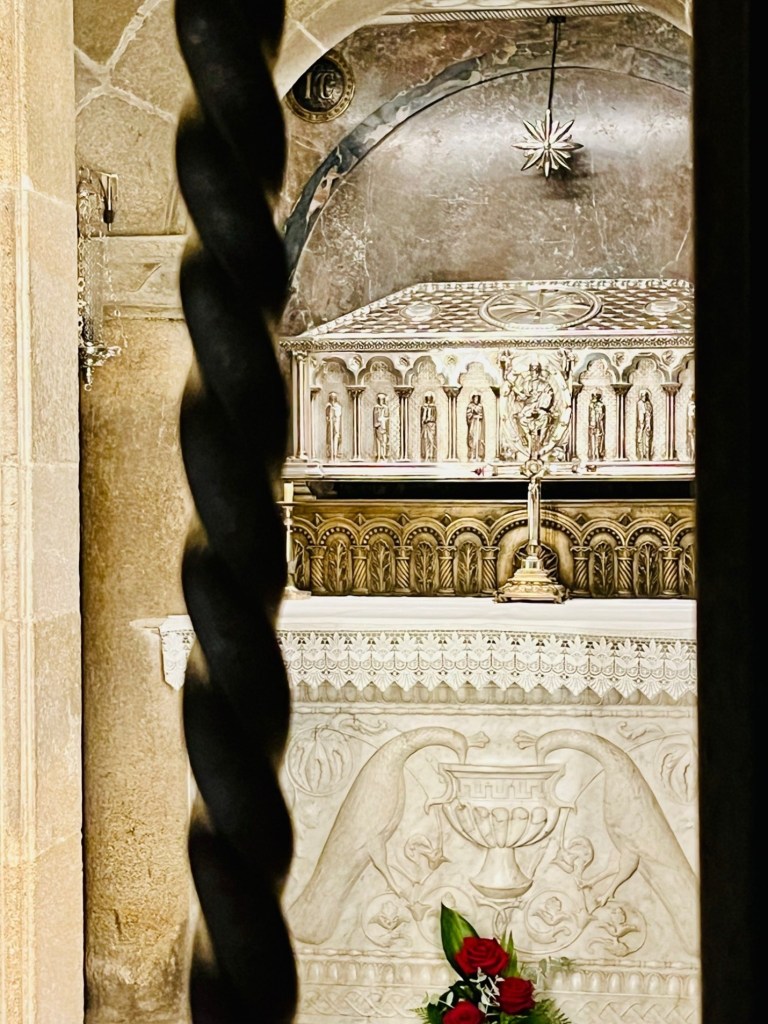
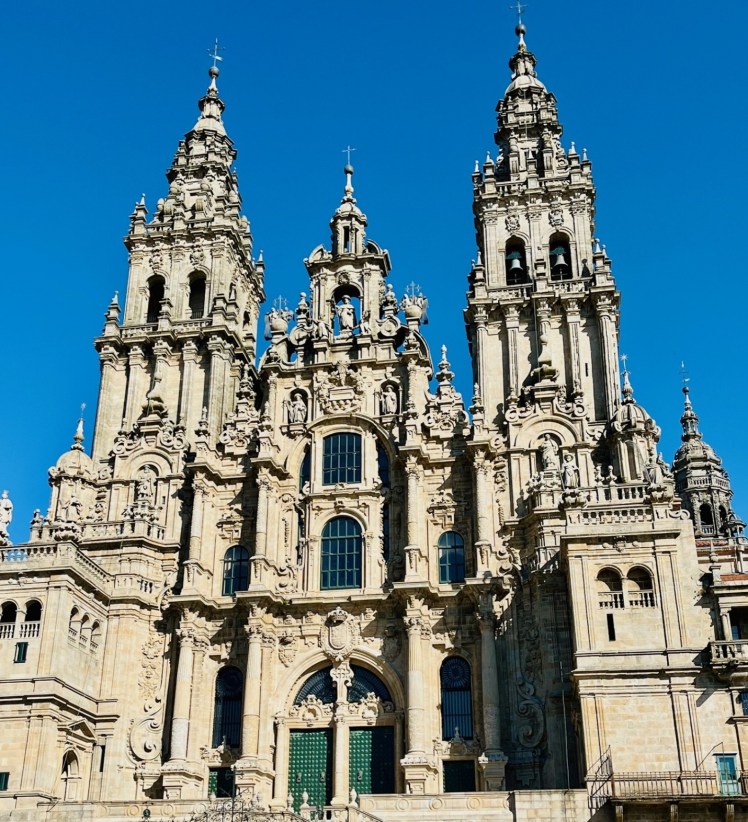
What’s so special about the Cathedral of Santiago de Compostela?
Elated and exhausted pilgrims gather in the large Praza de Obradoiro in front of the Cathedral of Santiago de Compostela. Behind them are the twin belltowers and Baroque façade added to protect the original Romanesque Portico of Glory from weather damage. Though intended to be the main entrance, the western door is rarely open forcing pilgrims to enter the church via the southern entry unless it’s a year when St. James’ feast day falls on a Sunday. Then the eastern Holy Door is open to pilgrims.
Inside, a dazzling Baroque altarpiece adorned with gold and silver serves as a focal point for religious ceremonies while the massive, swinging censer (known as the Botafumeiro) is a famous spectacle propelled by a system of ropes and pulleys that takes eight men to operate. A space in the transept holds the royal pantheon and tombs of several Galician kings and queens while a beautiful Gothic cloister offers a quiet retreat. Other chapels, a church museum and the treasury house important relics and artifacts. Behind the altar is a small, hidden compartment where pilgrims hug and kiss the statue of St. James after viewing his silver reliquary inside the apostolic crypt.
Does any of it matter?
Tales, legends, magic or miracles – you decide.
What we know is that for twelve centuries St. James has lured people from all points of the globe and set them on an arduous journey to a city in northwestern Spain.
 Reid & Robie
Wow!!! Hard to believe.
LikeLike