
Santiago is not the end of the Camino, but the beginning.
– Paulo Coelho
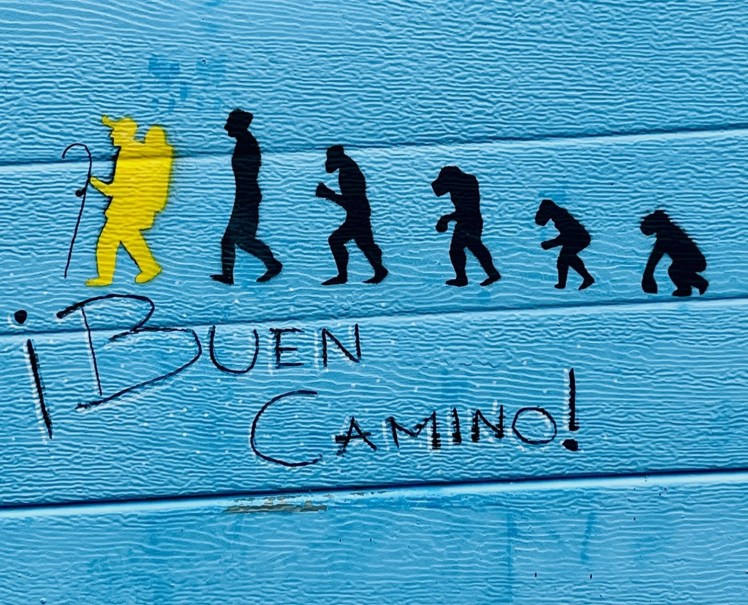
Though the Camino ends in Santiago de Compostela, the things we learn on the journey shouldn’t stop there. On the Camino – as in life – there are a few lessons to live by.
Keep it simple, stupid. Life’s complicated enough.
It seems everything designed to make life simpler only adds more stress – apps that track our steps, calls on our watches and refrigerators that remind us we’re running low on milk.
It’s likely that when you first conceived of hiking the Camino, somewhere deep inside was a craving for simplicity – at least for a little while. On the trail it’s about taking care of the basics. You plan for the weather, study the route and terrain, and make sure you have a place to rest your head at night.
Here’s your chance to travel slowly, carry everything you need on your back, detox from social media and worry less about what’s happening in the outside world. Because when you arrive in Santiago the refrigerator will still remind you to stop for milk on the way home.
Stop and smell the roses. In Basque Country my sister and I met a man averaging of 25 miles a day on the Camino, an impressive pace that had him bypassing everyone around. But this race to Santiago also meant he was missing a key aspect of the journey.
If there’s ever a time to stop what you’re doing and take a look around, it’s while walking the Camino. Visit the San Telmo Museum in San Sebastian to learn about Basque culture, linger at the corner restaurant on a busy afternoon, laze at a picnic next to a field of grazing sheep or grab a drink at a beach bar and watch the surf roll in.
Because if you can’t find time to stop and smell the roses while walking 500 miles, you’re not making a pilgrimage. You’re sprinting to check it off a list.
Smile every day. A smile releases fun, little, natural painkillers called endorphins that improve our mood and reduce stress. Smiling boosts the immune system, lowers blood pressure and reduces the heart rate. Most of all, a smile can shift your perspective towards a more positive outlook.
On the Camino a smile connects people from different languages. It says hello to strangers and thank you to the woman serving coffee. When you don’t know how to say the words, just smile.
It goes a long way.
Remember life’s short. Time on the Camino is too precious to waste.
When my sister and I knowingly booked an historic casa rural in Basque Country for the minimum two-night stay, we looked forward to resting in the mountain retreat outside Munitibar. We soon discovered that the policy was designed to deter pilgrims after the homeowner gave us strict instructions how to clean up in the kitchen, told us not to sit on the furniture in the living room and made us promise not to put our packs anywhere but on the floor since he was convinced we carried bedbugs.
After just one night we left Casa Garro and let the owner keep his money. We simply refused to spend another night where we weren’t welcome.
Have faith. A pilgrimage is a spiritual journey – whether through meditation, communing with nature or prayer.
It takes faith to set out on a journey to walk 500 miles. And once there, you need to believe you can scale the muddy hill, find the next yellow arrow in the rain, survive blisters and rain-soaked shoes and continue – slowly, day by day – on the path to Santiago.
But setting out before dawn to walk a cliffside path alone without a headlamp isn’t an act of faith. It’s reckless. Fortunately, when bad things happen on the Camino there’s always another pilgrim coming along behind to help.
Be thankful. You likely made a lot of sacrifices to get to Spain.
Maybe you left behind a job, beloved pet, new grandchild or even a spouse to walk the Way. Some days it rains, other days the heat may be unbearable and the journey harder than expected. Injury, sickness, exhaustion all play a part on the road to Santiago. But no matter what’s getting you down, be grateful to be part of this amazing journey.
Say hello. On the Camino del Norte it’s possible to go all day without seeing another pilgrim. But that doesn’t mean there aren’t plenty of opportunities to meet people.
Smile to the woman sweeping the church steps, wave at passing cars on narrow lanes and say “buenos días” to farmers taking a break in the field. The simple gestures might lead to some surprising conversations.
In Toar I said hi to a man walking his dog and was soon introduced to Mark and his four-legged friend Arnie Thorogood, named for the star in the Terminator movies. In the brief moments we chatted, I learned Mark is the cousin of George Thorogood (from Bad to the Bone fame, a song prominently featured in the second movie), and an expat Brit who moved to Ibiza 14 years ago before relocating to a quiet corner of Galicia. Despite the remoteness, Mark said living along the Camino was like being in London. It allowed him to meet people from all over the globe.
Do drink the water. Staying well hydrated is one thing all pilgrims worry about.
On our first day after leaving Irun, we saw a sign on a fountain outside the Hermitage of Guadalupe saying the water wasn’t potable. So when a day-hiker started to refill her bottle, I feared she might become ill and pointed to the sign.
“Es una mentira,” the local woman replied. It’s a lie.
On the Camino del Norte there are plenty of places to refill your bottle with cold, clean, refreshing water. Or soak your bandana to wipe the sweat off your face and arms.
The fountains along the Camino were built for pilgrims, so use them.
Be respectful. It’s no secret that parts of Spain are reaching a tipping point with overtourism. Locals in Barcelona pelt tourists on La Rambla with water guns, the tourist board in Santiago posts flyers reminding pilgrims to be reverent while in Sevilla and Granada tickets to the most sought-after sites are sold out months in advance.
But most people appreciate pilgrims so long as they aren’t loud or leave trash. So if you insist on listening to music or a podcast while walking the Camino, wear earbuds. And if you absolutely must make a nature call, find a trash receptacle for that toilet paper.
Believe in people. Many of the pilgrims I met along the Camino credited the movie The Way for introducing them to the path of St. James. And while the Emilio Estevez-Martin Sheen production shows what a pilgrimage is like there’s one aspect the movie gets horribly wrong.
When Martin Sheen’s backpack is stolen it leads to a memorable evening at a Romani festival. But while the plot neatly brings together the movie’s protagonists and a few local inhabitants, the people living along the Camino don’t want your backpack or anything in it. Feel free to leave your bag outside a hotel, in a corner of the restaurant or any place out of the way.
Everything will still be there when you return.
Share. Some small towns on the Camino only have one restaurant, and from 2-4 p.m. that place will be filled with hungry locals. Other parts of the Camino del Norte have limited facilities so all hikers stop at the same café. When space is at a premium, remember what you learned in elementary school where every new kid’s a potential new friend.
When people are standing and waiting at a restaurant, offer to share your table. Because even if there are plenty of cafés and only a handful of pilgrims, your backpack doesn’t deserve a seat at the table.
Keep your shoes on. It’s tempting, I know. After weeks of hiking 10-15 miles a day sometimes you have to let the puppies breathe. But while it’s okay to unlace the Hokas and slip off your socks on a bench along the trail, restaurant owners and their patrons frown on pilgrims who take their shoes off at a café. Ditto for putting your feet on a chair. After all, would you like to eat within sight (and smell) of someone’s feet?
Eat like a local. While I admit that public benches and picnic tables are in short supply on the Camino del Norte, if you must eat your own food, find a grassy spot on the side of the way and make it a picnic. Don’t sit at a café eating your own food.
Instead, pick up a slice of homemade apple cake or chocolate croissant to go with your coffee. I guarantee it’ll taste better than whatever three-day-old food you have in your pack, and the extra €1.50 won’t set you back much.
Remember you’re a guest. You may have trained for months, spent a fortune on all the latest hiking gear and used up your annual allotment of vacation, but you’re still a guest in Spain. Be grateful, thoughtful and polite.
This is a pilgrimage, after all.
That’s my list of lessons learned on the Camino de Santiago. What’s yours?
 Reid & Robie