
Below us, spread out like a map, was Essaouira – a brilliant splash of white between the sea and sky.
– Natasha Edwards
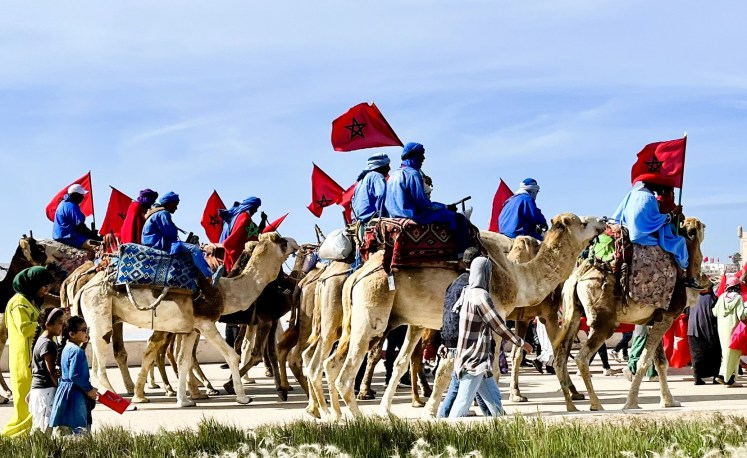
Essaouira on Morocco’s Atlantic shore is a charming, relaxed, coastal town known for its picturesque medina, fleet of blue fishing boats and impressive fortress that offers a stunning backdrop between the desert and sea. Called “the Windy City of Africa,” the town’s broad bay and beach brake waves make it a top destination for watersports while a slower, more laid-back pace blends local Berber culture with European influences lending the town a bohemian vibe.
History of Essaouira (Mogador)
Founded by Phoenicians in the 7th century BC, Mogador (modern day Essaouira) served as a commercial hub connecting sub-Saharan trade routes with the Mediterranean world.
During the 1st century AD, Romans cultivated murex snails in the bay to make Tyrian purple dye. This extremely expensive, labor-intensive process made the rare shade more valuable than gold and reserved exclusively for royalty. But it was the Portuguese who put Mogador on the map in the 16th century, using it as a marketplace for gold and ivory, slaves and spices, an aromatic trade that lives on in the colorful stalls of the souk.
In the mid-18th century, Sultan Sidi Muhammad ibn Abdullah transformed Mogador’s sleepy fishing village into his principal Atlantic port, a move that undermined his political rivals in Agadir further to the south. To create his new shipping center near Marrakech, the sultan hired French architect Theodore Cornut to design a European-style fortress and walled city (medina) which became a thriving commercial seaport and turned Agadir into a ghost town.
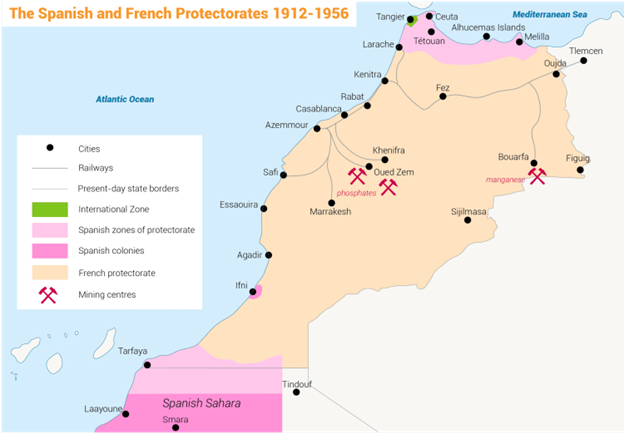
From 1912 to 1956 Morocco was split between two European powers. While the Spanish Protectorate controlled the south and far north of the country, central Morocco was administered by the French. With the population centers of Marrakech, Fez, Rabat and Casablanca under France, French became the official language still used today for government, legal and business dealings.
In the mid-20th century, Mogador changed its name to Essaouira (pronounced sa-WEAR-a), transitioning once more into a popular artist colony and tourist destination.
Medina and Fishing Port
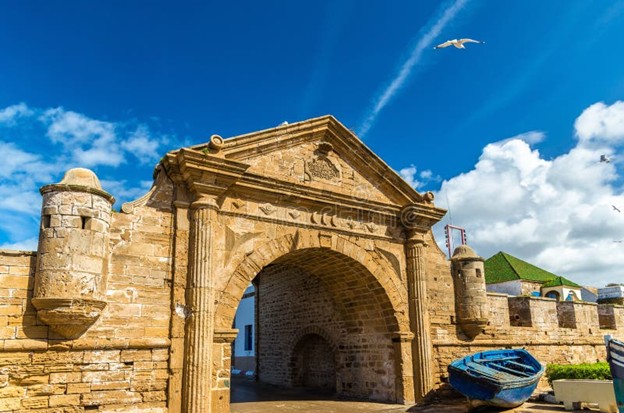
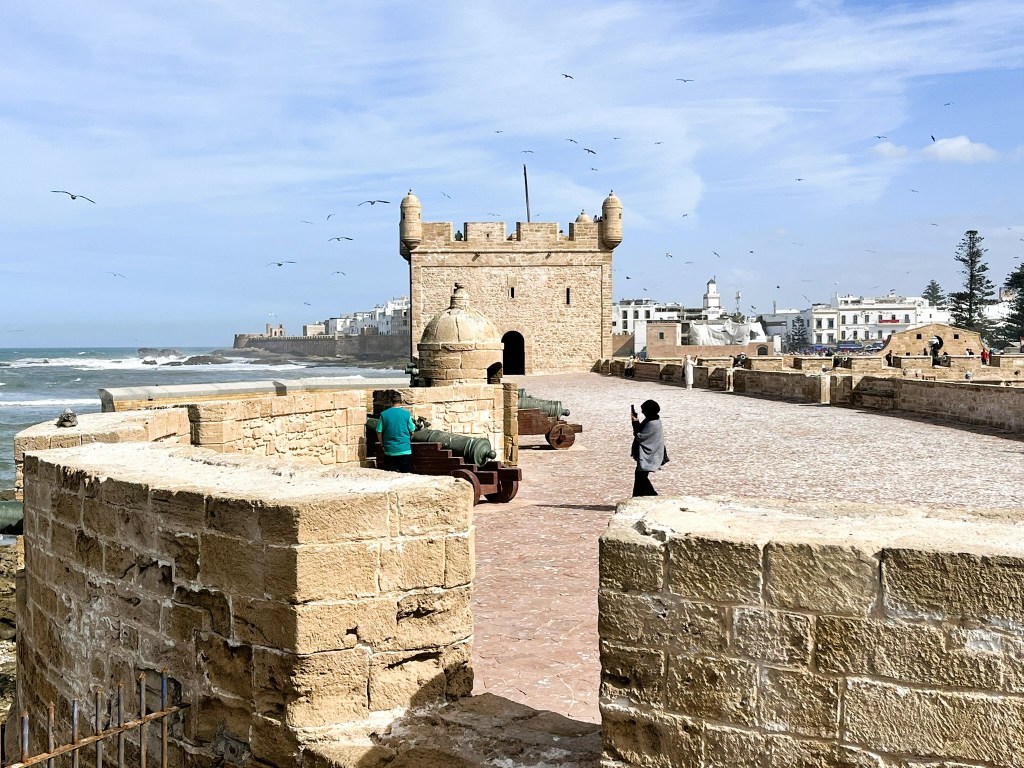
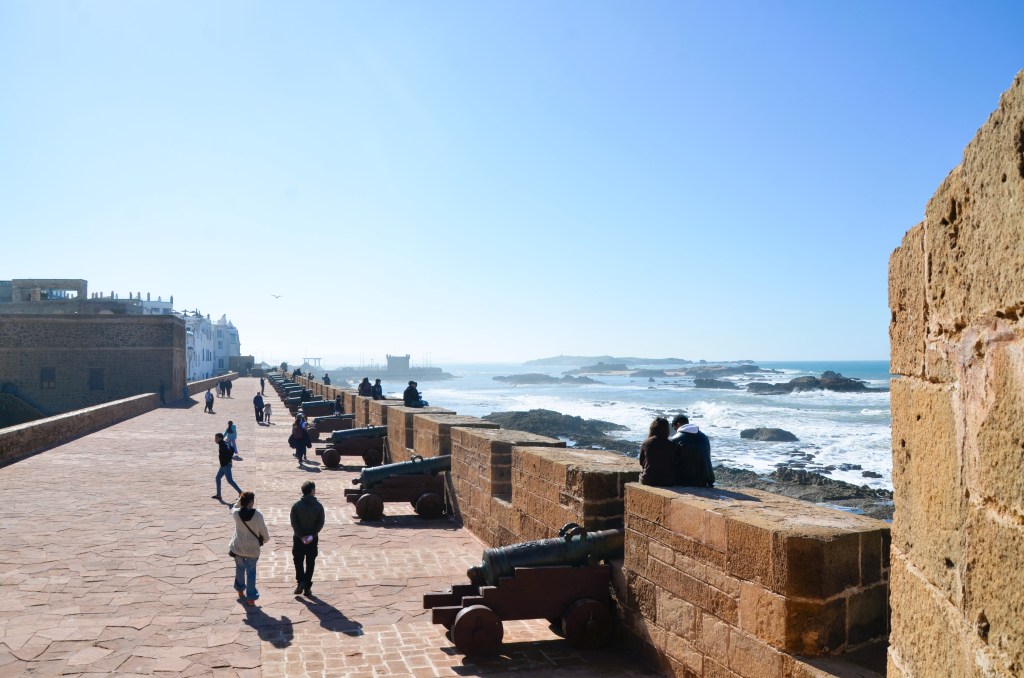
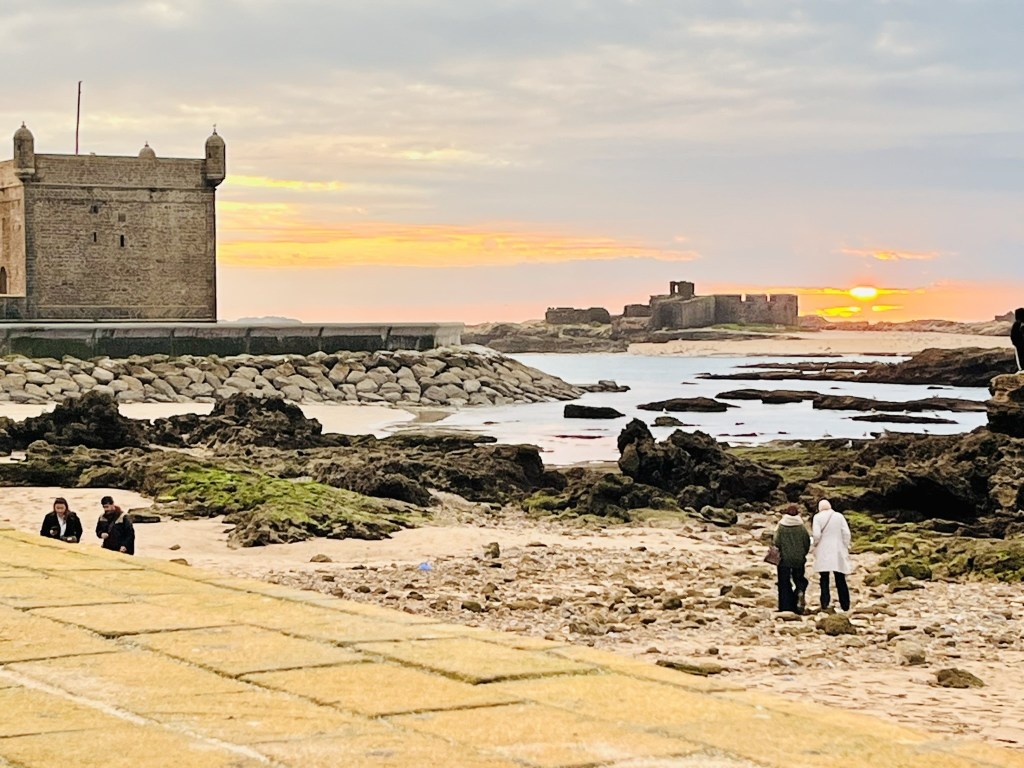
Essaouira’s UNESCO World-Heritage medina (walled city) designed by Frenchman Theodore Cornut was built on the foundations of an old Portuguese fortress featuring ramparts and cannons to protect the city from sea attack.
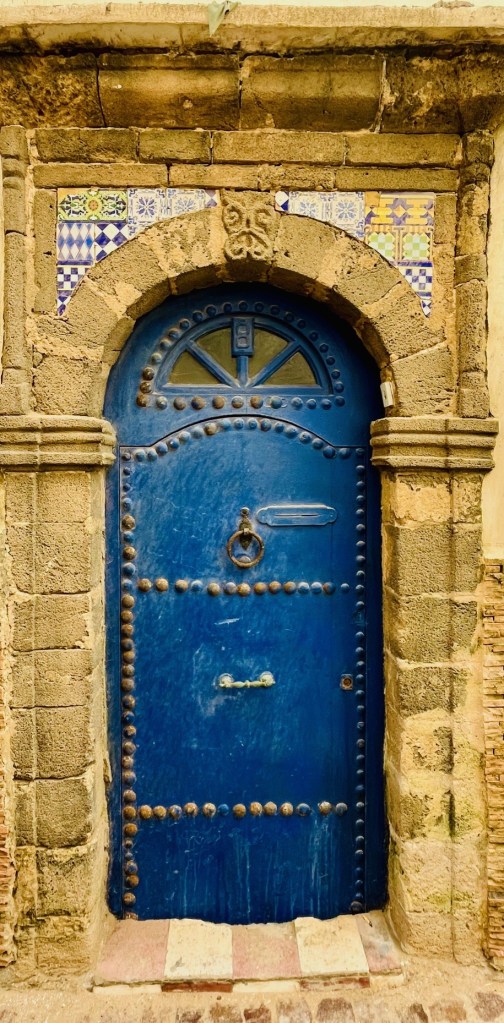
Visitors arriving to the multicultural port pass beneath the Bab al-Mersa (“Gate of Tolerance”) displaying the Islamic Crescent, Star of David and Scallop shell of Santiago to find narrow alleys and whitewashed buildings with doors and shutters painted a vivid blue, the hallmark color of the town.
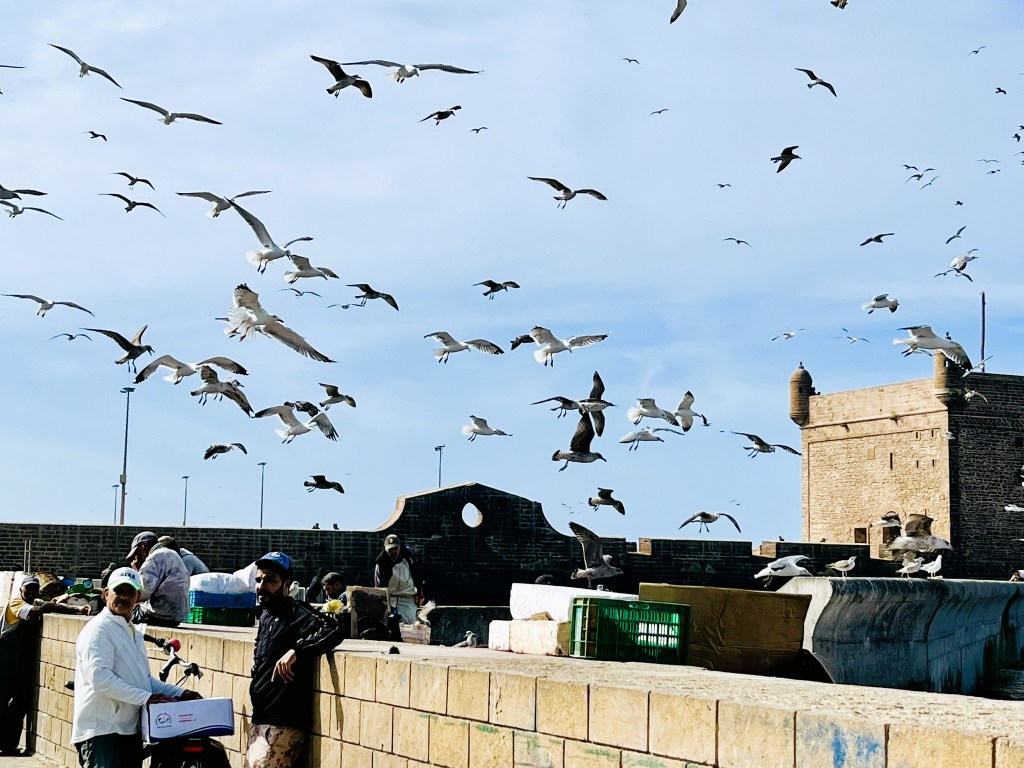
Outside the medina, distinctive blue fishing vessels pay homage to the Tyrian dye industry and help protect wooden boats from the harsh Atlantic environment while a lively wharf features a fresh-caught market and seafood restaurants willing to grill up whatever fish catches your fancy.
Artist colony
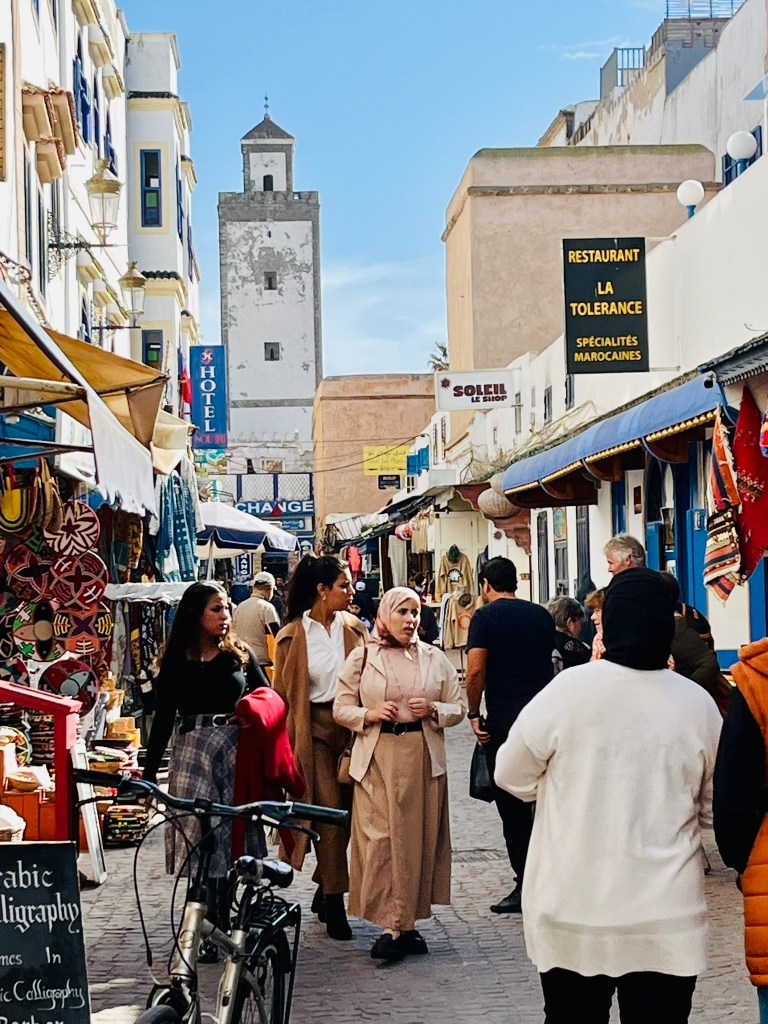
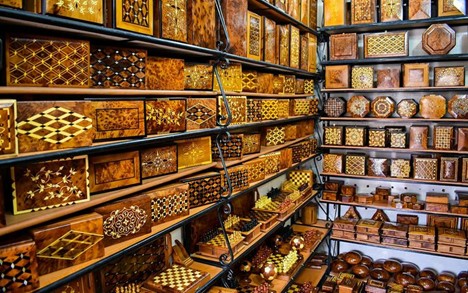
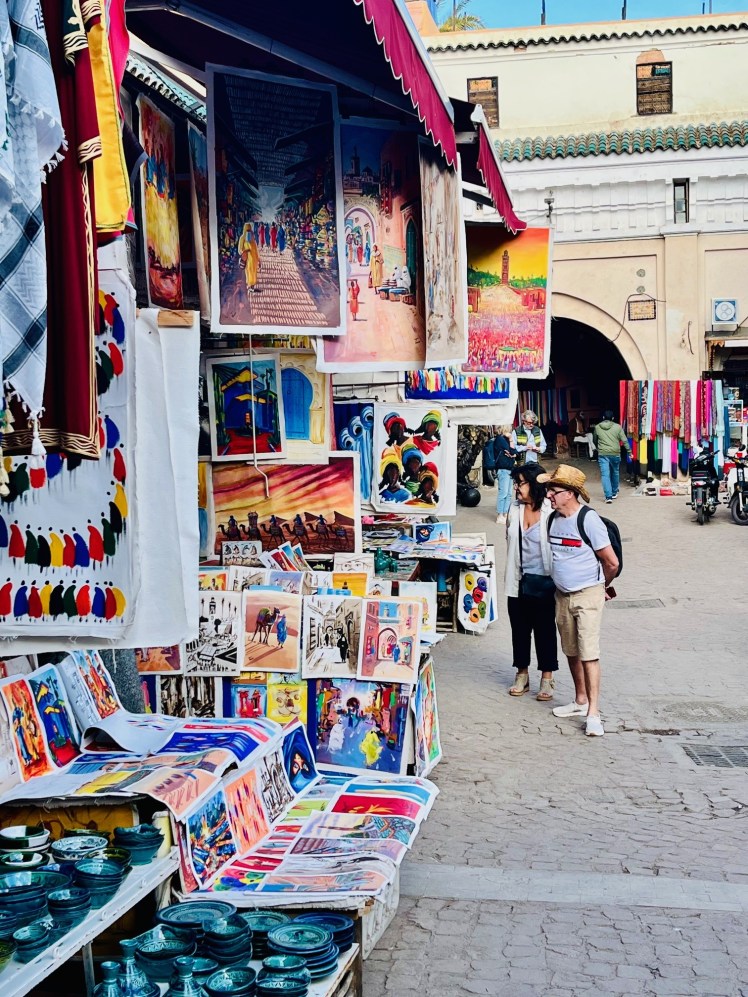
Within the walled city numerous, small, artist-owned studios feature paintings and tapestries while the city is a center for local craftsmen using the aromatic root of the Thuya tree to carve richly colored, highly decorative works.
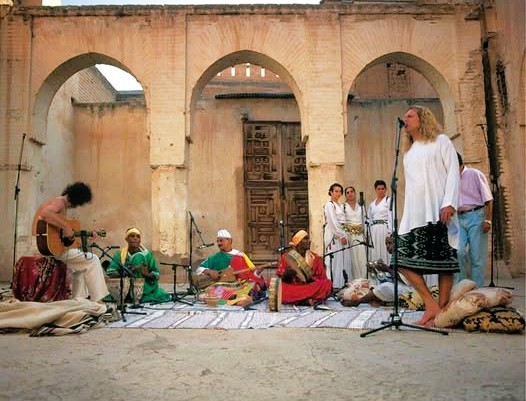
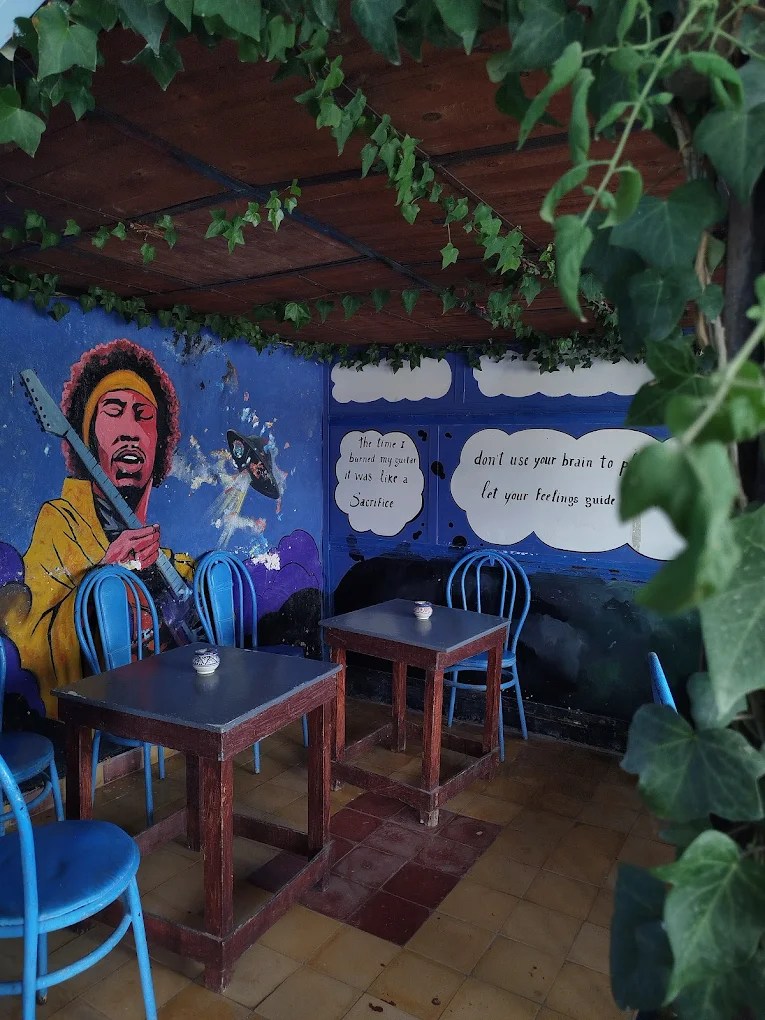
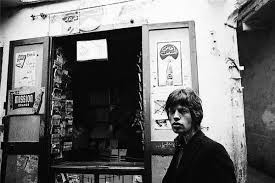
Influenced by a mix of cultures, Essaouira’s annual Gnaoua World Music Festival blends African, Berber and Arabic rhythms to create an avant-garde style that has attracted musicians since the ‘60s with visits from Jimi Hendix, Cat Stevens, Led Zeppelin, Bob Marley and Mick Jagger.
Twin Cities
Two distinct groups of people living in Essaouira give the town a dual personality.
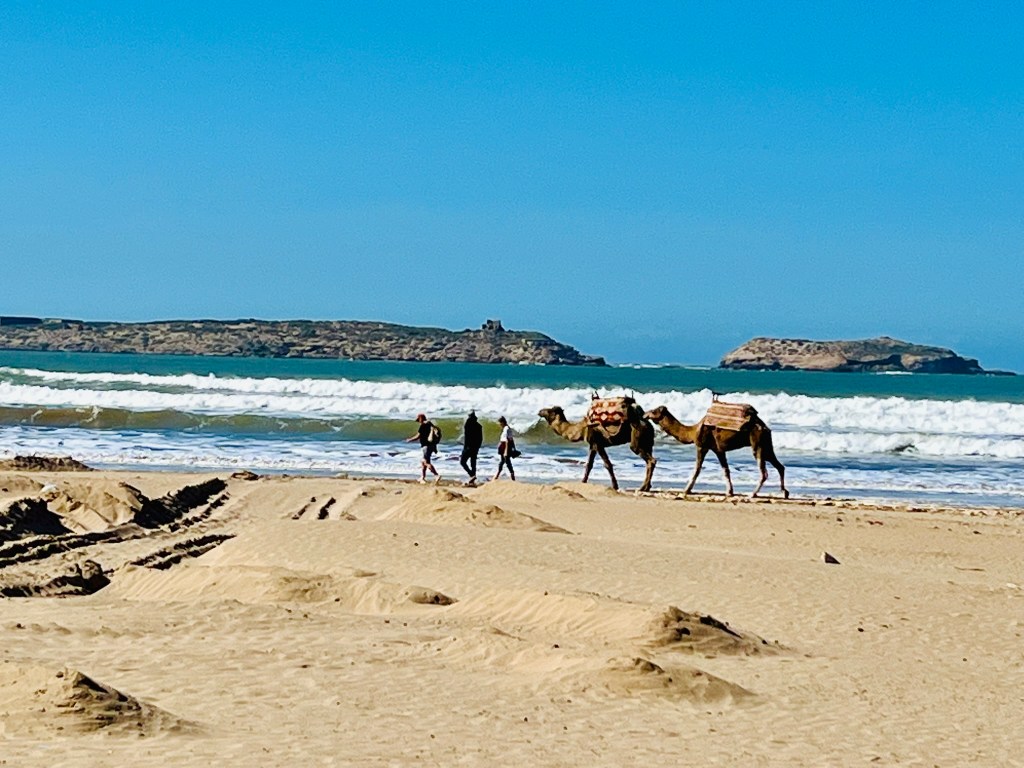
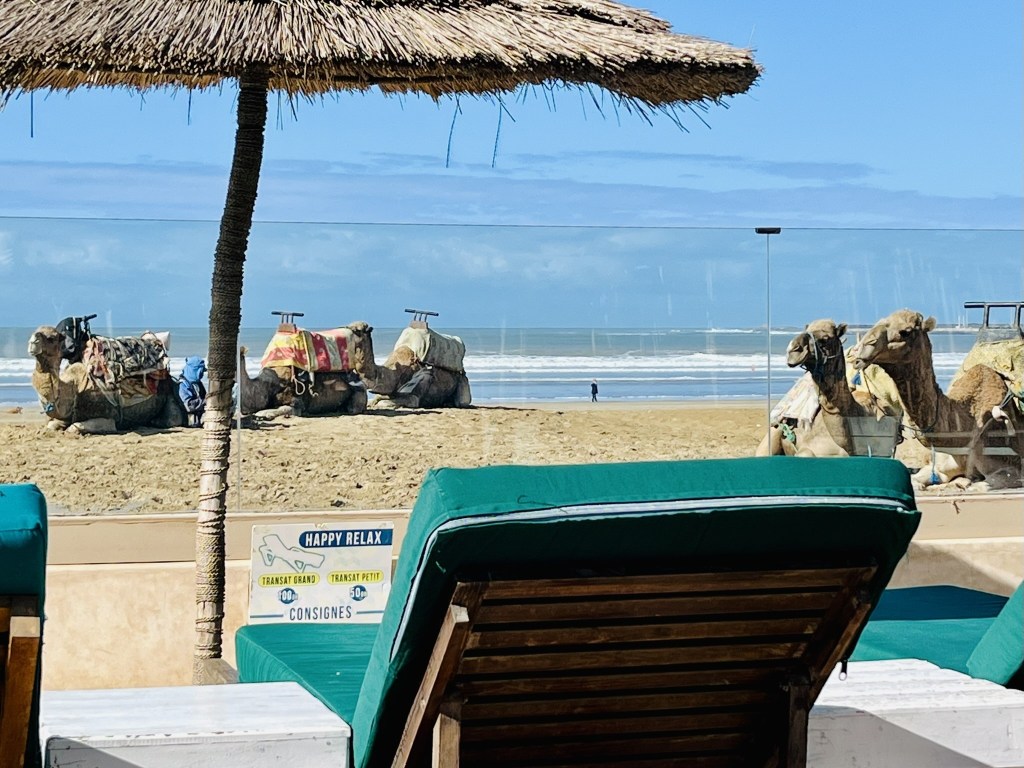
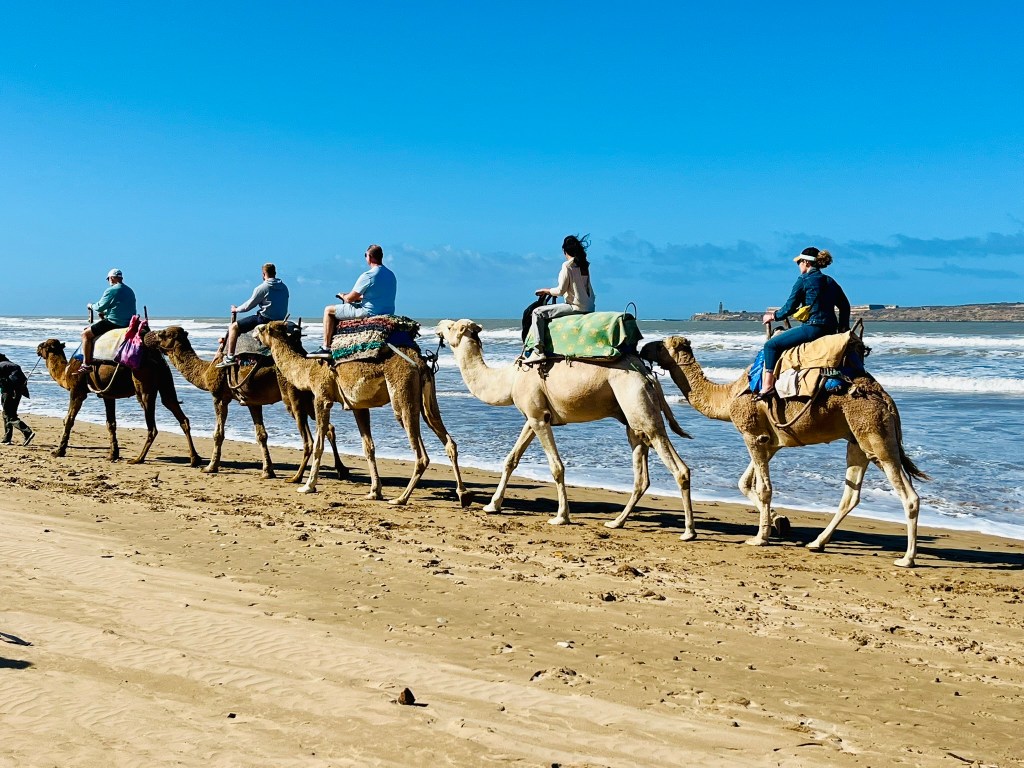
With its mile-long bay, the promenade is the perfect place to soak up the sun on a cool winter day, watch fishing vessels return from the nightly hunt and see tourists enjoying horse and camel rides on the beach.
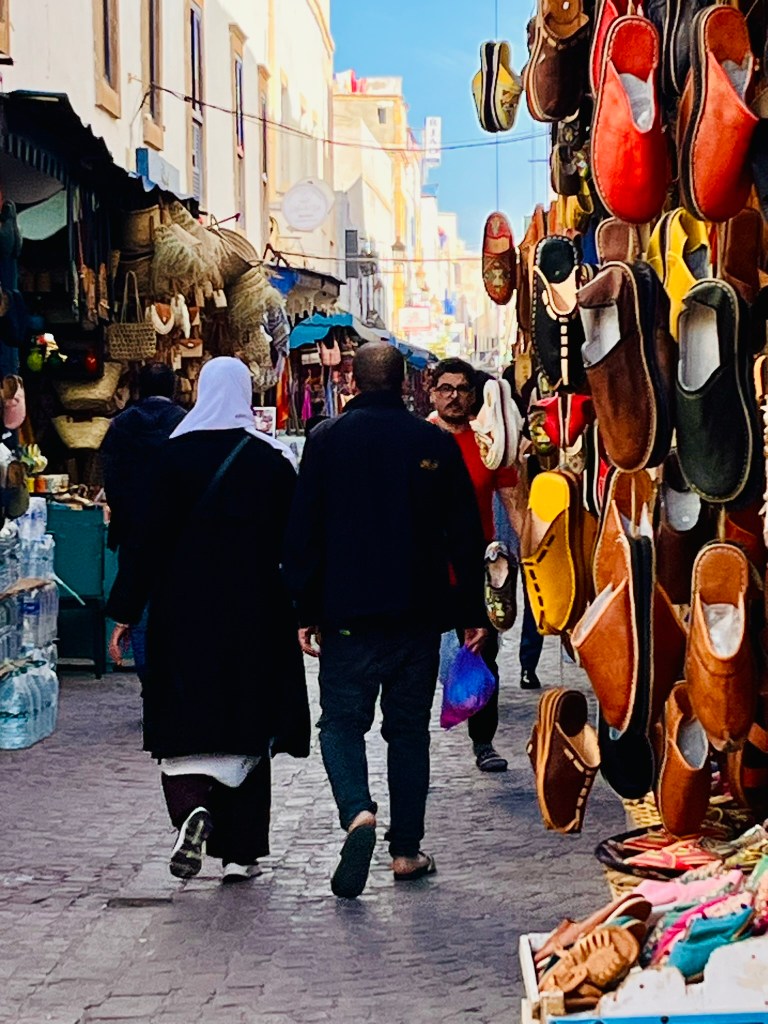
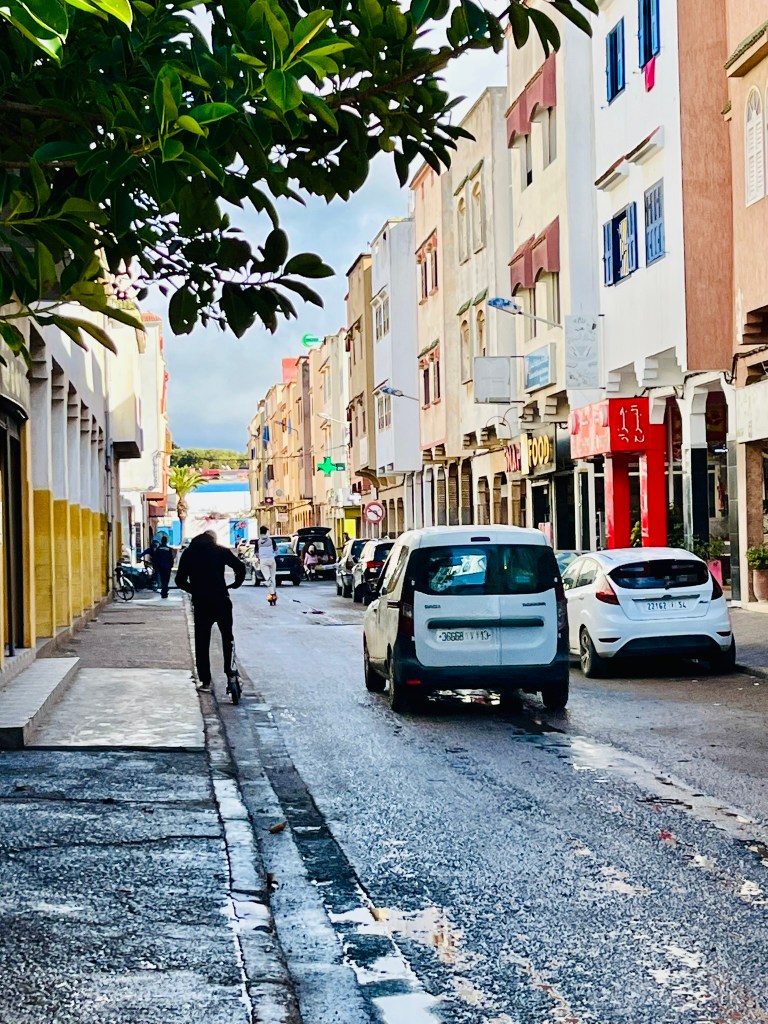
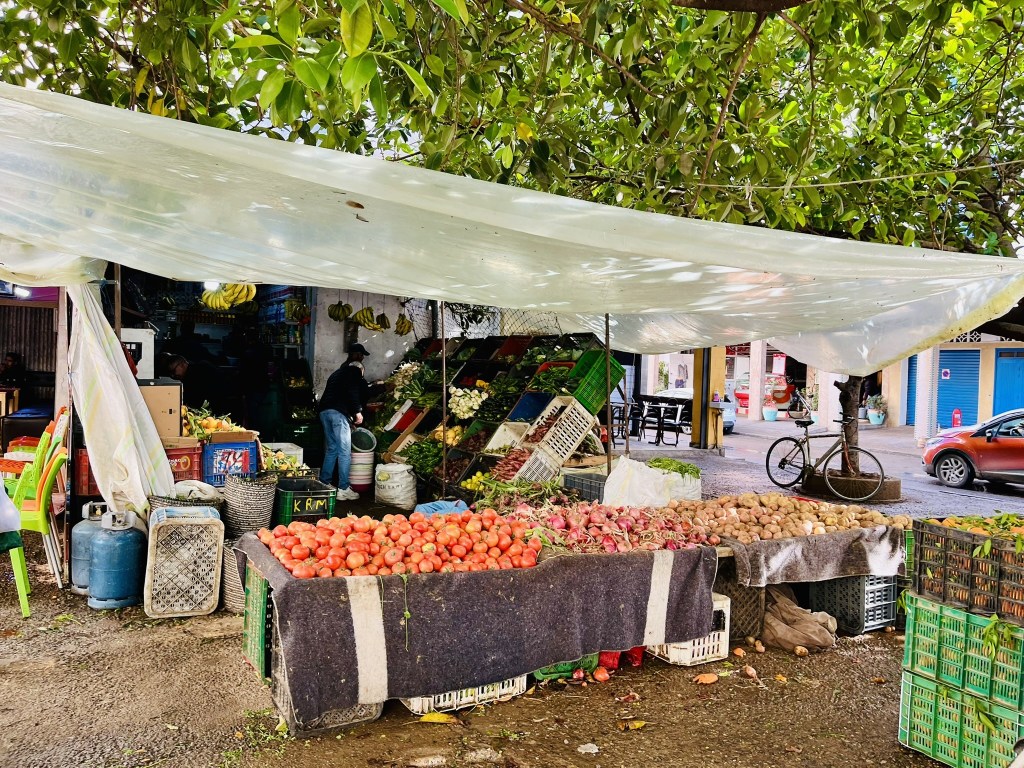
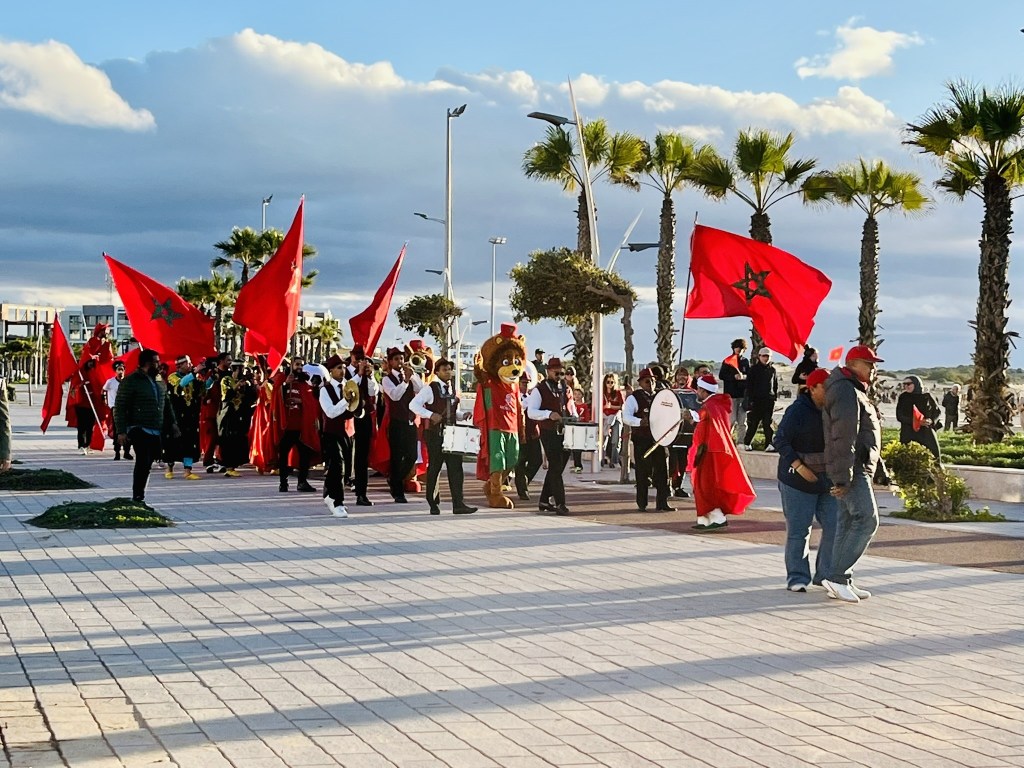
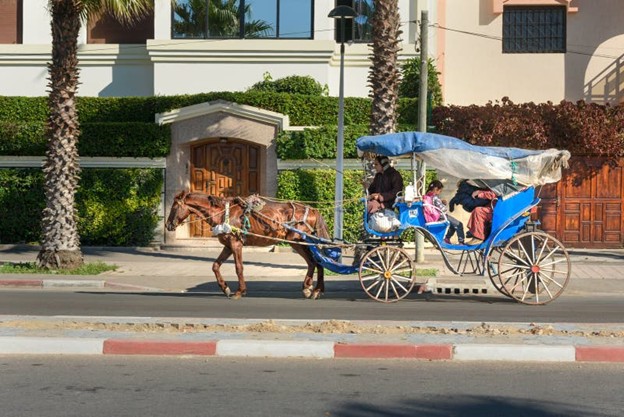
While parades, kitesurfing, beach soccer and motorcross races in the sand lure locals on weekends, most of the time the waterfront is the domain of tourists and European expats. But behind the promenade is a bustling main street where few out-of-towners venture. Here, locals work, shop and go to school using blue, horse-drawn carriages as taxis to take them from one end of Essaouira to the other. And when Morocco won the 2025 FIFA Arab Cup, the street lit up with a revelry that lasted late into the night.
Essaouira on film
The city’s distinctive 18th-century fortifications and stunning blue-and-white medina make it a popular backdrop for films seeking an authentic, historical setting. In season 3 of Game of Thrones, Essaouira was the city of Astapor. In 2024’s Lonely Planet, it was the site of a Moroccan retreat where Laura Dern meets Liam Hemsworth.
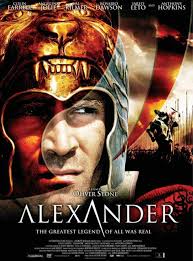
In Oliver Stone’s 2004 epic Alexander, Essaouira stands in for ancient Macedonia. In the 2005 movie Kingdom of Heaven, Ridley Scott turns Essaouira into Jerusalem during the Crusades. And in The Jewel of the Nile, the 1985 sequel to Michael Douglas, Kathleen Turner and Danny Devito’s Romancing the Stone, Essaouira served as the base for the desert chase scenes.
Camels and Kitesurfing
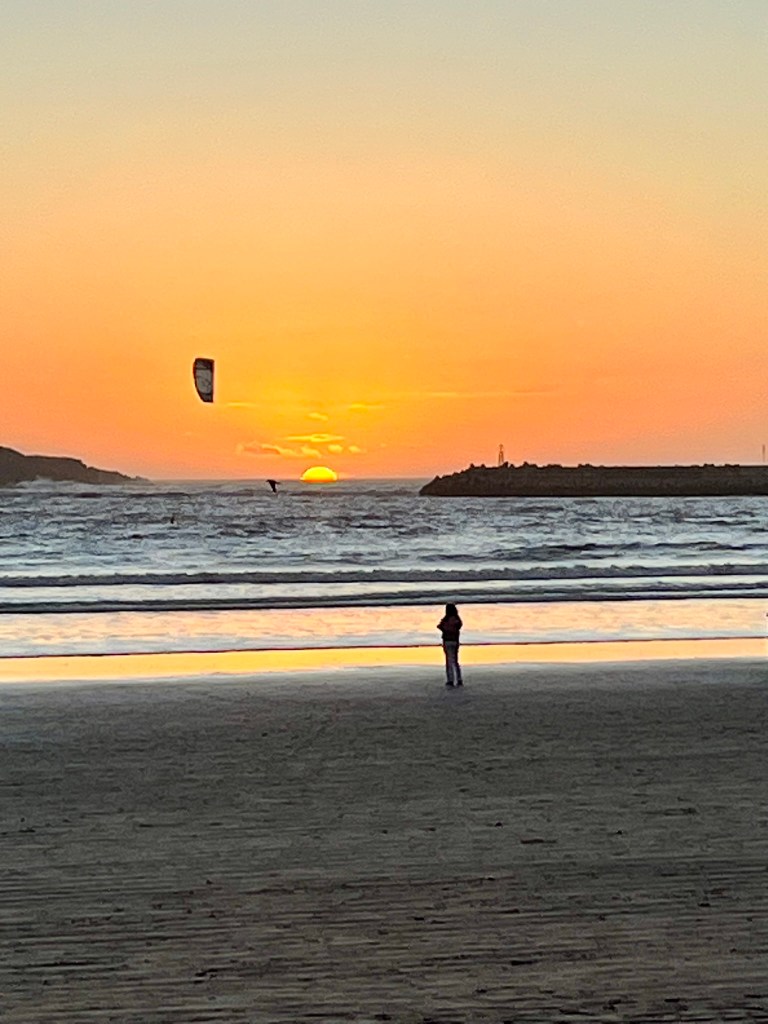
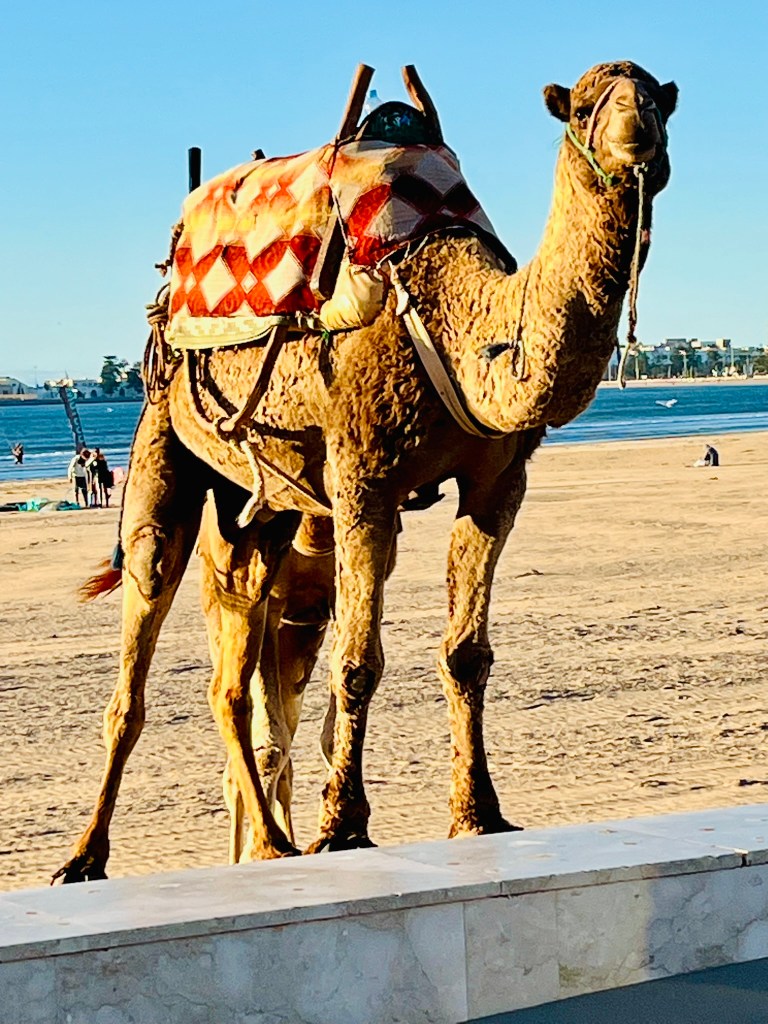
A favorite activity in Essaouira is going to the beach to watch the entertainment. Every day surfers paddle out to ride the waves unless it’s too windy to surf. Then, they strap into enormous, colorful kites and fly across the water. And at the southern end of the beach, horses and camels plod along in the sand offering tourists rides across the dunes.
Seagulls and Sunsets
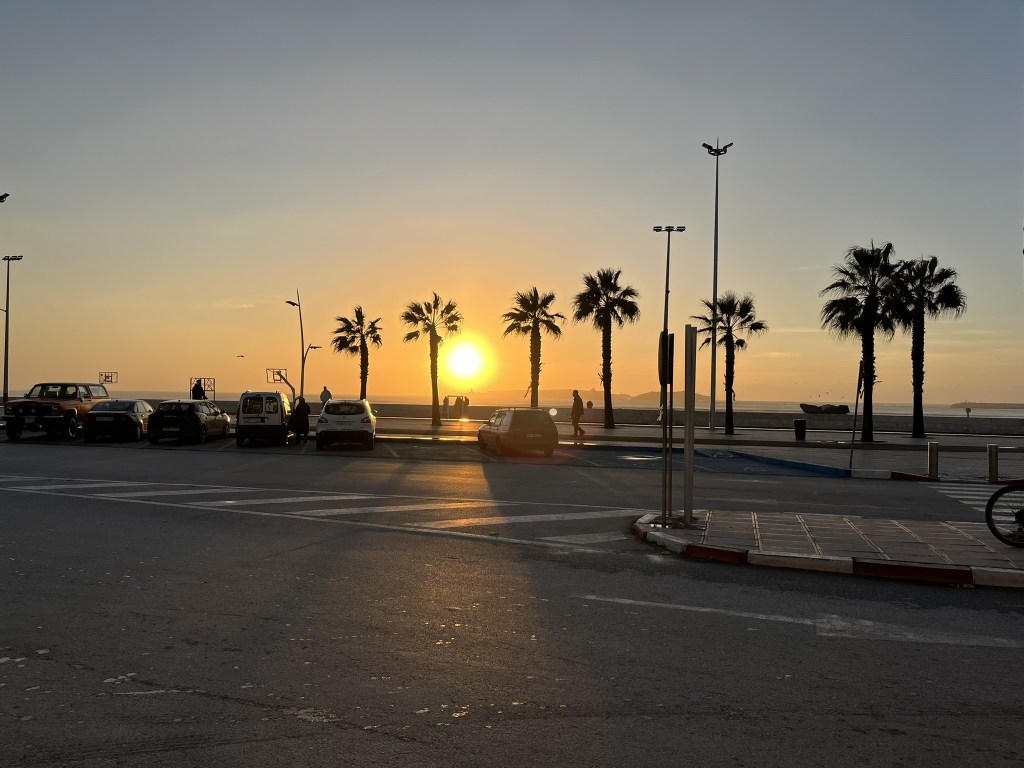
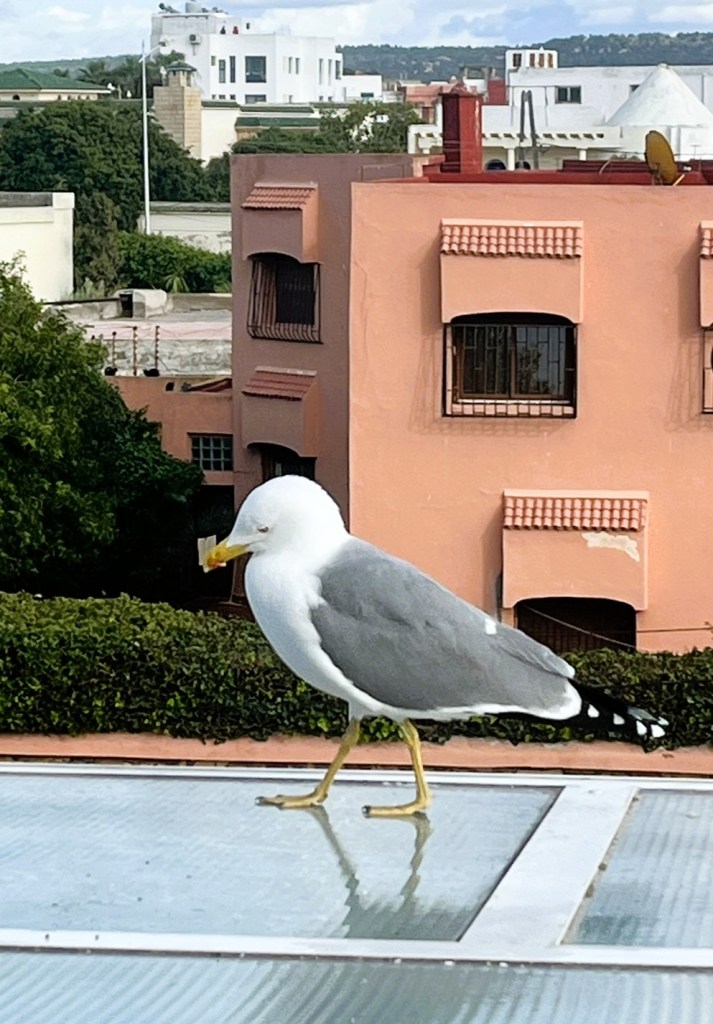
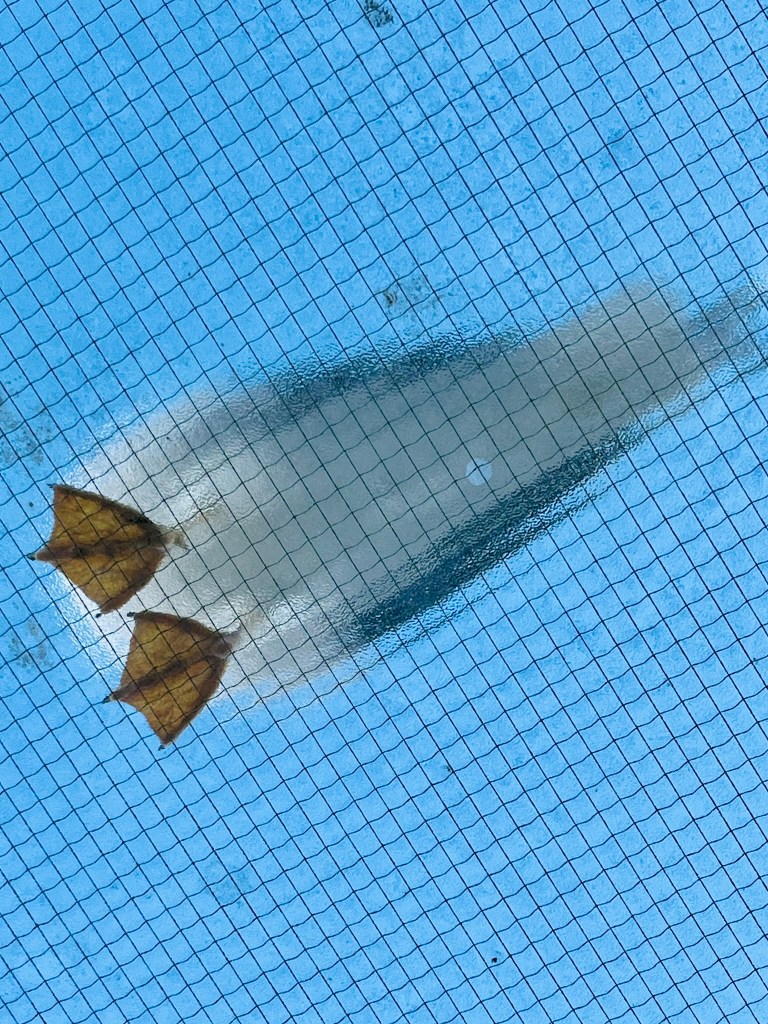
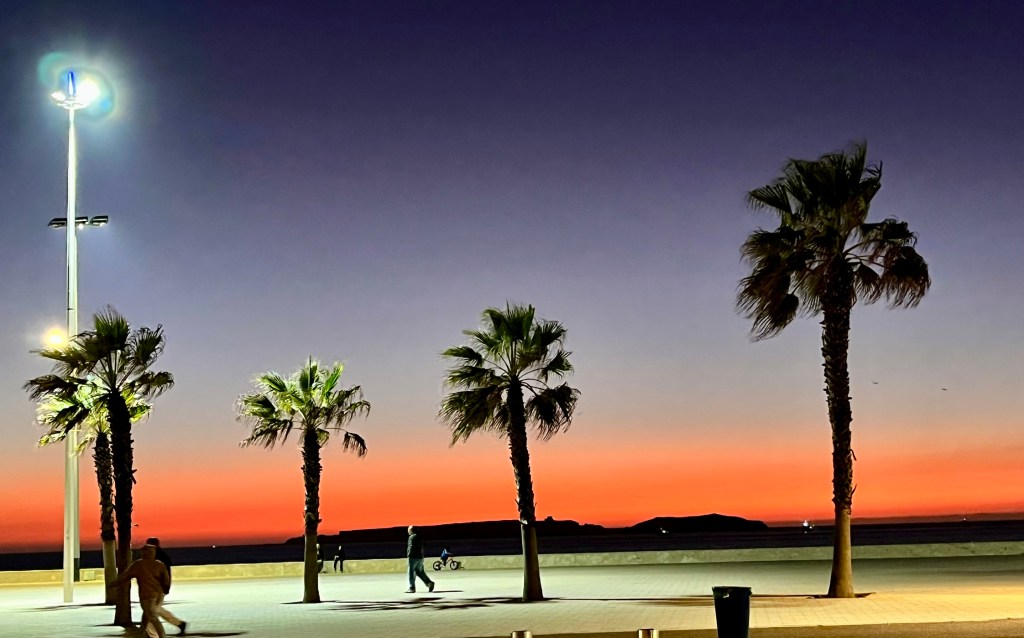
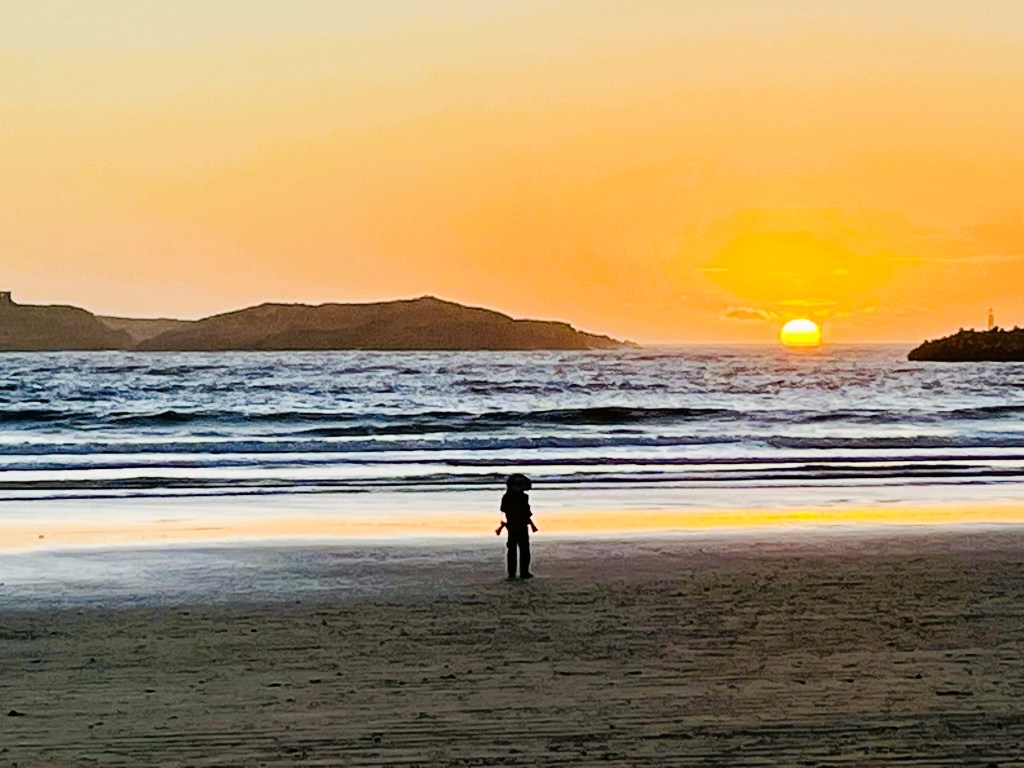
Facing west, Essaouira offers brilliant sunsets over the North Atlantic. And as with every fishing village, the skies above the town are filled with seagulls.
In the sunroom of our rented apartment, this meant Robie and I got to meet a few of the local residents up close and personal.
 Reid & Robie
Great photos, happy travels!
LikeLiked by 1 person
Thank you! We’re looking forward to trying your dirty rice recipe since it’s easy to make with basic ingredients we can find most anywhere and looks delicious!
LikeLike