
Sometimes miracles come in pairs
– Author Unknown

If Spain holds a special place in my heart, Mexico has captured my soul.
I’ve crossed Mexico’s borders more than any other nation except my own, studied the country’s culture, language and history, worked for Mexican hotels and even briefly called the place home. But I didn’t grow up vacationing south of the border. In fact, before landing a job repping a trio of hotels along Mexico’s Pacific coast, I’d visited the country only twice. And when that gig unexpectedly imploded, I accepted an offer to babysit drunk American college students in Cancun and kicked off my love affair with Mexico.
Mexico’s tourism – like so much about the country – has always been tied to its neighbor to the north. During the height of Prohibition in the 1920s, a trip to Mexico usually meant crossing into Tijuana, Matamoros or Ciudad Juarez for a little “vice tourism” to escape the forced sobriety at home. Across the border mob bosses and Hollywood stars partied at the casinos, bet on dog races and sat in smoke-filled rooms watching glitzy floor shows featuring sequined dancers where Sinatra sang South of the Border “down Mexico way” before Las Vegas was, well, Vegas. But in the wake of the 21st Amendment and the end of Prohibition, Mexican President Lazaro Cardenas clamped down on gambling to stop cash flowing into his political rivals’ coffers. In the process, he sent organized crime into the Nevada desert.
For the most part Mexico’s stunning coastline remained overlooked until England’s future king Edward VIII paid a visit to Acapulco. Upon his return, the prince recommended the beautiful bay to his fellow European royals knowing their penchant for basking on the Mediterranean’s Cote d’ Azur, Bermuda and the Bahamas. And once a few dared to venture beyond the Atlantic, Mexican President Emilio Portes announced his government’s plan to invest in tourism. A few years later, Acapulco’s iconic Los Flamingos Hotel opened welcoming the likes of Cary Grant and Errol Flynn.
For decades Mexico’s Pacific coast was Hollywood’s playground. Elvis, Brigette Bardot and Frank Sinatra lazed in sunny Acapulco Bay. Gary Cooper and John Wayne smiled for the camera while sportfishing in Mazatlán. And John Huston put Puerto Vallarta on the map when he filmed The Night of the Iguana on location. Soon Mexico was on the hunt for additional places Americans could spend their hard-earned cash, and in the mid-1960s, President Gustavo Diaz commissioned a three-year study from the Banco de Mexico to locate potential sites tapping 40-year-old Harvard graduate Antonio Enriquez Savignac to spearhead the search. By the early 1970s, the first master planned resort was under way.
Located on Mexico’s Pacific coast between Acapulco and Manzanillo, Ixtapa inaugurated its first air-conditioned hotel, the Aristos in 1975 followed the next year by the El Presidente Las Palmas hotel. Their openings spawned a trip to the posh new town by New York Times columnist James Egan who described the Robert Trent Jones Jr.-designed golf course and state-of-the-art international airport.
The decision to start in Ixtapa wasn’t accidental. Closer than Hawaii, more developed than islands in the Caribbean, Mexico’s Pacific beaches were blessed with deep waters and plenty of sunshine. And after the success of Ixtapa, two small villages at the tip of the Baja Peninsula were remade into a sportfishing paradise with high end hotels that turned the sleepy towns of Cabo San Lucas and San Jose del Cabo into a united international destination. By the late 1980s a third destination was underway on the Pacific when construction crews broke ground on Huatulco Bay in southern Mexico. Aided by the Saturday night timeslot of The Love Boat plying the waters between L.A. and Acapulco, the Pacific coast’s dominance seemed complete.
But on the far side of the country competition was brewing. Fundamental to the Banco de Mexico’s report was inputting measurable data to track every aspect of prospective sites. In addition to collecting reports about the growing popularity of tourism to the Caribbean, the commission compiled demographic profiles on American sunseekers merging statistics, flight times and migration patterns to popular destinations like Miami, Hawaii and Acapulco. They input climate records using average temperatures, rainfall and historic hurricane paths. And when the computations were complete, the commission used Banco de Mexico’s fleet of private planes to investigate the sites firsthand. While some locations didn’t make the short list due to migrating army ants, shark habitats or other natural predators, the group gave priority to regions where “no other viable development alternatives existed.” And in the far reaches of the Yucatán, they found a prime location.
As late as the 1970s, the far eastern region of the Yucatán Peninsula was considered “one of the most backward, isolated, remote, unhealthy, hostile, uneducated and thinly populated regions of rural Mexico.” With limited rainfall and shallow clay soil sitting atop limestone, little grew in the Yucatán beyond a pervasive, scraggly jungle and a plant known as henequen. In the late 19th century, the area prospered from planting the hardy agave variant used to make fibers which were then woven into twine, rope, sacks, rugs, shoes, string and ships’ riggings. But when new technological advances in the production of cheap plastics and synthetic fabrics caused a global drop in demand for henequen, many people in the Yucatán were reduced to living much as their ancestors had, in traditional Mayan huts without electricity or plumbing.
Other challenges for the Yucatán included a limited labor force, seasonal hurricanes and little to no infrastructure. With few highways through the jungle and no overland route from Mexico’s population centers, a trip to the Caribbean could take days or even weeks. Yet despite the challenges, in 1970 the Mexican government bought a 13-mile island on the edge of the peninsula. Four years later, the country officially annexed the territory and made Quintana Roo a state.
Cancun’s master plan called for the construction of three distinct areas laid out in the shape of a right-sided bracket. Along the eastern edge, the island would be the dedicated tourist zone with hotels, shopping centers, marinas, golf courses and restaurants. To the north on the mainland, planners designated a site for the town’s hospitality workers with apartments, schools, shops and eventually a theater. And south of the island they set aside acreage for a small international airport. Yet before any of these major building projects could commence, the engineers needed to install key infrastructure and bring electricity, drinking water and waste removal to the area. But once construction was underway, the government’s biggest challenge was finding investors because few companies – foreign or domestic – wanted to gamble on a destination carved out of the jungle wilderness. Forced to back its own already massive investment, the Mexican government financed the first hotels on Cancun.
They opened in 1974.
By 1976, downtown Cancun boasted a population of 18,000 inhabitants. On the island, 1,500 hotel rooms catered to 2,000 tourists a week generating 5,000 jobs. A decade later the area exploded, registering more than 12,000 hotel rooms and an equal number under construction or on the drawing board. By 1990, Cancun was a tourism juggernaut. In twenty years, the former coconut plantation with a population of two had been transformed into an international tourist destination and was home to nearly a quarter million inhabitants.
Little about my time in Cancun was culturally authentic. I lived in a hotel, drove a rental car and worked for a U.S. company that catered to American tourists. But the experience perfectly captured the shiny new destination in a remote corner of the country far removed from the major cities. With the glitzy new playground as our backdrop, my colleagues and I formed intense bonds since few of the locals and none of the international crew had family nearby. We pulled all-nighters at the airport, celebrated milestones far from loved ones and did our best to keep our American charges out of Mexican jail cells. In our less wholesome version of The Love Boat, we greeted a fresh batch of arrivals each week, helped them settle into their hotels and tried to make sure no one died of alcohol poisoning. And in the same way that Captain Stuebing and his crew made weekly stops in Acapulco and Puerto Vallarta, we had Pirates’ Night on Mondays and danced at Christine’s every Thursday amid the revolving door of pale new clients.
In the years since I worked in Cancun, I sought out cultural experiences in the country beyond the beaches and bikini contests. I visited pre-Columbian ruins, met Mennonites and Tarahumara natives in the Copper Canyon, sampled dried grasshoppers in Oaxaca, and when I needed a spot to test the new boyfriend, the only place I wanted to take Robie was Mexico. But when we left Texas for Florida, the thing I missed most was easy access to the country. And now that we were planning a move to Spain, I realized that deep down I always thought we’d end up in Mexico.
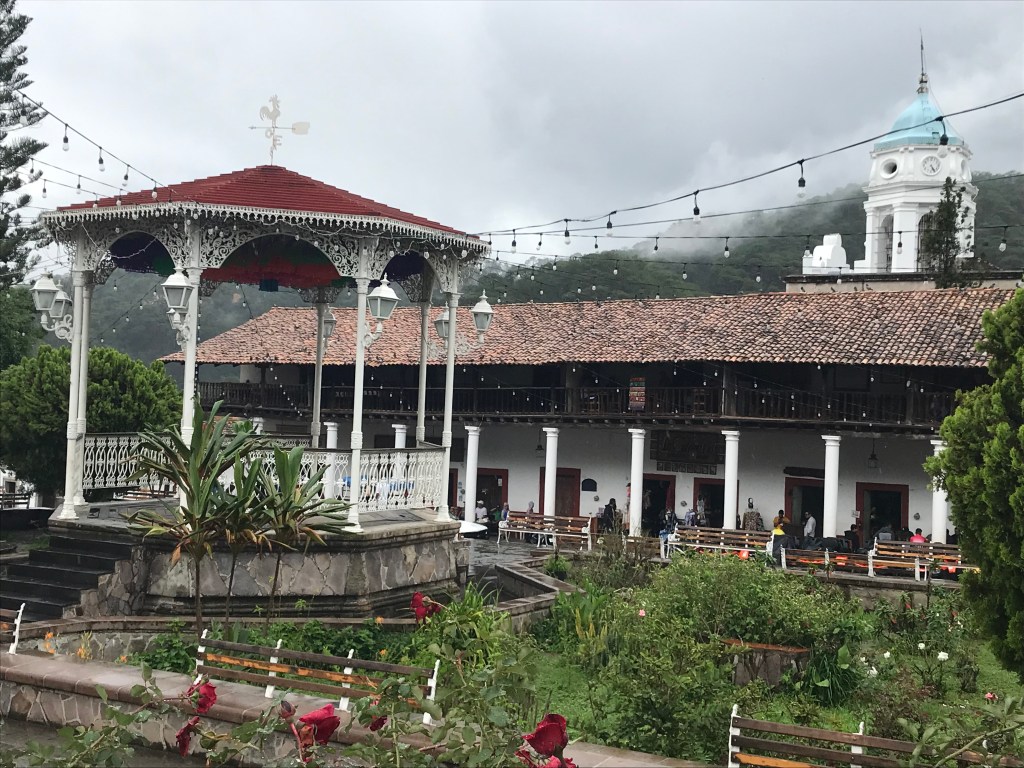
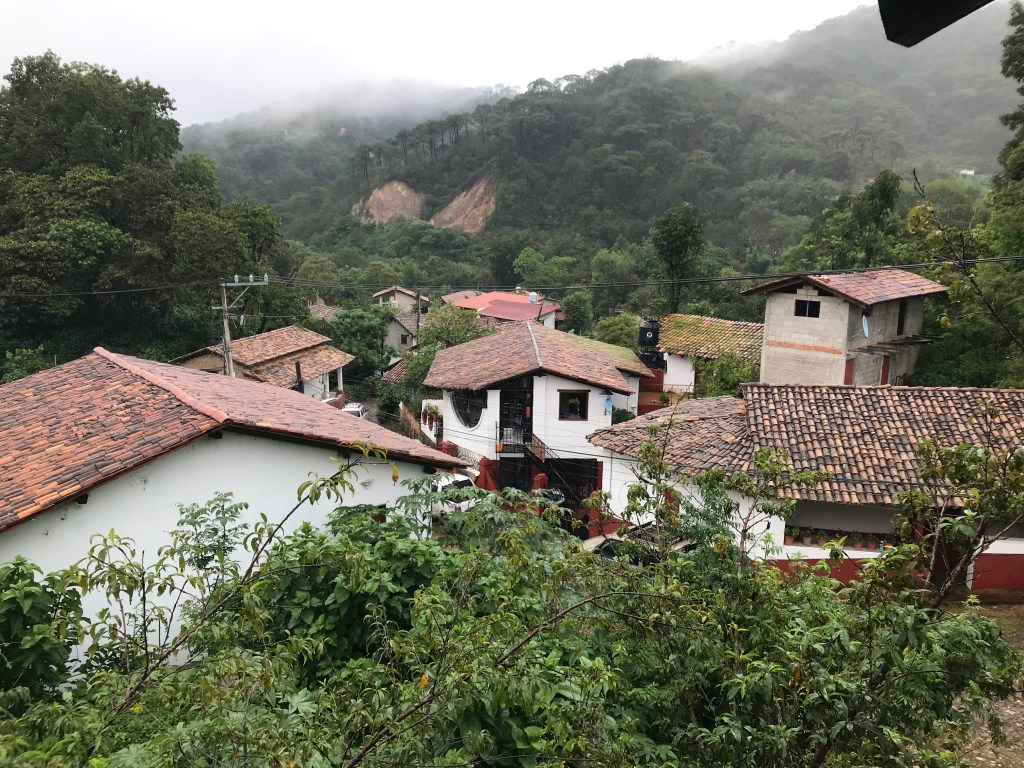
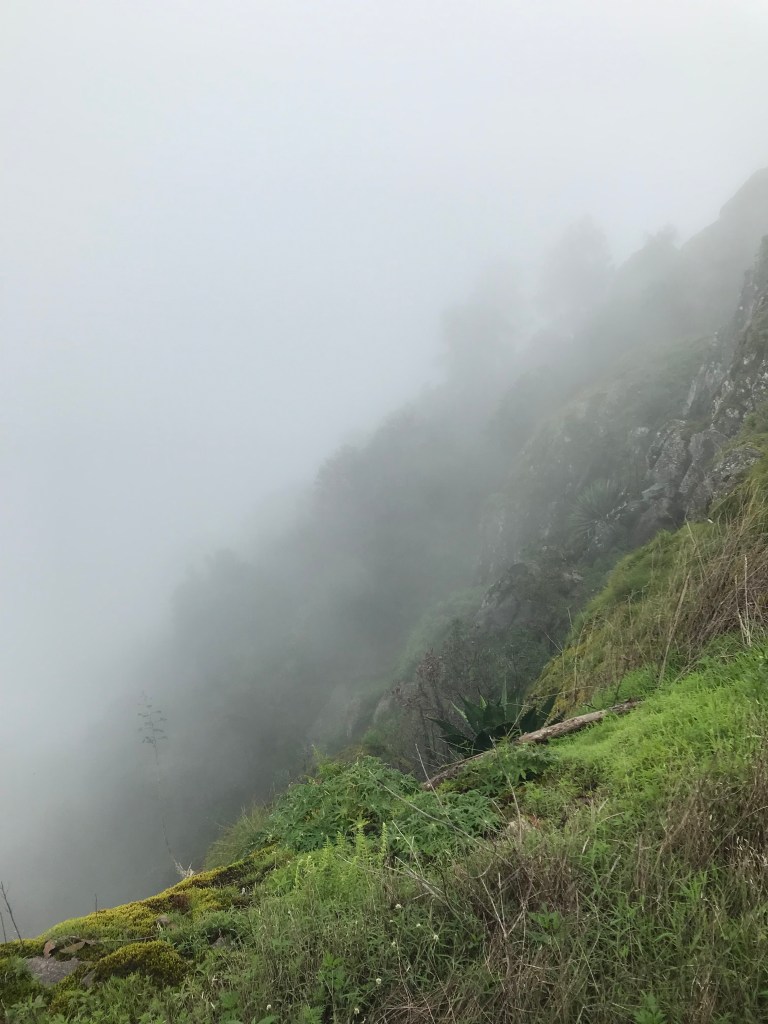
Needing to make a final trip to my adopted homeland, Robie and I bought cheap airfare to Puerto Vallarta. And when I found a short article in Food & Wine touting an upcoming culinary hotspot in a place called, remarkably enough, San Sebastian del Oeste (West San Sebastian), it cemented our decision to stay in the lush valley two and a half hours outside the beach resort. Hidden in the Sierra Madre Mountains, San Sebas (as San Sebastian del Oeste is called by the locals), has been named a Pueblo Mágico by Mexico’s Secretary of Tourism. The program, launched in 2001, recognizes places of unique character that provide historically significant experiences through important events, traditions, festivals and food. And with more than 175 current Pueblos Mágicos, these sites diversify the country’s tourism and bring visitors to remote destinations preserving customs and cuisines, supporting local crafts, creating opportunities and generating jobs.
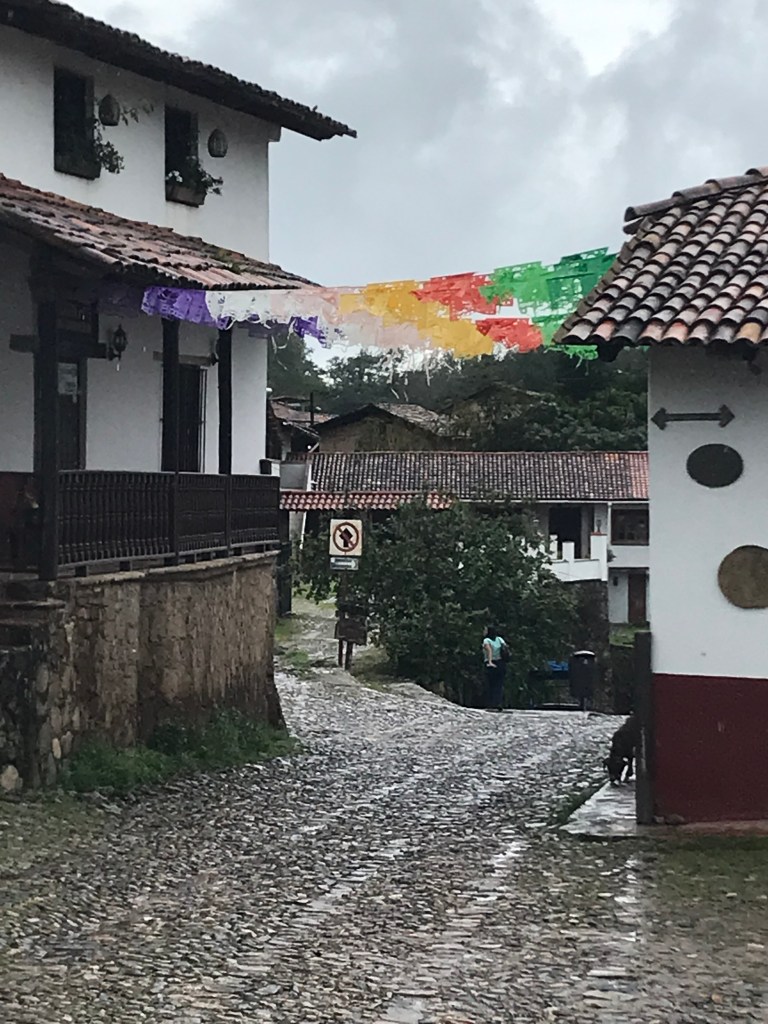
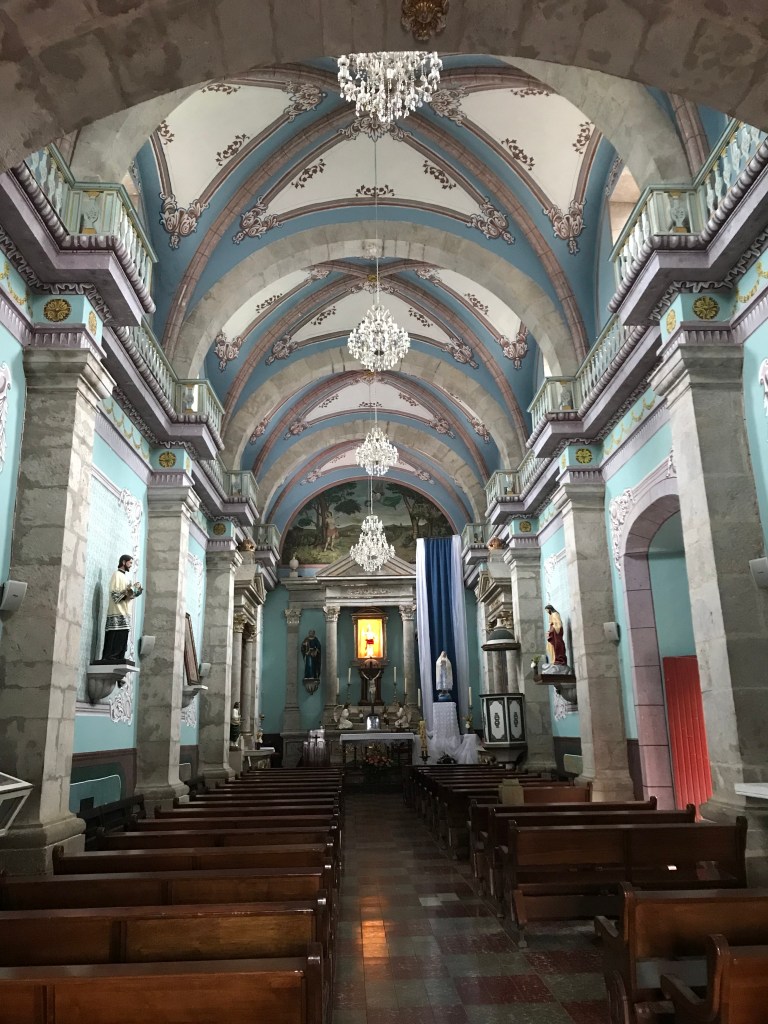
Established as a Spanish mining town in 1605, San Sebas was once home to nearly 20,000 inhabitants but following the Revolution of 1910 and the end of mining operations fewer than 1,000 residents live in the colonial village today. Noted for its stunning main square, cobblestone streets and Spanish Baroque church, San Sebas had something else Robie and I needed, a break from the annual Texas summer heat dome. As the temperatures in Dallas soared to 110 degrees Fahrenheit, for a few days we kept cool in August without air conditioning thanks to San Sebas’ rainy, 70-degree summers.
In a town where everyone knows their neighbors and overnight tourists rarely venture, we were welcomed warmly. During a rainy afternoon on Los Arcos’ patio restaurant overlooking the zocalo, we got to know Eduardo, our server and recent transplant from Mérida who came to San Sebas for the slower pace and low-key lifestyle. And in a place where few businesses – including Los Arcos – stayed open past five p.m., Eduardo seemed to have found the serenity he was looking for.
With little in the way of traditional sightseeing, Robie and I hiked around the nearby mountains, wandered the cobblestone streets, took pictures of festive banners strung between whitewashed building, contemplated the blue and white ceiling of the Church of San Sebastian, and sheltered from a downpour in a small store with the proprietor, his family and a couple of regulars. But mostly, we passed the time eating our way around town.
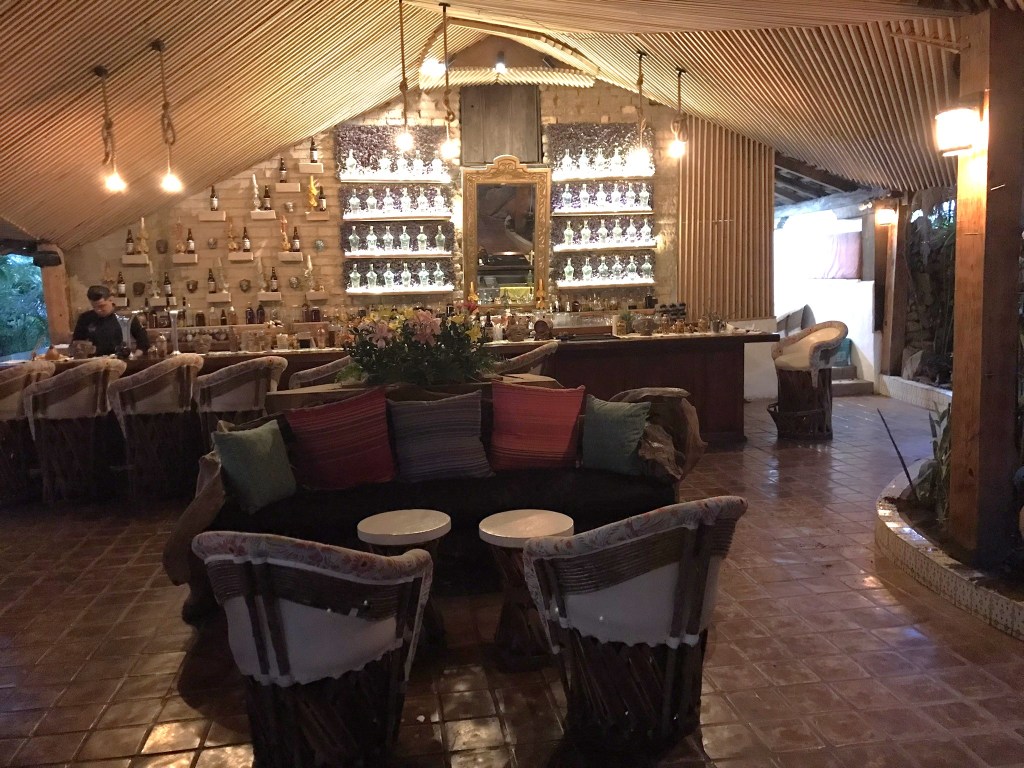
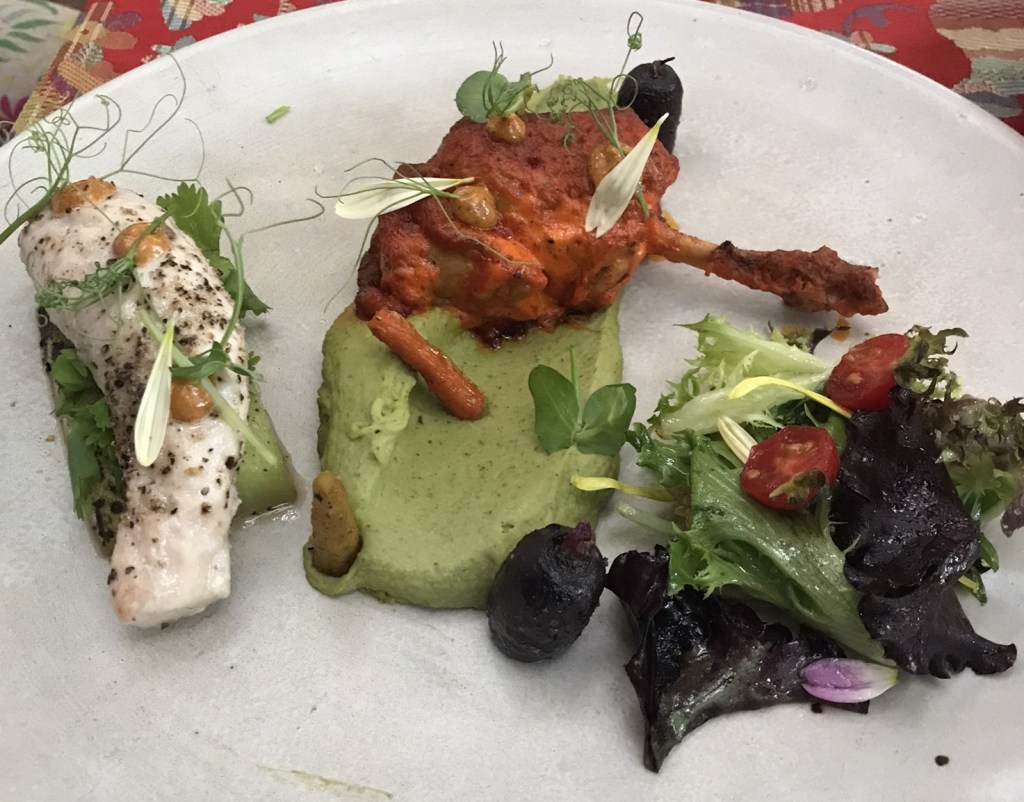
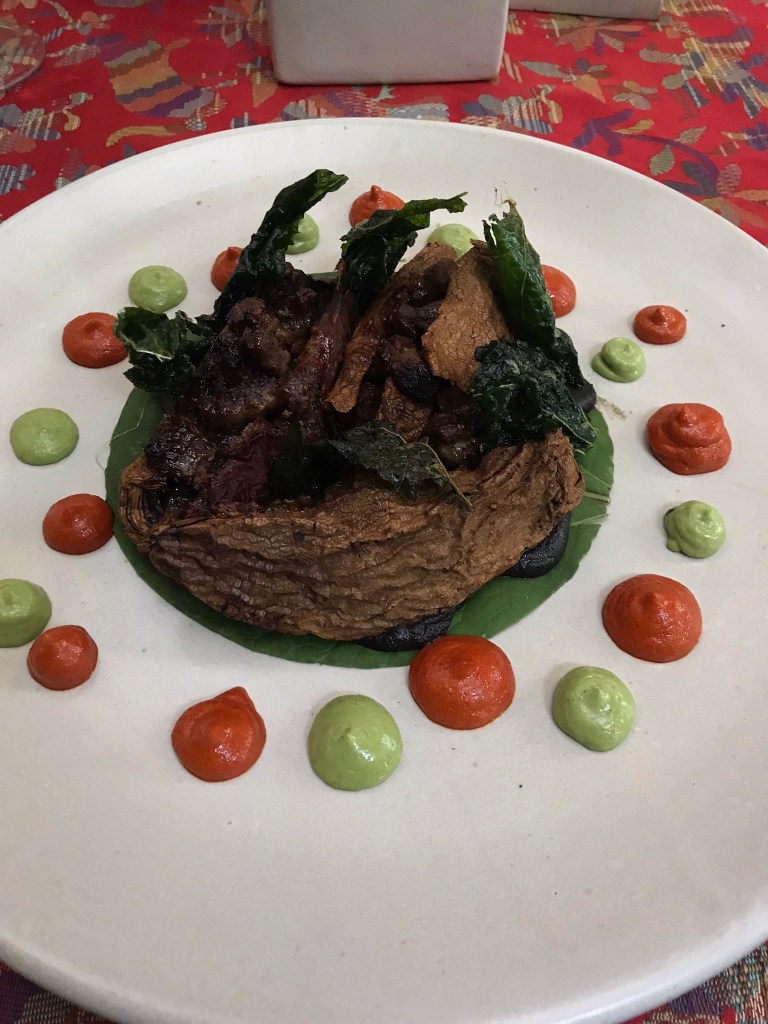
There were the substantial chilaquiles in spicy red sauce served with fried eggs for breakfast at Los Arcos, the sumptuous chicken enchiladas in mole poblano at Comedor La Lupita, pepperoni pizza at El Fortin and cheese quesadillas anywhere we could get them. But they all led up to our final meal at Jardín Nebulosa, the farm-to-table garden restaurant mentioned in Food & Wine and billed as “part restaurant, part botanical garden, and part farm sitting in the middle of the forest.”
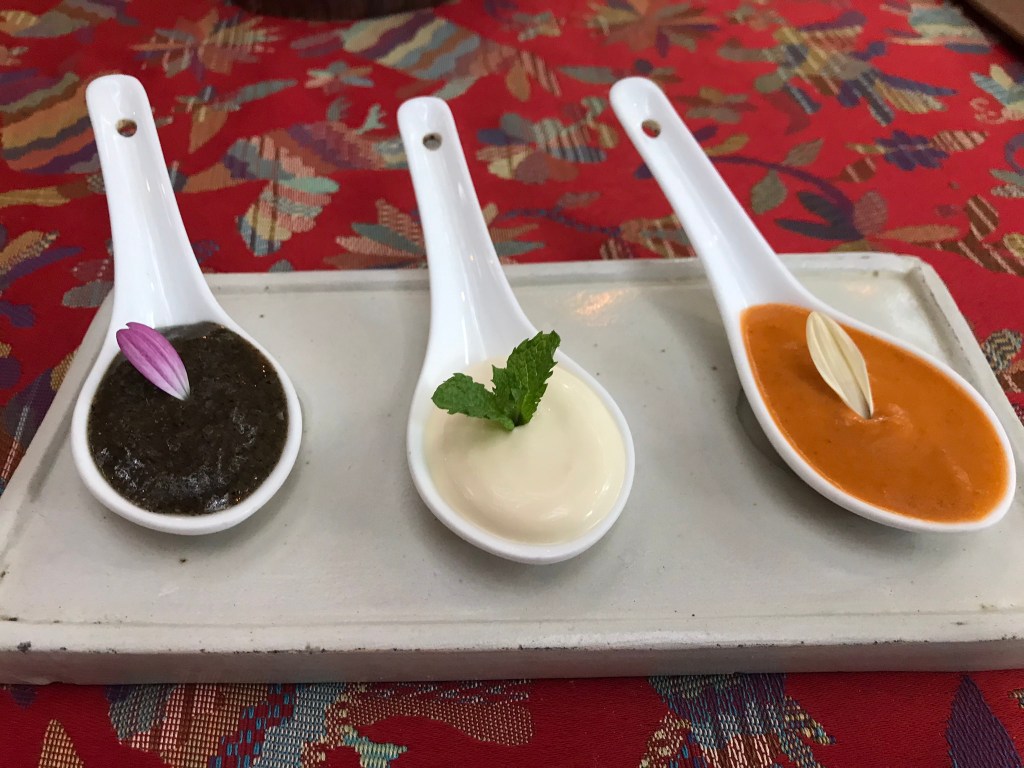
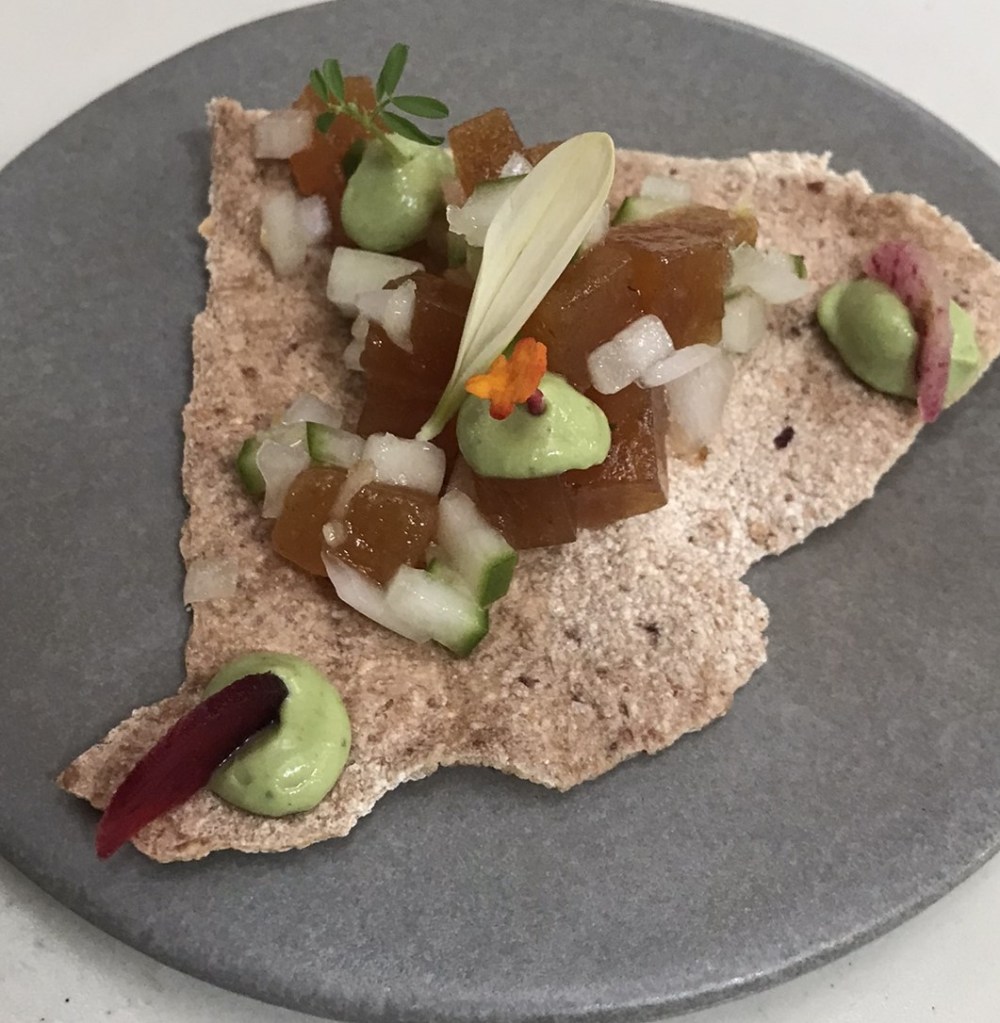
Managed by Emanuel Corona and his team, Jardín Nebulosa offers dishes they claim were served throughout the region before the Spanish conquest. We ate thick, homemade blue corn tortillas made with heirloom maize and slathered with an avocado paste (the original guacamole undiluted with tomatoes or garlic or onions, Emanuel insisted), sprinkled with edible flowers and fried insects.
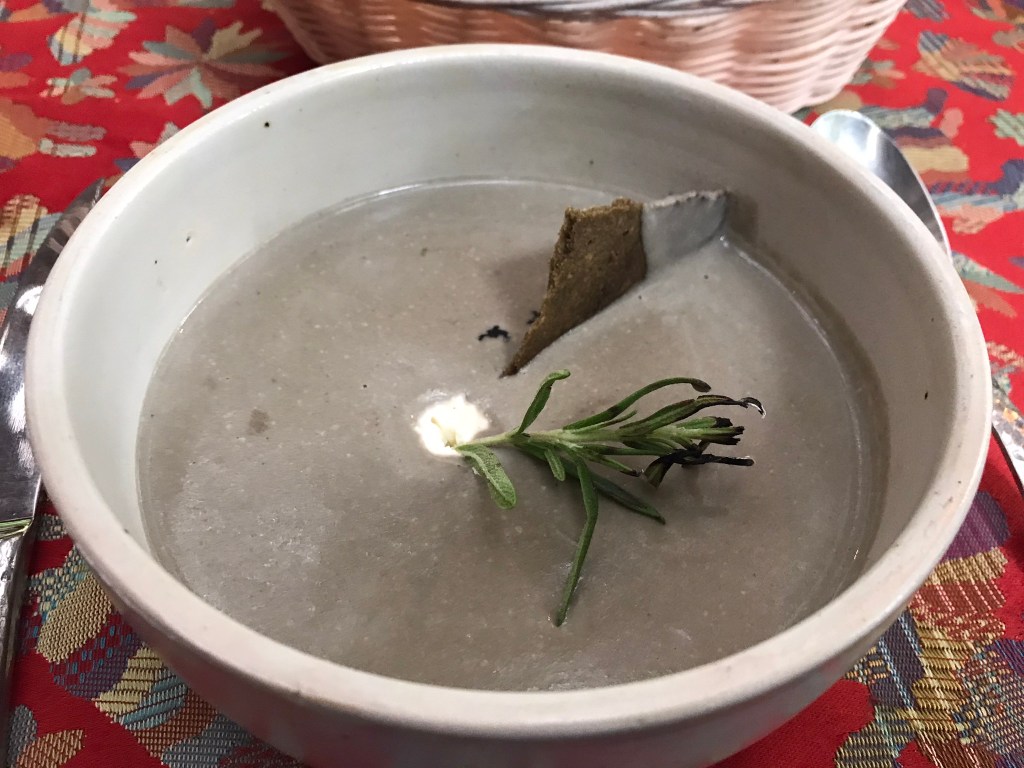
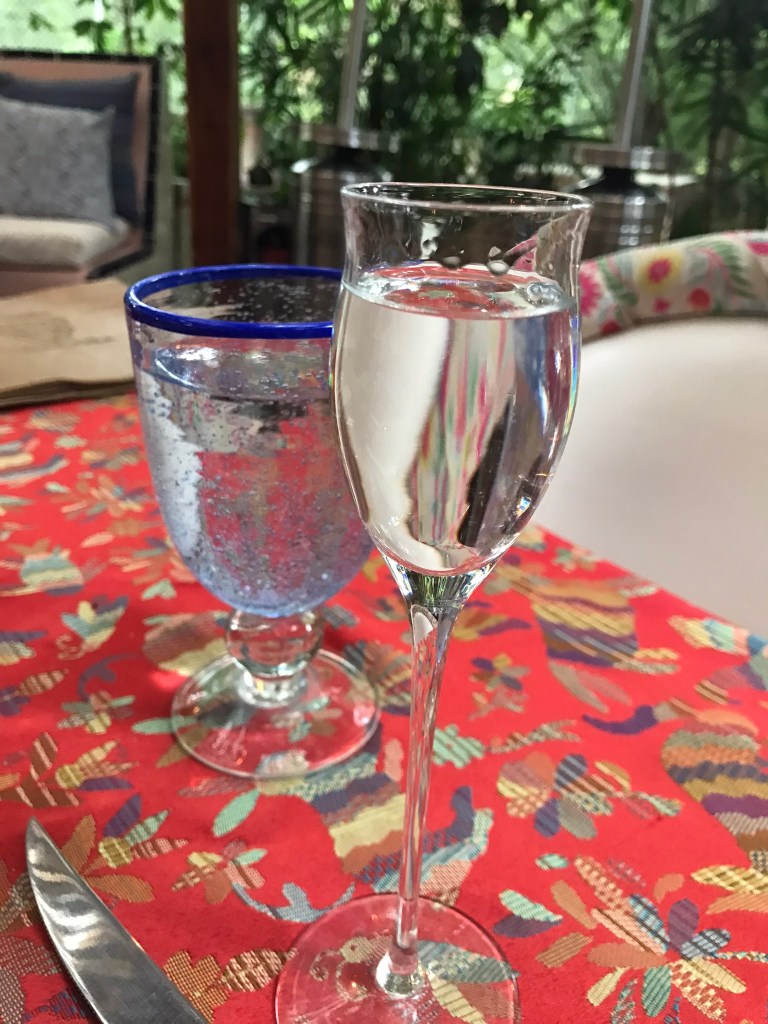
For the second course, Robie chose an earthy huitlacoche soup made from the delicate corn fungus while I enjoyed a salad so fresh one of the kitchen staff came to collect the ingredients from the garden a few feet from our outdoor table. For entrées, we tucked into succulent rabbit loin and roasted wild boar, and though the restaurant makes its own seasonal craft beers, Robie and I opted for their homemade raicilla, a local moonshine made from wild, foraged agave. More floral and sweeter than tequila or mezcal, we learned how the drink was first brewed hundreds of years ago by local farmers to avoid paying the taxes imposed on its more popular cousins.
The next morning as Robie and I headed out of town to spend a few days lounging on the coast in Sayulita, we waved to Eduardo steadfastly serving his guests on Los Arcos’ patio. While the sumptuous meals and Pueblo Mágico wouldn’t soon be forgotten, our escape from San Sebas was perfectly timed since we’d learned from the noise-averse Eduardo that weekends were loud as locals from Puerto Vallarta flooded the town to drive rented ATVs on dirt roads. As we reached the edge of town, Robie and I passed a caravan of dune buggies spewing mud and trailing loud, obnoxious beatbox music. And when we came across another boisterous crowd stopped for tequila shots at a corner bar in La Estancia de Landeros, I realized how much Mexico’s tourism industry had changed.
A few short decades ago, locals in San Sebas left their mountain hamlet to find jobs in Puerto Vallarta that catered to American tourists. Today, their grandchildren make daytrips to the Pueblo Mágico to party.
Just like American college students on spring break in Cancun.
 Reid & Robie
Really liked all the history and great pictures.
LikeLike
So happy you enjoyed the post!
LikeLike