
Don’t cry, Angelita. Tonight I’ll buy you a house, or I’ll dress you in mourning.
– Manuel Benítez, “El Cordobés,” to his sister before his bullfighting premiere in Madrid
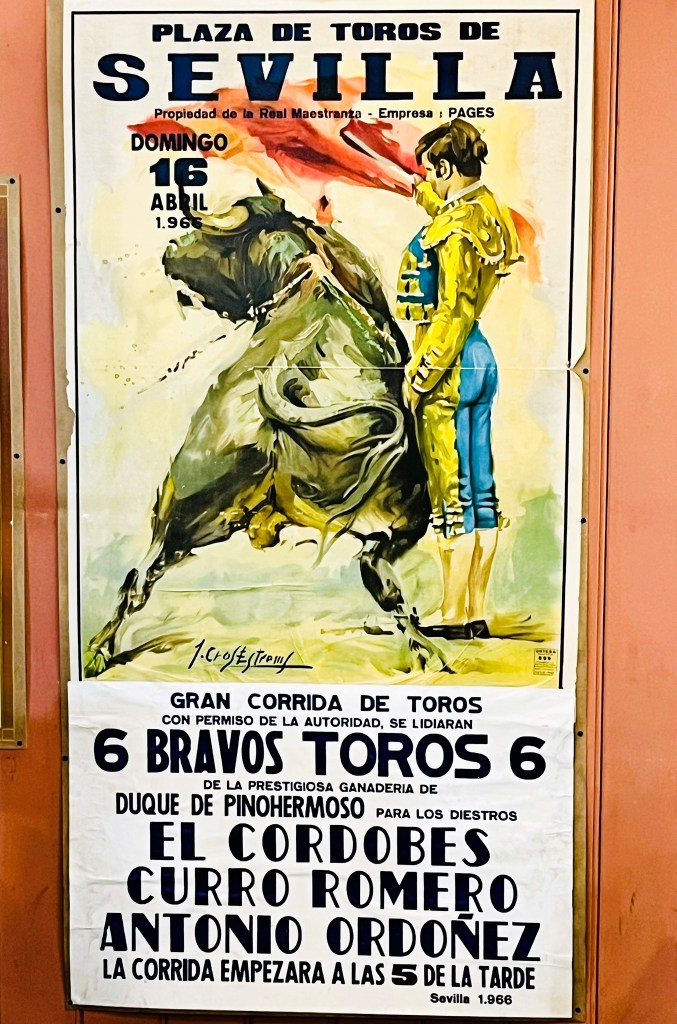
The promise of a matador to his sister summarizes the high stakes game of fighting bulls on the world’s grandest stage – get rich or bleed to death in the corrida sands.
In a remarkable work of narrative non-fiction, the authors of Is Paris Burning? Larry Collins and Dominique Lapierre capture a unique cultural moment through the unforgettable story of Manuel Benítez, known in the bullring as El Cordobés. Framed around a single, crucial day during the San Isidro festival in the spring of 1964, the narrative opens at El Cordobés’ highly anticipated debut in Spain’s most famous bullring, Las Ventas in Madrid. Facing a powerful, agile, 1,300-pound bull named Impulsivo, El Cordobés knows he may not survive the encounter with a Miura bull, the most dangerous, cunning and revered breed in Spain.
As the bullfight unfolds, the authors recount Benítez’s birth in the months before the Spanish Civil War and his childhood as an orphaned, illiterate street urchin in rural Andalucía. Surrounded by poverty, rigid social barriers and the aftermath of civil war, young Manuel yearns to escape by becoming a matador. But as the authors point out, “the world [El Cordobés] was trying to enter was one of the most inbred, most closed societies in existence. Courage and ambition alone were not enough to buy admission to its ranks. Friendship was needed, and the aid of someone already inside.”
With no friends on the inside, Manuel learns his craft by fighting bulls illegally in the fields at night evading vigilant landowners while crisscrossing Andalucía on foot. As we follow Manuel’s pursuit to be a toreador, the authors weave the voices of those around him to create a vibrant tapestry of the era combining his biography with three decades of Spanish history. From the doomed Second Republic of the 1930s through the horrors of the Spanish Civil War, readers find themselves inside Franco’s dictatorship as Collins and Lapierre construct two parallel narratives alternating between events in the country and the journey of a would-be matador.
Developing a raw, self-taught manner born of poverty, El Cordobés takes audacious risks. Standing too close to the bull and fighting animals deemed unmanageable or too aggressive, El Cordobés displays a level of bravado that blurs the line between bravery and recklessness. Flirting with danger, he puts his life in jeopardy with each performance captivating audiences with his unrefined, spectacle-driven approach punctuated with theatrical flair. While his brash, risk-seeking style earns El Cordobés admiration from the masses it prompts criticism from classists who prefer precision and finesse.
In James A. Michener’s fictional account of a bullfight between rival matadors in México, the author bases his characters on two real-life toreadors from Spain. In Victoriano Leal, a scion of the traditional method steeped in art, discipline and honor, Michener draws heavily from the lithe and graceful Manolete. For Leal’s opponent he portrays a man rising to improbably heights fueled by hunger, grit and survival where form takes a backseat to fearlessness in the ring just like El Cordobés. By the time Collins and Lapierre describe Manolete’s death from a Miura bull, El Cordobés stands in the “Cathedral of Bullfighting” waiting for Impulsivo’s thundering entrance to the ring.
At Las Ventas on the morning of El Cordobés’ Madrid debut, rain delays the fight and makes the sand slippery. As the enormous beast passes within inches of his body, the matador struggles to maintain his footing and quickly realizes the animal’s blind in his left eye making Impulsivo more dangerous and unpredictable and severely slashing El Cordobés chances of walking out of the ring unscathed.
Weaving the spectacle of the corrida with the story of El Cordobés and the harsh realities of post-civil war Spain, the narrative unfolds at a time of change after Franco reluctantly agrees to open the country. In following El Cordobés’ struggle to become a celebrated icon, Collins and Lapierre use him as a metaphor of hope in a country struggling to rebuild itself. Within El Cordobés’ unique, life-threatening brand of bullfighting they find the raw, defiant spirit of the Spanish people emerging after decades of isolation and repression.
Written with the flair of a novel, Or I’ll Dress You in Mourning uses flashbacks and the voices of those interviewed to create an intense emotional buildup while fashioning a non-fiction story that reads like a drama. A thrilling rag to riches ride of a boy who defies the odds to become Spain’s most famous celebrity.
So, how does the book rate?
Did I enjoy reading it? I love it so much it’s one of the few books I’ve read twice.
Though not a travel narrative, Or I’ll Dress You in Mourning takes the reader on a journey across Spain during the first half of the 20th century through the lens of a sport and cultural tradition.
Did I learn something new? Definitely.
Following Manuel Benítez on the road to becoming El Cordobés, I learned more about bullfighting than I got from Hemingway’s Death in the Afternoon or his The Sun Also Rises. Using the natural three-part act of the corrida, Collins and Lapierre expertly explain the sport and how a brash, risk-taking El Cordobés left his mark on it.
Mostly I learned about the Spanish Civil War and the atrocities on both sides that scarred a nation.
In 1930s Spain, extreme economic inequality keeps half the populous in poverty while religious traditions protect the wealthy. When the democratically elected government attempts change, a top-heavy military sees its power diminishing and launches a coup that divides the country.
As General Franco’s troops take control of the cities, in the countryside of Andalucía people rise to defend their government, or more pointedly, to fight against the Church and landed aristocracy who have kept them impoverished for generations. In the small hamlet of Palma del Río where Manuel Benítez was born it’s a bloody, lawless time. As a village mob sets out to burn the large hacienda, they kill the priest trying to stop them. When they find the reviled hacienda owner away, the villagers take their rage out on his prized bulls slaughtering the animals and doling out cuts in an age when few could afford meat. Once Franco’s Nationalists gain control, the landlord returns and uses the Guardia Civil to exact revenge, executing anyone involved in killing his bulls.
Does the journey make me want to pack my bags? Always.
I love Spain and would return in a heartbeat – as soon as my 90 Schengen days out of 180 roll around again.
Does the author inspire me in other ways? The story of Manuel Benítez/El Cordobés fuels my interest in Spain’s rich bullfighting traditions.
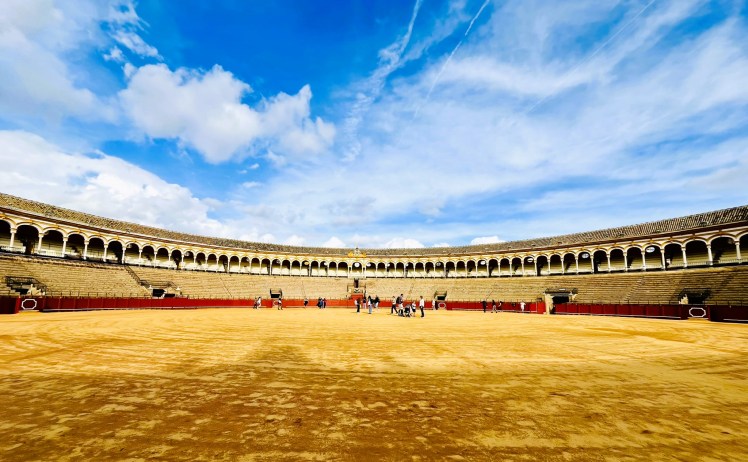
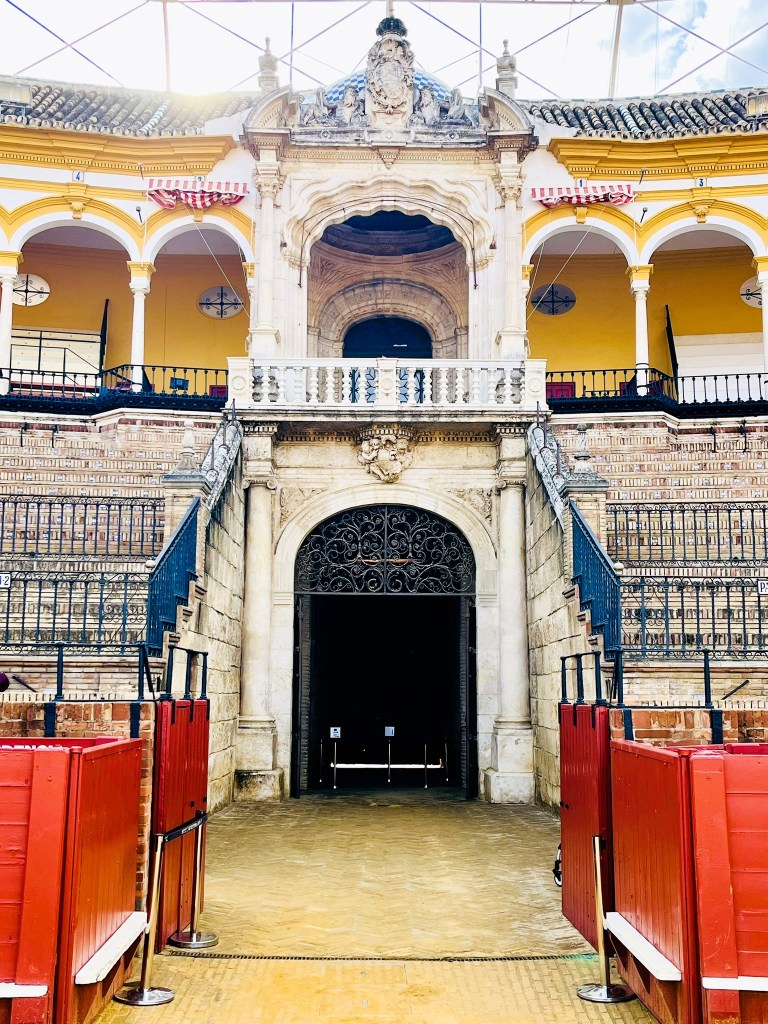
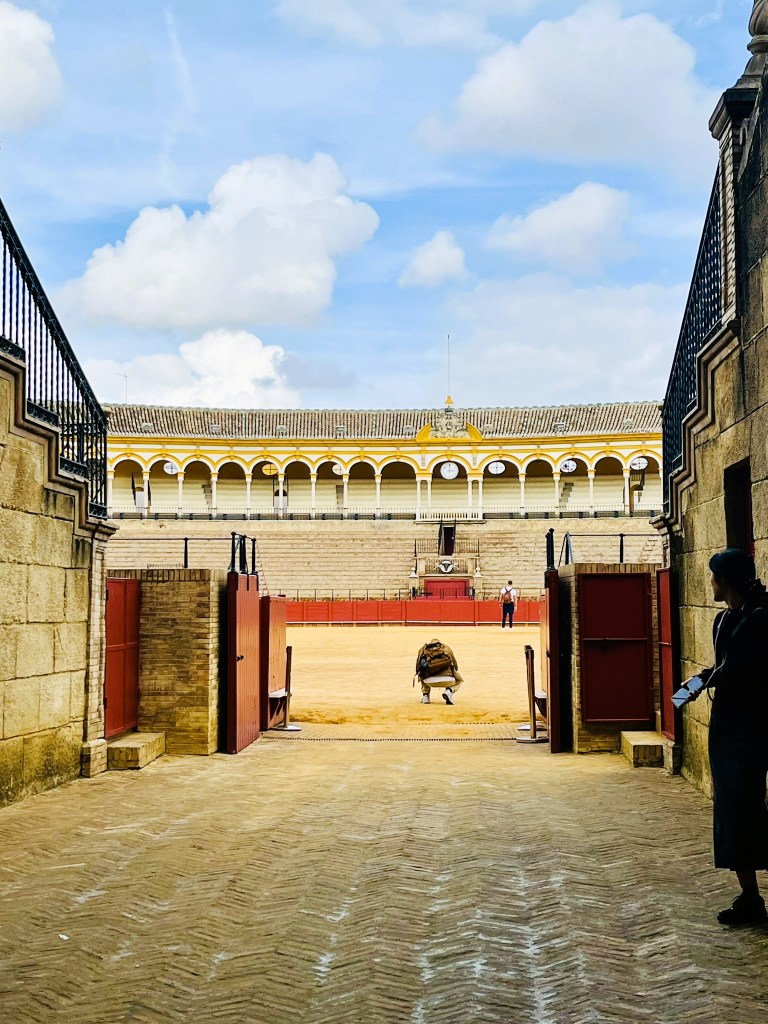
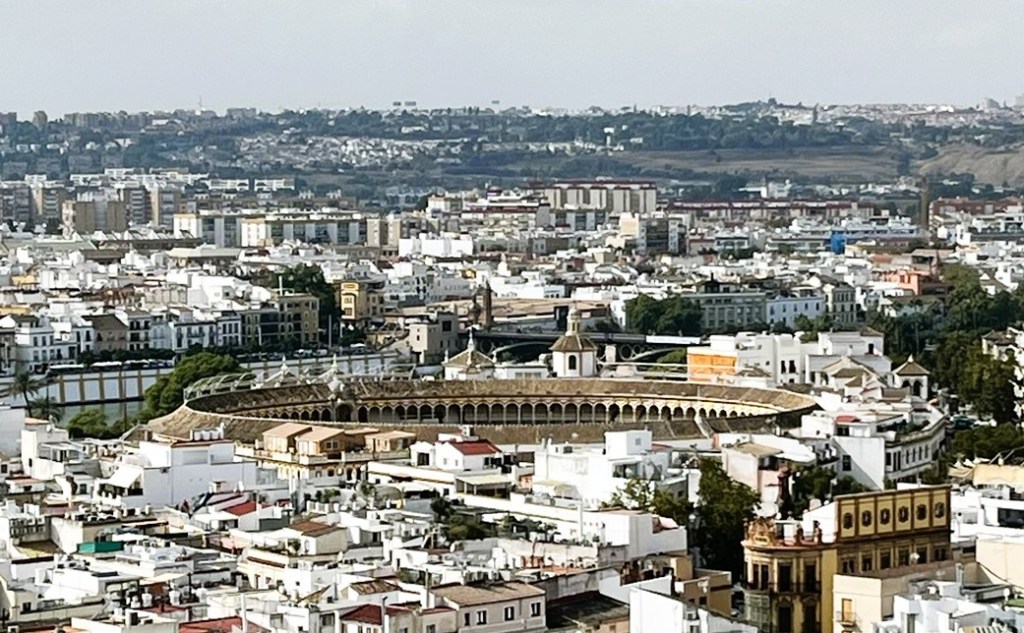
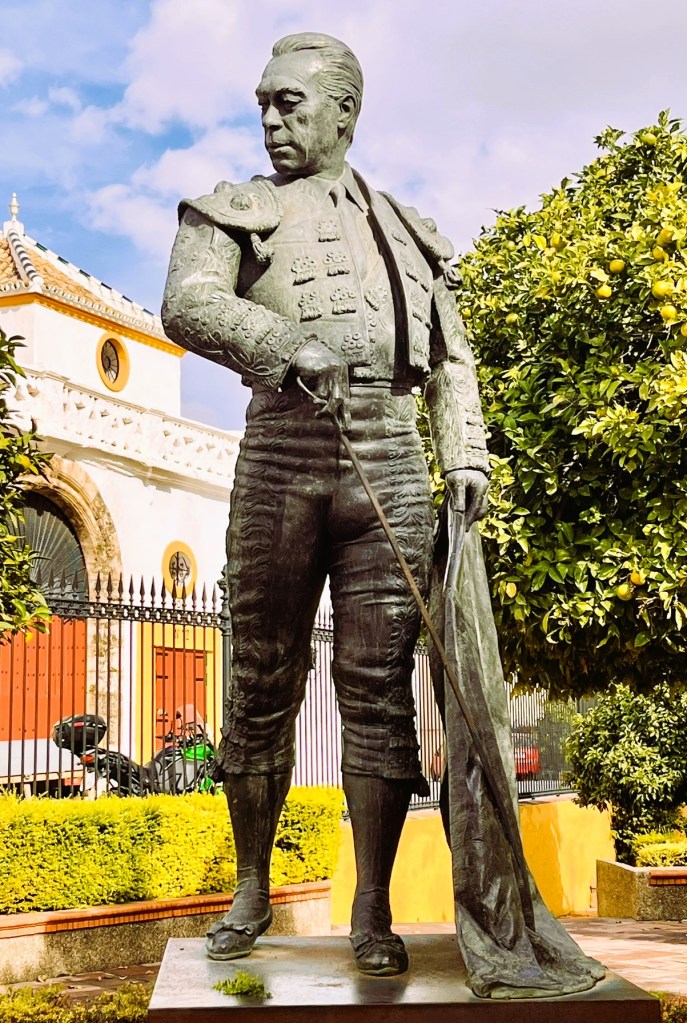
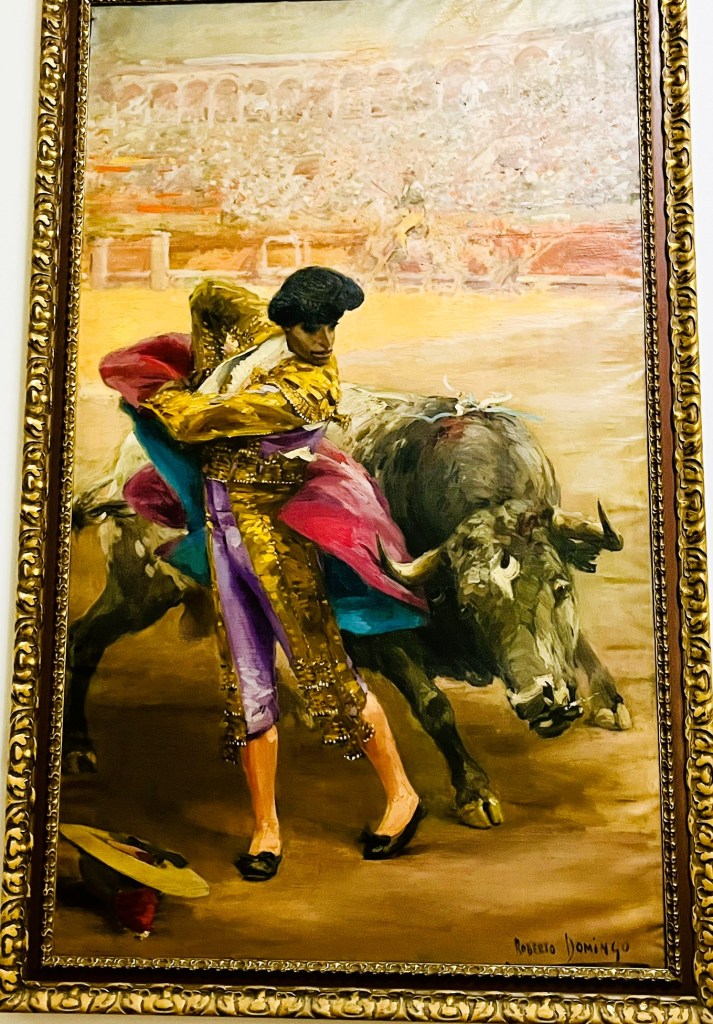
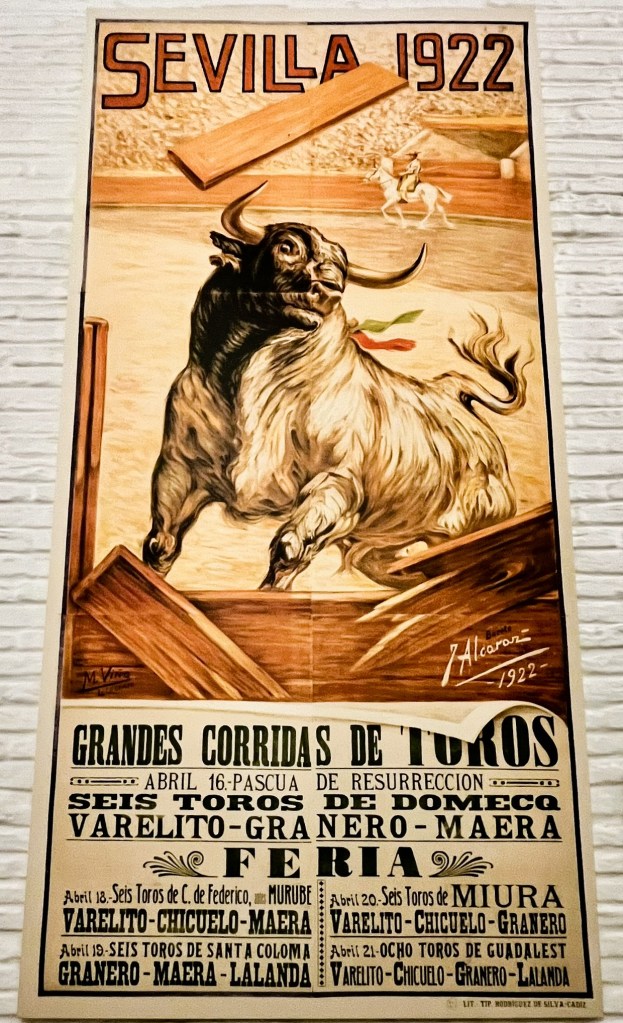
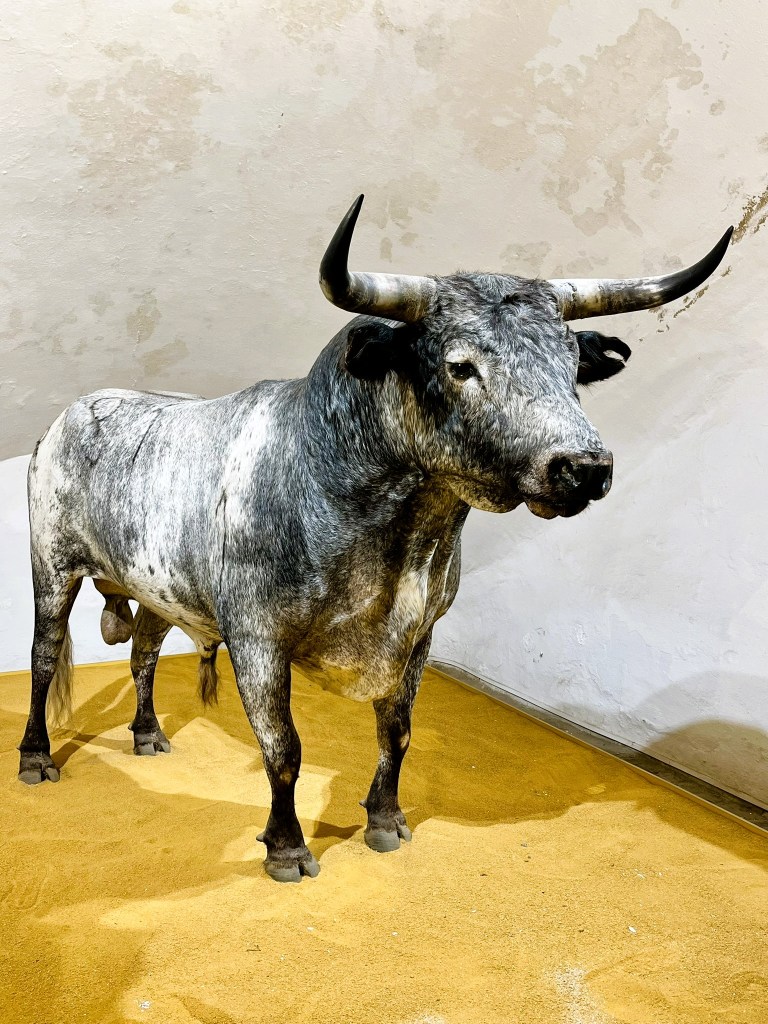
Since first reading Or I’ll Dress You in Mourning, Robie and I have attended a bullfight and visited the Bullfighting Museum in Córdoba dedicated to the sport’s two icons, Manolete and El Cordobés. But it was only during a recent trip to Seville that we got up close and personal to the “Mecca of Bullfighting,” the second most important bullring in Spain.
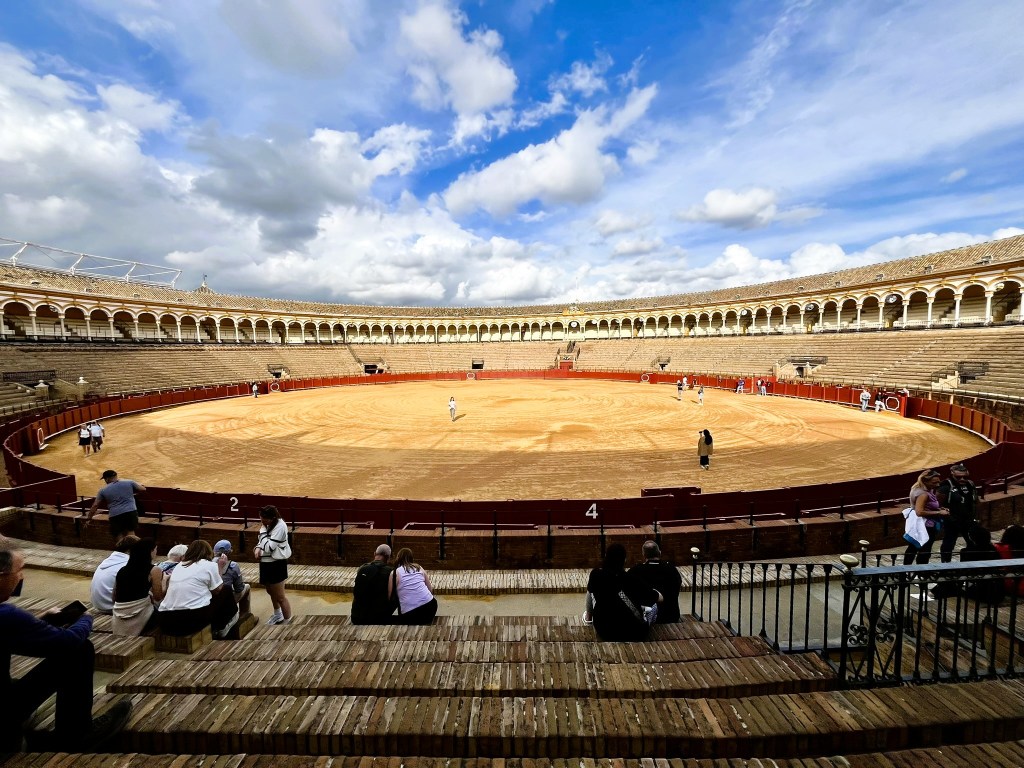
The Plaza de Toros de la Real Maestranza on the banks of the Guadalquivir River took over a century to complete adapting over the years and resulting in a unique oval shape. Finished in the late 19th century, the ring blends Baroque and Neoclassical styles with iconic whitewashed walls and ochre accents.
Our tour of the elegant, historic plaza de toros allowed us to see the stadium from the view of the matador standing on the corrida sands awaiting the entrance of an enormous, enraged bull.
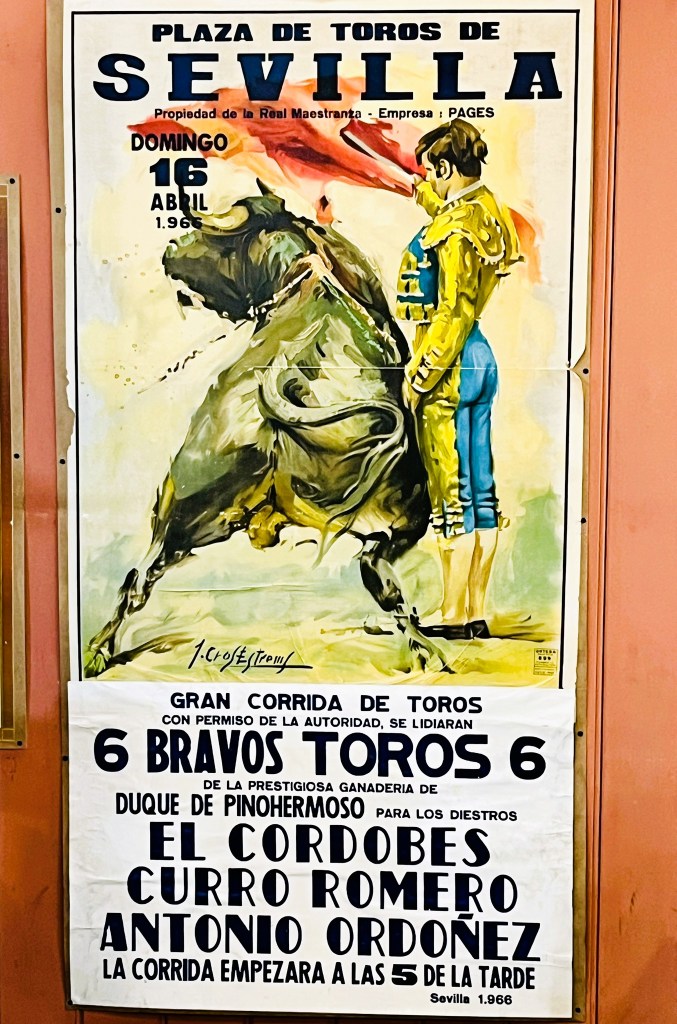
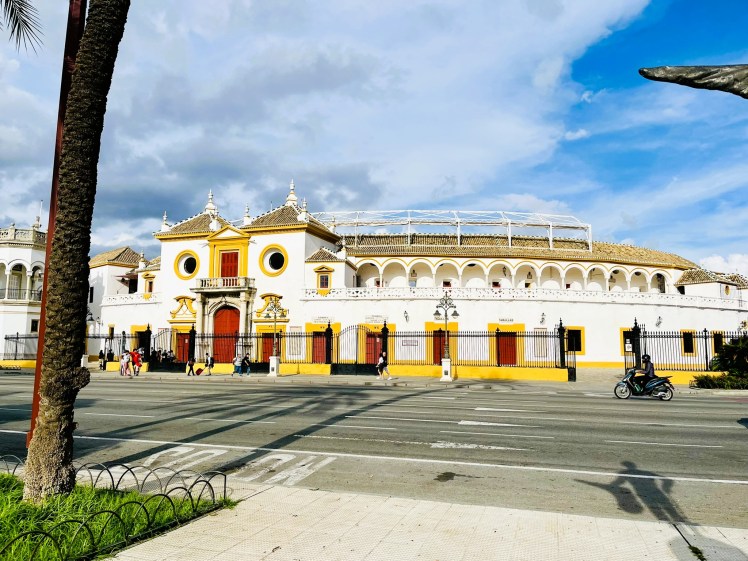
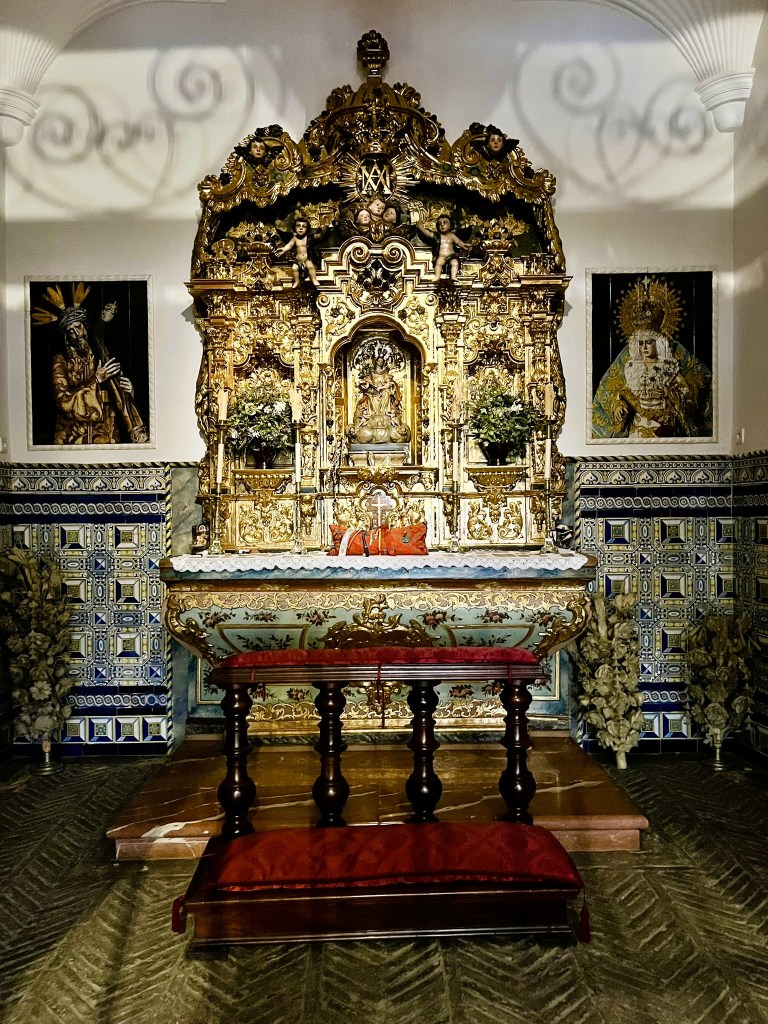
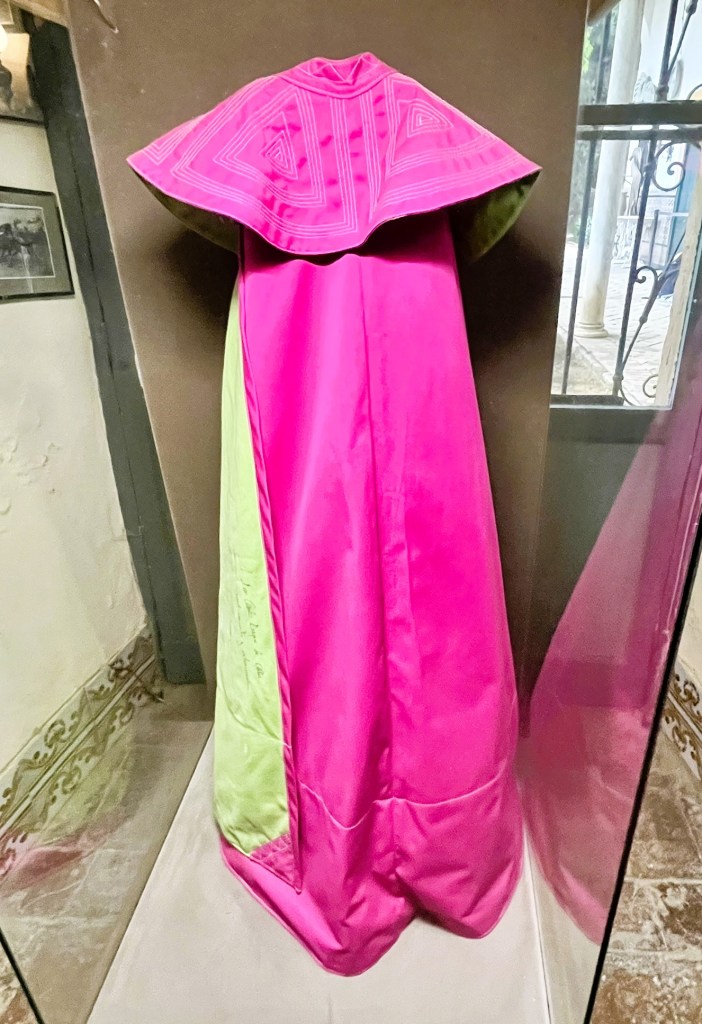
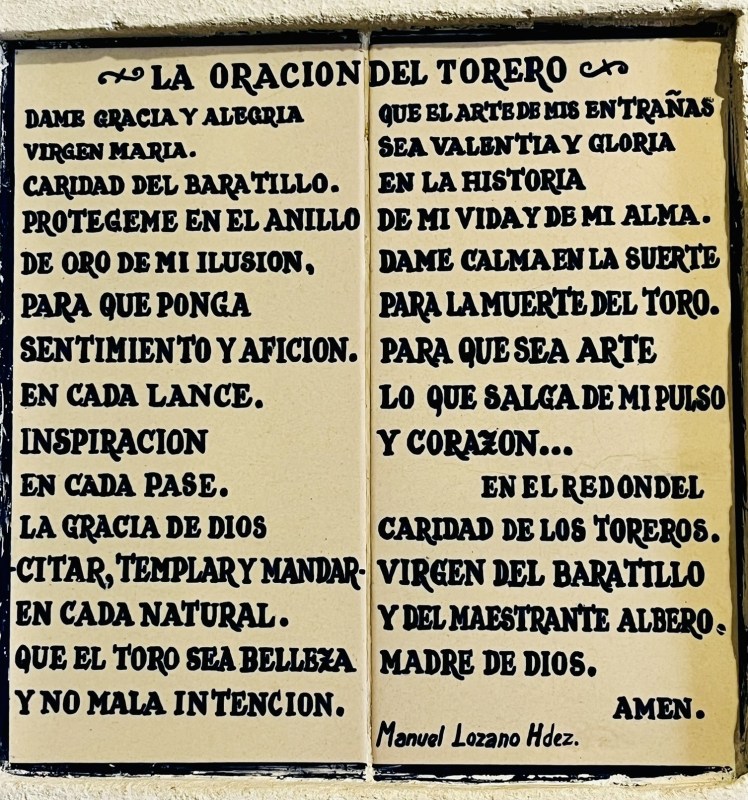
Bullfighter’s Prayer
Give me grace and joy, Virgin Mary, charity of the bullfighters’ brotherhood.
Protect me in the golden ring so that I may put feeling and passion into every move, inspiration into every pass, the grace of God in every movement. To summon, control and command every natural pass so that the bull may be beautiful and not ill-tempered. May the art of my soul be courage and glory in the story of my life. Grant me calm in the moment of the bull’s death so that what comes from my pulse and heart becomes art in the bullring, Virgin of the Baratillo and of the Maestrante Albero, Mother of God. Amen.
– Manuel Lozano Hernandez
 Reid & Robie
A book review, a history lesson and insight into Spain and its culture…you packed it in! Thanks for your insights.
LikeLike
Thank you, Jill! So happy you enjoyed the post! 🙂
LikeLiked by 1 person