
Moroccan food dances on your tongue with spices that tell a story of the desert and the sea.
– @living_with_a_cook
I adore Moroccan food. The rich, aromatic blend of Berber, Arabic and Mediterranean influences characterized by slow-cooked dishes filled with fragrant spices, fresh vegetables, meat and seafood served alongside fluffy couscous and round loaves of bread. At its heart, Moroccan cuisines is about warm hospitality, communal dining and flavors that balance sweet and savory in every bite.
Using ingredients that reflect the country’s long history of agriculture and trade, Moroccan dishes combine perfumed spices with sweet, dried fruits and pairs meats with sharp, bitter accents to create an intoxicating combination that’ll have your tastebuds anticipating the next amazing bite. After three months in the country, we’re sharing Reid & Robie’s favorite local dishes, the ones we order time and again and have replicated in our kitchen in Essaouira.
Moroccan Mint Tea
Our culinary tour of Morocco begins with the country’s famous symbol of hospitality made from Chinese gunpowder green tea loaded with fresh mint sprigs sweetened by sugar. Moroccan mint tea is best enjoyed at a café watching the bustling souk or medina while getting to know the friendly, four-legged locals and listening to the traditional Berber music of strolling musicians.
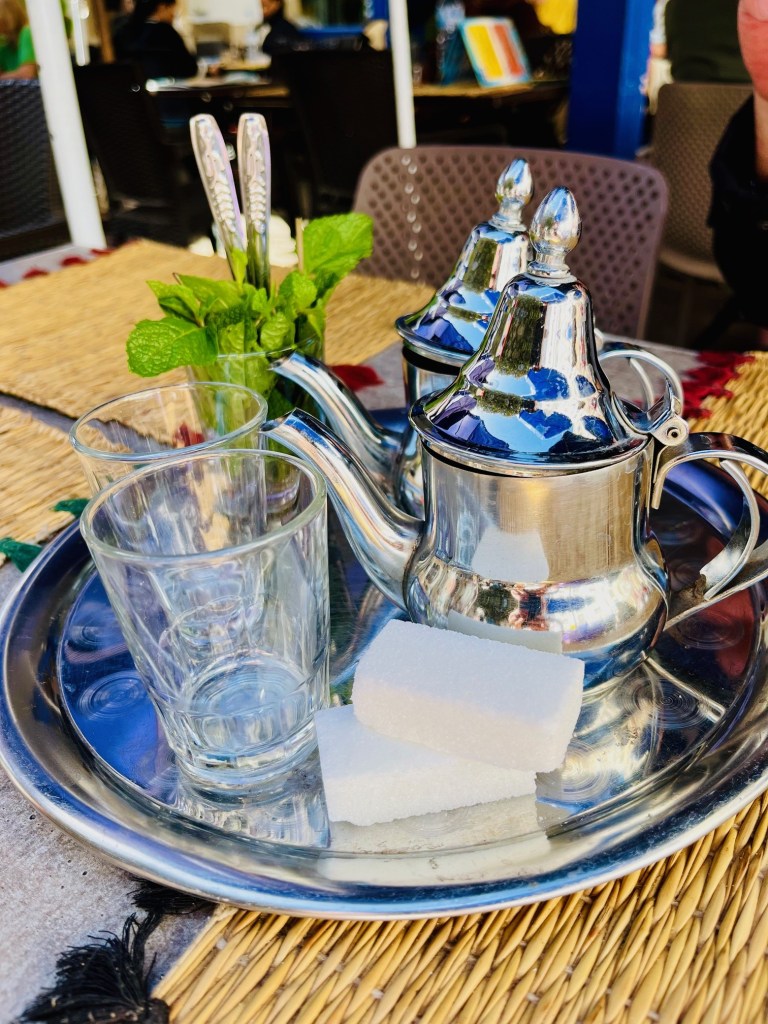
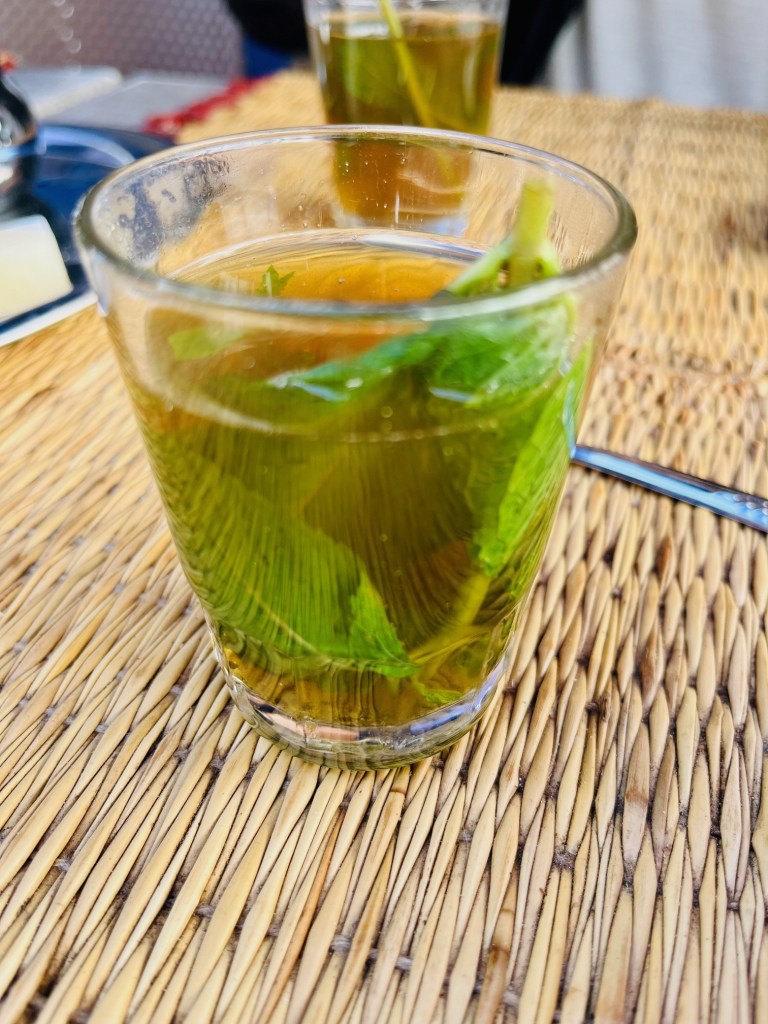

Moroccan mint tea is served at every social gathering
Colorful, comfortable dining
Enjoying a meal out in Morocco isn’t just about the hospitality and food. It’s also about being surrounded by spirited markets, oceanfront views and colorful décor.
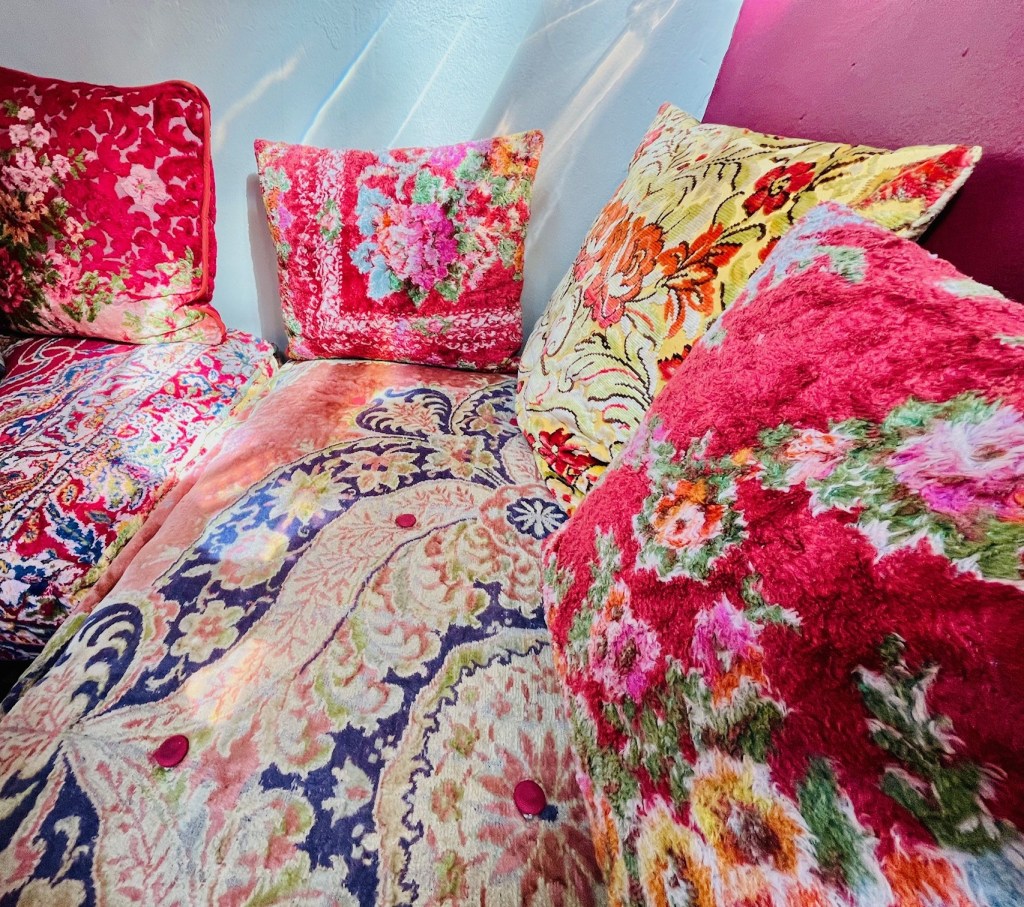
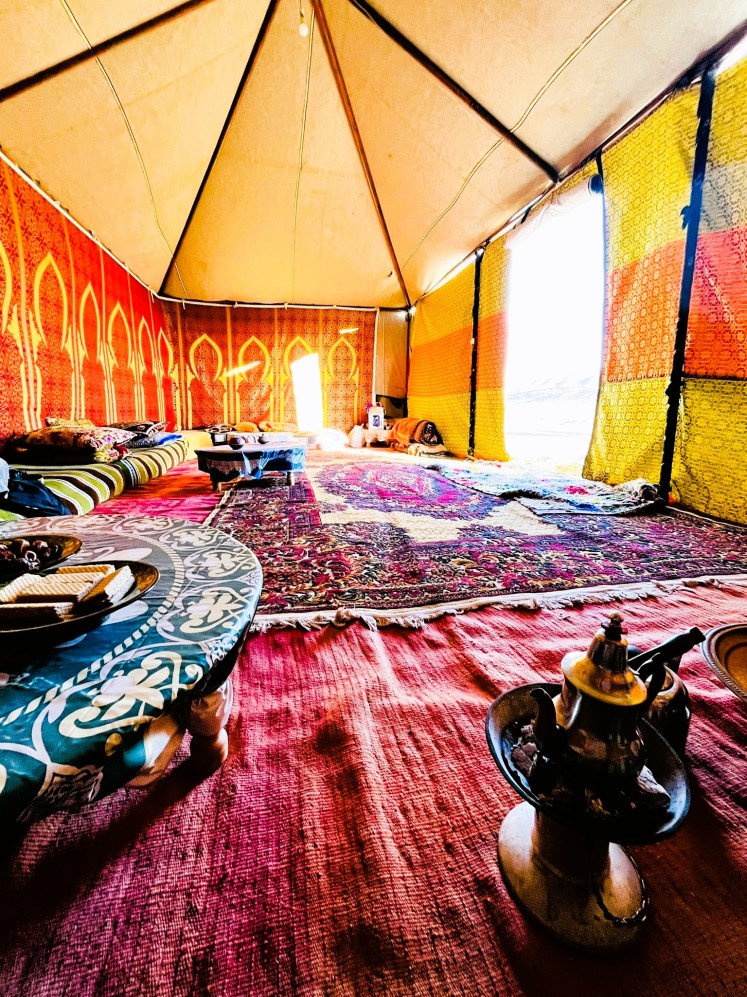
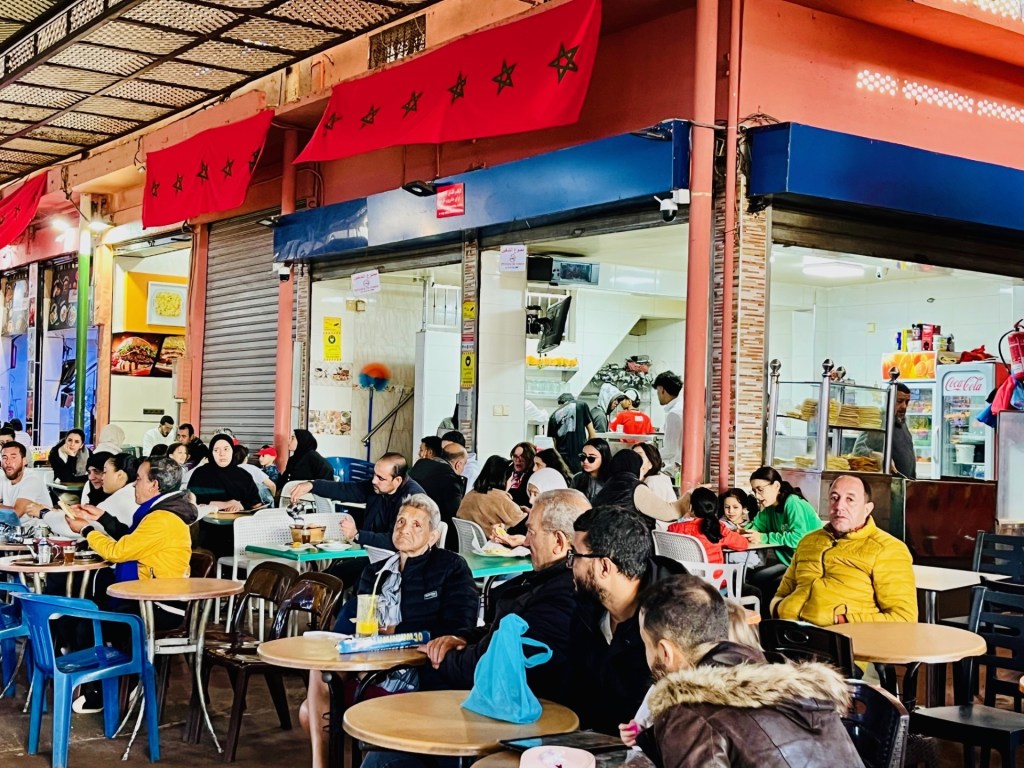
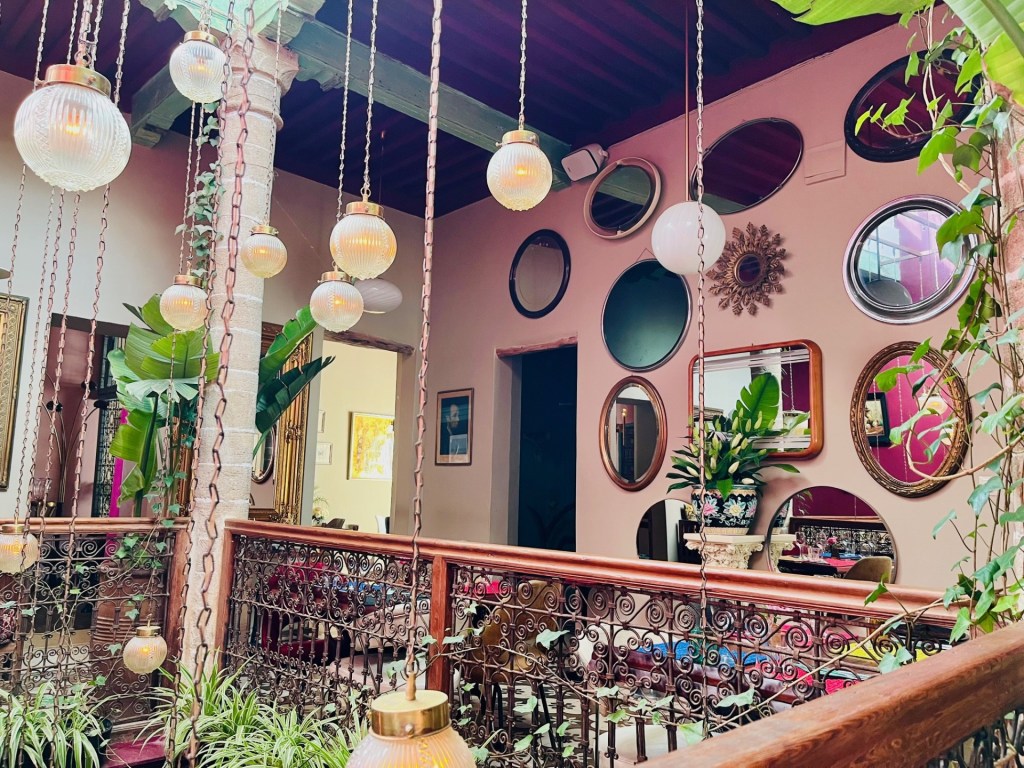

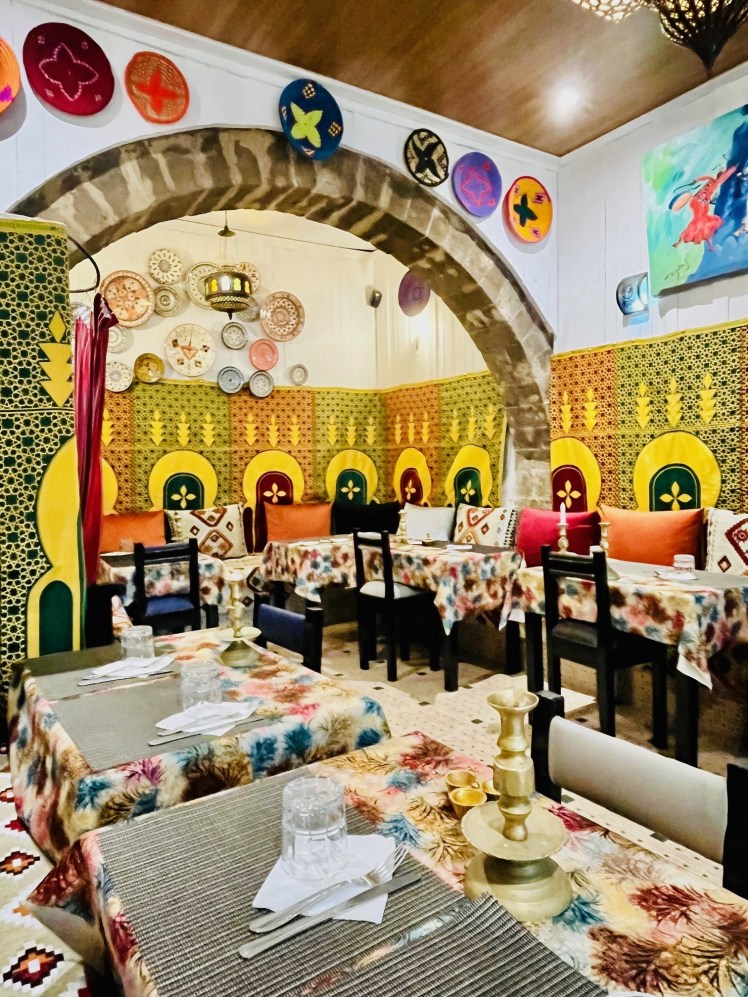

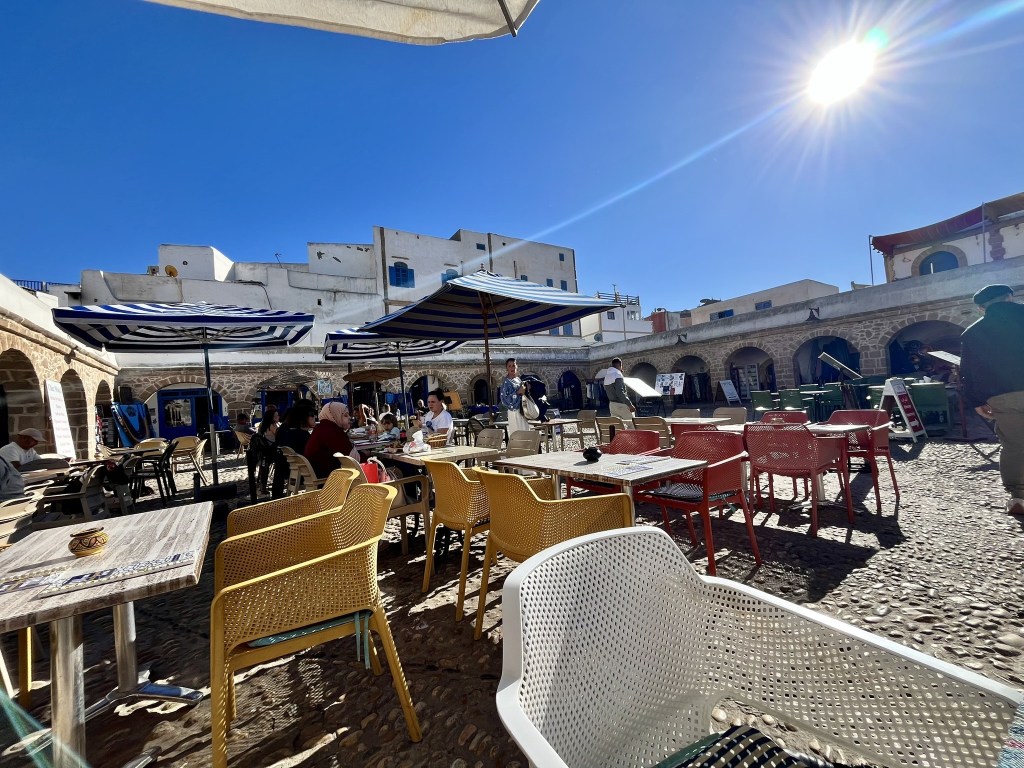
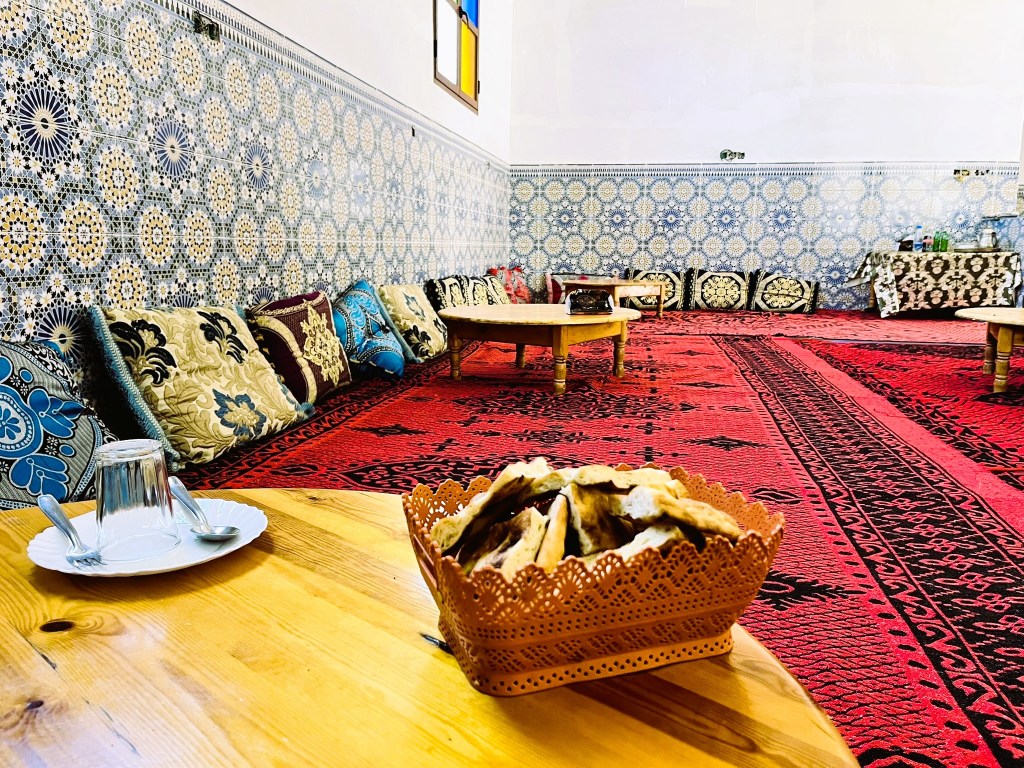
Colorful restaurants where every bench comes with plush cushions and guests occasionally sit on the floor
Olives, olives, olives!
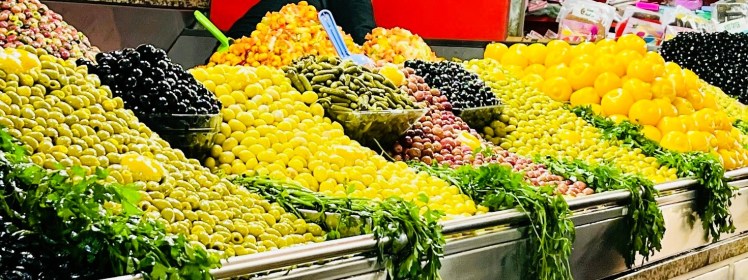
A Mediterranean country blessed with abundant sunshine, you can bet that the complimentary nosh before a meal will include olives because Morocco grows a ton of them. There’s the Green Beldi, a hand-picked olive traditionally brined with water, sea salt and lemon for a crisp, tender texture and fruity taste.
There are black olives dry-cured in salt then soaked in oil for a rich, buttery flavor and purple olives harvested before the fruit turns black offering a soft consistency that’s great for cooking. Finally, we have Picholine Marocaine, an olive known for its crisp crunch and tart, nutty flavor.
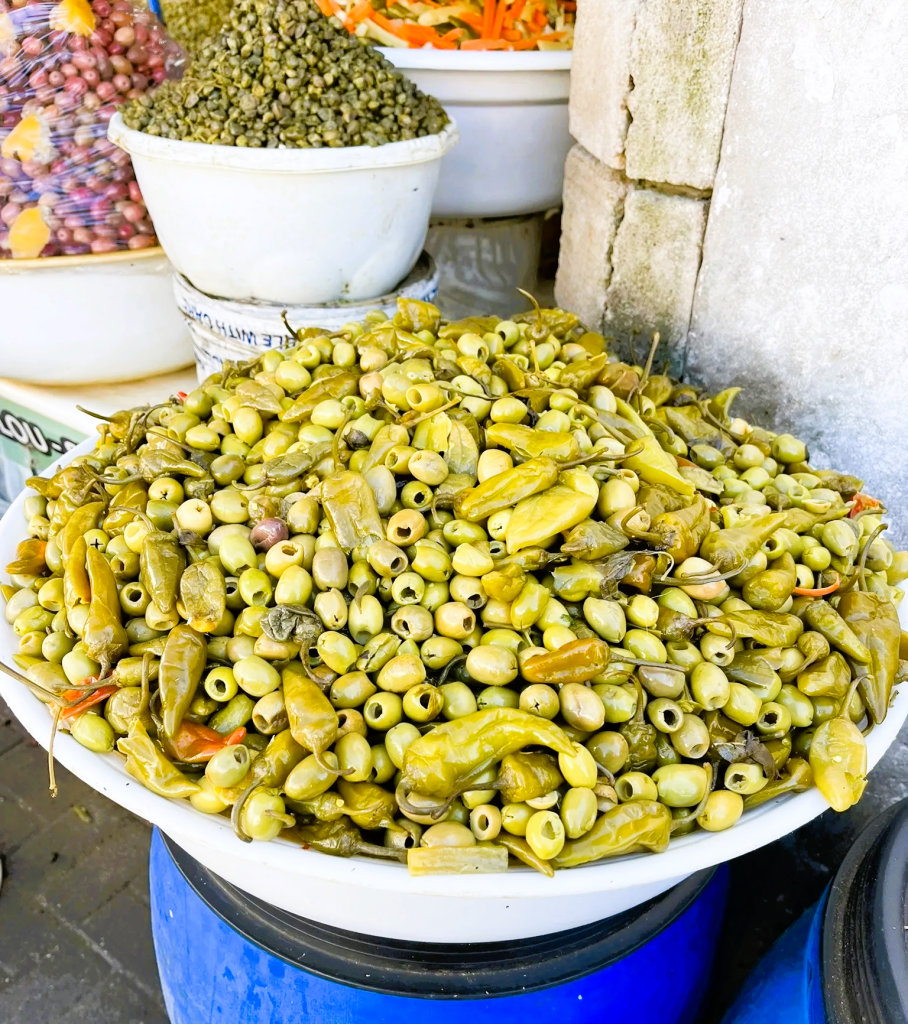
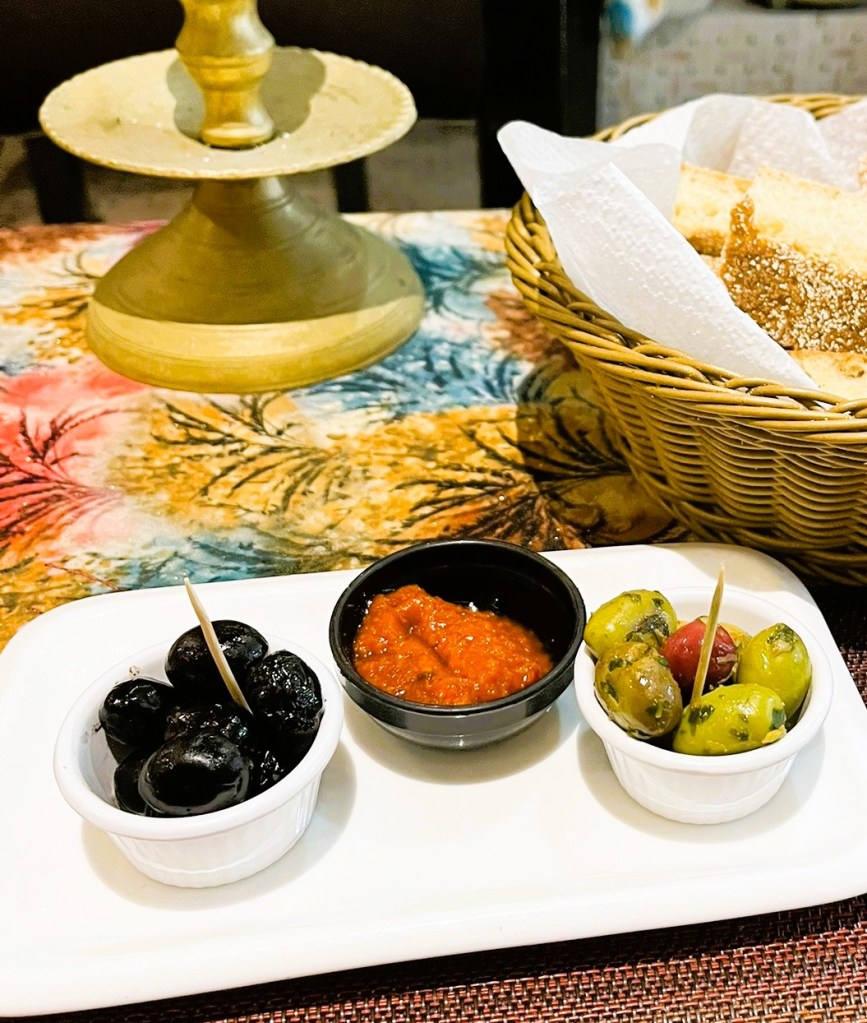
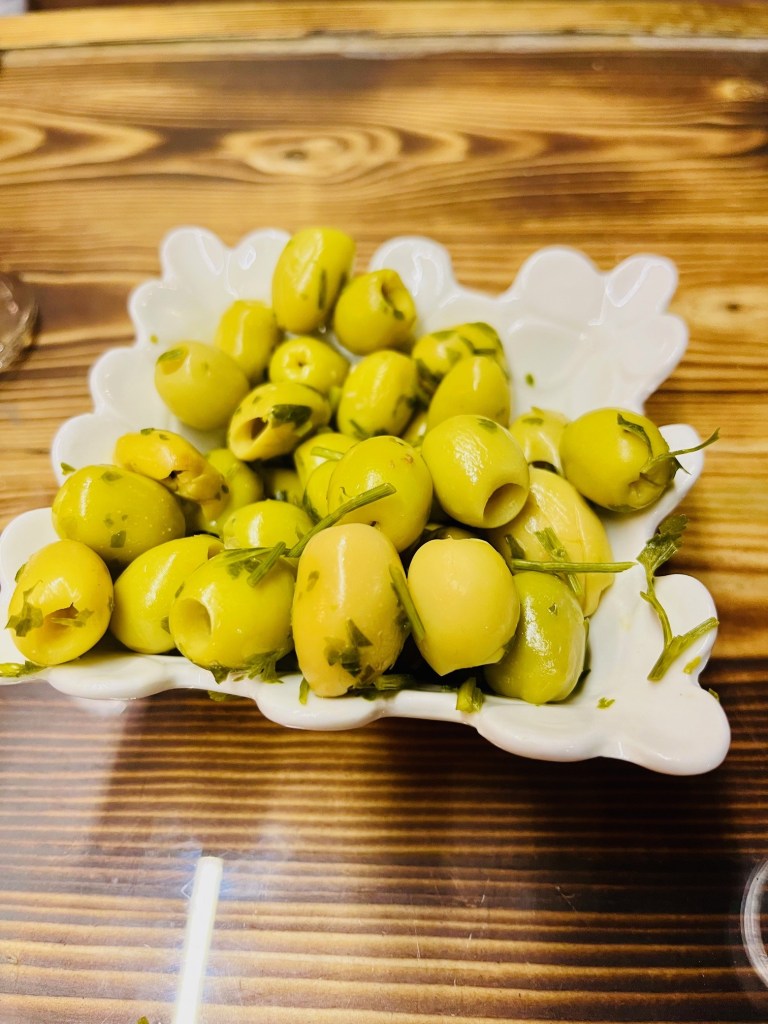
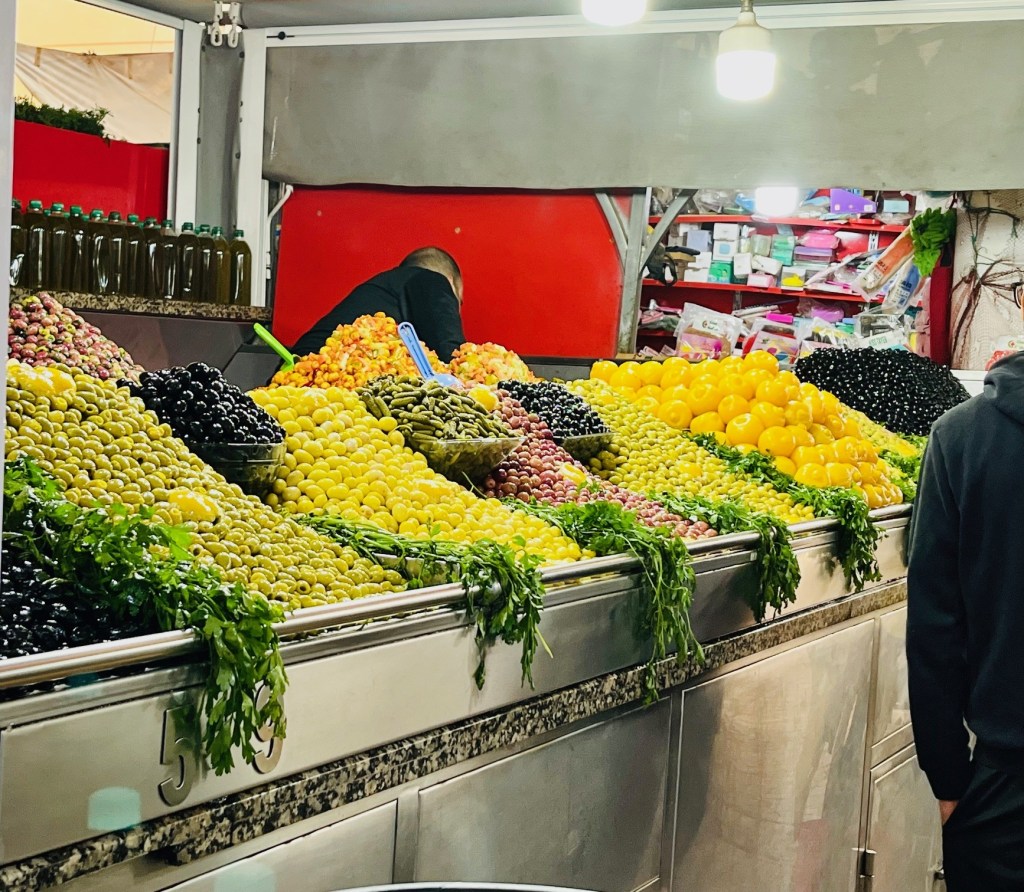
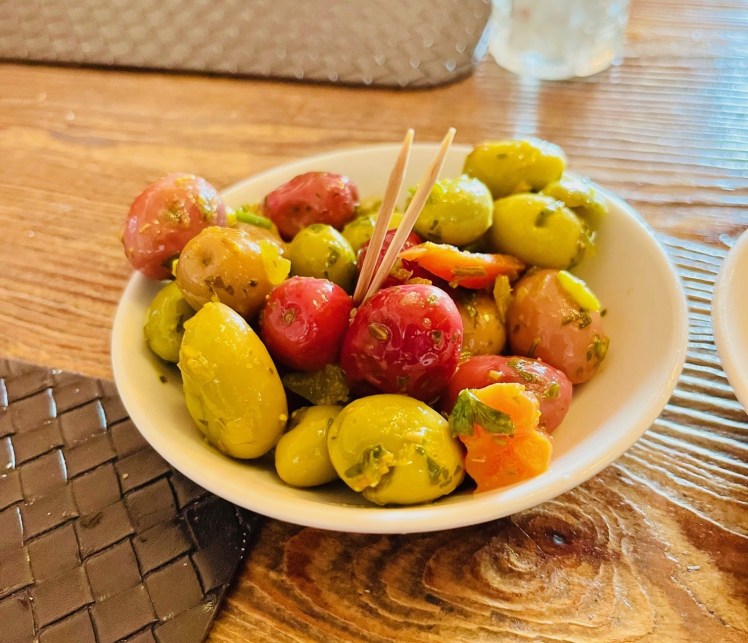
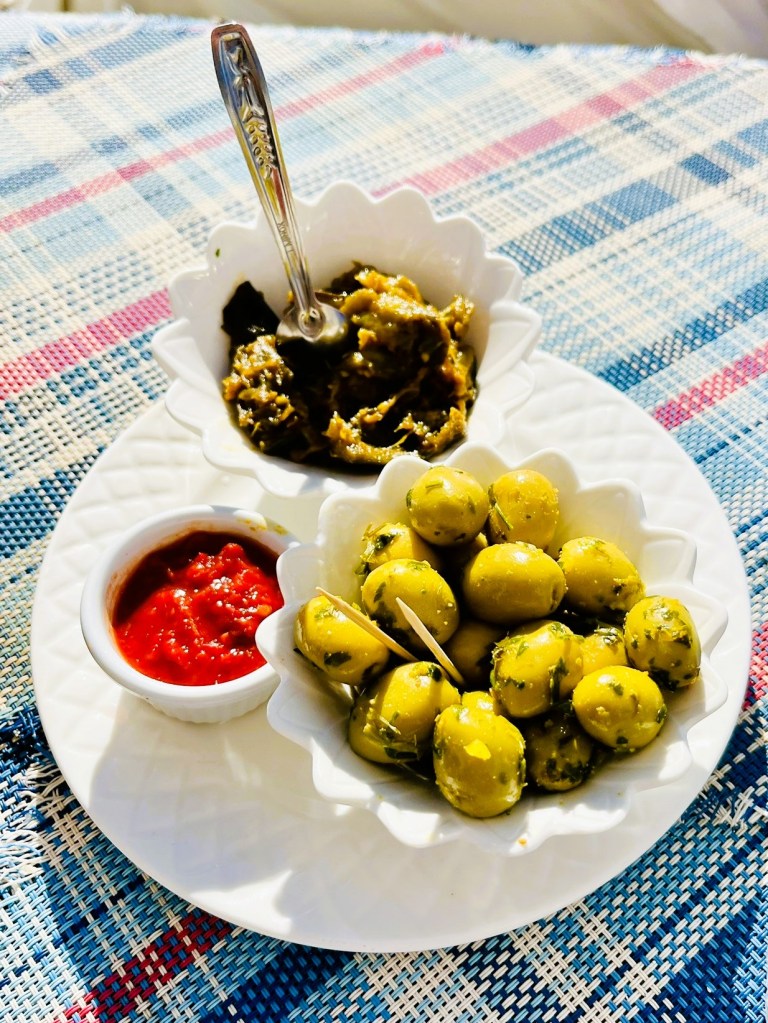
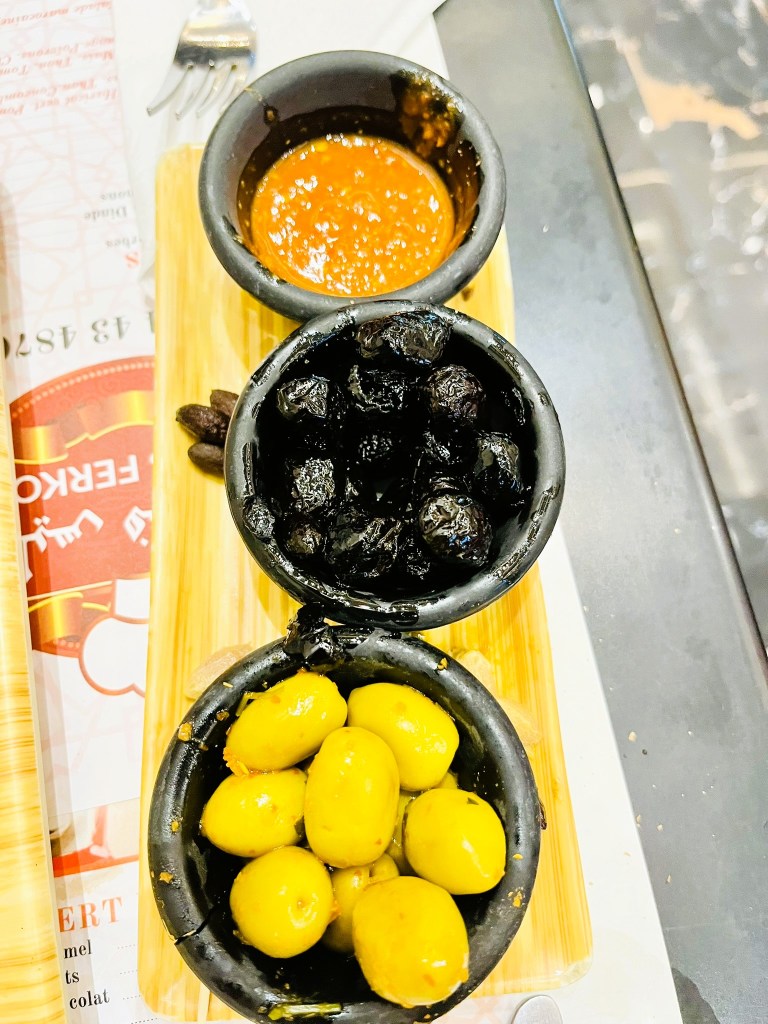
Free appetizers mean lots of olives!
Round bread
The favorite bread in Morocco is khobz, a soft, round loaf essential for sopping up all those delicious sauces. Plus, since the traditional way of eating in Morocco is with your hands, this little baby makes ripping off a chunk and spreading open the edges to pick out bites of meat and vegetables the perfect vehicle for popping them in your mouth.
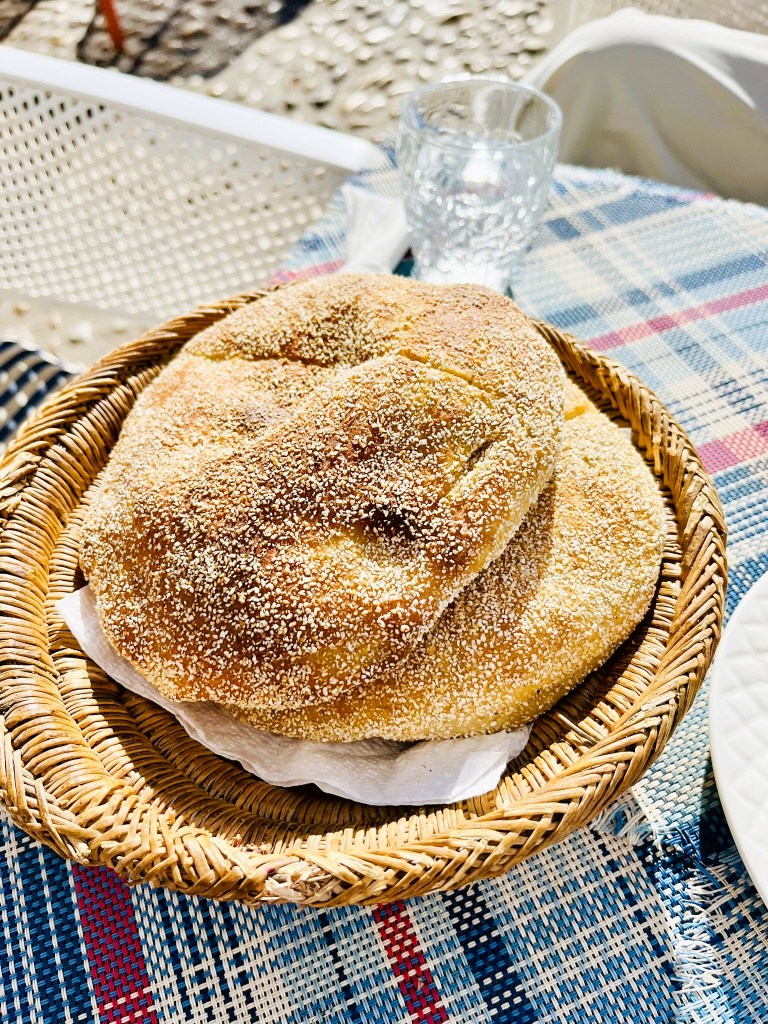
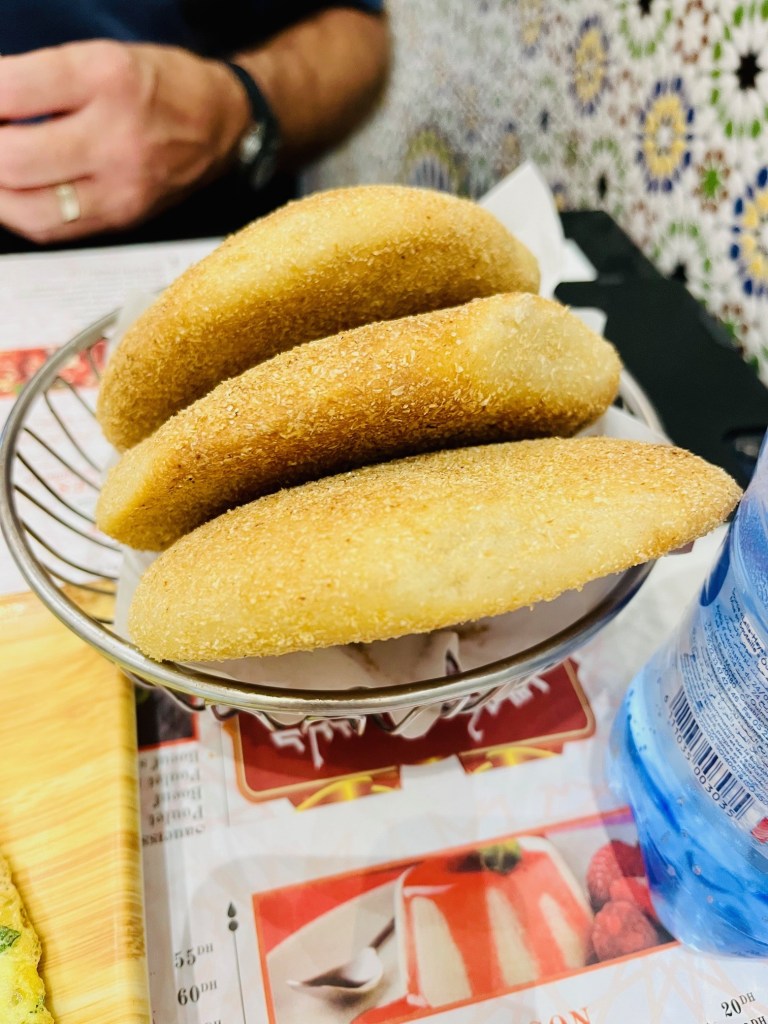
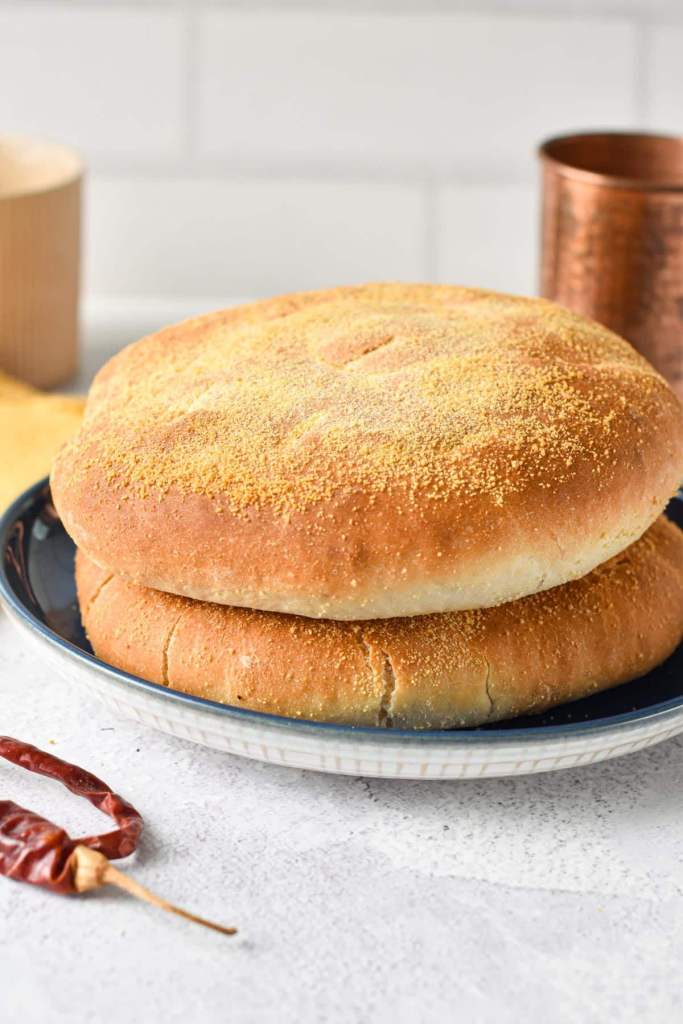
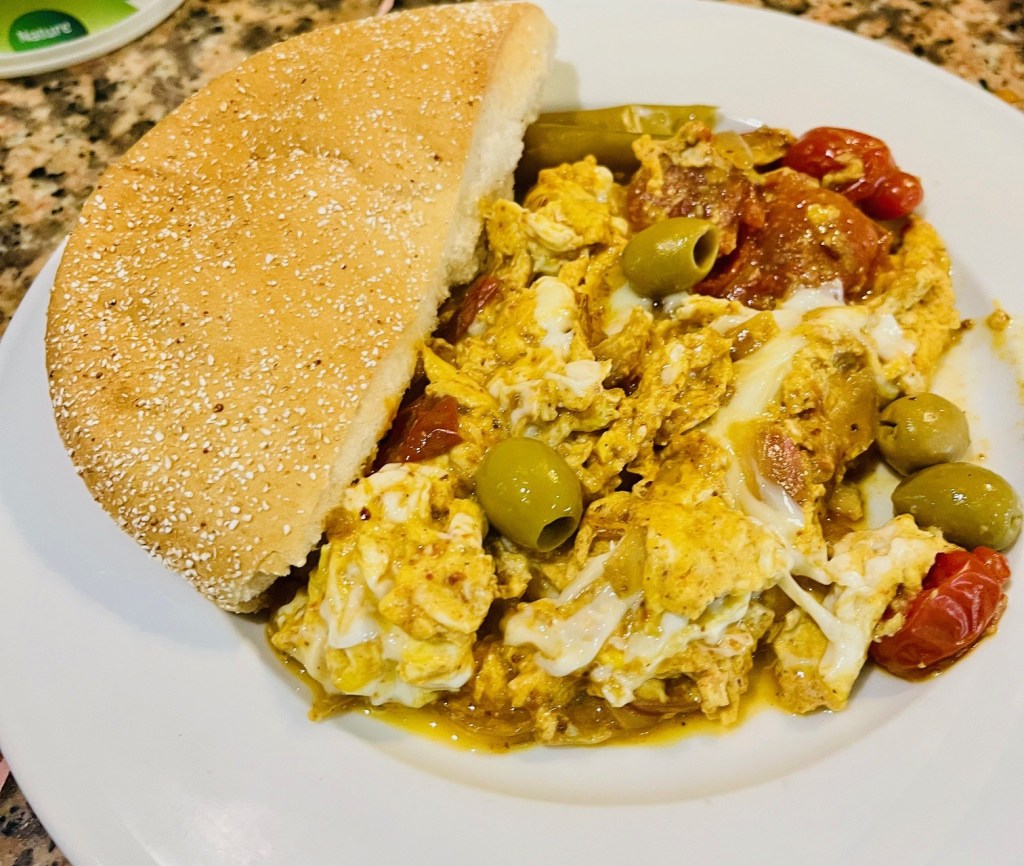
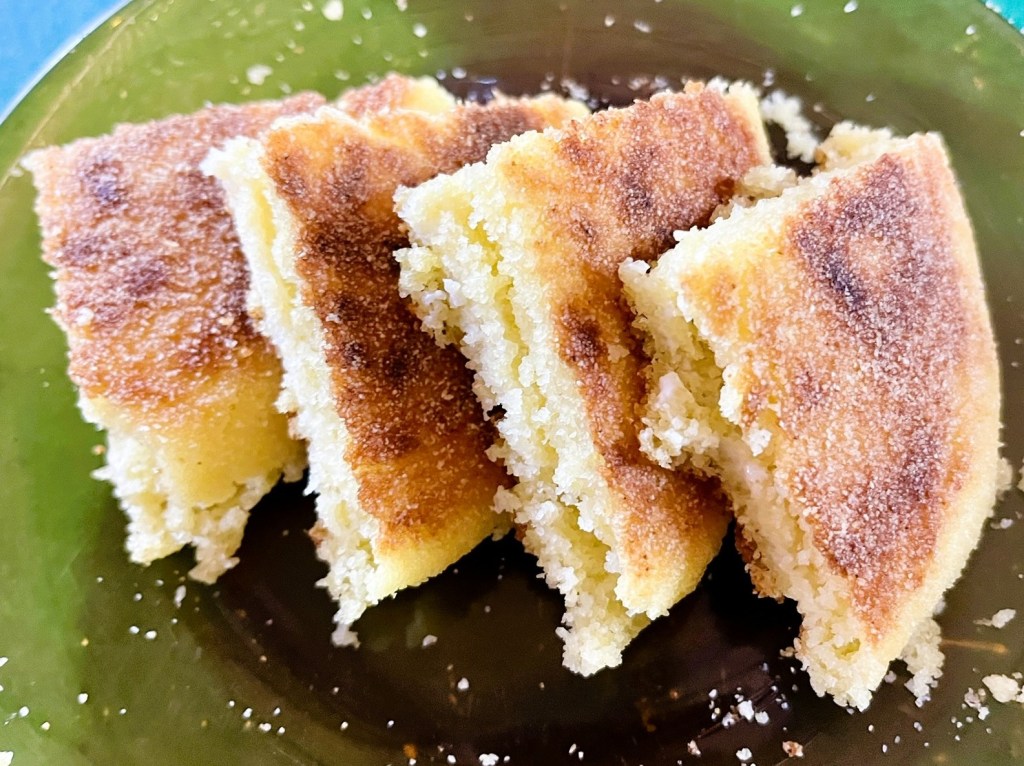
Traditional Moroccan khobz
Soups and Salads
With such complex main dishes, Moroccan soups and salads are prized for their simplicity.
Fresh tomatoes and cucumbers lightly dressed in olive oil and lemon juice. Unassuming vegetable broth filled with hearty chickpeas, lentils and pasta. These humble dishes are a great palate cleanser for the deep, rich flavors that are sure to come next.
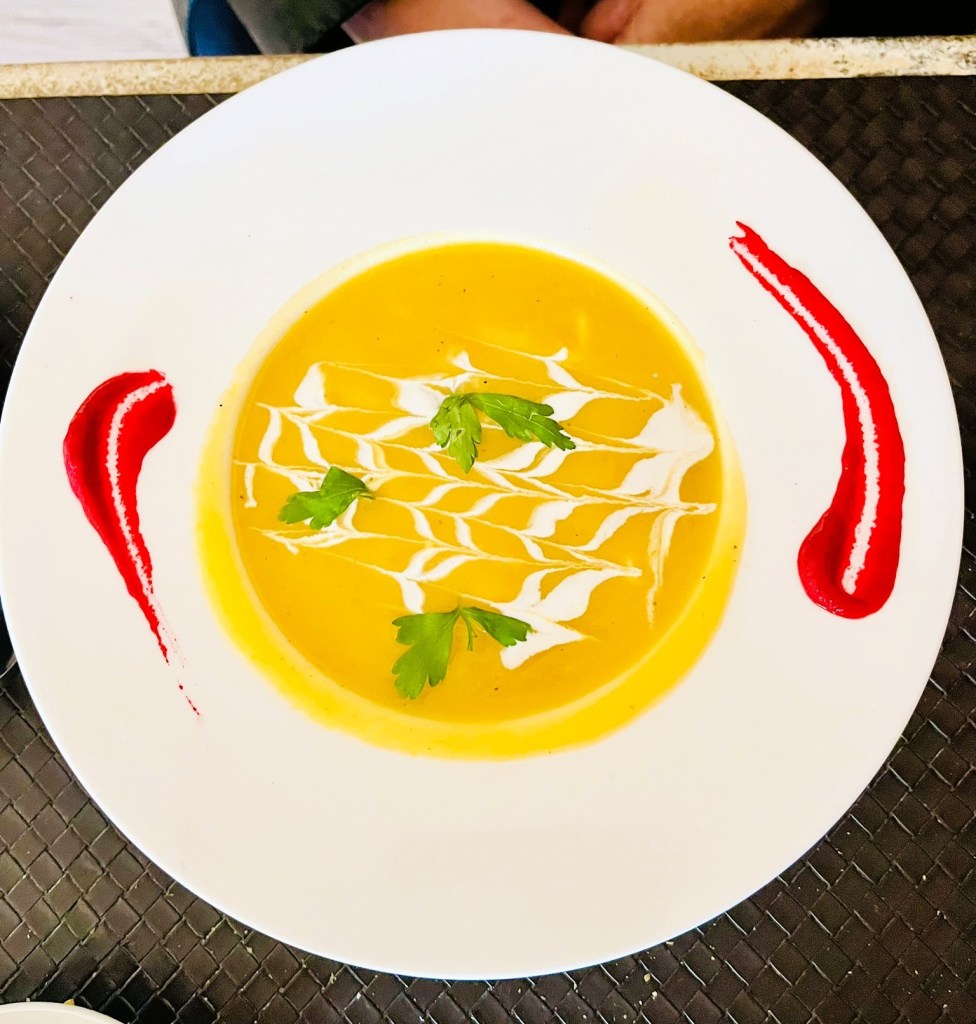
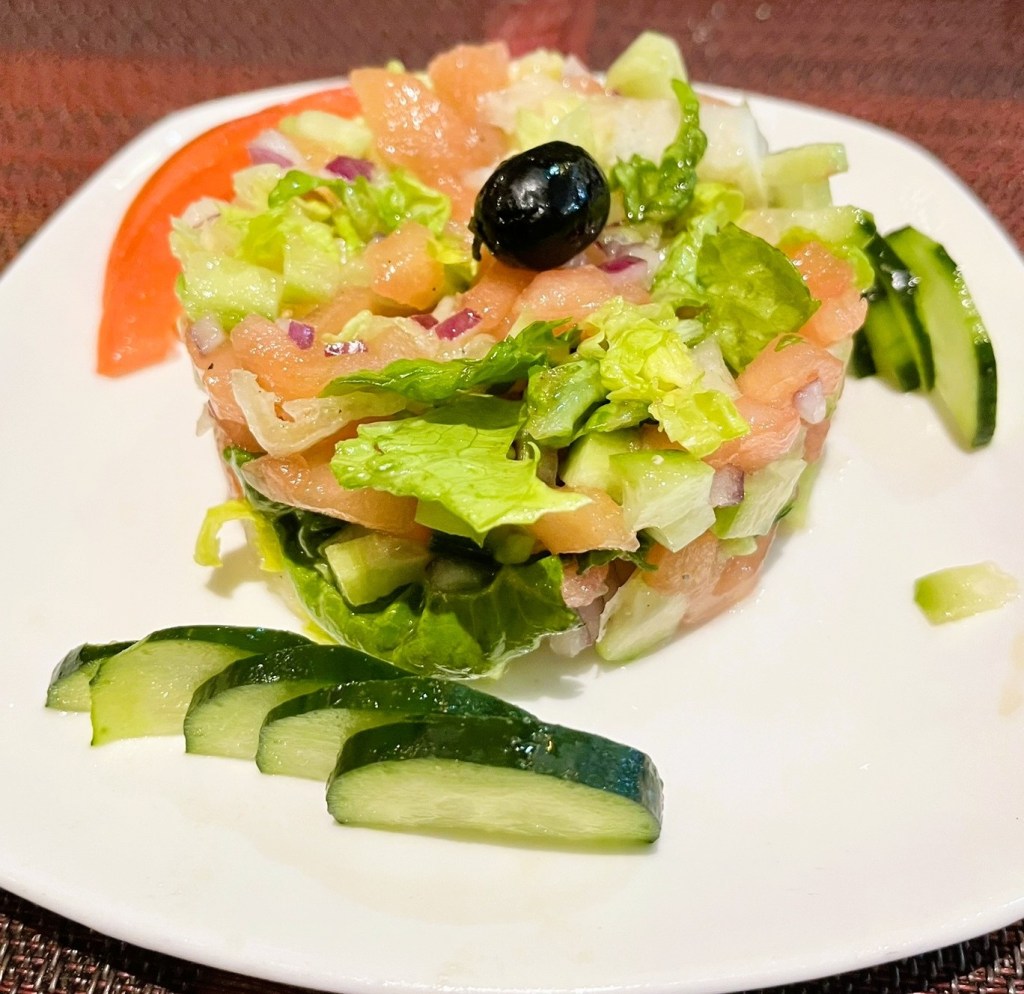
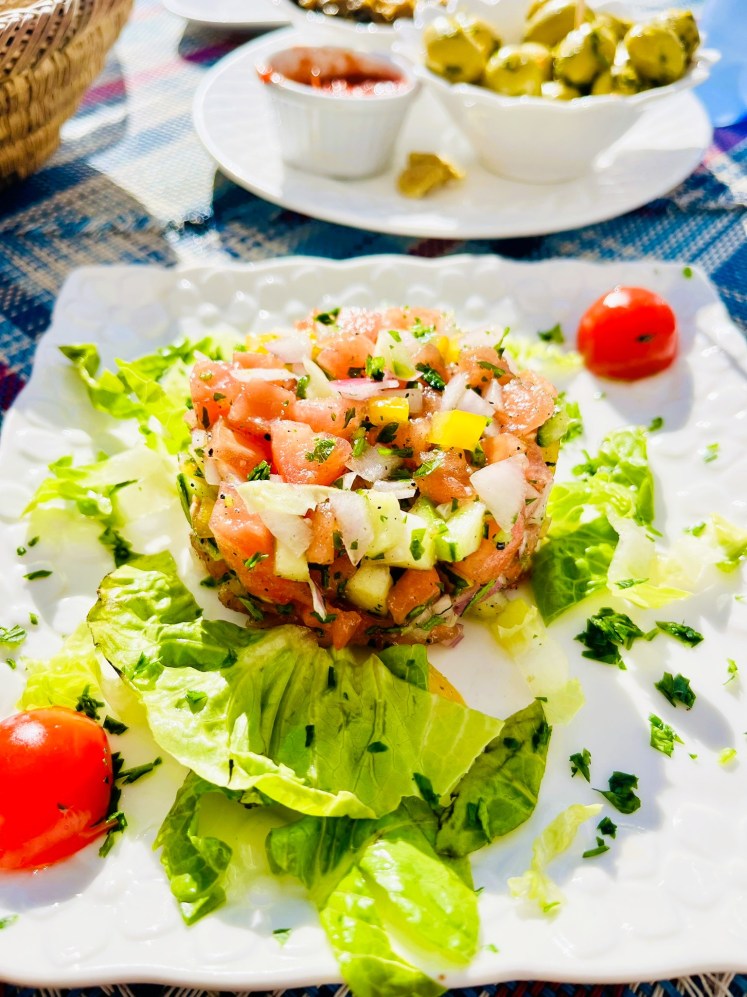
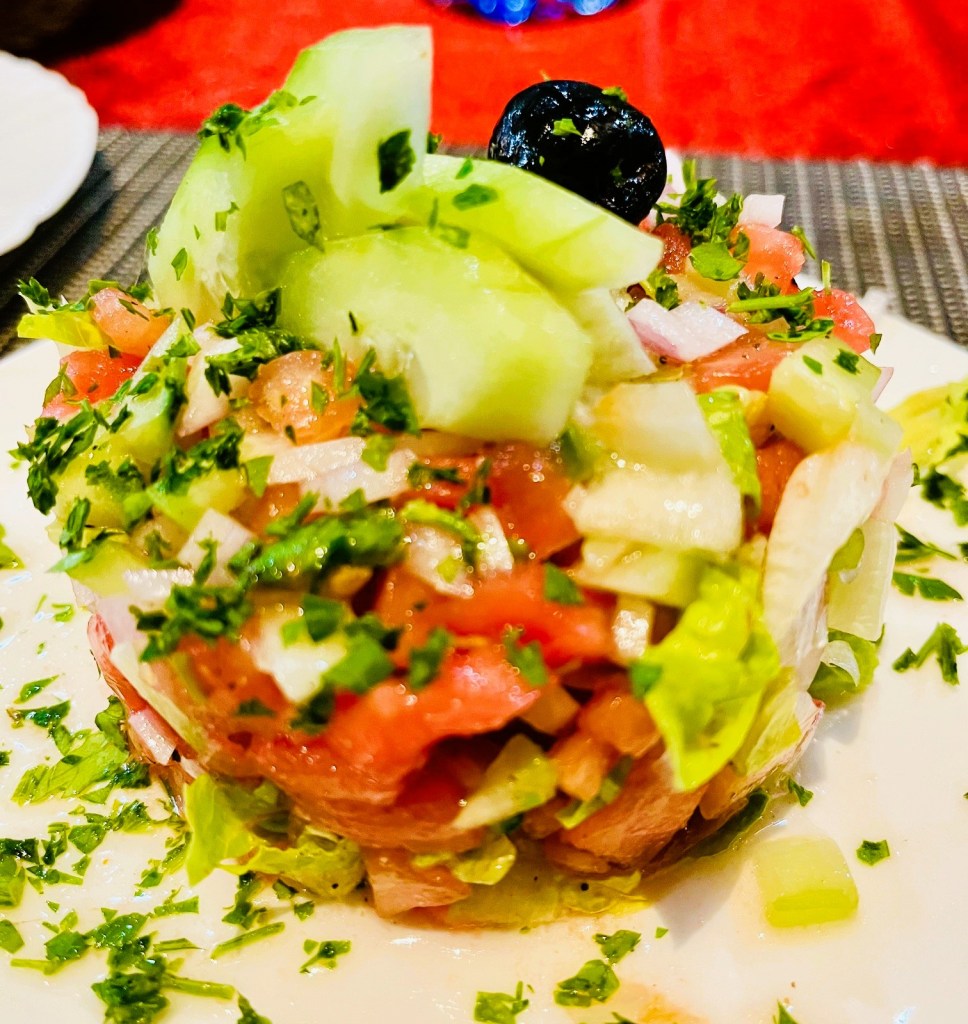
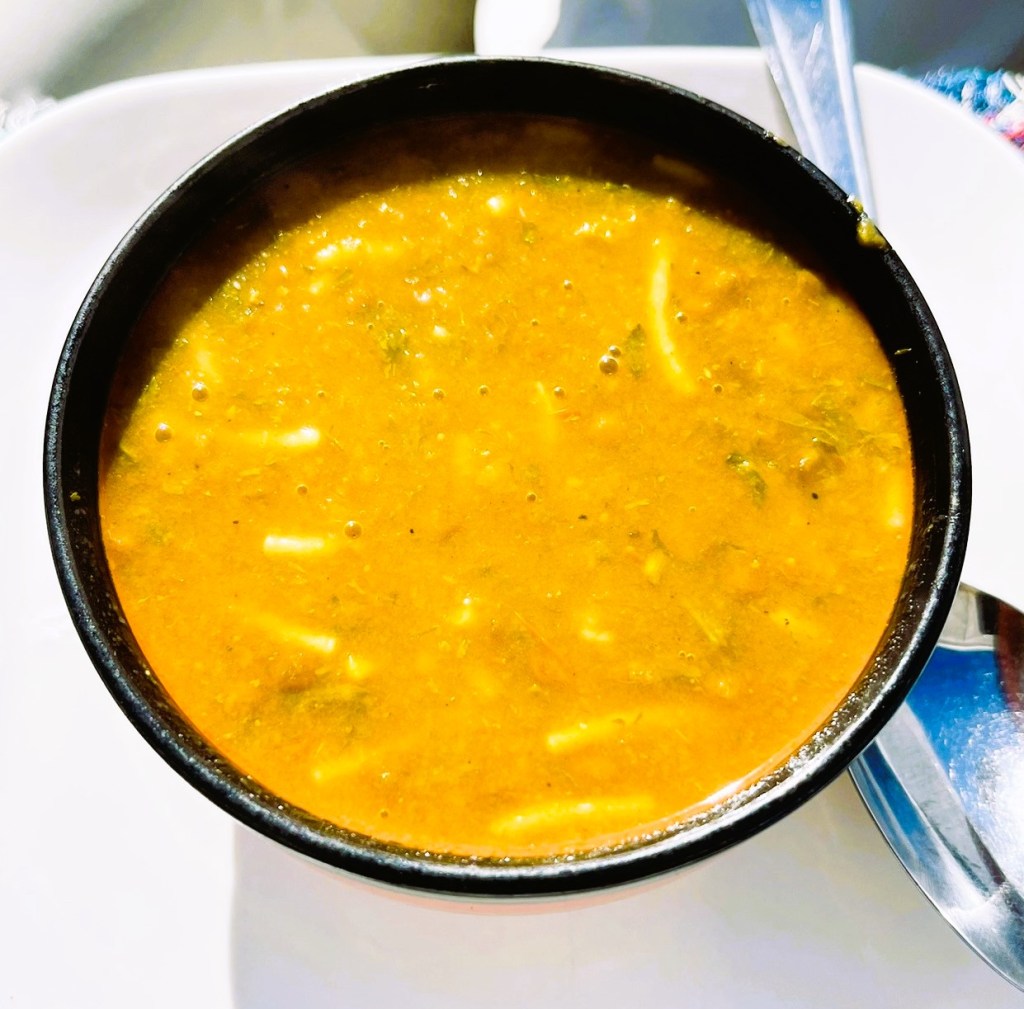
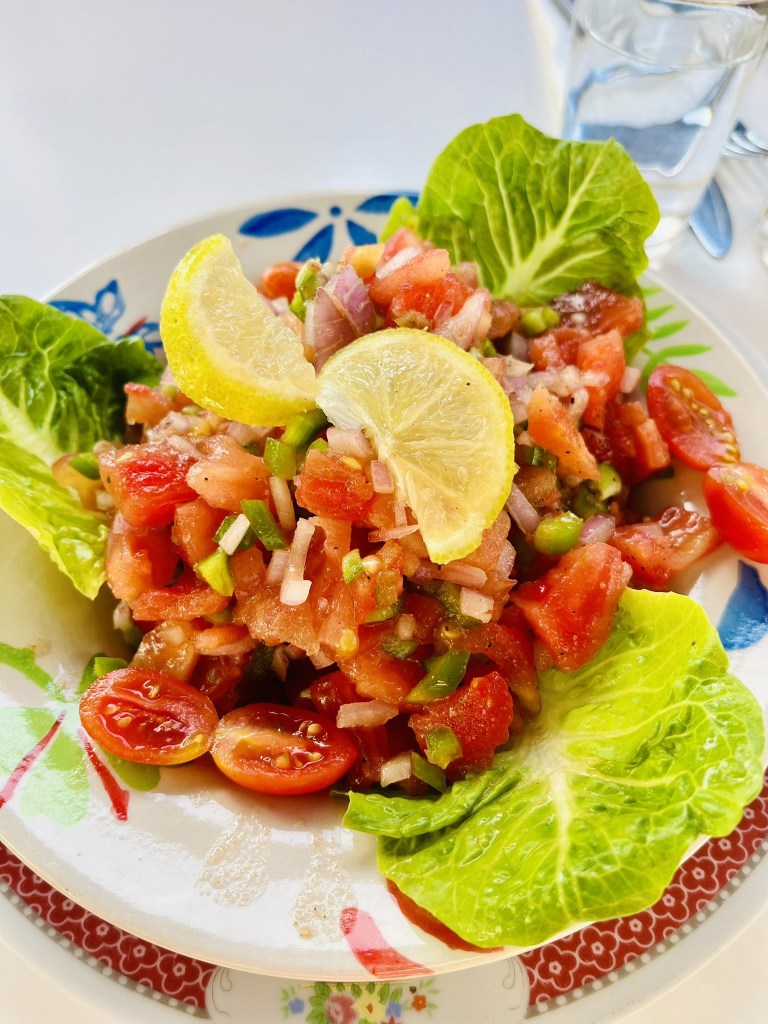
Soups & salads
Moroccan omelets
Moroccans get most of their protein from legumes and eggs instead of meat. And we think a loaded Moroccan omelet is a great way to get your veg.
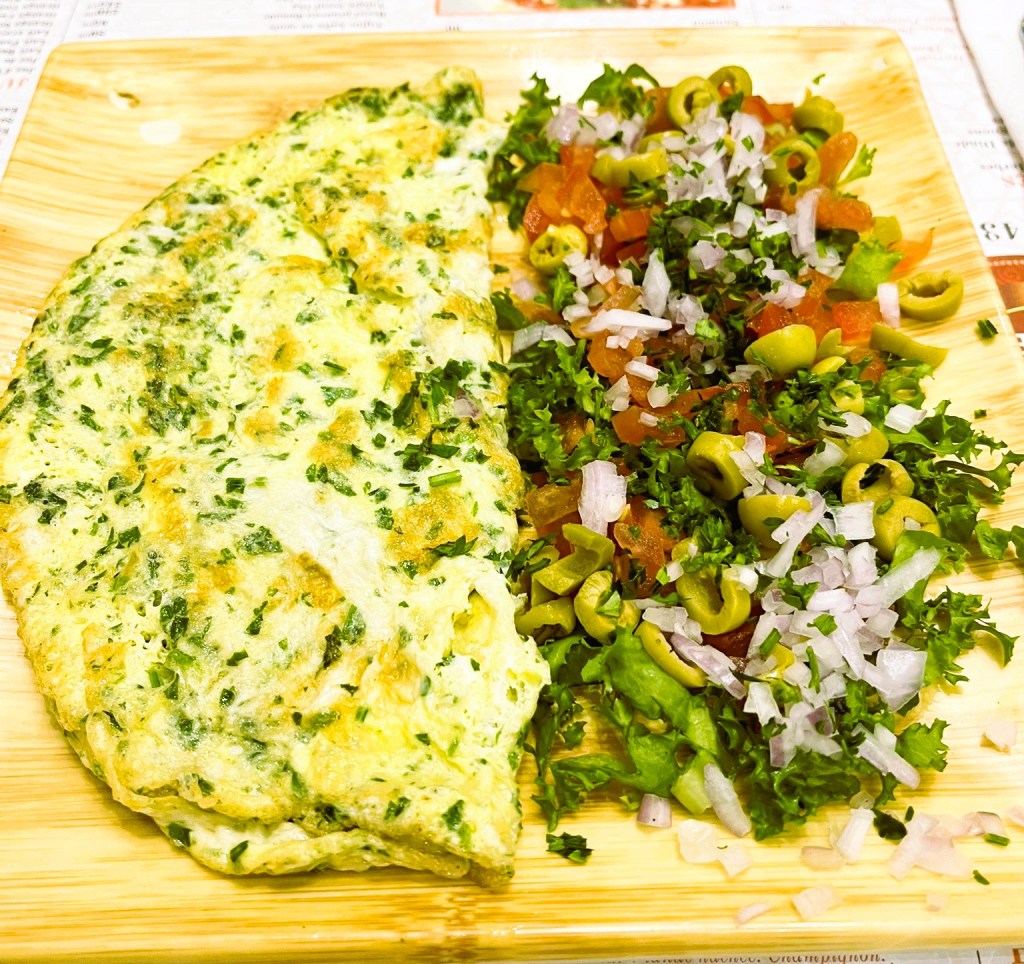
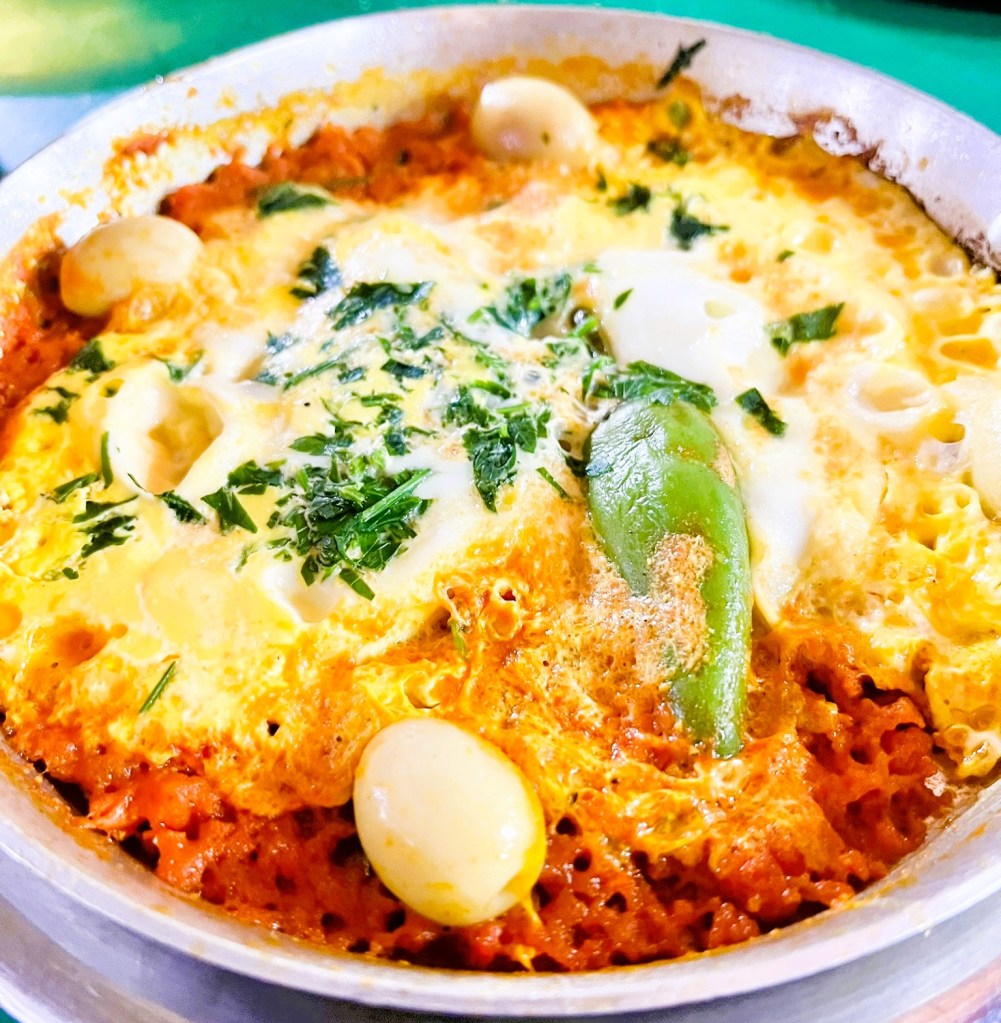
Moroccan egg dishes
B’stilla (or Moroccan pigeon pie)
A sweet and savory pie, b’stilla was originally reserved for royalty.
Traditionally made with pigeon, today’s chefs often substitute chicken cooking the meat with warm spices and combining it with a sauce of eggs and crushed almonds before wrapping the whole thing in phyllo and baking it. Then while the crust is still warm, the flaky pie gets dusted with cinnamon and confectioner’s sugar adding a comforting, nostalgic aroma and scintillating flavor.
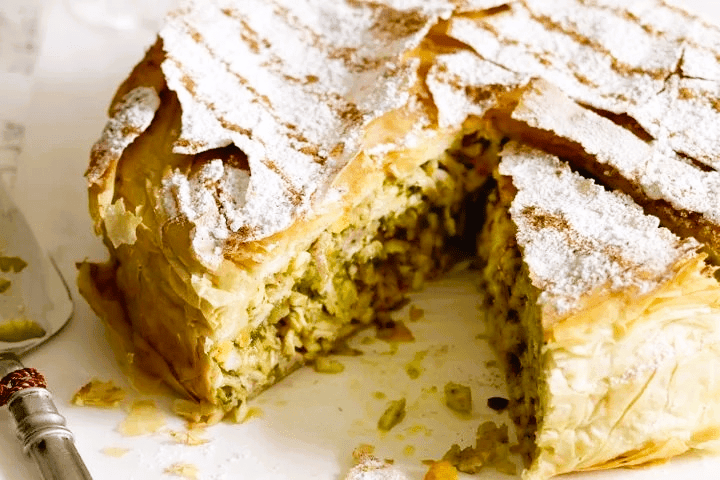
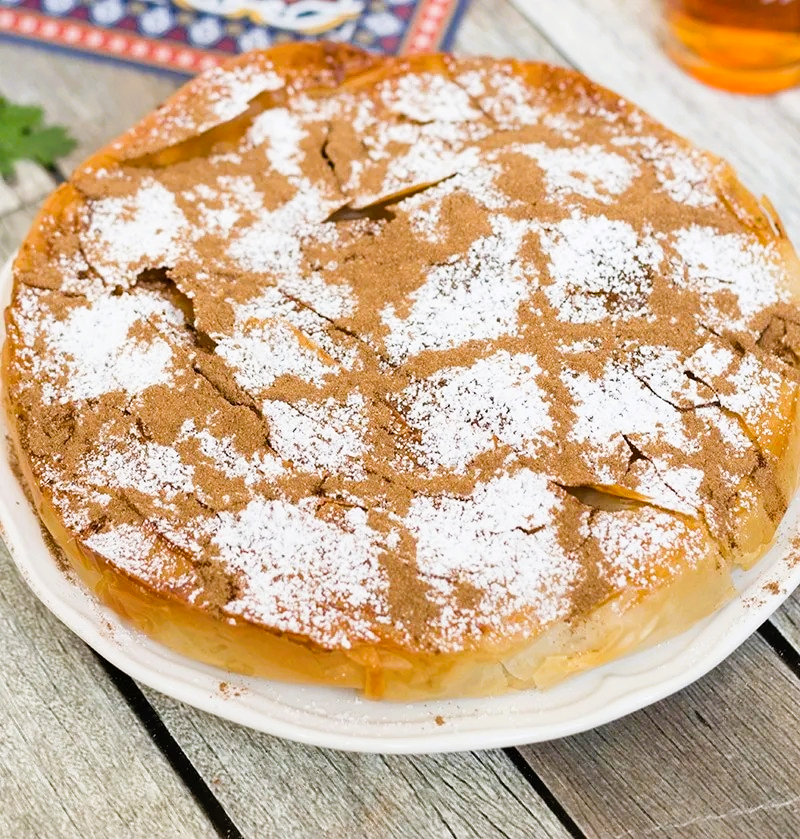
B’stilla
Tagines
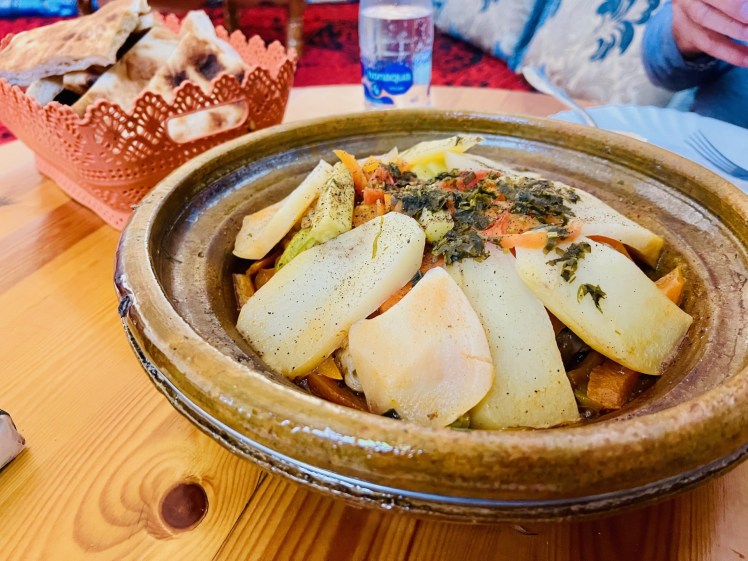
An iconic, slow-cooked stew made from meat, vegetables or fish, tagines come in a conical pot by the same name.
Our favorites include braised lamb sweetened with dried apricots or dates, and kofta, spiced meatballs made from beef or sardines simmered in tomato sauce laced with harissa (a spicy combination of dried chilis, garlic, cumin, coriander and smoked paprika) topped with a fried egg. Plus, we love the slow-cooked chicken simmered in broth seasoned with Morocco’s signature blend, ras el hanout. This complex mixture of more than 40 spices includes ginger, cinnamon, cumin, cardamom, saffron and turmeric. When those flavors are infused in the chicken, they pair well with the tagine’s briny, green olives and preserved lemons.
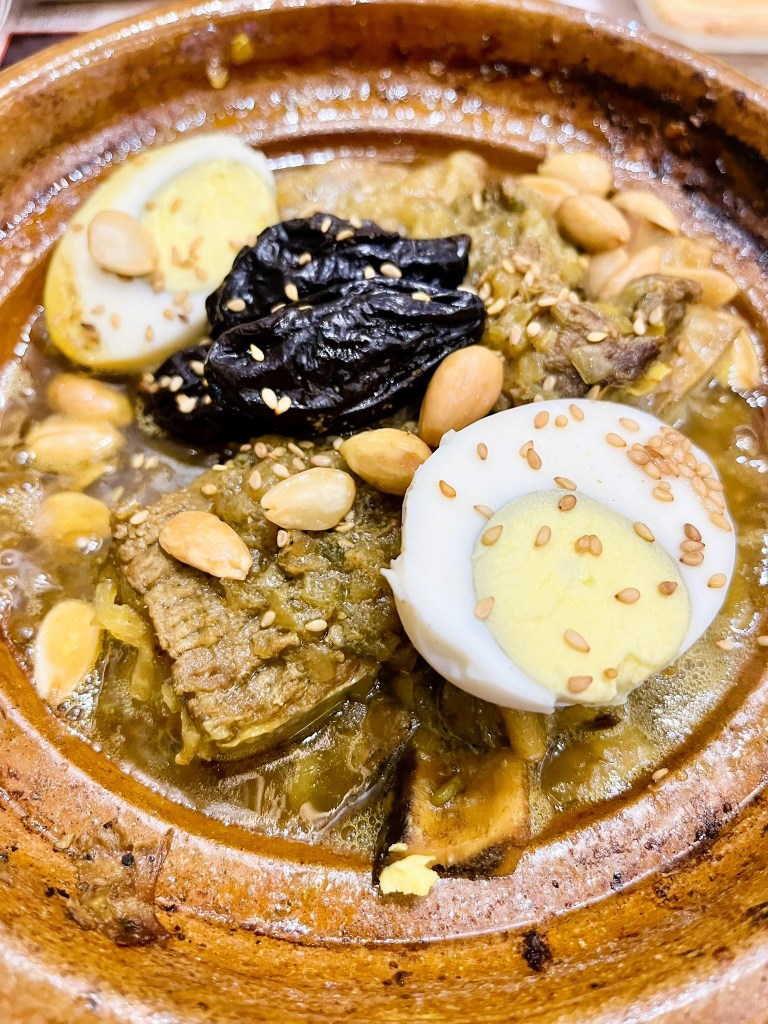
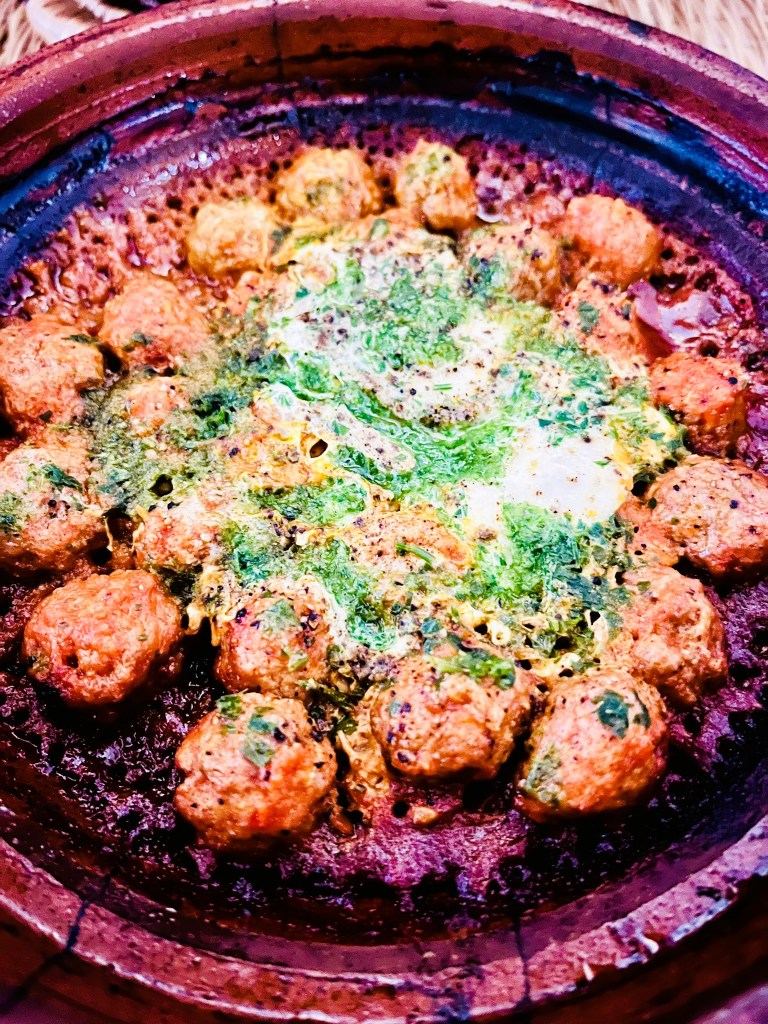
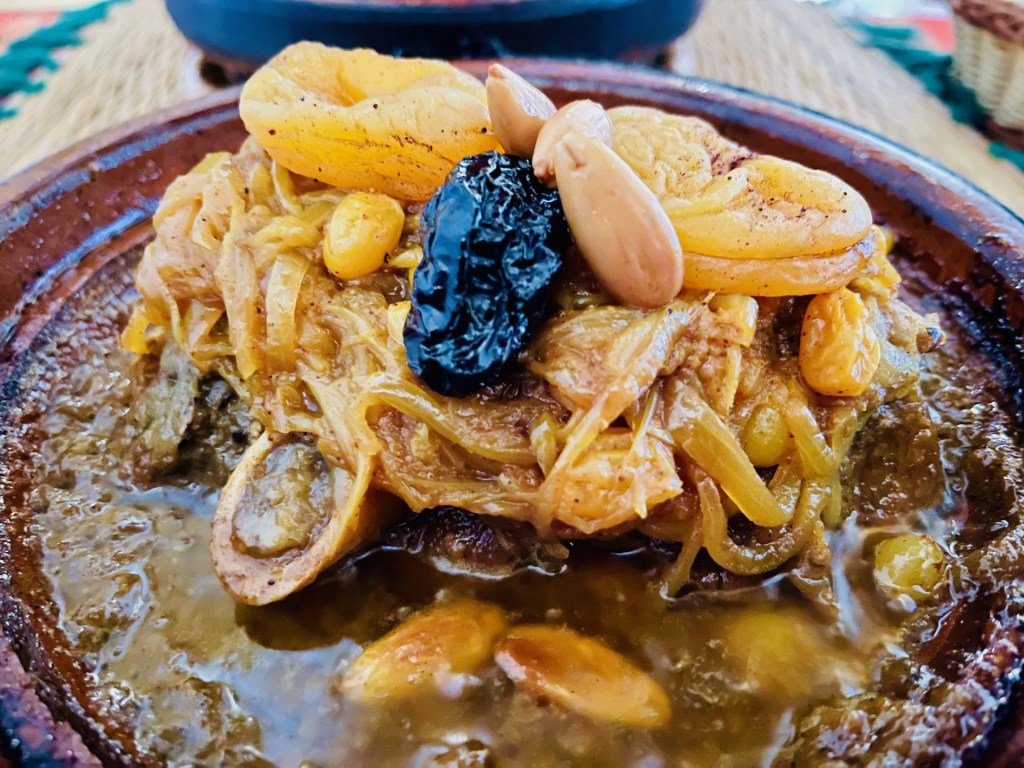
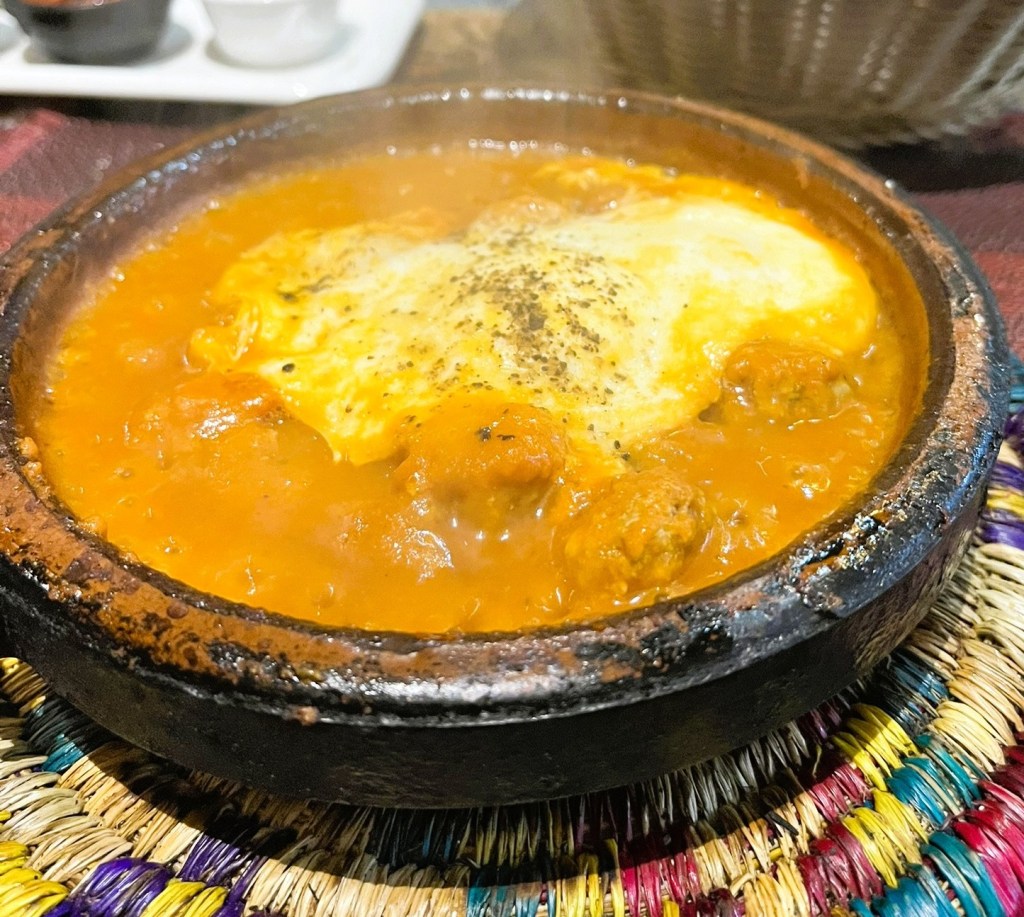
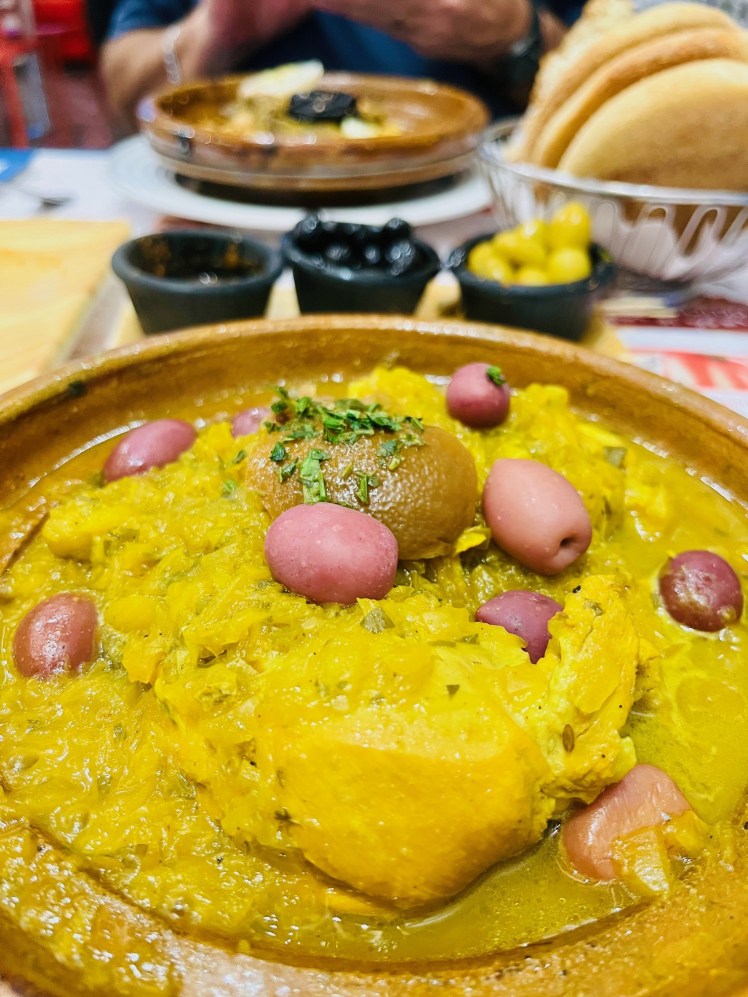
Tagines are essential to everyday cooking in Morocco
Bounty of the sea
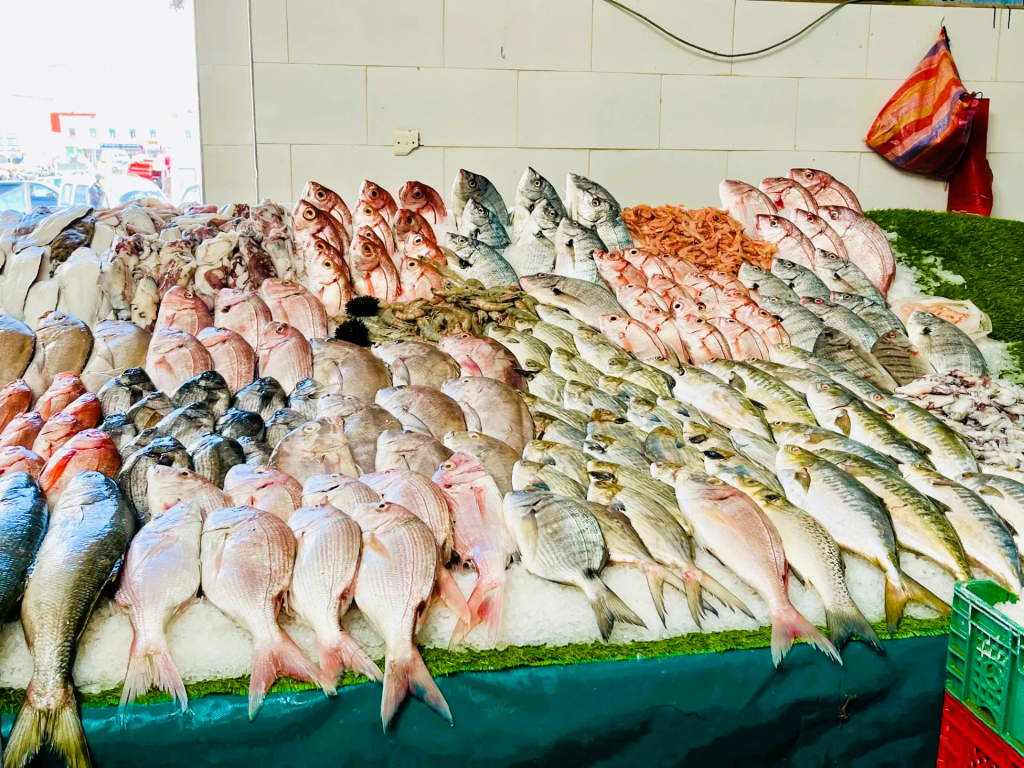
With nearly 2,000 miles of shoreline, Moroccans consume a lot of seafood. In every fishing village along the coast, you’ll find stalls set up offering the catch of the day and restaurants nearby that are happy to bathe your fish in fresh herbs and garlic before grilling it right up for you.
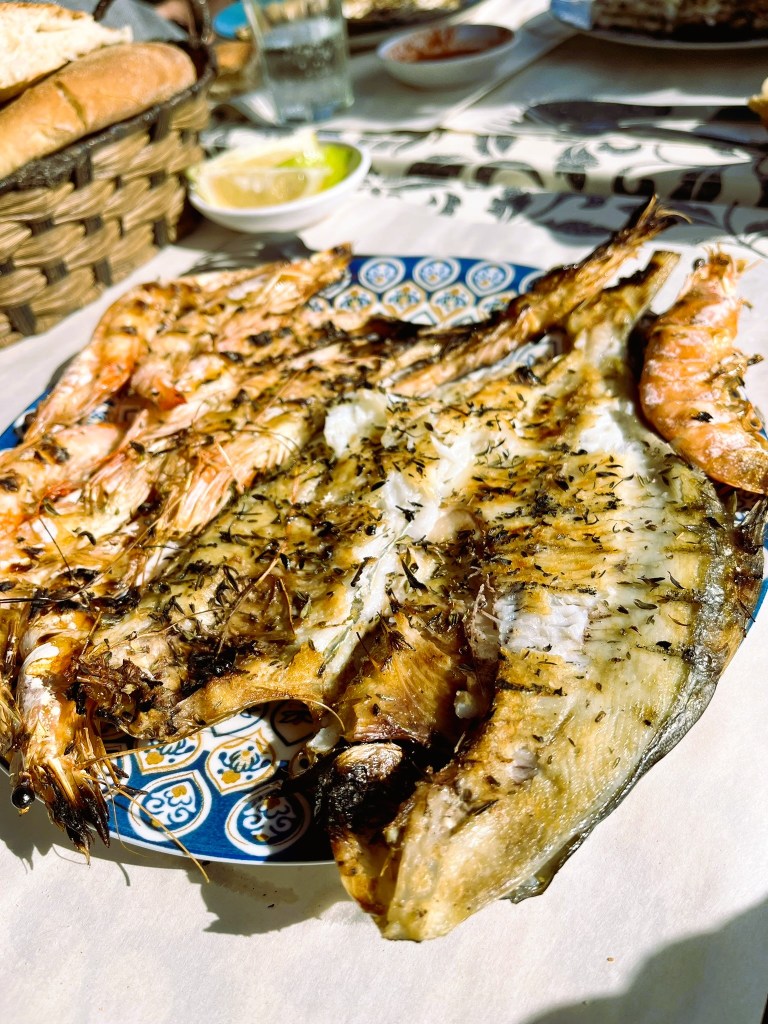
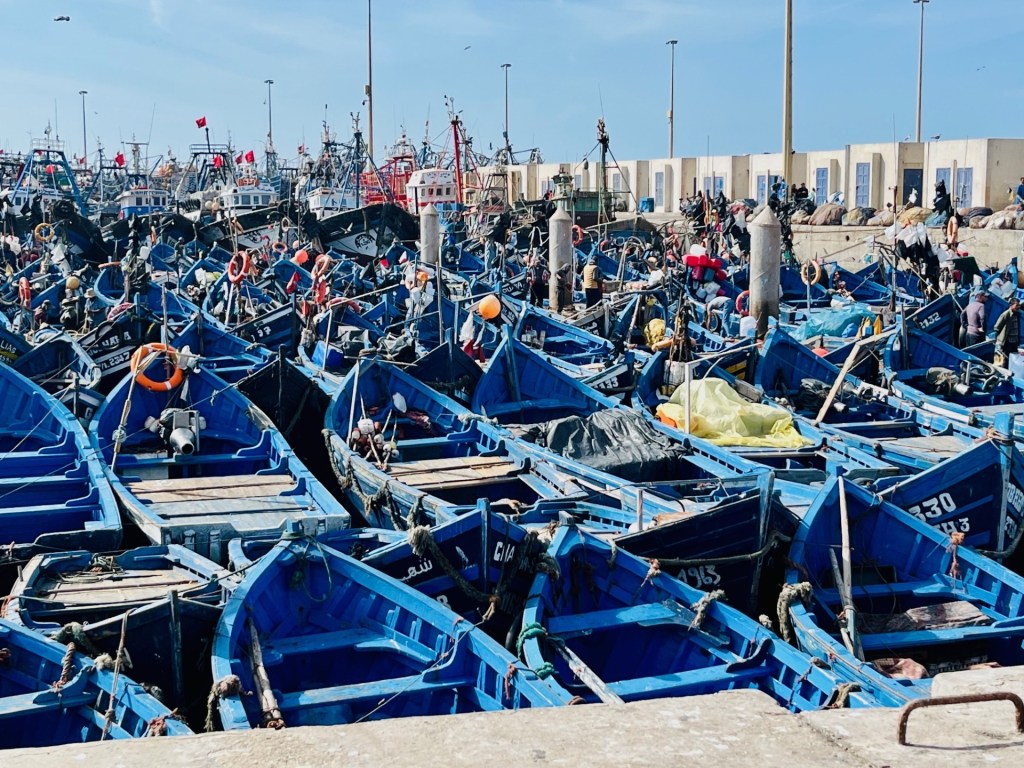
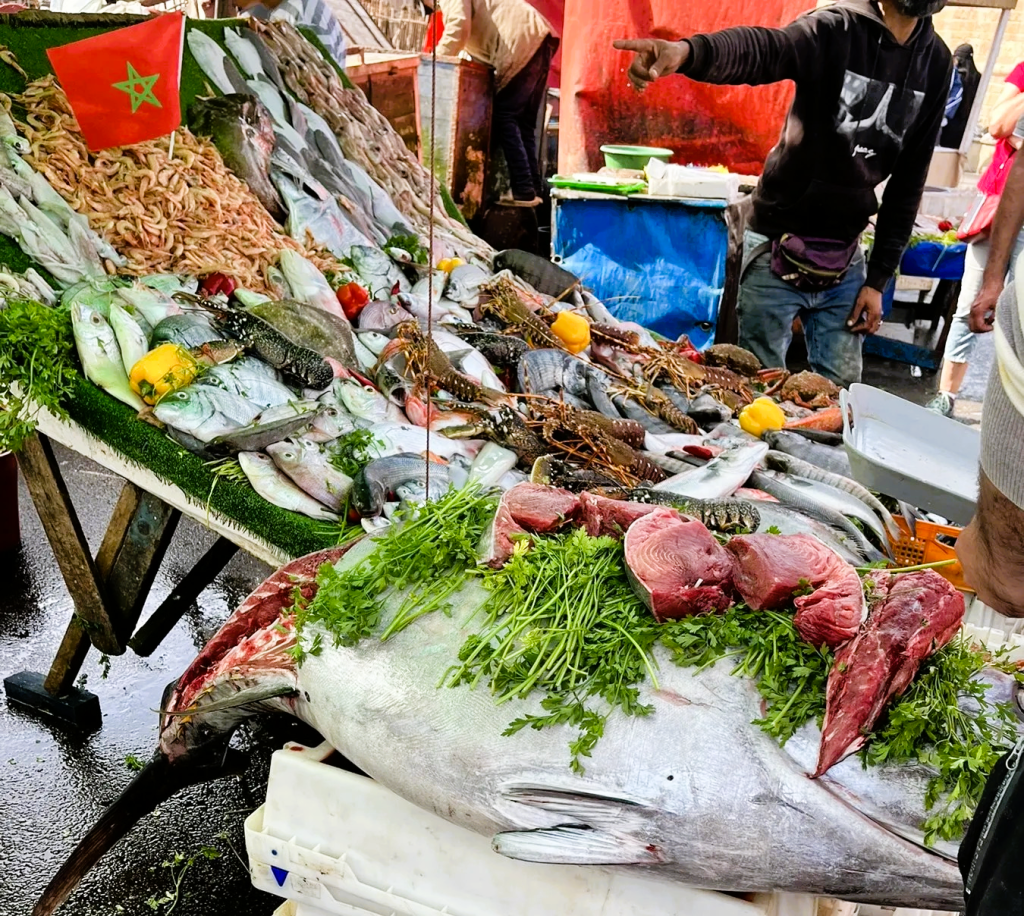
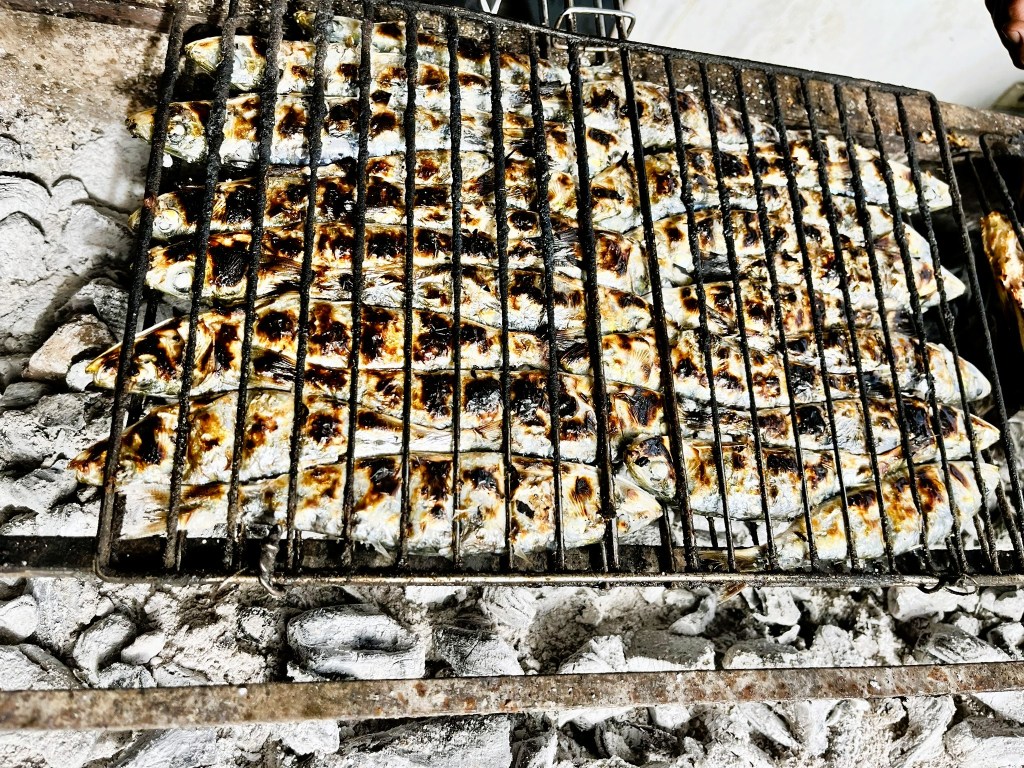
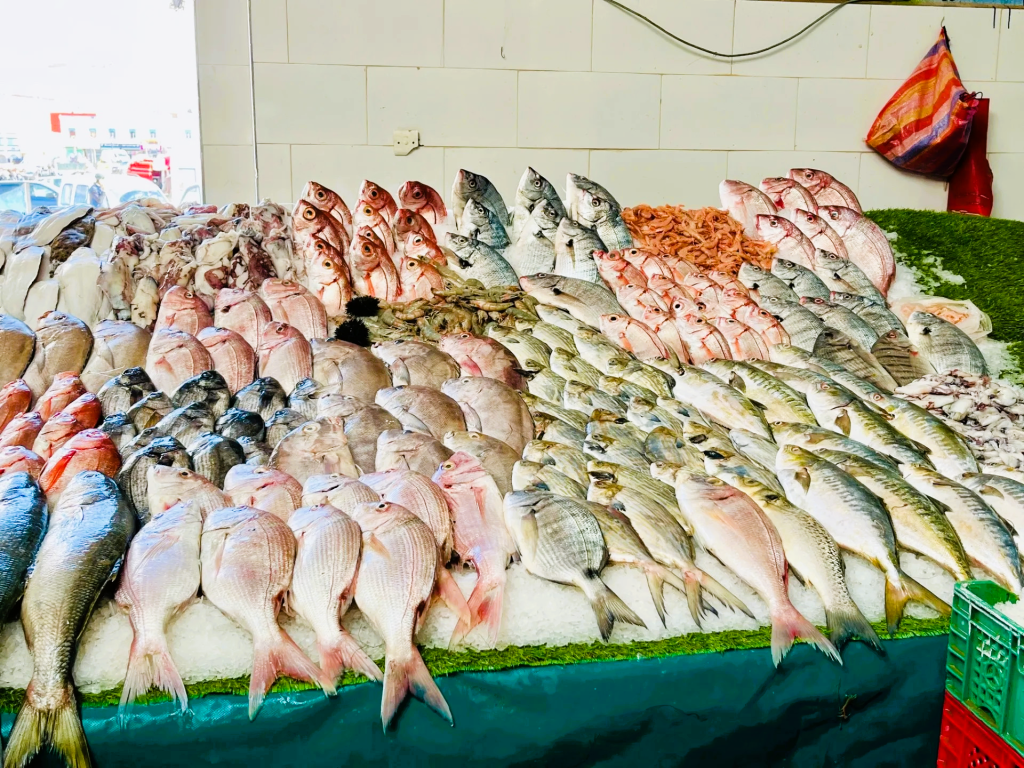
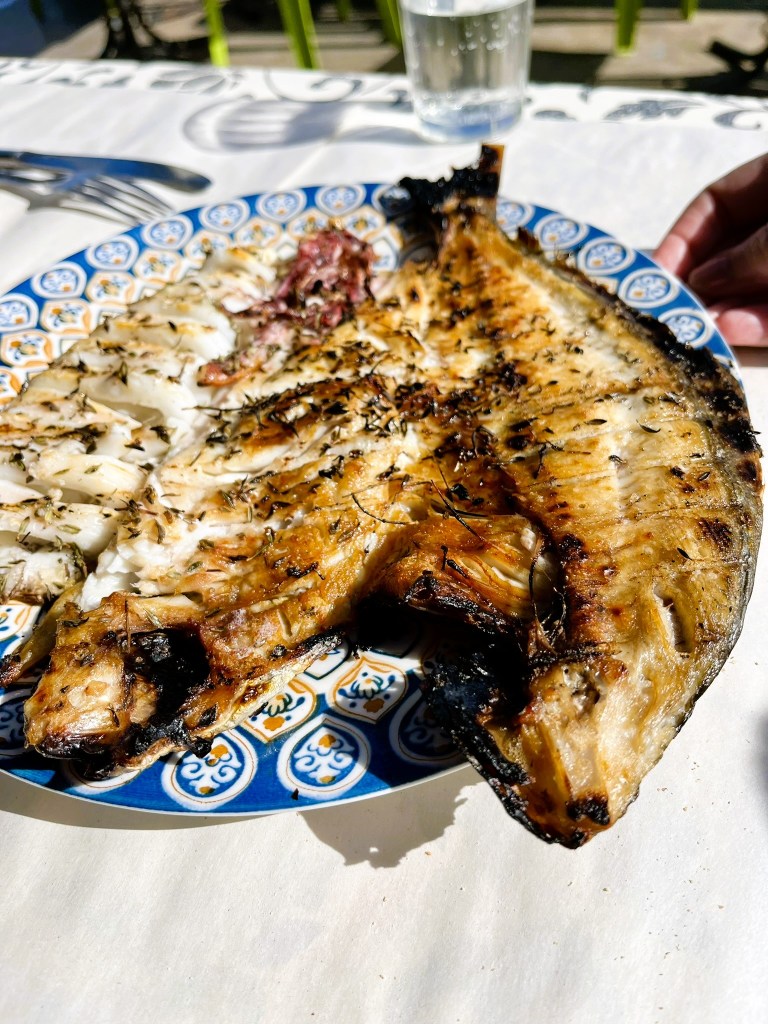
Markets and freshly grilled fish
Morocco’s national dish
This fluffy, nutty pasta made from semolina flour formed into tiny granules absorbs the flavors of whatever it touches making couscous a staple at every meal. Served with meats and vegetables like zucchini, eggplant, carrots and onions, the dish is then mounded to look like a tagine.
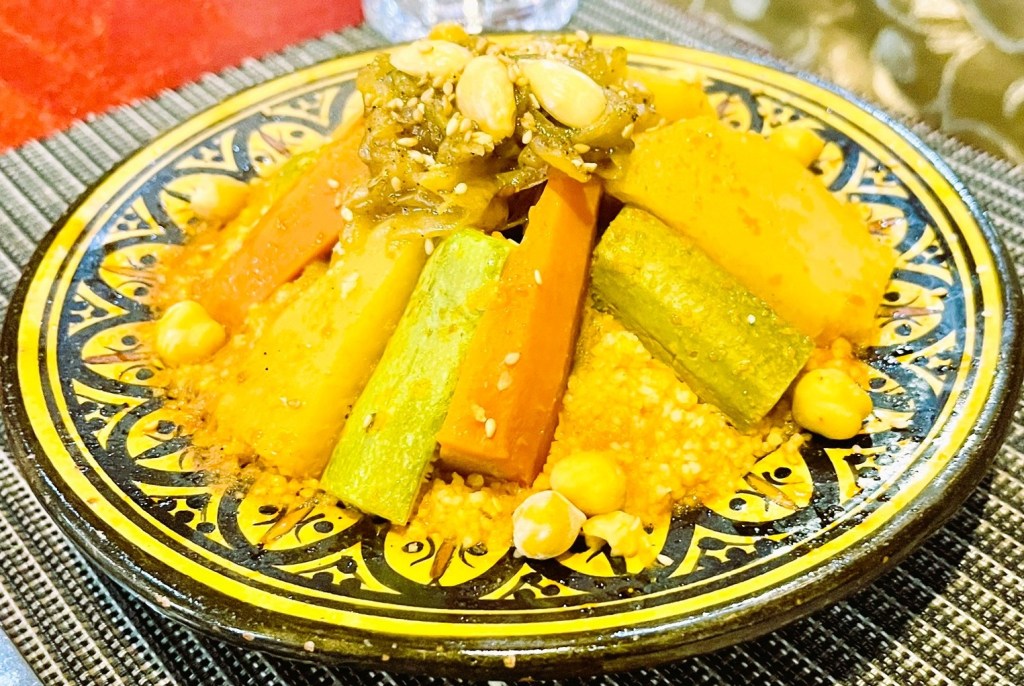
Couscous, Morocco’s national dish
Traditional sweets
Honey-soaked cakes, almond cookies, cream-filled pastries dipped in chocolate and nutty strudels, Moroccans love their sweets. And so did we! Plus, check out the guy selling sweet breads during a stop on the bus to Agadir. A little something to take care of a growling tummy on the three-hour ride from Essaouira and a bargain at one dirham a piece (about eleven cents).
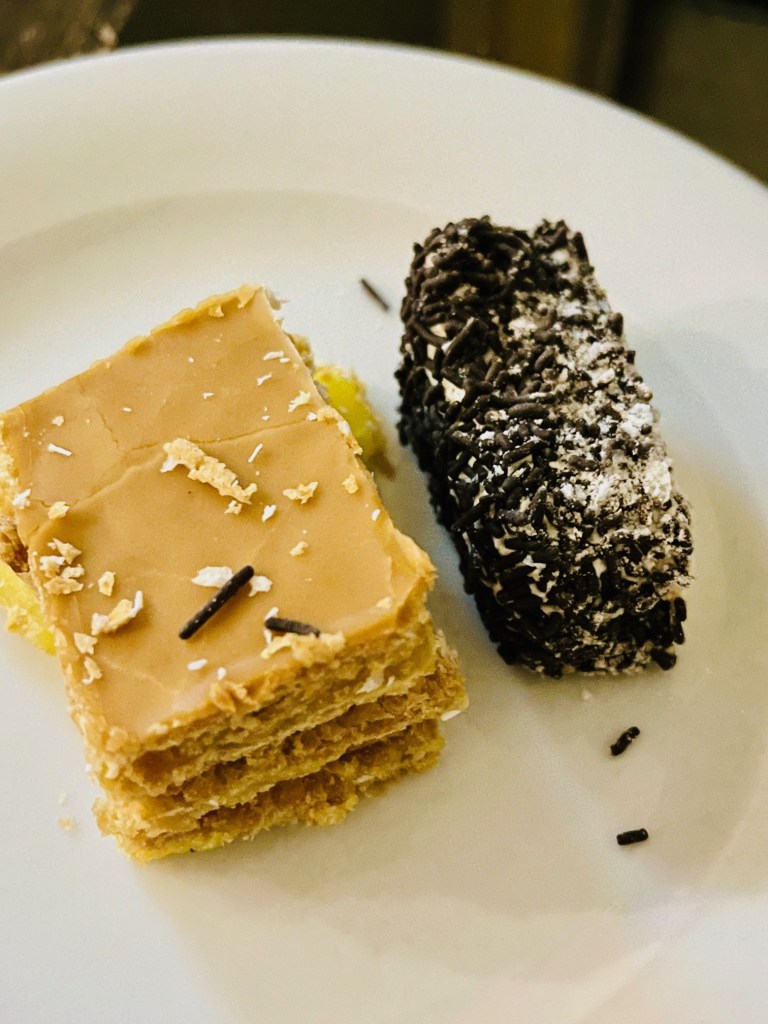
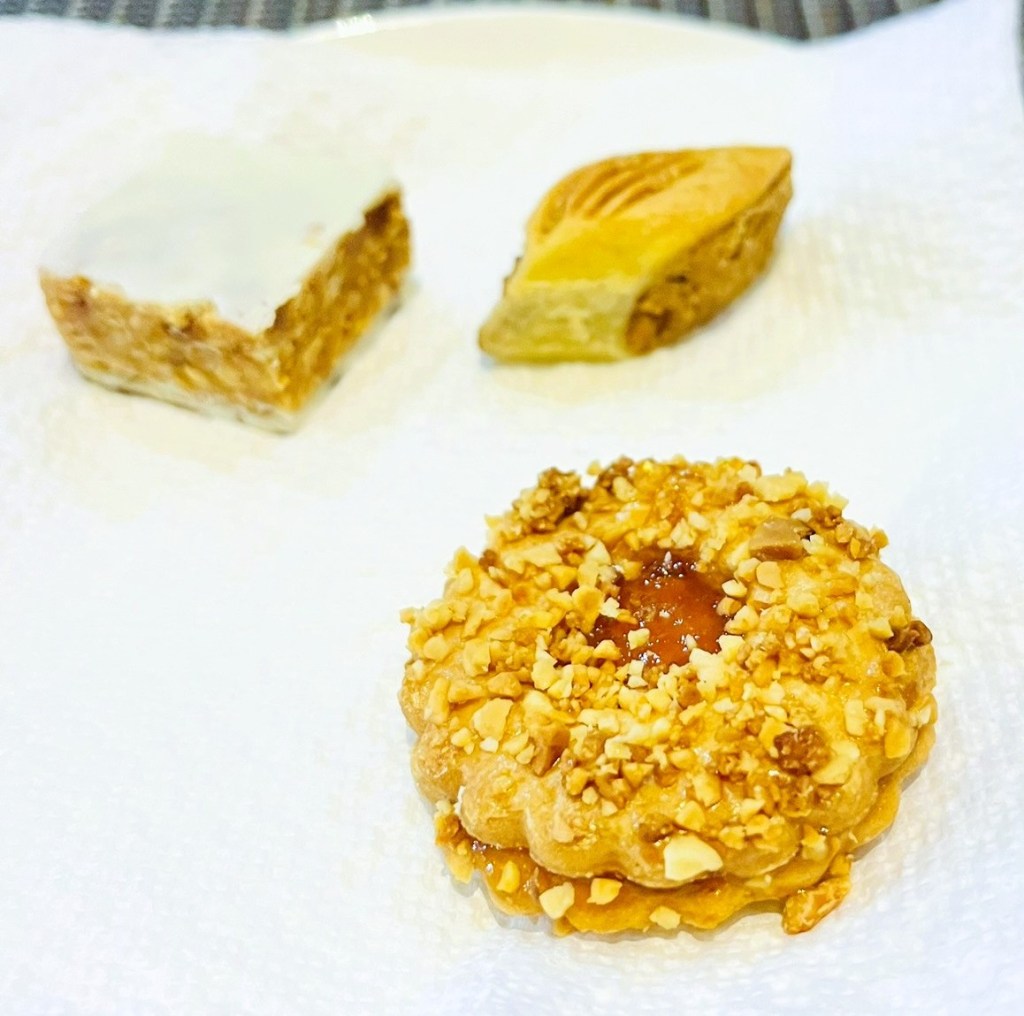
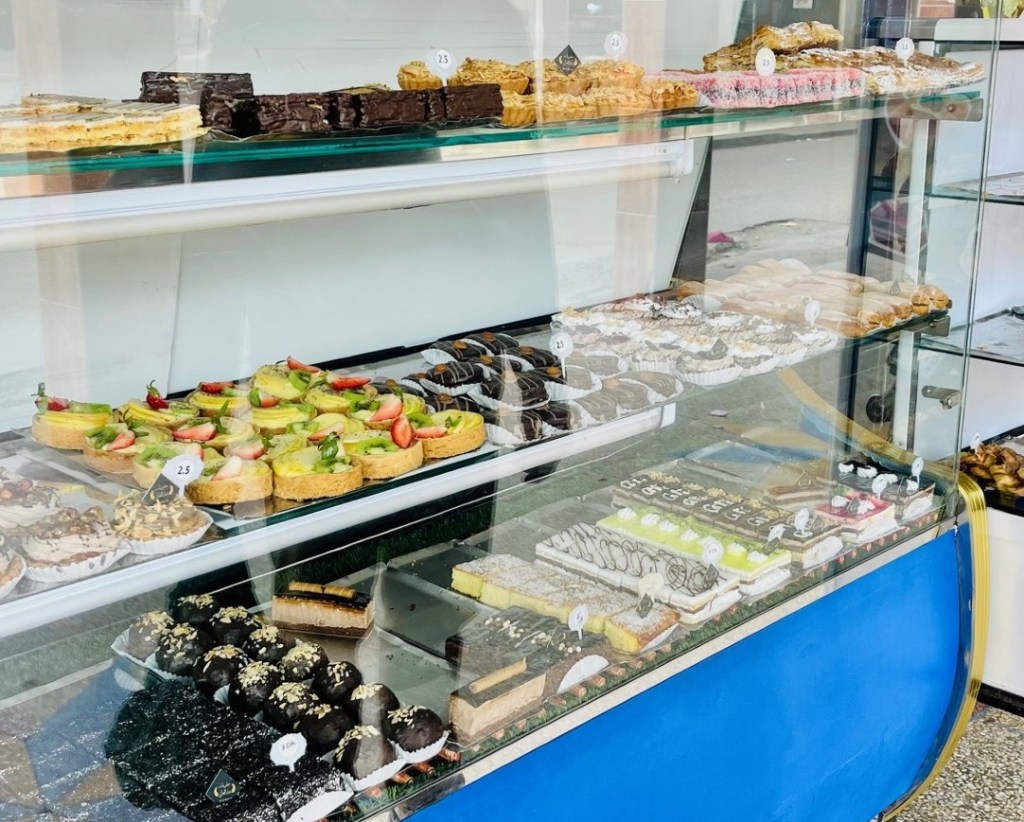
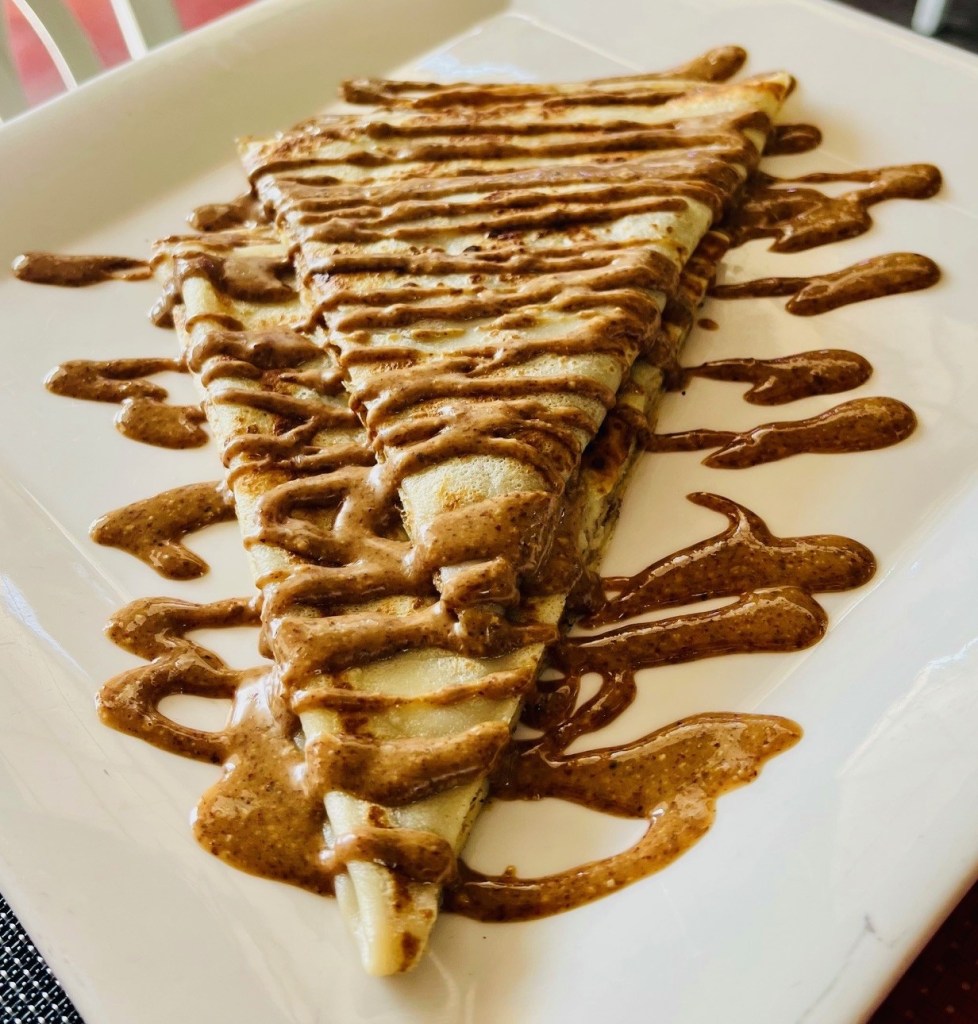
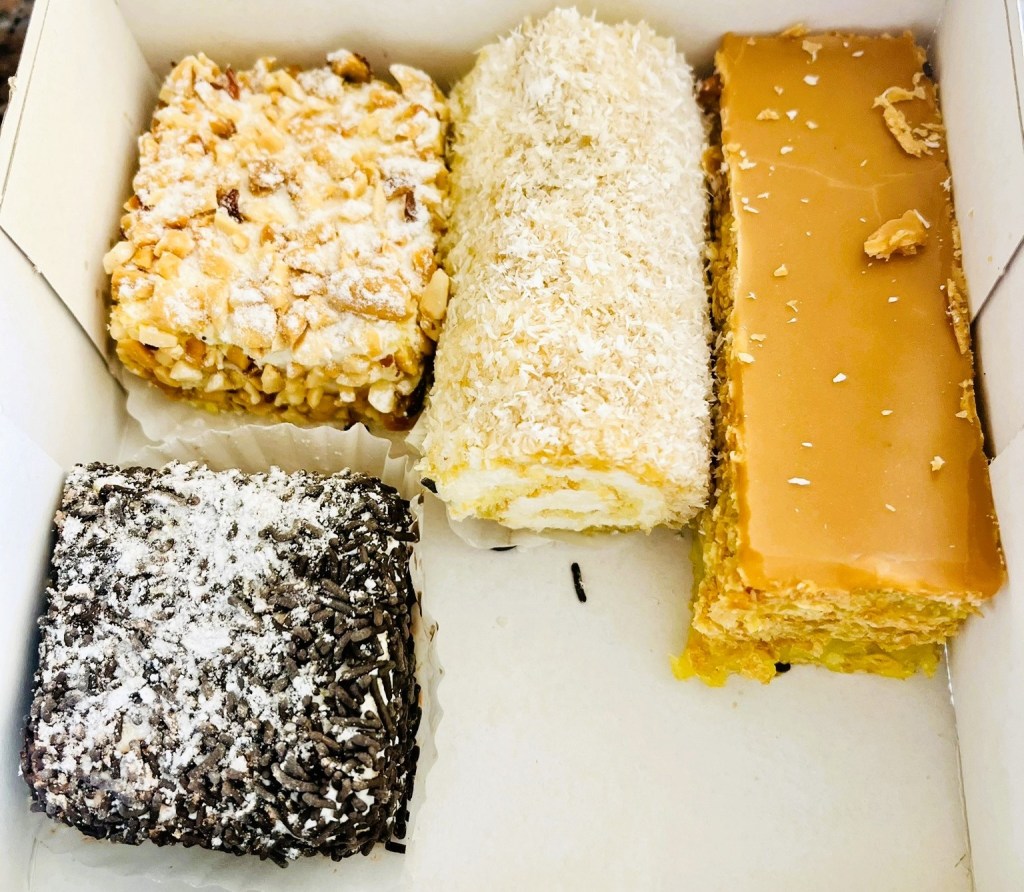
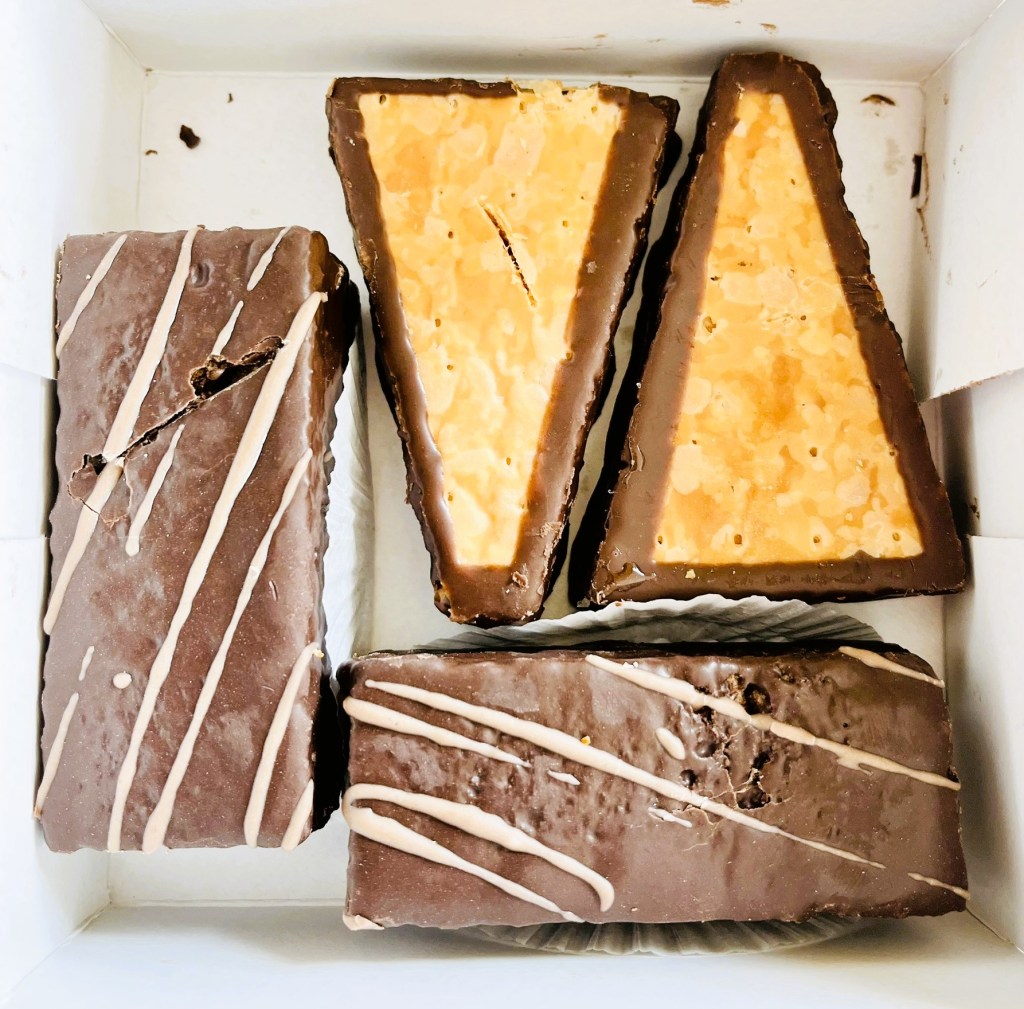

Sweet treats
 Reid & Robie
Love the colors and round shapes, cute kitty too 🐱
LikeLike
Wow! I never noticed how so many Moroccan dishes are round. Great eye! 😉
LikeLike